
Banking
ACAMB seeks banks’ nod for wider QR code adoption


The Association of Corporate Communication and Marketing Professionals in Banks (ACAMB) has urged banks to deepen the adoption of digital payment channels, including QR code payments.
The position was diasclosed during ACAMB’s, courtesy visit to the Nigeria Inter-Bank Settlement System (NIBSS) Plc in Lagos.
The visit, which brought the leadership of both bodies together, followed a deliberation around a shared concern with emphasis on the need for the industry to strengthen its payment rails and speak with a united and accurate voice when service disruptions occur.
Leading the ACAMB delegation, President, Jide Sipe said the association wants a forum where banks can have a single conversation about the sector, so that new and valuable developments are effectively disseminated to the public promptly and accurately.
“We want to make sure there is a space where banks engage, share ideas, and ask relevant questions about how to grow the industry as well as manage its challenges,” Sipe said.
The association’s President added that ACAMB has been meeting stakeholders across the sector, including the Chartered Institute of Bankers of Nigeria *(CIBN)*, to understand where the association can support better collaboration and engagement.
Sipe pointed to recent system downtime as a test of how the industry communicates. He said ACAMB wants the narrative around such incidents to rest on accurate information rather than on accounts from people outside the operations, and proposed a stakeholders’ conference that would connect heads of corporate communications directly with NIBSS.
Responding, NIBSS Managing Director and Chief Executive Officer, Premier Oiwoh, said, reliable digital payment infrastructures are foundational for economic inclusion. “That is why one of the key ingredients that shape our philosophy at NIBSS is our commitment to financial inclusion. Seamless and effective payment has always been at the core of what we do and one key path to achieving this is ensuring a payment system that works. This will in return optimise revenue security, better customer experiences, and faster time-to-market which in return facilitates economic growth.
Oiwoh said that since joining NIBSS in May 2019, the organisation has prioritised industry fairness and trust in digital payments by tracking transaction “velocity” to anticipate crashes and shifting load between environments to keep services running.
“As we all know, customers expect payments to be fast, accurate, and flexible”.
He further ascribed NIBSS Instant Payment (NIP) as the foundation of that work, describing it as Nigeria’s first account-based instant transfer and, by the organisation’s account, the first of its kind anywhere in the world, when it launched about 15 years ago.
Oiwoh linked that foundation to the National Payment Stack (NPS) created by NIBSS, which he said is effectively cutting transaction time and lifting efficiency across the system.
By his account, the NPS “enables secure, real-time payments, cross-border transactions, and financial inclusion across Nigeria and Africa,” giving banks and customers faster, more reliable rails to move money within the country and beyond its borders.
According to him, NPS, today ranks top compared to other payment systems across the globe, including India’s Unified Payment Interface (UPI) due to the obvious evidence inherent in its performance, which is second to none at the moment and we are proud that this came out of Nigeria.
He also spoke on other key responsibilities of NIBSS, which include but not limited to fashioning out best innovative solutions to promote interoperability among banks, deepening trust and awareness with the digital payment platform and most importantly tactical support in helping to curb fraud, which has been immensely successful with numerous fraud mitigations leading to high profile arrests, since assuming office, particularly with the help of law enforcement agencies.
He also spoke on the need for banks to also adopt other innovative ways of payment like the NQR (Nigeria Quick Response) code which he noted is a secure, account-based payment solution designed by NIBSS to simplify and reduce the cost of mobile transactions. It allows customers to securely transfer funds simply by scanning a merchant’s displayed QR code with their banking app. Some of the benefits, he mentioned, include, Instant Settlement; Instant Notifications; Zero Onboarding Cost; Lower Transaction Fees, NQR significantly lowers processing and transaction fees across various price bands.
According to Oiwoh, “there is absolutely no *huge* cost to acquire or set up the merchant infrastructure, businesses only need to print or display the code. Both the buyer and the seller get immediate transaction alerts, allowing for real-time payment verification. Most importantly, there are fewer disputes & chargebacks. The inherent benefits point to an efficient system that further engenders ease for all”, he said.
The conversation reinforced an industry shift toward faster, contactless payments, with ACAMB urging banks to expand their rollout of NIBSS NQR-powered QR payments *for and on behalf of the financial service industry*, which let customers pay by scanning a code rather than reaching for *cash.* Oiwoh pointed out that United Bank for Africa (UBA) Plc was among the early movers, onboarding all its POS merchants onto NQR so that customers without their cards can simply scan to pay.

• Says $950m inflows from IMTOs, foreign portfolios hit $6.31b
• Lists banks’ roles in achieving $1tr economy by 2030
By Monireoluwa Lucas
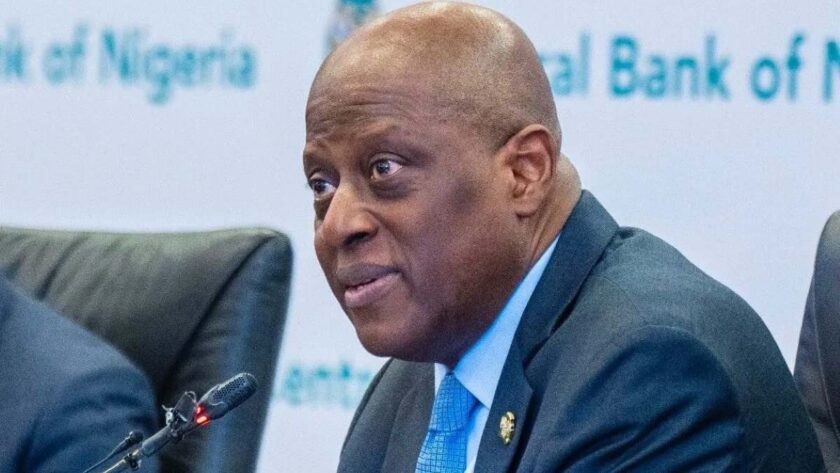
The Central Bank of Nigeria (CBN) today said sources of foreign exchange inflows into the economy has changed significantly, with autonomous sources taking the lead.
Speaking at the ongoing 38th FICAN conference held in Abuja, CBN Deputy Governor, Economic Policy, Dr. Muhammad Sani Abdullahi, disclosed that of the $10.82 billion in total inflows recorded in July 2026, $7.33 billion, or nearly 68 per cent, came from autonomous sources.
The breakdown showed that remittances through International Money Transfer Operators (IMTOs) reached $950 million that month while net foreign portfolio inflows totalled $6.31 billion in January to August 2026.
He explained that portfolio flows can reverse, but the broader improvement in supply has reduced the market’s reliance on direct CBN provision.
“Our external buffers are stronger. Gross reserves stood at US$55.60 billion on 11 September 2026, while the end-August stock provided 11.3 months of import cover,” he said.
Speaking on the theme: “Towards a Robust and Resilient Financial System in the Post-Banking Sector Recapitalisation”, he said Nigeria’s aspiration to build a $1 trillion economy by 2030 requires banks that are capable of mobilizing and allocating capital on a much larger scale.
Abdullahi, said stronger capital buffers should enable banks to finance local infrastructure, support industrial expansion, facilitate international trade, and compete more effectively in regional and global markets.
He said stronger banks also provide greater capacity to absorb losses during economic stress and sustain investment in innovation and digital transformation.
“The environment in which these banks operate is increasingly interconnected. Geopolitical uncertainty, climate-related risks, cyber threats, and rapid technological change can transmit shocks across borders through financial trade and technology, affecting capital flows, exchange rates, and external governments. Resilience, therefore, requires institutions to anticipate emerging risks, absorb shocks, adapt, and recover. The lessons of past financial crises underlie the value of aggregate capital, but also the need to prepare for risks that may take unfamiliar forms,” he said.
According to him, capital is therefore the starting point.
“Boards and management must maintain sound controls, recognize risks early, and learn to identify viable projects. Sound corporate governance must underpin that growth. Boards and management teams must demonstrate integrity, accountability, and transparency. Strengthen internal controls and guard against excessive restating. Their decisions must protect the interests of depositors, investors, and other stakeholders,” he said.
He directed that risk management be extended beyond credit risk to the market, utility, and operational risks, as well as cybersecurity, third-party dependencies, and private-related financial risks.
He said the environment in which these banks operate is increasingly interconnected.
“Geopolitical uncertainty, climate-related risks, cyber threats and rapid technological change can transmit shocks across borders through financial, trade and technology channels, affecting capital flows, exchange rates and external buffers.
“Resilience therefore requires institutions to anticipate emerging risks, absorb shocks, adapt and recover. The lessons of past financial crises underline the value of adequate capital, but also the need to prepare for risks that may take unfamiliar forms,” he said.
Abdullahi said the CBN will continue to pay close attention to governance, asset quality, liquidity and large exposures. “We will also expect banks to protect customer data, maintain reliable payment services and recover quickly from disruptions. A stronger balance sheet must be matched by stronger management of risk.
“As more financial services move to digital channels, banks must invest continuously in cybersecurity, data protection, disaster recovery and business continuity. Innovation brings opportunities, but public trust depends on customers being able to transact securely and access their funds reliably, including when systems come under pressure,” he said.

By Monireoluwa Lucas
FirstBank has moved to equip small and medium-sized enterprises (SMEs) with practical strategies to win customers, increase sales and build sustainable businesses as it hosts the third-quarter edition of its SMEConnect Webinar on September 9, 2026.
The webinar, themed “The SME Growth Blueprint: Practical Sales Strategies to Win Customers and Boost Revenue,” is part of FirstBank’s capacity-building initiative aimed at helping entrepreneurs overcome some of the challenges limiting business growth and competitiveness.
The programme, anchored on the bank’s “You First” brand promise, is designed to provide business owners with practical knowledge, market insights and access to financial and advisory solutions tailored to their needs.
Participants are expected to gain insights into strategies for improving brand visibility, attracting and retaining customers, increasing sales conversion and building customer loyalty, with the broader objective of driving sustainable business growth.
The webinar will feature Chief Executive Officer and Founder, Bags Warehouse, Helen Mojisola Ijaola; Founder and Chief Executive Officer, Mamalicious Products Nigeria, Onome Gbenga-Adewara; and Group Head, Retail Banking Group, FirstBank, Olusola Ogunsakin.
Head, SME Banking, FirstBank, Helen A. Willie, will host the session, while Team Lead, SME Engagement & Advisory, FirstBank, Olajumoke Moyo-Ladipo, will serve as moderator.
Speaking ahead of the webinar, Group Executive, e-Business and Retail Products, FirstBank, Chuma Ezirim, said the ability of SMEs to develop effective sales strategies was critical to converting business opportunities into sustainable revenue.
He stated: “Growth is not accidental; it is driven by the ability of businesses to create value, win customers, and convert opportunities into sustainable revenue.
“At FirstBank, we recognise that many SMEs possess great products and services but often require practical sales strategies to unlock their full potential. This SMEConnect Webinar is designed to bridge that gap by providing insights from successful business leaders who have built and scaled thriving enterprises.Through these initiatives, we continue to demonstrate our commitment to equipping SMEs with the knowledge, capacity, and support needed to accelerate growth, create jobs, and strengthen Nigeria’s economy.”
SMEConnect is part of FirstBank’s broader efforts to support the growth and resilience of SMEs through capacity development, business advisory services and financial solutions.

- Withdraws operating licences
The Central Bank of Nigeria (CBN) has withdrawn the operating licences of 46 microfinance banks across the country, saying the affected institutions failed to meet the conditions required to continue operating as licensed financial institutions.
The decision took effect on July 1, 2026, following approval by the Governor of the Central Bank of Nigeria, Mr. Olayemi Cardoso.
A statement issued today by the Acting Director of Corporate Communications at the CBN, Mrs. Hakama Sidi-Ali, said the action was taken under the provisions of Sections 12 and 13 of the Banks and Other Financial Institutions Act (BOFIA), 2020, which empowers the apex bank to withdraw the licences of financial institutions that fail to comply with regulatory requirements.
According to the CBN, the affected banks were found to have breached one or more of the conditions required for continued operation.
The regulator explained that some of the institutions no longer had enough assets to cover their liabilities, while others shut down operations without obtaining approval from the Central Bank. It also said several of the banks had stopped carrying out financial intermediation, failed to begin operations within one year after receiving their licences, or could no longer maintain the minimum capital required by law because of accumulated losses.
“The revocation was approved by the Governor of the Central Bank of Nigeria, Mr. Olayemi Cardoso, following the banks’ failure to meet the regulatory requirements for continued operation as licensed financial institutions,” the statement said.
The affected institutions are Minji-Se Churchill Microfinance Bank in Rivers State, Merchant Microfinance Bank and Abia SME Microfinance Bank in Abia State, Janmaa Microfinance Bank in Kwara State, Busu Microfinance Bank and Bejin-Doko Microfinance Bank in Niger State, Gold Microfinance Bank, Chanelle Microfinance Bank, Safegate Microfinance Bank.
Others are, Supreme Microfinance Bank, Creditville Microfinance Bank, MBAG Microfinance Bank, Verdant Microfinance Bank and Entrepreneur Microfinance Bank in Lagos State, Zain Microfinance Bank (formerly Dawakin Tofa Microfinance Bank), Bompai Microfinance Bank, Ajwa Microfinance Bank (formerly Gezawa Microfinance Bank), Now Now Digital Microfinance Bank, Minjibir Microfinance Bank.
Also affected by the decision of the CBN are, Shanono Microfinance Bank, Sumaila Microfinance Bank, Rimin Gado Microfinance Bank, Sycamore Microfinance Bank, Tofa Microfinance Bank, Kanopoly Microfinance Bank, Bellbank Microfinance Bank (formerly Tsanyawa Microfinance Bank) and Esteem Microfinance Bank in Kano State, Crystabel Microfinance Bank in Bayelsa State, Kamba Microfinance Bank and Zuru Microfinance Bank in Kebbi State.
Iwade Microfinance Bank and Apple Microfinance Bank in Ogun State, Winview Microfinance Bank and Casha Microfinance Bank in the Federal Capital Territory, Mwaghavul Microfinance Bank and Yeneng Microfinance Bank in Plateau State, Creekline Microfinance Bank in Delta State, Bestar Microfinance Bank in Oyo State, Livingspring Microfinance Bank in Cross River State, Stanford Microfinance Bank in Akwa Ibom State all had their licences withdrawn.
The CBN hammer also fell on Frontline Microfinance Bank in Anambra State, Zafec Microfinance Bank and Basawa Microfinance Bank in Kaduna State, Straight Sahara Microfinance Bank in Benue State, OurPass Microfinance Bank in Ondo State, and Avantus Microfinance Bank in Osun State.
The apex bank said the exercise forms part of its ongoing efforts to strengthen Nigeria’s financial system by ensuring that only institutions that comply with banking regulations remain in operation.
It added that removing non-compliant institutions from the financial system would help protect depositors, promote stability in the banking sector and improve public confidence in licensed financial institutions.
The CBN said it remains committed to maintaining a safe, sound and resilient financial system and would continue to take supervisory and regulatory measures whenever necessary to ensure that banks and other financial institutions operate in line with existing laws and regulatory standards.
Industry observers say the latest action reflects the Central Bank’s resolve to tighten oversight of financial institutions and enforce compliance with prudential requirements aimed at safeguarding customers’ funds and preserving confidence in Nigeria’s banking sector.



-

 Energy11 months ago
Diesel falls to ₦979/L in Lagos
-

 Law & Crime12 months ago
EFCC vs Yahaya Bello: Court adjourns ₦80.2b alleged fraud trial to Nov 11
-

 Art & Life9 years ago
These ’90s fashion trends are making a comeback in 2017
-
Business9 years ago
The 9 worst mistakes you can ever make at work
-
Entertainment9 years ago
The final 6 ‘Game of Thrones’ episodes might feel like a full season
-
Art & Life9 years ago
According to Dior Couture, this taboo fashion accessory is back
-
Entertainment9 years ago
The old and New Edition cast comes together to perform
-
Entertainment9 years ago
Mod turns ‘Counter-Strike’ into a ‘Tekken’ clone with fighting chickens