

Business
Fuel Price Crisis Deepens as Petrol Hits 643% Rise

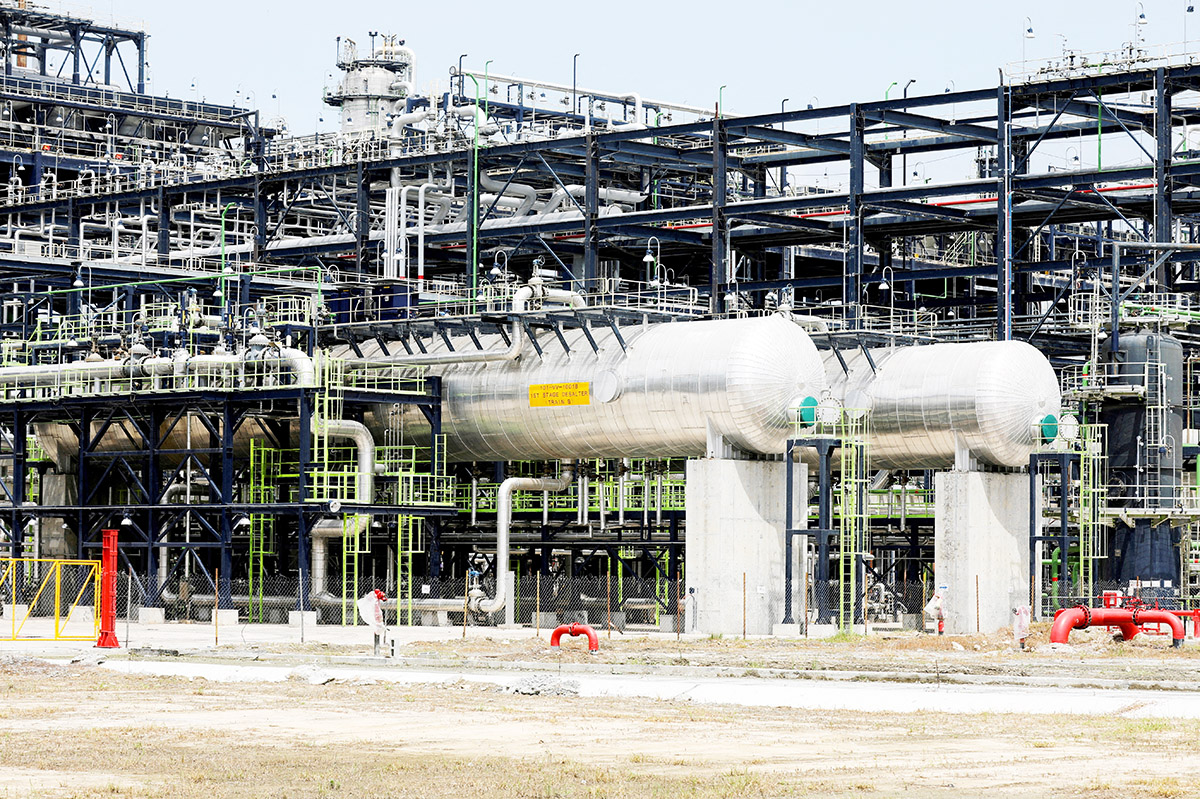
The price of Premium Motor Spirit (petrol) jumped from N175 to N1,300 between May 2023 and May 2026, representing approximately a 643 per cent price increase in three years, as reported by The PUNCH.
Findings showed that the surge in petrol prices was triggered by the removal of subsidies by President Bola Tinubu immediately after he was sworn in on May 29, 2023.
Also, the devaluation of the naira compounded the situation, causing the then-imported product to rise beyond the reach of many Nigerians.
Three years later, the cost of a litre of petrol jumped at filling stations, ranging between N1,300 and N1,400, depending on the location.
The current price surge from about N800 some months ago to N1,300 was occasioned by Middle East tensions, which led to global oil disruptions due to the closure of the Strait of Hormuz.
Recall that immediately after Tinubu took the oath of office, he quickly announced that “the fuel subsidy is gone.”
This led to an immediate rise in petrol prices from N175 or N200 to over N500 per litre. The Nigerian National Petroleum Company Limited, which was the sole importer of petrol, led the charge by raising its pump prices.
Remarkably, Tinubu had hiked the fuel price without recourse to the promise he made in Abeokuta during his campaign that he would bring down the price of petrol.
With the removal of fuel subsidies, the price went up, and this led to a rise in inflation across the country. But Nigerians were persuaded by the President that there would be no gain without pain.
Also, recall that when the government floated the exchange rate in June 2023, the cost of petrol rose above N1,000.
However, the NNPC quickly introduced what the International Monetary Fund tagged an “implicit subsidy” payment through the back door. While the landing cost of petrol was around N1,200, the NNPC sold it at half the price based on the promise of the Federal Government to pay the shortfall, or what was tagged “under-recovery.”
For close to a year, the NNPC sold the product at about N600 per litre, denying claims that it was paying subsidies. However, in 2024, the state oil firm admitted to selling below the cost price.
The former Chief Financial Officer of the NNPC, Umar Ajiya, stated, “In the last eight to nine years… what has been happening is that we have been importing PMS, which has been landing at a specific cost price, and the government tells us to sell it at half price. So, the difference between the landing price and that half price is a shortfall…”
Following the admission, fuel prices rose to as high as N1,080. This coincided with the unveiling of the Dangote Petroleum Refinery’s PMS. The Dangote refinery triggered a price war in the petroleum market towards the end of 2024 when it started reducing petrol prices.
With the Dangote refinery in the sector, petrol was selling for N800 to N900 until the US-Iran conflict began on February 28, 2026. Since the US-Iran war started, the Dangote refinery has raised the gantry price of petrol repeatedly, while filling stations sell to customers at N1,300 and above.
The current rise in petrol prices has caused another increase in inflation, leading to higher transportation costs and rising prices of other commodities.
Our correspondent reports that efforts were made by the Federal Government to reduce transportation costs. The government introduced the Presidential Initiative on Compressed Natural Gas to hasten the adoption of CNG as an alternative to petrol and diesel.
Nonetheless, it was observed that CNG adoption has yet to show any reasonable effect on the cost of living. Since petrol prices recently jumped from N800 to N1,300, the Federal Government has been urged to introduce measures that could cushion the effect on the masses.
Energy economists called for targeted cash transfers to ameliorate the impact of the rising fuel prices on vulnerable Nigerians. A former president of the Association of Energy Economists, Prof Adeola Adenikinju, said the current situation presents a “two-edged sword” for Nigeria, with potential revenue gains from higher oil prices on one hand and worsening economic hardship for citizens on the other.
According to him, rising petrol costs have triggered increases in transportation fares and inflation, placing additional pressure on low-income households. “This is the time that Nigeria should say, ‘Look, we are sending some cash to those poor people who are vulnerable,’” he said, stressing the need for direct intervention to support the most affected.
Adenikinju said while recent moves to increase allowances for civil servants may provide limited relief, such measures would exclude a large segment of Nigerians working in the private and informal sectors. He therefore urged both federal and state governments to collaborate in designing broader support mechanisms.
The National President of the Petroleum Products Retail Outlet Owners Association of Nigeria, Billy Gillis-Harry, said he regretted that the Federal Government was not taking steps to support the masses despite making more gains from high oil prices.
He said, “The government is not making any statements about the rising petrol prices, so it’s worrisome. At least, the government could come up with some measures. We are making some gains now on the price of crude oil. The government can give some back to reduce the cost of transportation so that food will not be expensive, along with a few other things. That’s what we have advised.”
The PETROAN boss said the price of petrol could rise above N1,500 per litre if the Middle East crisis is not de-escalated.
An economist, Bismarck Rewane, had earlier advised, “One of the options that can be explored is that the Federal Government of Nigeria agrees to sell crude at a particular price to the Dangote refinery with the assurance that the price of refined products does not increase.”
But the Federal Government has ruled out the introduction of price controls and a return to fuel subsidies. The Minister of Finance and Coordinating Minister of the Economy, Taiwo Oyedele, during recent engagements with global investors in Paris, said Nigeria would maintain its market-driven approach, stressing that subsidy removal remains irreversible to prevent distortions in the economy.
“We will not bring back the fuel subsidy because it creates distortions for the economy, and we won’t introduce price control because we believe in the market,” Oyedele said.


By Monireoluwa Lucas
Africa risks losing further ground in the global shipping industry as a shortage of internationally certified seafarers and maritime professionals continues to limit the continent’s ability to compete in an increasingly technology-driven sector.
The Manager of Training and Maritime Centre of Excellence (MCOE) at Nigerian Maritime Services Limited (NSML), Dr Effiong Ekanem-Attah, raised the concern at the 2026 Maritime Training Institute organised by the Association of Maritime Journalists of Nigeria (AMJON) in Lagos.
Ekanem-Attah, who represented the Managing Director of NSML, Abdulkadir Kere Ahmed, said the global maritime industry was becoming increasingly regulated, technology-driven and dependent on skilled professionals capable of operating under international standards.
Speaking on the theme: “The Power of Innovation in a Future-Ready Maritime Training Agenda,” he said digitalisation, decarbonisation, automation and stricter safety requirements were reshaping shipping and increasing demand for competent maritime professionals.
He said that despite Africa’s strategic maritime location and extensive coastline, the continent had struggled to produce sufficient internationally certified seafarers to meet the demands of the global maritime labour market.
According to him, limited access to quality maritime training, inadequate simulator facilities, accreditation challenges and insufficient opportunities for practical sea-time were among factors responsible for the skills gap.
The situation, he said, had compelled many shipping companies operating in Africa to rely heavily on expatriates for critical technical and operational positions.
“Consequently, many shipping companies operating in and out of Africa have relied heavily on expatriate personnel for critical technical and operational roles,” he said.
Ekanem-Attah said closing the gap would require an integrated maritime manpower development system combining education, professional certification, practical sea-time, mentorship, technology, research and industry collaboration.
He said the NSML Maritime Centre of Excellence on Bonny Island, Rivers State, was established as part of efforts to address longstanding maritime manpower challenges.
According to him, the centre combines maritime training, simulator-based learning, sea-time development, professional certification support, research, consultancy and industry partnerships.
Ekanem-Attah said the centre had secured international accreditations, including ISO 9001:2015 Quality Management System, DNV standards for maritime simulator and training centres, United Kingdom Maritime and Coastguard Agency accreditation for six courses, Nautical Institute accreditation for Dynamic Positioning programmes, as well as accreditations from Marshall Islands, Bermuda and the Nigerian Maritime Administration and Safety Agency (NIMASA).
He said the accreditations would enable Nigerian and other African maritime professionals to obtain globally recognised qualifications locally instead of travelling abroad for specialist training.
The centre, he added, had invested in advanced facilities, including bridge and engine-room simulators and Dynamic Positioning systems, enabling trainees to simulate operational situations, emergency procedures and other risk-sensitive scenarios.
On the challenge of sea-time, Ekanem-Attah said NSML’s Seafarers Continuous Development Programme had provided opportunities for young professionals seeking to meet certification requirements.
He said 272 cadets had completed sea-time training through the programme, while another 54 were either in college or onboard vessels progressing towards professional certification.
“As of August 2026, NSML employs over 700 seafarers and remains the largest employer of qualified Nigerian seafarers,” he said.
Also speaking, the Lagos Port Complex Manager of the Nigerian Ports Authority (NPA), Mr Adebowale Lawal, who represented the Managing Director, Dr Abubakar Dantsoho, said technology alone could not transform the maritime sector without adequate human capital.
Lawal said digitalisation, artificial intelligence, automation, robotics and data-driven logistics were changing global port and shipping operations.
He said the NPA had deployed technology to improve efficiency, transparency, safety and service delivery, citing the Electronic Call-Up System, Electronic Access Control, digital revenue systems, vessel management platforms and the ongoing development of the Port Community System.
According to him, the Authority was also aligning its processes with the National Single Window to promote greater integration and electronic exchange of information among maritime stakeholders.
“These initiatives demonstrate that the future of our ports will depend increasingly on people who understand and can effectively deploy technology,” he said.
Lawal said maritime training institutions must produce professionals who were technically competent, innovative, adaptable and digitally literate, as the industry moves towards smart ports, autonomous and connected ships, cybersecurity systems, green shipping technologies and data-driven decision-making.
He urged greater collaboration among government, industry and training institutions to develop the manpower required to make Nigeria’s maritime sector globally competitive.
“Let us remember that innovation is not only about machines and technology; it is about people, ideas and the courage to do things better,” he said.
Lawal added that sustained investment in skills development would help Nigeria build a workforce capable of driving safer, smarter, greener and more efficient maritime and port operations.
By Oluwayanmife Lucas, with agency reports
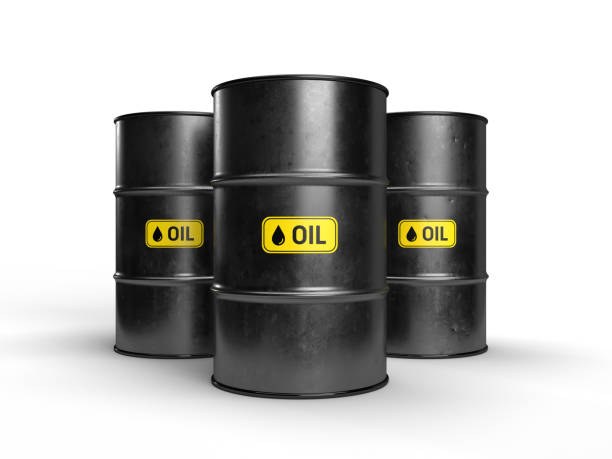
OPEC+ members yesterday at a virtual meeting agreed to keep oil production steady in October. This decision thus puts a stoppage to a six-month run of output increases as the group shifts its focus to determining new production quotas for 2027.
In a press statement uploaded on OPEC website shortly after the meeting, it noted that the producers agreed to have OPEC+ keep its oil output policy unchanged for October as the producer group needs to agree new quotas before deciding its next output steps.
The meeting of seven core OPEC+ members — Saudi Arabia, Russia, Iraq, Kuwait, Algeria, Kazakhstan and Oman — comes as the Iran war continues to disrupt oil exports through the Strait of Hormuz, limiting OPEC+’s influence over prices and market share.
The pause comes as the war with Iran continues to disrupt oil exports through the Strait of Hormuz, reducing the ability of OPEC+ supply decisions to influence crude prices and the group’s market share.
Meanwhile oil prices continue its upward surge wit Brent yesterday selling at $96.28 and West Texas Intermediate selling at $91.48 respectively per barrel.
In August, OPEC+ agreed its production boost for September, completing a phased rollback of a 1.65 million-barrel-per-day supply cut first agreed in 2023. Despite the agreed production increases, the group made up of the Organisation of the Petroleum Exporting Countries and its allies, including Russia, still produces far below its targets because of the war.
“OPEC+ currently has very limited power over the physical oil market. The group can change production targets on paper, but it cannot guarantee that those barrels will be produced or actually reach the market. The focus now shifts away from monthly production adjustments and towards the much more consequential debate over 2027,” said Jorge Leon of Rystad Energy.
OPEC+ still has another layer of production cuts in place, covering most members of the 21-country group until the end of 2026. Before the group decides how to unwind the cuts and return production to the market, it needs to review members’ oil production capacity to set 2027 output baselines, which form the basis for quotas.
According to sources who spoke to Reuters, this debate will likely happen later in 2026 and hence OPEC+ is likely to pause its output increases for the fourth quarter, sources earlier told Reuters.
Actual production remains well below the group’s targets amid the war and disruptions to regional oil flows. The gap means previously announced increases have had a more limited effect on physical supply than the headline quotas suggest.
The 21-member alliance, which includes the Organisation of the Petroleum Exporting Countries, Russia and other producers, still has another layer of production cuts scheduled to remain in place through the end of 2026.
Before deciding how quickly those remaining cuts can be unwound, members need to review their production capacity and establish new 2027 output baselines. Those baselines are critical because they determine the individual production quotas allocated to members.
Discussions over the new baselines are expected later this year, making a pause in output increases during the fourth quarter increasingly likely.
The expected decision also comes at an unusual time for the producer alliance. With the Strait of Hormuz disrupting exports, the amount of crude reaching global markets is being shaped more heavily by wartime shipping constraints than by adjustments to OPEC+ production targets.
That has limited the group’s traditional ability to manage supply and influence prices through coordinated output changes.
The seven countries reiterated their collective commitment to achieve full conformity with the Declaration of Cooperation.



-

 Art & Life9 years ago
These ’90s fashion trends are making a comeback in 2017
-
Business9 years ago
The 9 worst mistakes you can ever make at work
-
Entertainment9 years ago
The final 6 ‘Game of Thrones’ episodes might feel like a full season
-
Art & Life9 years ago
According to Dior Couture, this taboo fashion accessory is back
-
Entertainment9 years ago
The old and New Edition cast comes together to perform
-
Entertainment9 years ago
Mod turns ‘Counter-Strike’ into a ‘Tekken’ clone with fighting chickens
-
Sports9 years ago
Phillies’ Aaron Altherr makes mind-boggling barehanded play
-
 Law & Crime10 months ago
EFCC vs Yahaya Bello: Court adjourns ₦80.2b alleged fraud trial to Nov 11