
Energy
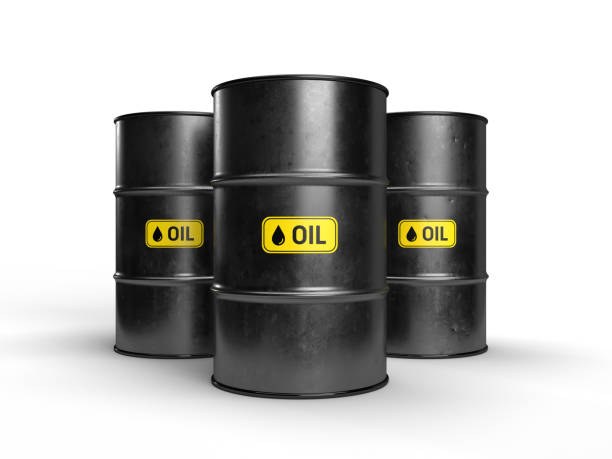
OPEC+ opts to retains oil production in October, as prices continue rising

By Oluwayanmife Lucas, with agency reports
OPEC+ members yesterday at a virtual meeting agreed to keep oil production steady in October. This decision thus puts a stoppage to a six-month run of output increases as the group shifts its focus to determining new production quotas for 2027.
In a press statement uploaded on OPEC website shortly after the meeting, it noted that the producers agreed to have OPEC+ keep its oil output policy unchanged for October as the producer group needs to agree new quotas before deciding its next output steps.
The meeting of seven core OPEC+ members — Saudi Arabia, Russia, Iraq, Kuwait, Algeria, Kazakhstan and Oman — comes as the Iran war continues to disrupt oil exports through the Strait of Hormuz, limiting OPEC+’s influence over prices and market share.
The pause comes as the war with Iran continues to disrupt oil exports through the Strait of Hormuz, reducing the ability of OPEC+ supply decisions to influence crude prices and the group’s market share.
Meanwhile oil prices continue its upward surge wit Brent yesterday selling at $96.28 and West Texas Intermediate selling at $91.48 respectively per barrel.
In August, OPEC+ agreed its production boost for September, completing a phased rollback of a 1.65 million-barrel-per-day supply cut first agreed in 2023. Despite the agreed production increases, the group made up of the Organisation of the Petroleum Exporting Countries and its allies, including Russia, still produces far below its targets because of the war.
“OPEC+ currently has very limited power over the physical oil market. The group can change production targets on paper, but it cannot guarantee that those barrels will be produced or actually reach the market. The focus now shifts away from monthly production adjustments and towards the much more consequential debate over 2027,” said Jorge Leon of Rystad Energy.
OPEC+ still has another layer of production cuts in place, covering most members of the 21-country group until the end of 2026. Before the group decides how to unwind the cuts and return production to the market, it needs to review members’ oil production capacity to set 2027 output baselines, which form the basis for quotas.
According to sources who spoke to Reuters, this debate will likely happen later in 2026 and hence OPEC+ is likely to pause its output increases for the fourth quarter, sources earlier told Reuters.
Actual production remains well below the group’s targets amid the war and disruptions to regional oil flows. The gap means previously announced increases have had a more limited effect on physical supply than the headline quotas suggest.
The 21-member alliance, which includes the Organisation of the Petroleum Exporting Countries, Russia and other producers, still has another layer of production cuts scheduled to remain in place through the end of 2026.
Before deciding how quickly those remaining cuts can be unwound, members need to review their production capacity and establish new 2027 output baselines. Those baselines are critical because they determine the individual production quotas allocated to members.
Discussions over the new baselines are expected later this year, making a pause in output increases during the fourth quarter increasingly likely.
The expected decision also comes at an unusual time for the producer alliance. With the Strait of Hormuz disrupting exports, the amount of crude reaching global markets is being shaped more heavily by wartime shipping constraints than by adjustments to OPEC+ production targets.
That has limited the group’s traditional ability to manage supply and influence prices through coordinated output changes.
The seven countries reiterated their collective commitment to achieve full conformity with the Declaration of Cooperation.












Energy
Fed govt. rolls out one million CNG vehicles, intensifies CNG as cheaper transport alternative

By Oluwayanmife Lucas
The Federal Government has pledged to intensify efforts to promote compressed natural gas (CNG) as a cheaper alternative fuel for transportation, with a renewed focus on accelerating the rollout of one million CNG-powered vehicles across the country.
To this end, the Minister of State Petroleum Resources (Gas), Ekperikpe Ekpo, has tasked the leadership of the Presidential Initiative on Compressed Natural Gas and Electric Vehicles (Pi-CNG & EV) and the Decade of Gas (DoGas) Secretariat to focus on critical interventions, step up investments, expand CNG infrastructure and strengthen programmes to drive nationwide adoption.
Ekpo gave the directive over the weekend in Abuja while receiving progress updates from the two bodies, stressing the need to translate the Federal Government’s Auto CNG policy into tangible benefits for Nigerians in form of cheaper transport fares.
He said the drive had become imperative following the removal of petrol subsidy and the need to provide Nigerians with a more affordable and environmentally friendly alternative for transportation, in line with the aspirations of President Bola Tinubu.
The Minister noted that Nigeria’s abundant natural gas resources presented an opportunity to lower transportation costs, deepen domestic gas utilisation and stimulate economic growth. He emphasised the need for sustained investments in refuelling infrastructure, vehicle conversions and other critical components required to accelerate CNG adoption.
Ekpo commended the leadership of Pi-CNG & EV for the progress recorded under its current management and assured the initiative of the government’s continued support in achieving its objectives, including the expansion of CNG use across the country.
He also highlighted the importance of growing domestic gas consumption, noting that supply had risen above two billion cubic feet per day for the first time in Nigeria history.
“Nigeria is a gas nation with a gas reserves index of over 80 years, and that is why we are talking about the Decade(s) of Gas.
“It is important that we listen to the directive of Mr. President to make transportation cheaper via CNG. We will continue to give you all the backing, to provide the necessary assistance to make sure we drive this project to a logical conclusion,” he said.
In his remarks, the Executive Chairman/CEO of Pi-CNG & EV, Ismaeel Ahmed, said the initiative would step up investments and programmes to expand CNG infrastructure and increase vehicle conversions nationwide and lead to chepaer ttansport fares for millions of Nigerians.
Ahmed explained that the joint industry market study completed by the decade of gas secretariat provides a framework for accelerating rollout, tracking progress, identifying gaps and strengthening implementation efforts to accelerate the adoption of CNG as a transportation fuel.
Similarly, the Coordinator of the Decade of Gas Secretariat, Mr. Ed Ubong, described CNG as a key component of Nigeria’s energy transition and assured continued support for the presidential initiative and efforts to increase domestic and export gas utilisation across the country for the benefits of Nigerians as well as investors.
· Revenue hits N3.74tr
By Oluwayanmife Lucas
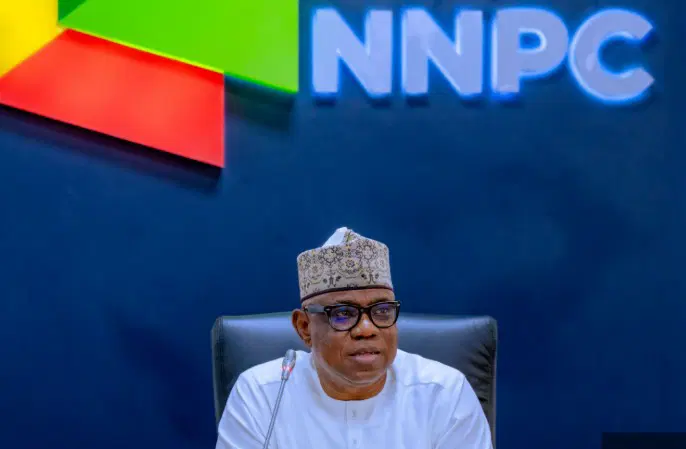
The Nigerian National Petroleum Company (NNPC) Limited has announced a N431 billion Profit After Tax (PAT) for the month of August 2026. The figure shows a rise of 54.5 per cent from the N279 billion recorded in the previous month.
This was contained in the Company’s monthly operations and financial report for the month of August 2026.
Revenue for the period, according to the report, stood at N3.74 trillion as against N3.09 trillion recorded in the previous month.
The Company also recorded a 19.89 per cent increase in cumulative statutory payments from N7.91trillion for January to July to N9.49 trillion for January to August.
The report also put the average crude oil and gas production figures for the period at 1.69 million barrels per day and 7,680 million standard cubic feet per day, respectively.
On the state of infrastructure, there was 100per cent availability of upstream pipelines, while the OB3 and AKK Gas Pipelines stood at 100 per cent and 95 per cent completion.

· Cash reserves hit $6.7b
By Oluwayanmife Lucas
Dangote Petroleum Refinery and Petrochemicals has recorded a remarkable turnaround in its financial performance, posting $22.5 billion in revenue and $4.7 billion in net profit for the nine months ended September 30, 2026, compared with a loss of $117.2 million in the corresponding period of 2025, as the African industrial giant consolidates its transition into a major profit-generating industrial enterprise.
The unaudited financial results, released in Lagos yesterday, reveal that revenue surged by 144 per cent from $9.2 billion in the first nine months of 2025, while earnings before interest, taxes, depreciation and amortisation (EBITDA) jumped nearly nine fold to $5.5 billion, reflecting higher refining throughput, improved operational reliability and stronger refining margins.
The performance represents a significant financial milestone for the 700,000 barrels per day refinery, which is currently undertaking a landmark Initial Public Offering (IPO) aimed at broadening African ownership of the industrial complex. The most striking development is the refinery’s transformation from a loss-making operation into a highly profitable enterprise, accompanied by a substantial strengthening of its balance sheet.
According to the results, net income rose to $4.73 billion from a loss of $117.2 million a year earlier, while EBITDA margin expanded to 24.56 per cent from 6.83 per cent, reflecting a marked improvement in the economics of its refining operations. Operating cash flow also increased more than tenfold to $3.68 billion, compared with $364.7 million in the corresponding period of 2025, demonstrating the refinery’s growing capacity to generate cash from its core business. The company’s cash balances climbed to $6.69 billion from $809.5 million, while its balance sheet moved from a net debt position of $1.73 billion in September 2025 to net cash of $650.8 million by September 2026. The transition to a net cash position is particularly significant, indicating that the refinery’s cash holdings now exceed its reported debt obligations on a net basis, a development that strengthens its financial flexibility as it pursues further expansion.
The results also point to accelerating financial performance during the third quarter of 2026. Revenue increased from $13.91 billion at the end of June to $22.48 billion by September, implying third-quarter revenue of approximately $8.57 billion.
Similarly, EBITDA rose from $2.60 billion in the first half of the year to $5.52 billion at the end of September, indicating that the refinery generated approximately $2.92 billion in EBITDA during the third quarter alone. Net profit also increased from $1.82 billion at the half-year mark to $4.73 billion by September, representing an additional $2.90 billion in the three months to September. These figures underscore the pace at which the refinery’s commercial operations have expanded following its commissioning and initial production ramp-up.
Managing Director and Chief Executive Officer of Dangote Petroleum Refinery and Petrochemicals, David Bird, attributed the strong results to higher throughput, greater operational stability and improved refining margins.
“Our third-quarter performance demonstrates the successful transition from commissioning and ramp-up activities to sustainable commercial operations,” Bird said. “Revenue increased to $22.5 billion from $9.2 billion in the corresponding period of 2025, while EBITDA rose to US$5.5 billion from $627.6 million, reflecting higher throughput, improved operational reliability and stronger gross refining margins.”
Bird said the results validated the strength of the refinery’s integrated business model and provided a solid foundation for the company’s next phase of growth.
“These results reflect the strength of our integrated business model and provide a solid foundation as we progress through our IPO and execute our Vision 2030 growth strategy,” he stated. “With our expansion programme already underway, we remain focused on increasing refining capacity and broadening our product portfolio. We will continue to strengthen our distribution network across Africa and support energy security across the continent, while creating long-term value for stakeholders,” he said.
The financial performance comes at a defining moment for Dangote Petroleum Refinery, whose IPO is seeking to bring a broader cross-section of Africans into the ownership of one of the continent’s most significant industrial investments. The company recently secured approval from the Securities and Exchange Commission to extend the closing date of the offer from October 13 to October 27, 2026, to accommodate growing investor interest across Africa and facilitate wider cross-border participation. The IPO comprises 4.1 billion ordinary shares at ₦525 per share, representing an offering valued at approximately ₦2.15 trillion.
The President/Chief Executive of Dangote Industries Limited, Aliko Dangote, had disclosed that subscriptions to the offer had already exceeded the company’s original fundraising target, stressing that the overriding objective was to enable more Africans to participate in the refinery’s ownership rather than merely raise additional capital. The latest financial results provide an important perspective on that proposition, demonstrating the earnings capacity, cash generation and financial strength of the enterprise as it seeks to attract a wider shareholder base. Beyond the immediate IPO, the results also have implications for the Group’s Vision 2030 industrial expansion programme, which includes increasing refining capacity, expanding petrochemical production and strengthening distribution networks across African markets.
Located in the Lekki Free Zone, Lagos, Dangote Petroleum Refinery and Petrochemicals operates an integrated refining and petrochemical complex with a crude distillation capacity of 700,000 barrels per day. The facility, built to international environmental, safety and product quality standards, is among the world’s most modern large-scale refining complexes and represents a major investment in Africa’s energy and industrial infrastructure.

-
 Energy11 months ago
Diesel falls to ₦979/L in Lagos
-

 Law & Crime12 months ago
EFCC vs Yahaya Bello: Court adjourns ₦80.2b alleged fraud trial to Nov 11
-

 Art & Life9 years ago
These ’90s fashion trends are making a comeback in 2017
-
Business9 years ago
The 9 worst mistakes you can ever make at work
-
Entertainment9 years ago
The final 6 ‘Game of Thrones’ episodes might feel like a full season
-
Art & Life9 years ago
According to Dior Couture, this taboo fashion accessory is back
-
Entertainment9 years ago
The old and New Edition cast comes together to perform
-
Entertainment9 years ago
Mod turns ‘Counter-Strike’ into a ‘Tekken’ clone with fighting chickens