

Energy
Dangote Refinery posts $22.5b revenue, records $4.7b profit


· Cash reserves hit $6.7b
By Oluwayanmife Lucas
Dangote Petroleum Refinery and Petrochemicals has recorded a remarkable turnaround in its financial performance, posting $22.5 billion in revenue and $4.7 billion in net profit for the nine months ended September 30, 2026, compared with a loss of $117.2 million in the corresponding period of 2025, as the African industrial giant consolidates its transition into a major profit-generating industrial enterprise.
The unaudited financial results, released in Lagos yesterday, reveal that revenue surged by 144 per cent from $9.2 billion in the first nine months of 2025, while earnings before interest, taxes, depreciation and amortisation (EBITDA) jumped nearly nine fold to $5.5 billion, reflecting higher refining throughput, improved operational reliability and stronger refining margins.
The performance represents a significant financial milestone for the 700,000 barrels per day refinery, which is currently undertaking a landmark Initial Public Offering (IPO) aimed at broadening African ownership of the industrial complex. The most striking development is the refinery’s transformation from a loss-making operation into a highly profitable enterprise, accompanied by a substantial strengthening of its balance sheet.
According to the results, net income rose to $4.73 billion from a loss of $117.2 million a year earlier, while EBITDA margin expanded to 24.56 per cent from 6.83 per cent, reflecting a marked improvement in the economics of its refining operations. Operating cash flow also increased more than tenfold to $3.68 billion, compared with $364.7 million in the corresponding period of 2025, demonstrating the refinery’s growing capacity to generate cash from its core business. The company’s cash balances climbed to $6.69 billion from $809.5 million, while its balance sheet moved from a net debt position of $1.73 billion in September 2025 to net cash of $650.8 million by September 2026. The transition to a net cash position is particularly significant, indicating that the refinery’s cash holdings now exceed its reported debt obligations on a net basis, a development that strengthens its financial flexibility as it pursues further expansion.
The results also point to accelerating financial performance during the third quarter of 2026. Revenue increased from $13.91 billion at the end of June to $22.48 billion by September, implying third-quarter revenue of approximately $8.57 billion.
Similarly, EBITDA rose from $2.60 billion in the first half of the year to $5.52 billion at the end of September, indicating that the refinery generated approximately $2.92 billion in EBITDA during the third quarter alone. Net profit also increased from $1.82 billion at the half-year mark to $4.73 billion by September, representing an additional $2.90 billion in the three months to September. These figures underscore the pace at which the refinery’s commercial operations have expanded following its commissioning and initial production ramp-up.
Managing Director and Chief Executive Officer of Dangote Petroleum Refinery and Petrochemicals, David Bird, attributed the strong results to higher throughput, greater operational stability and improved refining margins.
“Our third-quarter performance demonstrates the successful transition from commissioning and ramp-up activities to sustainable commercial operations,” Bird said. “Revenue increased to $22.5 billion from $9.2 billion in the corresponding period of 2025, while EBITDA rose to US$5.5 billion from $627.6 million, reflecting higher throughput, improved operational reliability and stronger gross refining margins.”
Bird said the results validated the strength of the refinery’s integrated business model and provided a solid foundation for the company’s next phase of growth.
“These results reflect the strength of our integrated business model and provide a solid foundation as we progress through our IPO and execute our Vision 2030 growth strategy,” he stated. “With our expansion programme already underway, we remain focused on increasing refining capacity and broadening our product portfolio. We will continue to strengthen our distribution network across Africa and support energy security across the continent, while creating long-term value for stakeholders,” he said.
The financial performance comes at a defining moment for Dangote Petroleum Refinery, whose IPO is seeking to bring a broader cross-section of Africans into the ownership of one of the continent’s most significant industrial investments. The company recently secured approval from the Securities and Exchange Commission to extend the closing date of the offer from October 13 to October 27, 2026, to accommodate growing investor interest across Africa and facilitate wider cross-border participation. The IPO comprises 4.1 billion ordinary shares at ₦525 per share, representing an offering valued at approximately ₦2.15 trillion.
The President/Chief Executive of Dangote Industries Limited, Aliko Dangote, had disclosed that subscriptions to the offer had already exceeded the company’s original fundraising target, stressing that the overriding objective was to enable more Africans to participate in the refinery’s ownership rather than merely raise additional capital. The latest financial results provide an important perspective on that proposition, demonstrating the earnings capacity, cash generation and financial strength of the enterprise as it seeks to attract a wider shareholder base. Beyond the immediate IPO, the results also have implications for the Group’s Vision 2030 industrial expansion programme, which includes increasing refining capacity, expanding petrochemical production and strengthening distribution networks across African markets.
Located in the Lekki Free Zone, Lagos, Dangote Petroleum Refinery and Petrochemicals operates an integrated refining and petrochemical complex with a crude distillation capacity of 700,000 barrels per day. The facility, built to international environmental, safety and product quality standards, is among the world’s most modern large-scale refining complexes and represents a major investment in Africa’s energy and industrial infrastructure.

· Revenue hits N3.74tr
By Oluwayanmife Lucas
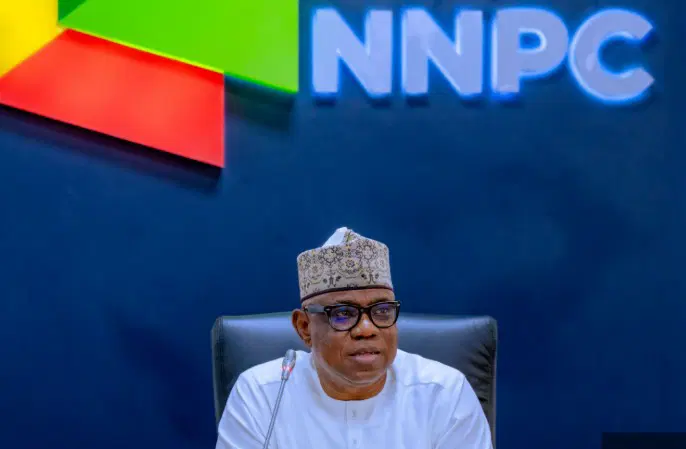
The Nigerian National Petroleum Company (NNPC) Limited has announced a N431 billion Profit After Tax (PAT) for the month of August 2026. The figure shows a rise of 54.5 per cent from the N279 billion recorded in the previous month.
This was contained in the Company’s monthly operations and financial report for the month of August 2026.
Revenue for the period, according to the report, stood at N3.74 trillion as against N3.09 trillion recorded in the previous month.
The Company also recorded a 19.89 per cent increase in cumulative statutory payments from N7.91trillion for January to July to N9.49 trillion for January to August.
The report also put the average crude oil and gas production figures for the period at 1.69 million barrels per day and 7,680 million standard cubic feet per day, respectively.
On the state of infrastructure, there was 100per cent availability of upstream pipelines, while the OB3 and AKK Gas Pipelines stood at 100 per cent and 95 per cent completion.
By Monireoluwa Lucas
Shell Petroleum B.V. has signed an agreement to sell its full interest in the Shell Nigeria Gas Group to Vaaris Energy Limited. Shell Nigeria Gas operates a domestic gas distribution business in Nigeria.
“Shell Nigeria Gas has served industrial and commercial customers in Nigeria for more than 25 years, supported by the commitment and expertise of its people,” said Shell’s Country Chair in Nigeria, Elohor Aiboni.
“We believe this agreement provides a much stronger platform for the business’ next chapter under new ownership. Shell continues to focus on strategic Deepwater and Integrated Gas positions in Nigeria.”
The transaction is subject to regulatory conditions and approvals. Until completion, the Shell Nigeria Gas Group will remain part of Shell and will continue to serve its customers and operate as usual.
The transaction includes Shell Nigeria Gas Holding B.V., which was established in 2019 and holds all the shares, except for one, in Shell Nigeria Gas Limited.
Vaaris Energy Limited is a Nigerian energy company with interests across the oil and gas value chain and an existing operational footprint in the country.
The sale is consistent with Shell’s focus on simplifying its portfolio and concentrating investment in areas where it has competitive strengths.

By Oluwayanmife Lucas
Economic policy group and economist yesterday lent their support to the federal government’s decision to implement a temporary fuel price relief. They warned that this relief should not be misconstrued as return of subsidy on petroleum products, but be seen as a priority by government to protect vulnerable citizens, preserve the sustainability of public finances and maintain the integrity of ongoing economic reforms.
Besides, they warned that the commercial status of the Nigerian National Petroleum Company Limited (NNPC) Limited does not eliminate the government’s responsibility to respond to exceptional public-interest considerations.
NNPC Ltd., the group maintained, remains a government-owned commercial enterprise with a diversified portfolio of petroleum-related businesses, whose commercial mandate should ordinarily guide its operations. However, the policy group argued, temporary and clearly defined public-interest interventions can be accommodated within an appropriate governance framework.
The Group, Center for the promotion of Private Enterprise (CPPE), a policy and economic think-tank group, in a chat with The Trust News, argued that the critical consideration is that such interventions must be transparent, proportionate, time-bound and financially sustainable.
The CPPE further noted that the current global energy crisis demands pragmatic policy responses, not ideological rigidity. It further argued that although economic reforms must remain sustainable, but they must also be responsive to the welfare of the people.
Therefore, it explained, Nigeria does not need a return to the “fiscally destructive” subsidy regime, but a credible framework for temporary, targeted and transparent social protection during exceptional economic shocks.
Speaking with The Trust News, the Chief Executive Officer, CPPE, Dr. Muda Yusuf, explained that economic policies are instruments for promoting citizens’ welfare; hence, they should not become rigid doctrines that prevent governments from responding to exceptional social and economic difficulties.
He noted that the current escalation in petroleum product prices is driven principally by developments in the global energy market, particularly geopolitical tensions that have pushed crude oil prices above $100 per barrel. He described this as an “external shock affecting both oil-producing and oil-importing economies; it is neither a consequence of Nigeria’s subsidy removal policy nor peculiar to the Nigerian economy.”
Dr. Yusuf warned against the misconception that the Federal Government’s recent fuel price relief initiative through the NNPC is a reversal of the petroleum subsidy removal policy. Such an interpretation, he argued, is misleading and fails to distinguish between a fundamental policy reversal and a temporary intervention in response to an extraordinary economic shock.
“Extraordinary economic circumstances sometimes require exceptional policy responses. Governments across the world have historically intervened to cushion households and businesses against severe external shocks without abandoning their underlying economic policy frameworks. The COVID-19 pandemic provided compelling evidence of this approach, even in advanced market economies.
“The intervention is substantially different in scale, design and potential fiscal implications from the previous subsidy regime. Its temporary character and limited market coverage are important distinctions,” Dr. Yusuf said.
According to him, the removal of the previous petroleum subsidy was a necessary structural reform, therefore, reinstating a broad-based consumption subsidy would recreate serious fiscal vulnerabilities and undermine the gains from economic reforms.
He explained further: “For illustration, a subsidy of ₦1,000 per litre on national consumption of 50 million litres daily would create a fiscal exposure of approximately ₦50 billion daily; ₦1.5 trillion monthly and ₦18.25 trillion annually. Such an obligation would be fiscally unsustainable, especially in an economy facing substantial infrastructure deficits, debt-service commitments and competing development priorities. However, a limited and temporary intervention should not automatically be interpreted as a deterioration in policy credibility.”
Dr. Yusuf, an economist, explained that investors are principally concerned about policy predictability, market access, commercial viability, fiscal sustainability and the protection of legitimate investments. These fundamentals, he said, need not be compromised by a narrowly targeted emergency relief measure.
In this regard, the CPPE argued that there is a need to have a critical distinction between the previous subsidy regime and the current intervention. Under the former subsidy arrangement, Dr. Yusuf said, government effectively carried a substantial fiscal burden on nationwide petrol consumption, estimated at various times at between 50 million and 80 million litres daily. This arrangement created enormous fiscal pressures, weakened public finances, crowded out development spending and contributed to macroeconomic instability.
Citing an illustrative calculation based on the volumes contained in the ministerial commentary; by contrast, he said, the current intervention covers approximately 70 million litres of NNPC fuel supply monthly, compared with estimated national petrol consumption of 50 million litres daily and an estimated national monthly consumption of 1.5 billion litres; while NNPC monthly volume under the intervention will be 70 million litres, translating to an estimated national consumption of 4.7 per cent
“Arising from these figures, an intervention covering less than five per cent of estimated national consumption cannot reasonably be equated with a nationwide subsidy regime. More importantly, the intervention does not reinstate an administered national petrol price, impose a general subsidy obligation on private operators or dismantle the market-oriented framework for petroleum product pricing.
“The appropriate questions should therefore concern the fiscal cost, transparency, duration, beneficiaries and effectiveness of the intervention, rather than an inaccurate characterisation of it as a wholesale policy reversal,” Dr. Yusuf argued.
But beyond fuel discounts, the CPPE said there is a need to addressing the wider social costs. It said that while the proposed fuel price relief is a welcome development, its limited coverage means that its aggregate impact on household welfare will also be limited.
Government, the group further highlighted, should pursue broader interventions that address the principal channels through which the energy price shock affects citizens.
In a four-point agenda, the CPPE said the government should scale up affordable mass transit, because transportation is one of the most immediate transmission channels of higher energy prices to household expenditure and business operating costs. To this end, the group said the federal and state governments should prioritise high-capacity buses, including CNG, electric and other economically viable alternatives.
Support for agricultural productivity and food supply, strengthening state and local government interventions by way of states designating discounted fuel outlets, limited emergency fuel allocations for essential services, like subsidised public transport and targeted support for vulnerable households, should be considered, as well as protecting the integrity of petroleum market reforms.
“Government should sustain market-based pricing, fair competition, transparent regulation and a trade policy framework that supports domestic refining investment. Emergency interventions should not become a pretext for arbitrary price controls or the reintroduction of opaque fiscal obligations,” Dr. Yusuf submitted.



-

 Energy11 months ago
Diesel falls to ₦979/L in Lagos
-

 Law & Crime11 months ago
EFCC vs Yahaya Bello: Court adjourns ₦80.2b alleged fraud trial to Nov 11
-

 Art & Life9 years ago
These ’90s fashion trends are making a comeback in 2017
-
Business9 years ago
The 9 worst mistakes you can ever make at work
-
Entertainment9 years ago
The final 6 ‘Game of Thrones’ episodes might feel like a full season
-
Art & Life9 years ago
According to Dior Couture, this taboo fashion accessory is back
-
Entertainment9 years ago
The old and New Edition cast comes together to perform
-
Entertainment9 years ago
Mod turns ‘Counter-Strike’ into a ‘Tekken’ clone with fighting chickens