
Business
RMAFC adopts performance management system for staff


The Revenue Mobilisation Allocation and Fiscal Commission (RMAFC) has introduced a new Performance Management System (PMS) for its staff, replacing the long-standing annual performance evaluation report.
A statement issued on Wednesday by the Head of Information and Public Relations Unit of the Commission, Maryam Umar Yusuf, said the new system is part of efforts to enhance productivity, accountability, and service delivery through digital transformation.
The Chairman of the Commission, Dr. Mohammed Bello Shehu, who was represented at the training workshop by Hon. Ismail Mohammed Agaka, Federal Commissioner representing Kwara State, said the initiative was designed to move RMAFC from analog practices to digital-driven processes.
“Automation and digital tools will streamline processes, minimise errors, and make the analog system a thing of the past,” Dr. Shehu said.
He urged staff to prepare for the changes, warning that resistance could affect their roles within the Commission. “If you do not shake into the system, the system will likely shake you out,” he cautioned. He also advised personnel to adjust their mindset and attitude to embrace the transition expected in the coming months.
Addressing participants at the workshop, the Secretary to the Commission, Mr. Nwaeze Joseph Okechukwu, described RMAFC as one of Nigeria’s strategic institutions and stressed the importance of the training exercise.
“The training will ensure that officers experience digital transformation and develop new skills. I encourage staff to learn, unlearn, and relearn, while maintaining good dressing and the culture of punctuality to promote a professional and respectful work environment,” Okechukwu stated.
The Performance Management System consultant from Reliefline Nigeria Limited, Mr. Emmanuel Ohiro, lauded the Commission for adopting the new system, noting that it would strengthen efficiency.
“This workshop is a good idea, and I urge you to take it seriously as it will improve your service delivery,” Ohiro said in his goodwill message.
The training programme, organised by the Administration and Human Resources Department of RMAFC in collaboration with Reliefline Nigeria Limited, commenced on Tuesday, September 16, 2025, and will run daily until Wednesday, September 24, 2025.

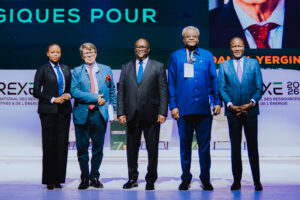
Sahara Group has called for increased African-led investment in energy infrastructure, highlighting its growing partnership with PETROCI as a model for how collaboration between African enterprises can strengthen energy security, build local capacity and create sustainable economic value.Speaking at the 2026 Salon International des Ressources Extractives et de l’Énergie (SIREXE) in Abidjan, during a session on Geopolitics and International Oil and Gas Logistics: Strategic Implications from Africa, Kola Adesina, Group Managing Director, Sahara Power Enterprise Group, said the continent must increasingly convert its abundant energy resources into value through investments in infrastructure, indigenous capacity and partnerships that respond directly to the needs of African markets.According to him, “having natural resources is an advantage, but the real value lies in what we build around them. Africa must move beyond exporting raw materials and importing finished products. We need to develop the capacity to process, distribute and use our resources to power industries, create jobs, and compete in global markets.”Adesina said Côte d’Ivoire provides a compelling example of partnerships, with Sahara and PETROCI working together to strengthen the country’s LPG supply chain and support more reliable access to energy.At the heart of the partnership is SAPET GAS, an 11,500-tonne LPG carrier introduced to strengthen the transportation and security of butane supplies into Côte d’Ivoire, complemented by investment in LPG storage infrastructure in Abidjan.Through SAPET Energy, the partnership is also advancing a 12,000-metric-tonne LPG storage solution with PETROCI, with plans for further expansion. The infrastructure has helped address demurrage costs associated with LPG supply logistics, while improving supply efficiency and strengthening access to cleaner energy for households and businesses across Côte d’Ivoire.“The SAPET GAS partnership is a practical example of what value addition looks like. It brings together local market knowledge, national priorities, investment and operating capability to address a real energy need. The value is not simply in owning an asset; it is in what that asset makes possible for the market and the people it serves,” he said.Adesina noted that partnerships of this nature demonstrate how African institutions and businesses can work together to develop solutions tailored to the continent’s energy requirements while retaining greater economic value within Africa.Sahara is advancing this infrastructure-led LPG strategy across the continent. In Ghana, the company has commissioned an LPG storage facility and deployed MT Asharami Ghana as a dedicated LPG vessel supporting product supply and distribution. In Kenya, Sahara recently broke ground on a 30,000-metric-tonne LPG storage terminal, extending its investment footprint into East Africa.These assets complement Sahara’s growing fleet of LPG shipping capabilities through WAGL Energy, its joint venture with NNPC Limited, creating an increasingly integrated network connecting maritime transportation, storage, supply, and distribution across African markets.Adesina said Africa’s energy transition offers an opportunity to build stronger indigenous businesses and supply chains while attracting the capital and expertise required to close infrastructure gaps and expand energy access.“For Sahara, the approach aligns with its Beyond XXX proposition, building on three decades of operating experience to pursue a new phase of growth, innovation and impact. Sahara will continue collaborating with PETROCI and other partners to advance investments that strengthen energy security, and expand cleaner energy access across Africa.”
Energy
Power Crisis: Stakeholders Warn of Prolonged Blackouts Over Mounting Debts, Gas Supply Challenges

Power
Nigeria’s electricity crisis could persist unless the Federal Government urgently addresses mounting debts in the power sector, inadequate investment in gas production and weak transmission infrastructure, industry stakeholders have warned.
The stakeholders said the absence of a sustainable payment system for gas suppliers, coupled with poor commercial arrangements and insufficient investment, continues to undermine electricity generation and efforts to improve power supply across the country.
The warning was issued at the sixth annual conference of the Power Correspondents Association of Nigeria in Abuja, where industry experts highlighted the financial and structural challenges threatening Nigeria’s ambition of building a $1 trillion economy by 2030 through reliable and affordable electricity.
The concerns come amid renewed power supply disruptions nationwide. On November 5, the Nigerian Independent System Operator attributed the decline in national grid generation to inadequate gas supply to thermal power plants and reduced water inflows into hydroelectric reservoirs. The development resulted in shorter electricity supply hours and increased load shedding.
However, the Nigerian National Petroleum Company Limited maintained that its gas transportation network remained operational, insisting that gas production, commercial supply arrangements and actual deliveries to power plants should be examined as separate issues.
Speaking at the conference, the General Manager, Gas Commercial, Nigerian National Petroleum Development Company, Bashiru Adoke, described the gas-to-power challenge as solvable but stressed that sustained investment and a dependable payment mechanism were necessary.
According to him, the inability of electricity market operators to adequately pay for gas supplied to generating companies remains one of the major obstacles to stable power generation.
Adoke explained that generating companies receive insufficient payments for electricity produced, making it difficult for them to meet their gas supply obligations.
He disclosed that the electricity market currently owes gas suppliers more than N630bn for power generated and consumed by Nigerians.
He further explained that gas accounts for between 60 and 75 per cent of electricity production costs, while payments received by generating companies are often insufficient to cover their operational expenses.
Adoke warned that periodic government interventions to settle outstanding debts would not provide a lasting solution if fresh liabilities continued to accumulate.
He noted that although the government’s intervention programme addresses legacy debts covering 2015 to 2025, outstanding obligations from 2025 onward are already building up and require urgent attention.
He also called for increased investment in non-associated gas production, warning that excessive dependence on associated gas, which is produced alongside crude oil, could expose electricity generation to disruptions whenever oil production is affected.
Although the Federal Government has introduced incentives through executive orders to encourage investment in gas projects, Adoke maintained that additional funding was required to boost production and ensure reliable supply to power plants.
He also expressed concern that high electricity tariffs could encourage more consumers to abandon the national grid in favour of solar energy and other alternative sources of power.
Adoke warned that widespread dependence on independent power solutions could threaten the long-term sustainability of the national electricity grid.
Meanwhile, the General Manager, Engineering, Transmission Company of Nigeria, Mojeed Akintola, identified inadequate electricity generation as a major constraint to effective transmission.
He explained that the transmission company could only distribute the volume of electricity generated by power stations, stressing that improving transmission capacity alone would not resolve the country’s electricity challenges.
Akintola disclosed that the company was expanding its transmission capacity through the installation of additional transformers and construction of new transmission lines.
However, he identified right-of-way disputes and vandalism as major challenges delaying the completion of critical transmission projects.
The stakeholders stressed that addressing the country’s electricity challenges would require a coordinated approach involving sustainable financing, increased gas investment, improved infrastructure and stronger commercial arrangements across the power value chain.

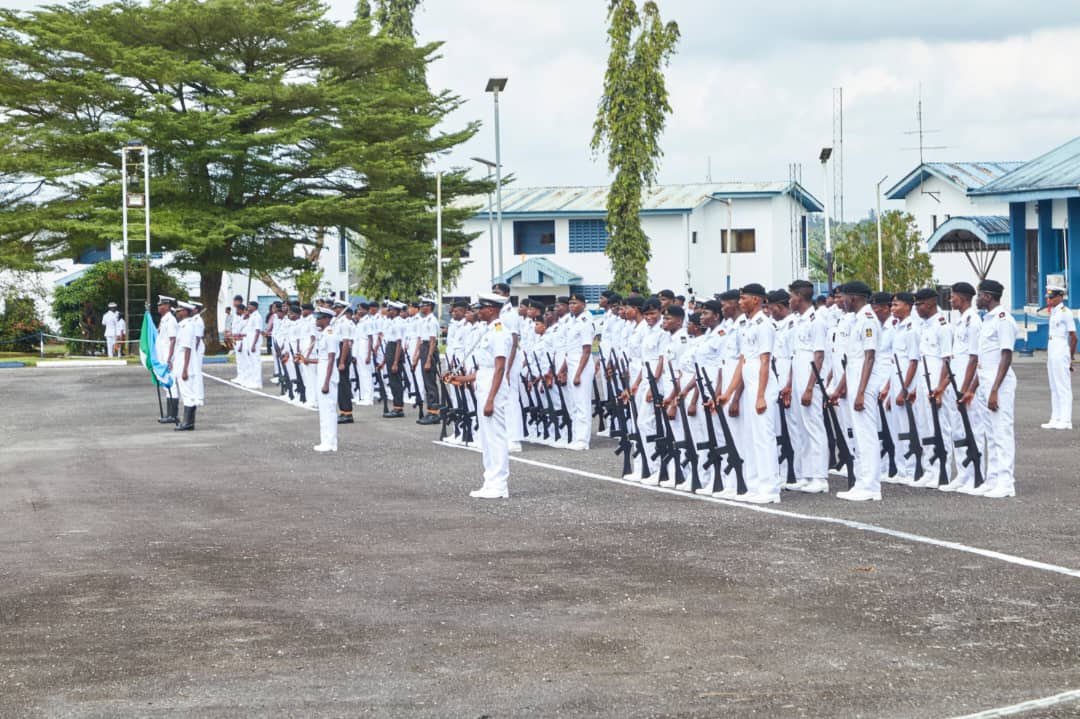
The Maritime Academy of Nigeria (MAN), Oron, has secured sea-time placements for more than 50 cadets on internationally trading vessels, including 43 currently training aboard ships operated by NLNG Shipping and Marine Services Limited (NSML), as the institution intensifies efforts to prepare Nigerian seafarers for global employment.
The placements address one of the maritime industry’s persistent manpower challenges: access to mandatory onboard training required for cadets to obtain professional certification and qualify for seafaring careers.
The Minister of Marine and Blue Economy, Dr Adegboyega Oyetola, represented by the ministry’s Permanent Secretary, Fatima Sugra Mahmood, disclosed this at the academy’s 2026 cadets’ graduation ceremony in Oron, Akwa Ibom State.
Oyetola said the Federal Government was committed to ensuring that maritime education translated into meaningful employment, internationally recognised qualifications and a skilled workforce capable of supporting the country’s shipping industry.
“For the Federal Government, the ultimate objective of maritime education is not simply to produce graduates, but to develop competent professionals who can find meaningful employment, compete internationally and contribute to the growth of our marine and blue economy,” he said.
The minister commended NSML, the Shipowners Association of Nigeria, Starzs Investment Limited, Sea Transport Services Nigeria Limited, Arion Energy Services Limited and other industry partners for providing onboard training opportunities.
“I encourage more indigenous shipowners and maritime operators to embrace this responsibility. Providing sea-time opportunities is not merely a contribution to the Academy; it is an investment in the future of Nigeria’s shipping industry,” he said.
The Acting Rector of the academy, Dr Kevin Okonna, said the institution had placed more than 50 cadets on internationally trading ships since its November 2025 graduation ceremony, including the 43 cadets undertaking their mandatory one-year sea service aboard NLNG vessels.
He added that reports on the cadets’ performance had been impressive, ranging from very good to excellent in both professional competence and character.
He also announced that arrangements had been concluded with NSML to sponsor another batch of cadets for sea-time training aboard its vessels.
Beyond onboard training, Okonna said the academy had strengthened its quality assurance and international partnerships, securing ISO 9001:2015 certification for quality management and ISO 21001:2025 certification for educational organisations through the Standards Organisation of Nigeria earlier this year.
With support from the Nigerian Maritime Administration and Safety Agency (NIMASA), the academy, he said, also won a competitive expression of interest to partner with the International Maritime Organization and the World Maritime University on the Future Ready Shipping in Africa project, which supports integrated pilot initiatives for green and digital shipping in sub-Saharan Africa.
The rector said all cadets were registered with professional bodies, including the Nautical Institute, UK; the Institute of Marine Engineering, Science and Technology; the Chartered Institute of Logistics and Transport; or the Chartered Institute of Transport Administration.
In his goodwill message, NSML Managing Director, Abdulkadir Ahmed, reaffirmed the company’s commitment to developing Nigerian maritime professionals through structured training and industry partnerships.
“Our partnership with the Maritime Academy of Nigeria, including the training collaboration facilitated through our Maritime Centre of Excellence, reflects this commitment,” Ahmed said.
He said classroom instruction must be complemented by practical skills, discipline and safety consciousness to develop professionals capable of meeting international maritime standards.

The graduation ceremony also featured the official launch of the academy’s Enterprise Content Management System (ECMS), designed to move administrative operations from manual, paper-based processes to a more efficient, transparent and secure digital environment.
Oyetola said the system aligned with the Federal Government’s digital transformation reforms, aimed at improving efficiency, accountability and public service delivery. He urged the academy’s management to ensure its effective use and sustainability.
He further stressed that the academy’s performance should be measured not only by the number of graduates it produces but also by their transition into professional certification and productive maritime careers.
The minister urged the graduating cadets to uphold discipline, integrity and safety, embrace emerging technologies and pursue continuous professional development as they enter an increasingly competitive global shipping industry.
“Wherever your careers take you, whether onboard Nigerian vessels or international fleets, remember that you represent not only yourselves and this Academy but also the Federal Republic of Nigeria,” he said.

-

 Energy1 year ago
Diesel falls to ₦979/L in Lagos
-
 Law & Crime1 year ago
EFCC vs Yahaya Bello: Court adjourns ₦80.2b alleged fraud trial to Nov 11
-

 Business9 years ago
The 9 worst mistakes you can ever make at work
-
Art & Life9 years ago
These ’90s fashion trends are making a comeback in 2017
-
Entertainment9 years ago
The final 6 ‘Game of Thrones’ episodes might feel like a full season
-
Art & Life9 years ago
According to Dior Couture, this taboo fashion accessory is back
-
Business9 years ago
3 Ways to make your business presentation more relatable
-
Entertainment9 years ago
The old and New Edition cast comes together to perform