
Maritime
MARCON Expresses Support for National Single Window Project, Calls It Game Changer for Economic Rebirth


The Maritime Correspondents’ Organisation of Nigeria (MARCON) has commended the federal government for taking the bold step towards actualising the National Single Window(NSW) project after over one and half decade of contemplation with trials and errors without timeline for takeoff.
In a press release signed by the association’s President, Ismail Aniemu, and its Secretary, Olamide Osho, MARCON commended the growing number of stakeholders who have shown support for the project while also describing the NSW as a game changer for Nigeria’s economic rebirth.
The association also urged all players in the nation’s import, export, manufacturing and logistics ecosystems to brace up for tech driven capacity development that would reinforce Nigeria’s position as Africa’s economic economic powerhouse with an influential population and high volume of trade.
It also lauded the project directorate domiciled in the Federal Inland Revenue Service (FIRS) for pursuing an all inclusive agenda, promoting robust engagements and sustaining the tempo of growing awareness for the national single window.
By consolidating documentation and automating approvals, MARCON believes the NSW will eliminate redundant paperwork and multiple agency interactions, cutting cargo clearance times significantly. This will in turn reduce demurrage charges (storage fees for delayed goods) and logistics bottlenecks, saving businesses billions of naira annually.
For instance, importers and exporters can avoid unnecessary costs from port delays, while small enterprises gain easier access to global markets. Overall, this fosters a more efficient supply chain, directly boosting sectoral productivity in manufacturing, agriculture, and e-commerce.
According to Aniemu, “the one document submission accessible and usable for security, regulatory and revenue purposes without the old way of multiple submissions thereby eliminating the cumbersome bottlenecks of various government agencies is the right way to go.
“This process is indeed revolutionary as it will further plunge Nigeria into a regime of paperless businesses transaction, promoting productive speed in a transparent manner that prevents trade disputes.
“We are optimistic about the responsibility of accountability the NSW shall place on all users as it will, no doubt, usher in true trade facilitation and ease of doing business. We call on all business people to join in working for the success of the project which commences by end of first quarter in 2026” he said in the release.
Other expected benefits from the project include streamlined documentation; cost savings and lower administrative burdens; enhanced Government Revenue and reduced leakages; increased transparency and anti-corruption measures and boosting investors’ confidence to attract foreign direct investments (FDI).


- Fiscal measures take effect
The Federal Government has reduced the import levy on both new and used vehicles as part of its 2026 Fiscal Policy Measures
The move, the government said, is aimed at lowering the cost of vehicle importation, easing the burden on importers and improving access to vehicles for consumers.
The new fiscal measures, which took effect on July 1 2026, form part of a broader review of Nigeria’s import tariff structure and customs regime designed to stimulate economic activity and support trade.
Under the revised policy, the import levy on new vehicles has been reduced from 20% to 10%, while the levy on used vehicles has been cut from 15% to 5% per cent.
According to government, “Beginning 1st July 2026, the Nigeria Customs Service will implement the Green Tax Surcharge as part of the 2026 Fiscal Policy Measures to support environmental sustainability. while also reducing the import levy on new vehicles from 20% to 10% and that of used vehicles from 15% to 5% to ease the cost of vehicle importation?”
Importers and dealers have since welcomed the development, describing it as a positive step forward.
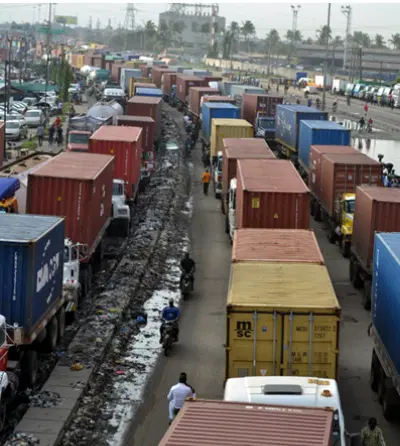
The Nigerian Ports Authority (NPA) has inaugurated a multi-agency task force to address the resurgence of traffic congestion along the Lagos port access roads, as part of renewed efforts to ensure seamless cargo evacuation and sustain improvements in port operations.
The initiative followed a stakeholders’ meeting convened by the Managing Director of the NPA, Dr. Abubakar Dantsoho, last month, where security agencies, freight forwarders, truck operators and representatives of the Lagos State Government agreed on coordinated measures to eliminate bottlenecks affecting cargo movement.
Deliberations at the meeting identified illegal extortion points, overlapping responsibilities among security agencies and other operational inefficiencies as major causes of the renewed gridlock along the port corridor.
Speaking on the outcome of the meeting, the General Manager, Corporate and Strategic Communications of the NPA, Ikechukwu Onyemakara, said the Authority remains committed to ensuring the unhindered movement of cargo to and from the nation’s seaports.
According to Onyemakara, the task force has been mandated to monitor truck movement along the port access roads on a regular basis, identify disruptions capable of causing traffic gridlock and immediately resolve such issues before they escalate.
He explained that members of the team would not establish checkpoints along the corridor but would instead maintain strategic presence at designated locations to ensure compliance while avoiding further obstruction to traffic.
To facilitate swift response to emerging challenges, Onyemakara said the task force has created a dedicated WhatsApp platform through which members can instantly report traffic violations and other incidents requiring immediate intervention.
On the renewal of the Electronic Truck Call-Up (ETO) system contract, which expired recently, the NPA spokesman said the Authority is reviewing the contractual terms to ensure a stronger and more effective framework before awarding a new agreement.
He, however, clarified that the ETO platform remains operational under the management of Truck Transit Parks (TTP) pending the conclusion of the procurement process.
He expressed optimism that the renewal process would be completed soon.
Reaffirming the Authority’s commitment to maintaining free-flowing port access roads, Onyemakara noted that efficient logistics remain central to the NPA’s strategy to enhance Nigeria’s port competitiveness and sustain the country’s improving global reputation.
“We are more interested in the free flow of logistics into our ports than anyone else because it is in our own interest,” he said.
He added that the Authority was determined to consolidate the gains already recorded in port efficiency, citing recent international recognition, including positive assessments by the World Bank, as evidence of ongoing progress.
“We are determined to sustain and even surpass the improvements already recorded in our port system. You can be assured that we remain fully committed to achieving the best possible performance from our ports,” Onyemakara said.
The newly inaugurated task force comprises representatives of the NPA, the Nigeria Police Force, the National Association of Government Approved Freight Forwarders (NAGAFF), the Association of Nigerian Licensed Customs Agents (ANLCA), the Federal Road Safety Corps (FRSC), the Maritime Workers Union of Nigeria (MWUN), the Nigerian Association of Road Transport Owners (NARTO) and the Association of Maritime Truck Owners (AMATO).
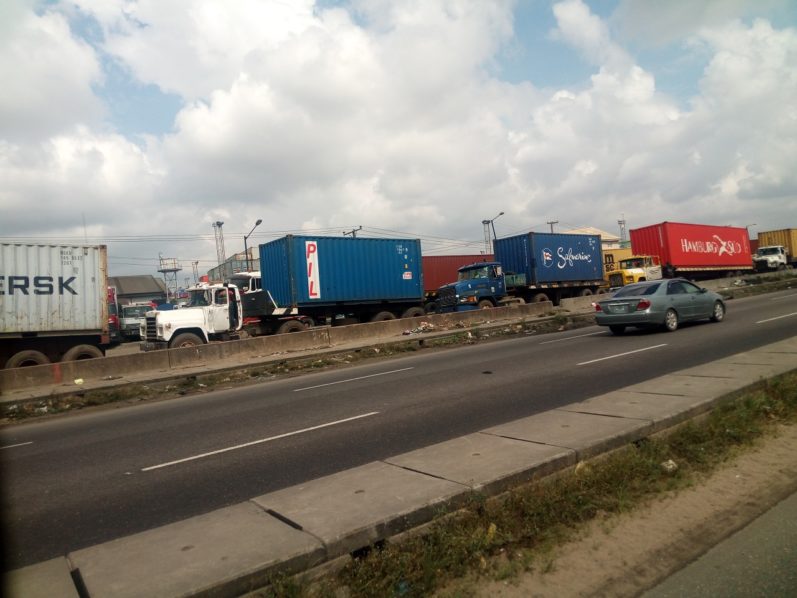
Stakeholders operating within the Lekki Deep Seaport corridor have agreed on a series of measures aimed at eliminating the persistent traffic gridlock that has crippled access roads to the port and adjoining industrial facilities for more than a year.
The resolution was reached at a strategic stakeholders’ meeting convened by the Nigerian Ports Authority (NPA) and chaired by the Lekki Port Manager, Emmanuel Anda.
The meeting was attended by representatives of the Lagos State Government, Lekki Port, Dangote Refinery, truck owners’ associations, the Electronic Truck Call-Up System operator, and other key industry stakeholders.
A major decision taken at the meeting was the prohibition of stationary trucks and tankers along the Lekki port corridor.
Stakeholders agreed that all trucks must remain in designated holding bays and waiting areas until they receive clearance to proceed to the port or industrial facilities.
The agreement followed an inspection tour of the Lekki port access roads by the stakeholders, who witnessed firsthand the severity of the traffic congestion. They subsequently resolved that the situation could no longer be allowed to persist.
Speaking at the meeting, the representative of Mycallup, the electronic truck call-up system operator for the Lekki Port corridor, Timi Koteolu, identified trucks servicing Dangote Refinery outside the electronic scheduling platform as one of the major causes of the gridlock.
According to him, many truck drivers operating with Dangote Refinery’s Authority to Collect (ATC) permits have been found parking indiscriminately along the roads while waiting to gain access to the refinery.
Koteolu disclosed that trucks servicing the refinery are currently not integrated into the port’s electronic call-up system, a development he said has contributed significantly to the traffic bottleneck.
Responding, the representative of Dangote Refinery, Jaiyeola Moshood, explained that the ATC permits serve as the approved access mechanism for tankers entering the refinery.
However, the management of the electronic truck call-up system maintained that trucks without an active call-up should not approach the port corridor and should instead remain in designated waiting areas until they are required at their respective terminals.
The Association of Maritime Truck Owners (AMATO) and the National Association of Road Transport Owners (NARTO) pledged their support for the initiative, promising to sensitise their members while calling for strict enforcement of traffic regulations to restore order along the corridor.
Also speaking, the Coordinator of NUPENG Dangote Refinery, Ademola Adeshina, stressed the need to decongest the port corridor and assured stakeholders that his members would comply with the established Standard Operating Procedures.
Anda commended the stakeholders for their commitment to finding a lasting solution to the traffic challenge and urged all parties to adopt a practical approach to addressing the menace.
He specifically encouraged Dangote Refinery to fully integrate with the electronic truck call-up platform, noting that such collaboration would significantly improve traffic management and reduce the indiscriminate presence of trucks on the access roads.
The Lekki Port Manager also assured participants that discussions would continue with the management of Dangote Refinery to strengthen coordination of truck movements, stressing that vehicles issued with ATC permits should only proceed when duly cleared.
Stakeholders expressed optimism that the collective measures would restore free flow of traffic, improve operational efficiency, and enhance safety along the Lekki port corridor, a critical gateway for Nigeria’s expanding maritime and industrial activities.



-

 Art & Life9 years ago
These ’90s fashion trends are making a comeback in 2017
-
Business9 years ago
The 9 worst mistakes you can ever make at work
-
Entertainment9 years ago
The final 6 ‘Game of Thrones’ episodes might feel like a full season
-
Art & Life9 years ago
According to Dior Couture, this taboo fashion accessory is back
-
Entertainment9 years ago
The old and New Edition cast comes together to perform
-
Entertainment9 years ago
Mod turns ‘Counter-Strike’ into a ‘Tekken’ clone with fighting chickens
-
Sports9 years ago
Phillies’ Aaron Altherr makes mind-boggling barehanded play
-
Entertainment9 years ago
Disney’s live-action Aladdin finally finds its stars