

Energy
Falcon Corporation receives Energy& LLP investment on gas

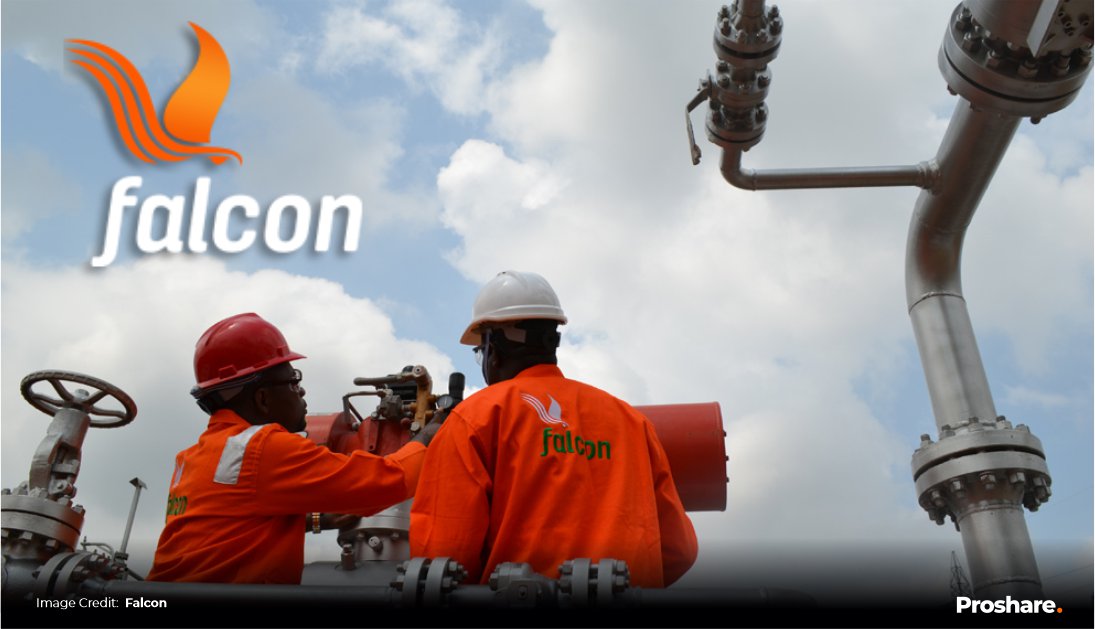
Falcon Corporation Limited, an indigenous player in Nigeria’s energy and gas sector, has announced that Energy& LLP, a subsidiary of EverCorp Industries, has acquired an equity stake in the Corporation. This follows BKM & S Konsult Limited’s divestment of its equity holding, which Energy& LLP has now purchased.
The investment by Energy& LLP reflects the Company’s conviction in the long-term fundamentals of Nigeria’s gas sector and the critical need for resilient indigenous players that can build the infrastructure required to power industrialisation, strengthen energy security and support the nation’s transition to more efficient energy sources.
Speaking on the transaction, Co-Founder and Deputy Managing Director of Falcon Corporation, Mrs. Audrey Joe-Ezigbo, described the partnership as “a timely and strategic step that reinforces Falcon Corporation’s long-term vision to deepen its investments across the gas value chain while maintaining its strong indigenous footprint.”
She added that with this investment, Falcon Corporation is positioned to expand its gas pipeline and distribution networks for industrial customers, accelerate development of its large-scale LPG storage and jetty facility in Rivers State, improve supply reliability, operational efficiency and safety across its gas assets, and accelerate growth across its core business areas.
The Founder and Managing Director of Falcon Corporation, Prof. Joe Ezigbo, expressed his satisfaction with the successful close of the transaction, noting that “this partnership represents more than a financial investment; it is a strategic alignment that supports Nigeria’s goal of increasing domestic gas utilisation and delivering cleaner, more affordable energy to industries and households; and aligns with Falcon Corporation’s broader ambition to build a resilient, future-ready energy enterprise.” He added that the collaboration with Energy& LLP will enable Falcon to leverage new synergies and deliver even greater value to its customers, partners, and the industry at large.
The Chief Financial Officer, Falcon Corporation, Nelson Walter, described the experience as both exciting and rigorous. He noted that “the successful transaction provides Falcon with additional capital to accelerate its growth plans and further strengthen its position within Nigeria’s gas value chain.”
Similarly, Chief Strategy Officer of EverCorp Industries, Tsola Barrow, said: “Energy& LLP’s investment in Falcon Corporation reflects our commitment to building businesses that have real impact on national development. Gas is central to Nigeria’s industrial growth and its transition to cleaner and more efficient energy sources. Falcon Corporation has demonstrated consistent leadership and resilience for more than three decades. Supporting its next phase of expansion is aligned with our philosophy of building and backing companies that strengthen infrastructure, deepen energy access and create long term economic value”.
All contractual obligations and regulatory requirements relating to the transaction have been satisfied, including approvals from the Nigerian Midstream and Downstream Petroleum Regulatory Authority (NMDPRA) and the Federal Competition and Consumer Protection Commission (FCCPC).
Vetiva Advisory Services acted as Financial Advisers while Detail Solicitors served as Legal Counsel to Falcon Corporation and Templars acted as Solicitors to Energy& LLP for the transaction.
This investment signals the continued attractiveness of Nigeria’s gas sector and reaffirms Falcon Corporation’s position as a trusted and forward-looking indigenous energy company poised for the next phase of growth.
Founded by Professor Joe Ezigbo and Mrs. Audrey Joe-Ezigbo, Falcon Corporation operates in pipeline gas infrastructure, Natural Gas sourcing and supply, and Liquefied Petroleum Gas (LPG) storage, sales and distribution and has consistently demonstrated resilience and leadership within Nigeria’s energy landscape for over 31 years.

By Oluwayanmife Lucas, with agency reports
OPEC+ members yesterday at a virtual meeting agreed to keep oil production steady in October. This decision thus puts a stoppage to a six-month run of output increases as the group shifts its focus to determining new production quotas for 2027.
In a press statement uploaded on OPEC website shortly after the meeting, it noted that the producers agreed to have OPEC+ keep its oil output policy unchanged for October as the producer group needs to agree new quotas before deciding its next output steps.
The meeting of seven core OPEC+ members — Saudi Arabia, Russia, Iraq, Kuwait, Algeria, Kazakhstan and Oman — comes as the Iran war continues to disrupt oil exports through the Strait of Hormuz, limiting OPEC+’s influence over prices and market share.
The pause comes as the war with Iran continues to disrupt oil exports through the Strait of Hormuz, reducing the ability of OPEC+ supply decisions to influence crude prices and the group’s market share.
Meanwhile oil prices continue its upward surge wit Brent yesterday selling at $96.28 and West Texas Intermediate selling at $91.48 respectively per barrel.
In August, OPEC+ agreed its production boost for September, completing a phased rollback of a 1.65 million-barrel-per-day supply cut first agreed in 2023. Despite the agreed production increases, the group made up of the Organisation of the Petroleum Exporting Countries and its allies, including Russia, still produces far below its targets because of the war.
“OPEC+ currently has very limited power over the physical oil market. The group can change production targets on paper, but it cannot guarantee that those barrels will be produced or actually reach the market. The focus now shifts away from monthly production adjustments and towards the much more consequential debate over 2027,” said Jorge Leon of Rystad Energy.
OPEC+ still has another layer of production cuts in place, covering most members of the 21-country group until the end of 2026. Before the group decides how to unwind the cuts and return production to the market, it needs to review members’ oil production capacity to set 2027 output baselines, which form the basis for quotas.
According to sources who spoke to Reuters, this debate will likely happen later in 2026 and hence OPEC+ is likely to pause its output increases for the fourth quarter, sources earlier told Reuters.
Actual production remains well below the group’s targets amid the war and disruptions to regional oil flows. The gap means previously announced increases have had a more limited effect on physical supply than the headline quotas suggest.
The 21-member alliance, which includes the Organisation of the Petroleum Exporting Countries, Russia and other producers, still has another layer of production cuts scheduled to remain in place through the end of 2026.
Before deciding how quickly those remaining cuts can be unwound, members need to review their production capacity and establish new 2027 output baselines. Those baselines are critical because they determine the individual production quotas allocated to members.
Discussions over the new baselines are expected later this year, making a pause in output increases during the fourth quarter increasingly likely.
The expected decision also comes at an unusual time for the producer alliance. With the Strait of Hormuz disrupting exports, the amount of crude reaching global markets is being shaped more heavily by wartime shipping constraints than by adjustments to OPEC+ production targets.
That has limited the group’s traditional ability to manage supply and influence prices through coordinated output changes.
The seven countries reiterated their collective commitment to achieve full conformity with the Declaration of Cooperation.
By Oluwayanmife Lucas
West Africa Exploration and Production Company (WAEP) has said it is stepping up efforts to unlock more than 1.6 billion barrels of oil in place across its Nigerian assets, with the Dangote Group’s upstream subsidiary targeting sustained production and gas monetisation within the next 24 months.
The company’s Managing Director and Chief Executive Officer, Olajumoke Ajayi, said WAEP had adopted a phased strategy to revive production from its brownfield assets, generate early cash flow and reinvest the proceeds in wider field redevelopment.
Speaking at the African Oil Week (AOW) Energy Conference in Accra, Ghana, at a panel session titled: “The Future of the African Operator: Building the IOCs of Tomorrow,” Ajayi said the company’s Oil Mining Leases (OML) 71 and 72, previously operated by Shell, represented a substantial resource opportunity, with more than 1.6 billion barrels of oil in place and about 1.9 trillion cubic feet of gas, based on discoveries to date.
The session, which also featured Olumide Ogunfowora, Adegbola Adesina, Temitope Edun and Uduakobong Equere, examined how African owned exploration and production companies can develop the technical, financial and institutional capacity required to compete at scale and take a larger role in the continent’s upstream industry. Ajayi, who is also President of the Nigerian Association of Petroleum Explorationists (NAPE), later moderated a separate session, “The Nigerian Upstream Opportunity: Unpacking Nigeria’s Basins.”
For WAEP, she said, the immediate priority is to extract value from existing production opportunities while building the foundation for long term redevelopment.
“The first thing is to look at the low hanging fruit, the short term oil gains, generate cash flow from that, put it back into the assets and start redevelopment. And that’s exactly what is happening currently,” Ajayi said.
The strategy is already moving into the execution phase as Ajayi noted that WAEP had signed contracts for three jack up rigs, with drilling expected to begin in December as the company seeks to increase production and unlock additional value from the OML 71 and OML 72 portfolio.
“We will be drilling to ramp up production and also bring out the value in the asset,” she said. The drilling campaign is being supported by six field development plan studies currently under way, which Ajayi said would provide the basis for a series of “back to back developments” across the portfolio.
The combination of near term production opportunities, development drilling and field planning is expected to create a pipeline of activity beyond the initial drilling campaign. A potentially significant element of WAEP’s strategy is its relationship with Dangote Petroleum Refinery and Petrochemicals, which Ajayi identified as a potential domestic market for the company’s crude.
“One of the shareholders, one of the partners on this asset, is the owner of the largest refinery in Africa, Dangote Petroleum Refinery and Petrochemicals. So the oil would definitely be needed by the refinery,” she said.
The relationship could strengthen the link between Nigerian upstream production and domestic refining at a time when the country is seeking to retain more value from its crude within the domestic energy system.
Ajayi said WAEP was also working towards establishing a dedicated terminal to support crude evacuation as production increases. The proposed terminal could potentially serve not only WAEP but other producers seeking to aggregate and evacuate crude, creating an additional commercial opportunity around the company’s infrastructure.
Ajayi said the evolution of African independent operators would ultimately depend on their ability to transform asset ownership into sustained production and value creation. For companies taking over mature or brownfield assets from international oil companies, she said, the challenge extends beyond reserves and licences to include technical expertise, capital deployment, operational discipline and the ability to sustain production.
That capability, she said, was central to WAEP’s strategy. “We need to put round pegs in round holes. We need to put the right skill and competence in the different units,” Ajayi said. She said the company had been deliberate about strengthening its technical and organisational capabilities as it prepares for the next phase of development.
Within the next 24 months, she expects the company to have significantly ramped up production while putting gas monetisation infrastructure and arrangements in place. “Between now and the next 24 months, gas monetisation would have been in place. We would have ramped up production consistently,” she said. “Not produce today, tomorrow you are down. Consistent, sustained production.”
By Oluwayanmife Lucas
Axxela Limited, a gas and power portfolio company in sub-Saharan Africa, has published its 2025 Sustainability Report, providing a comprehensive overview of the company’s environmental, social and governance performance across its operations during the year.
The report, themed: “Enabling Access, Deepening Impact”, highlights Axxela’s performance across key metrics and underscores its efforts to expand its infrastructure footprint, deepen stakeholder engagement and strengthen responsible business practices.
In the year under review, Axxela expanded its gas pipeline network by 39km, enhancing connectivity across Lagos, Ogun and Rivers states. The company also recorded zero fatalities and achieved 9.6 million Lost Time Injury (LTI) free man-hours across its operations.
In addition, the firm also strengthened its customer portfolio by connecting new industrial and commercial customers to its network. Other significant milestones include achieving Great Place to Work certification and receiving a Gold Medal rating in the EcoVadis Sustainability Assessment, placing Axxela among the top five per cent of companies assessed globally.
Commenting on the report, Group Chief Executive Officer, Axxela, Moshood Olajide, emphasised that the firm’s 2025 performance reflected the company’s commitment to responsible growth and long-term value creation.
“Expanding domestic gas utilisation remains central to our strategy. Each new customer connection supports cleaner and more efficient energy use, helping industries improve efficiency and reduce reliance on traditionally dirtier fuels. Our growth remains anchored in responsible infrastructure development and long-term value creation. We will continue to support Nigeria’s transition towards a more sustainable gas-powered economy,” he said.
The report also outlines Axxela’s approach to environmental management, including environmental monitoring, operational controls and rehabilitation programmes designed to minimise environmental disturbance and protect biodiversity.
The company maintained environmental compliance registers, conducted annual compliance audits and risk assessments, and carried out quarterly emerging risk scans across its operations and projects.
Axxela’s 2025 Sustainability Report, its ninth consecutive edition, was prepared in line with the core requirements of the Global Reporting Initiative (GRI) Standards and builds on the reporting discipline and frameworks established over previous reporting years. The report highlights the company’s steadfast commitment to transparent disclosure, responsible business practices and long-term value creation, while detailing the progress, priorities and actions shaping its approach to sustainable and responsible growth.



-

 Art & Life9 years ago
These ’90s fashion trends are making a comeback in 2017
-
Business9 years ago
The 9 worst mistakes you can ever make at work
-
Entertainment9 years ago
The final 6 ‘Game of Thrones’ episodes might feel like a full season
-
Art & Life9 years ago
According to Dior Couture, this taboo fashion accessory is back
-
Entertainment9 years ago
The old and New Edition cast comes together to perform
-
Entertainment9 years ago
Mod turns ‘Counter-Strike’ into a ‘Tekken’ clone with fighting chickens
-
 Law & Crime10 months ago
EFCC vs Yahaya Bello: Court adjourns ₦80.2b alleged fraud trial to Nov 11
-
Sports9 years ago
Phillies’ Aaron Altherr makes mind-boggling barehanded play