

Property & Environment
Lagos adopts digital building permit to boost smart city

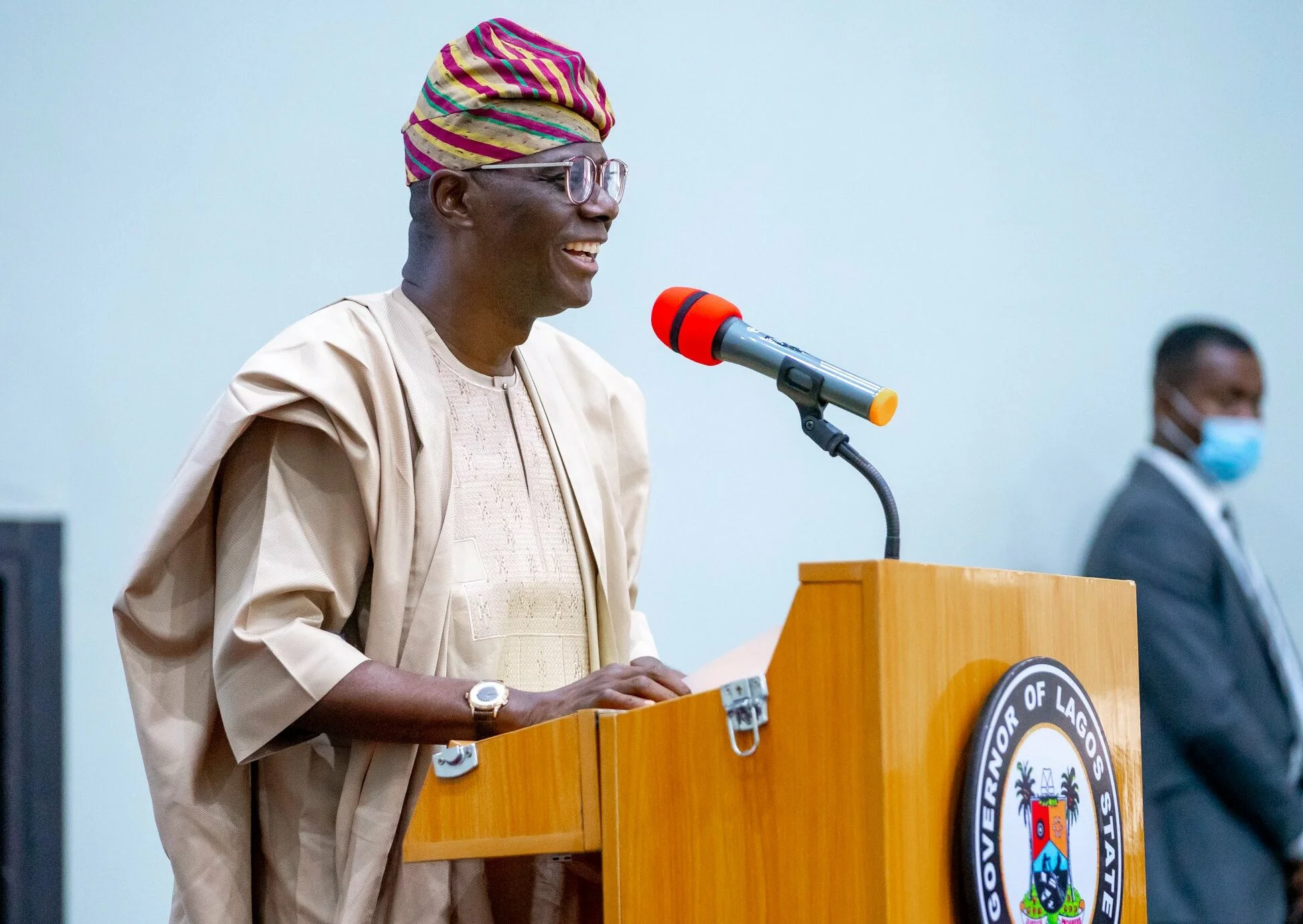
By Monireoluwa Lucas
The Lagos State government has ended the manual processing of building and physical planning approvals as part of efforts to deepen digital governance and advance its smart city ambition.
The state said all applications for planning permits must now be submitted and processed exclusively through the Electronic Physical Planning Processing System (EPPPS), bringing to an end the paper-based approval process.
The Commissioner for Physical Planning and Urban Development, Dr Oluyinka Olumide, disclosed this at a public sensitisation programme organised to engage built-environment professionals on the implementation of the electronic planning approval system.
Olumide said the directive, which took effect on April 1, 2026, was designed to eliminate the delays, multiple human interfaces and other challenges associated with the manual processing of planning approvals.
According to him, the transition to EPPPS is not merely a technological upgrade but a fundamental reform aimed at making the planning approval process more transparent, efficient and user-friendly.
He said the system would reduce complaints associated with physical interaction between applicants and officials while enabling applicants to submit documents, monitor their applications and receive updates electronically.
“The government has created timelines and simplified the procedures to make the system user-friendly. We are appealing to the public and professionals to embrace the platform because the manual process, with its bulky paperwork, has been outlawed,” he said.
Olumide, however, warned applicants against submitting false information or forged documents, saying inconsistencies would be detected during the electronic processing of applications and could result in delays.
“If you submit a doctored survey plan or fail to meet requirements such as the stipulated setbacks and other necessary documentation, your application will be delayed until you comply. The system is designed to identify such inconsistencies,” he said.
The commissioner said the EPPPS had achieved full operational readiness, with all relevant personnel trained and computer systems and internet connectivity deployed across the district offices.
He added that applications submitted outside the electronic platform would no longer be recognised as valid planning applications.
“All applications must now go through the EPPPS platform exclusively. Anyone processing planning permits manually from this date is engaging in an illegal activity,” Olumide said.
The Permanent Secretary of the ministry, Wasiu Olayinka, said the reform was intended to make the process of obtaining building approvals easier for Lagos residents and prospective property owners.
He said applicants would no longer need to make repeated physical visits to government offices, as the digital platform would enable them to apply for approvals from their homes or offices.
According to Olayinka, the full implementation of the EPPPS represents a major step in the state’s effort to modernise physical planning and improve service delivery.
Also speaking, the Special Adviser to Governor Babajide Sanwo-Olu on Taxation, Abdul-Kabir Opeyemi Ogungbo, said the electronic system would strengthen transparency, accountability and data-driven planning in the state.
Ogungbo urged residents, developers and built-environment professionals to make full use of the platform, noting that applicants could track the progress of their applications and receive notifications without having to visit government offices.
He said the system would also help the government move away from a planning environment characterised by physical files, long queues and missing documents.
“We are aggressively moving away from the era of dusty files, long queues and missing documents. This software will strengthen the integrity of our land records and help boost investor confidence,” he said.
The guest speaker, Prof. Timothy Nubi, however, said digitising the approval process must be accompanied by broader reforms in the real estate sector if the industry was to contribute more significantly to economic development.
Nubi lamented what he described as the failure of real estate to attain its full potential in Nigeria, arguing that weak infrastructure, inadequate investment and policy challenges had constrained the sector.
He said secure land titles remained critical to unlocking the economic value of property, noting that untitled assets represented a significant pool of dead capital globally and in Africa.
“When real estate begins to play its proper role in the economy, the sector will become healthier. Without title, you cannot create wealth in the way we see in countries such as the United States and Dubai,” Nubi said.
He cited estimates putting global dead capital held in untitled assets at about $9.3 trillion, with more than $1 trillion reportedly locked in Africa.
Nubi also questioned claims that a large proportion of properties in Lagos lacked proper titles, linking the problem to the continued development of estates without the necessary government approvals.
He urged the state government to examine why people invest substantial sums in land and properties only to commence construction without obtaining planning approval.
While commending the transition to digital processing, Nubi called for the new system to be genuinely seamless and free from unnecessary bureaucracy.
He said an efficient approval process would not only improve compliance but also encourage investment and help unlock greater economic value from Lagos’ rapidly expanding real estate market.


By Temitayo Lucas
The Federal Government has reaffirmed its partnership with Dangote Cement Plc and other industry stakeholders to drive affordable and inclusive housing, aligning with broader initiatives aimed at improving access to decent homes for low-income and informal-sector workers.
This initiative is seen as part of the efforts to bridge Nigeria’s housing deficit, even as stakeholders at the 2026 Abuja International Housing Show (AIHS) praised Dangote Cement for its significant contribution to affordable housing and infrastructure development in Nigeria. They described the firm as a key partner in efforts to bridge the nation’s housing deficit and improve access to quality building materials.
The industry leaders, policymakers, and housing experts specifically commended the President of Dangote Industries Limited (DIL), Aliko Dangote, for his commitment to Africa’s industrialisation and economic transformation, noting that his investments continue to drive sustainable growth across the continent.
At the Dangote Pavillion, the Minister of Housing and Urban Development, Dr. Muttaka Rabe Darma, reaffirmed the Federal Government’s commitment to working with the company to address Nigeria’s housing challenges.
He said the exhibition’s theme: “Housing Solutions for Low-Income and Informal Workers in Africa,” aligned with government efforts to expand access to affordable and inclusive housing.
Also, the founder and Chief Executive Officer of AIHS, Festus Adebayo, described Dangote Cement as a dependable partner whose consistent support has contributed to the growth and success of the annual housing exhibition. He noted that DIL is a principal sponsor of the event’s 20th edition, while Dangote Cement is showcasing innovative products and solutions designed to support housing development.
Dangote Cement’s Regional Sales Director for North Central, Bankole George, who represented the national Sales Director, Dolapo Alli, said housing remains critical to dignity, social stability, economic productivity and inclusive development.
He identified major barriers to affordable housing as high land costs, expensive building materials, limited access to mortgage financing, weak rental systems and planning regulations.
George advocated innovative housing finance models tailored to low-income earners and informal workers, including micro-mortgages, rent-to-own schemes, cooperative savings programmes, employer-assisted housing and incremental housing loans.
The call for stronger collaboration was echoed by former Speaker of the House of Representatives, Aminu Tambuwal, who urged African lawmakers to champion housing reforms, while former Senate President, Sen. Anyim Pius Anyim, called for innovative financing solutions to help close the continent’s housing gap.

• Surge in climate delegation since 2021
By Grace Edet
Nigeria’s participation at global climate summits has surged sharply over the last decade, with the country sending 749 delegates to COP30 in Belém, Brazil, according to new figures shared by data intelligence firm Statisense on Sunday, November 16, 2025. The number, “still provisional”, represents Nigeria’s largest delegation in 10 years, surpassing the 634 delegates recorded at COP29 in Azerbaijan and more than six times the size of its COP27 team in Egypt.
The platform, citing the UNFCCC’s participant registry, showed a dramatic fluctuation in Nigeria’s presence at the annual UN climate talks. The delegation peaked at 1,411 participants at COP28 in Dubai, before dropping and rising again ahead of COP30.
A breakdown of Nigeria’s attendance over the last 10 COP meetings shows the following trend:
2025 (COP30, Brazil) — 749 delegates
2024 (COP29, Azerbaijan) — 634 delegates
2023 (COP28, UAE) — 1,411 delegates
2022 (COP27, Egypt) — 120 delegates
2021 (COP26, UK) — 87 delegates
2019 (COP25, Spain) — 53 delegates
2018 (COP24, Poland) — 107 delegates
2017 (COP23, Germany) — 46 delegates
2016 (COP22, Morocco) — 81 delegates
2015 (COP21, France) — 87 delegates
The data paints a picture of inconsistent participation, with Nigeria sending as few as 46 delegates in 2017 and as many as 1,411 in 2023. Analysts say the swings reflect varying government priorities, funding availability, and the geopolitical weight attached to each edition of the climate summit.
The size of the country’s climate delegation has often sparked public debate, with critics questioning the cost implications and the value of large delegations, while government officials argue that diverse representation is necessary for negotiations, side events, and trade-related climate engagements.
With the provisional list for COP30 already placing Nigeria among the largest delegations globally, the conversation about efficiency, cost, and coordination at these summits is expected to continue as the country navigates its climate commitments and international diplomatic posture.



-

 Art & Life9 years ago
These ’90s fashion trends are making a comeback in 2017
-
Business9 years ago
The 9 worst mistakes you can ever make at work
-

 Law & Crime11 months ago
EFCC vs Yahaya Bello: Court adjourns ₦80.2b alleged fraud trial to Nov 11
-

 Energy11 months ago
Diesel falls to ₦979/L in Lagos
-
Entertainment9 years ago
The final 6 ‘Game of Thrones’ episodes might feel like a full season
-
Art & Life9 years ago
According to Dior Couture, this taboo fashion accessory is back
-
Entertainment9 years ago
The old and New Edition cast comes together to perform
-
Entertainment9 years ago
Mod turns ‘Counter-Strike’ into a ‘Tekken’ clone with fighting chickens