
Energy
NNPC profit falls to N462 billion in May

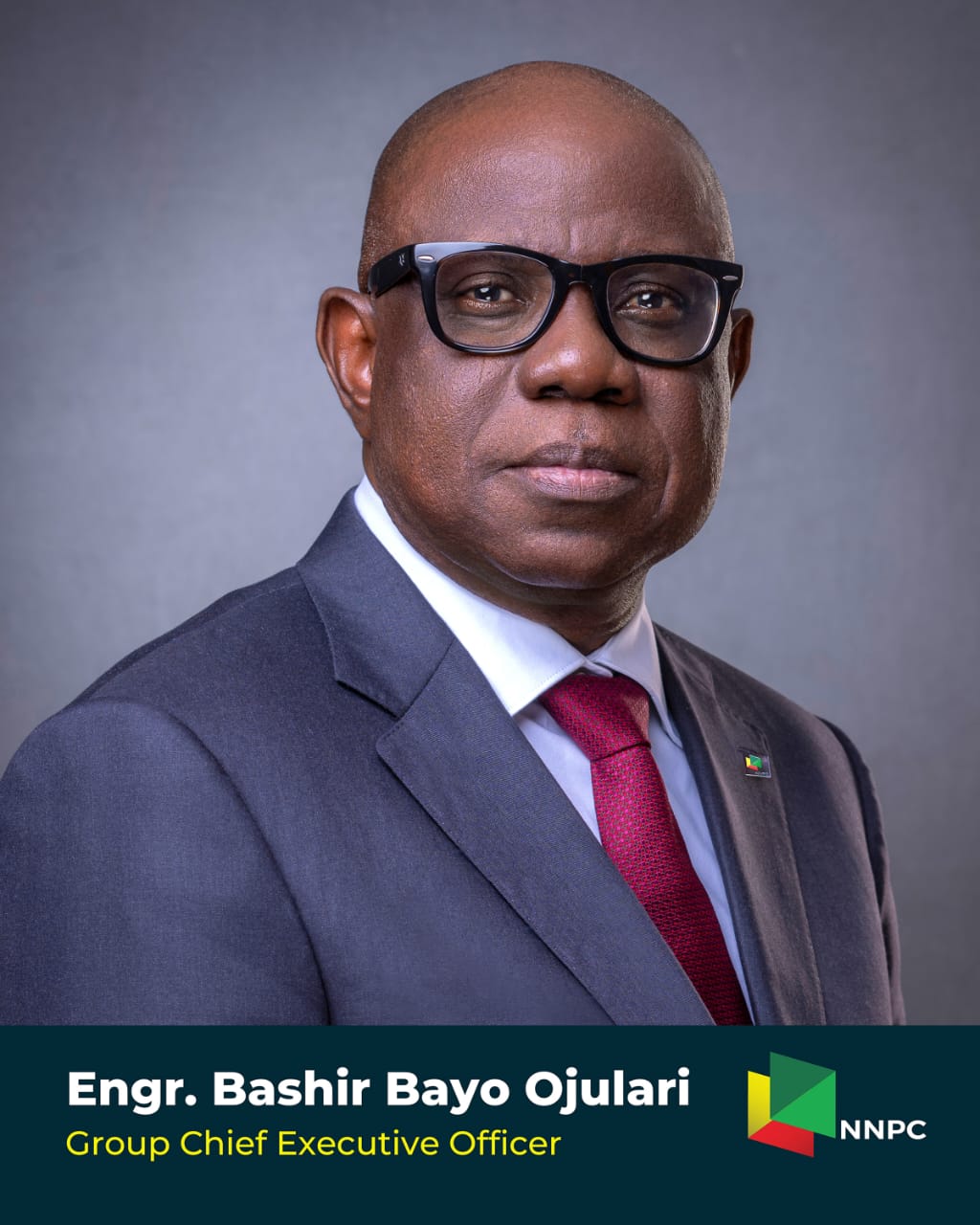
Nigerian National Petroleum Company Limited (NNPC Ltd) recorded a profit after tax of N462 billion for May 2026, its latest monthly report shows.
This represents a drop from the N481 billion recorded in April. The exact cause of this drop remains unclear as of press time.
The company, in its report summary released on today, highlighted key figures, including crude oil and condensate production, natural gas output, revenue, profit after tax, and strategic initiatives during the period.
In the report, the state-owned oil company posted a statutory payment of N4.86 trillion to the federation account within the first five months of 2026 (January to May).
The report also shows that the national oil company generated N4.33 trillion in revenue from oil, a decrease from N4.97 trillion it recorded in April.
According to the report, Nigeria’s crude oil and condensate production stood at 1.73 million barrels per day (bpd), up from April’s figure of 1.68 mbpd. Of this total, crude oil accounted for 1.47 mbpd, while condensates contributed 0.25 bpd.
Similarly, natural gas production was 7,774 mmscf/d in May, up from 7,730 mmscf/d in April. Gas sales stood at 4.921 bscf/d in May, down from 5.044 bscf/d in April.
The report further added that the petrol availability in its retail stations nationwide was 57 per cent in May, slightly up from 54 per cent in April, while the Obiafu-Obrikom-Oben Gas Pipeline project (OB3) hit 97 per cent completion, and the Ajaokuta- Kaduna- Kano (AKK) pipeline remained at 94 per cent completion, unmoved from the preceding month.
The NNPC said its strategic effort, including addressing well performance issues, reservoir pressure decline, lifting constraints, maintenance-related shutdowns, and facility reliability challenges, will reduce production deferments, improve asset availability and increase production.
The NNPC said the OB3 River Niger Crossing significantly progressed post pullback, precommissioning and tie-in works required to achieve commissioning of the full OB3 pipeline section by the end of Q3 2026.
The report said all production, sales and financial figures are provisional and subject to reconciliation with relevant stakeholders.
“Production improved in May due to higher asset reliability and uptime; however, output remained below target due to well performance issues (TEPNG), reservoir pressure constraints (Bonga), lifting-related curtailments (Nembe), and maintenance activities (Stardeep Agbami),” the report said.









· PETROAN, IPMAN divided over FCCPC, minister’s compliance order
Pressure continues to mount on oil marketers across the country to comply with provisions of the Petroleum Industry Act (PIA) 2021 that petrol prices must be cost-reflective of prevailing market forces.
Yesterday, the Nigerian Midstream and Downstream Petroleum Regulatory Authority (NMDPRA), joined the Federal Competition and Consumer Protection Commission (FCCPC) in warning oil marketers against “profiteering and arbitrary increases in the pump prices of petroleum products.”
The NMDPRA’s warning comes just three days after the Minister of State for Petroleum Resources (Oil), Heineken Lokpobiri, at the 2026 NMDPRA General Counsel and Legal Advisers Forum, directed the Authority to intensify surveillance across the downstream sector and ensure that Nigerians benefit from the recent fall in global crude oil prices.
But the fuel marketers responded swiftly to these directives, warning that they will shut down filling stations nationwide if the Federal Government attempts to impose price controls on petrol in the country’s deregulated downstream petroleum sector.
Yet, another body, the Petroleum Products Retail Outlet Owners Association of Nigeria (PETROAN), aligns with the ministerial directive, insisting that the Minister has the authority to intervene in the interest of consumers. The body however added a caveat that any decision should be taken after consultations with stakeholders.
PETROAN therefore called on the Minister of Petroleum Resources to convene an emergency meeting involving regulators, refiners and marketers to address the pricing concerns and arrive at solutions acceptable to all parties.
The NMDPRA, in a signed statement by its Director, Corporate Affairs, Ondaje Ijagwu, expressed concern over the outcome of its findings from surveillance of the downstream petroleum market suggesting undue exploitation of consumers.
The regulator, in a statement issued yesterday by it’s the Authority’s Head of Media and Public Relations, George Ene-Ita, said it had commenced monitoring activities at depots and retail outlets across the country and would not hesitate to sanction marketers found engaging in price gouging.
The statement, titled: ‘Pump Prices of Petroleum Products Must Be Cost Reflective’, noted that the authority had taken cognisance of the downward movement in international crude prices and was committed to ensuring that the benefits of market realities are reflected in domestic petroleum product prices.
“The Nigerian Midstream and Downstream Petroleum Regulatory Authority notes the global drop in crude oil prices and wishes to assure the Nigerian public that pump prices of petroleum products must be cost-reflective, in accordance with the Petroleum Industry Act (2021).
“Oil Marketing Companies have been cautioned against price gouging and profiteering. Depots and retail outlets are being monitored, and regulatory sanctions will be applied where applicable.
“The Authority is working with security agencies and other critical stakeholders, including the Federal Competition and Consumer Protection Commission, to guarantee consumer protection.
“NMDPRA reassures the public of its commitment to monitoring the midstream and downstream sector and ensuring adequate and reliable supply of petroleum products nationwide,” the statement read.
Earlier in the week, Lokpobiri had directed the NMDPRA to strengthen its oversight functions and ensure that no operator exploits Nigerians through unjustifiable pricing practices.
In issuing the directive, the minister said the deregulation of the downstream petroleum sector was not intended to create opportunities for excessive profiteering but rather to encourage competition, efficiency and fair pricing.
Lokpobiri had stressed that while government would not fix prices since the downstream sector has been deregulated, nonetheless, he argued, market operators must act responsibly and ensure that price adjustments accurately reflect changes in international oil prices and foreign exchange conditions.
“Pricing is also another issue, and I think that is one issue that I want this forum to deal with today. As part of the requirements of deregulation, prices have to be determined by market forces. When an NMDPRA has a unique responsibility, compounded by the PIA, to ensure not only that products are available but also that unnecessary profiteering is stopped. Yes, the market is definitely deregulated, but that doesn’t limit deregulation. I listen to discussions on television every day.
“They are calling me out. Mr. Lokpobiri should come and speak up. But I am not engaged in any press war with anybody. What is important is the reality of the situation in the industry. Primarily, market forces have to determine prices.
“But we also have a responsibility as a government all over the world to ensure that there is no profiteering. The PIA specifically vested government institutions, including the NMDPRA,” he said at the Abuja Forum on Monday.
The National Publicity Secretary, Independent Petroleum Marketers Association of Nigeria (IPMAN), Chinedu Ukadike, while reacting to the Minister’s comments at the Forum, warned that enforcing price controls in a deregulated market would contradict the provisions of the PIA and discourage investment in the sector.
According to Ukadike, allegations that marketers were profiteering was false, insisting that many operators were instead recording heavy losses due to repeated reductions in depot prices, particularly by the Dangote Refinery. He threatened that should the government try to arm twist marketers, then they may be left with no choice other than to shut down their retail outlets.
“If the government tries to enforce price control, we will shut down our filling stations nationwide. You cannot operate a deregulated market and at the same time dictate the price marketers should sell their products without considering the cost of purchase,” he said.
The IPMAN spokesman argued that marketers often buy fuel at higher prices only for depot prices to fall before they can sell, leaving them with losses while still servicing bank loans used to finance purchases.
According to him, the solution to high petrol prices is not government intervention in pricing but increased competition through improved local refining capacity and expanded fuel importation.
He urged the Federal Government to focus on reviving domestic refineries and creating an environment that encourages competition, which he said would naturally drive down fuel prices.
The Commission said the measure has become necessary after it observed that in spite of a downward review of the gantry prices of petrol by domestic refiners, marketers, depot owners, and retail outlet operators only reflected a negligible price reduction which are not commensurate with the steep fall in crude prices in the global market.
The positions by Lokpobiri, NMDPRA and FCCPC may be right. This is because, following a ceasefire agreement between U.S. and Iran two weeks ago and the reopening of the Straits of Hormuz, crude oil prices have been on a steady decline, falling to $71.99 per barrel (Brent crude) and $69.23 per barrel (WTI) yesterday- a sharp drop from the peak of $120 per barrel in April, returning to the prices in the pre- US-Iran war era in February.
Recall that the global spike in crude prices led to local refiners and marketers raising pump prices swiftly across the country, with petrol price climbing to between N1,350 to N1,500 and diesel selling N2,000 as hostilities intensified in the gulf between April and May. In February, petrol averaged between N800 and N900 per litre at the retail pumps. Presently, notwithstanding the global price fall of crude oil, petrol is still sold at average of N1,200 while some local refiners fixed between N1,025 and N1,075 as their gantry prices.
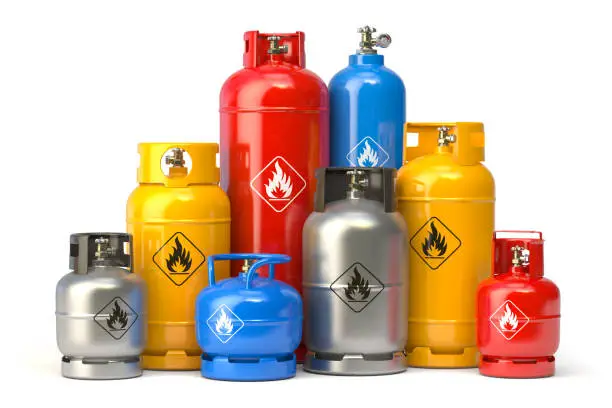
The price of liquefied petroleum gas (LPG) otherwise known as cooking gas, has plummeted to between N1, 100 and N1, 500 per kilogramme depending on location. Sources attributed the price drop to improved product supply and lower depot prices. In Abuja, the commodity sells for between ₦1,250 and ₦1,500 per kilogramme: consumers in cities like, Port Harcourt, Benin City, Warri, Onitsha and Enugu purchase the product between ₦1,150 and ₦1,450 per kilogramme.
In cities in the northern states like Kano and Kaduna currently record prices ranging from ₦1,300 to ₦1,550 per kilogramme, while Maiduguri and some communities in the North East still pay as much as ₦1,650 per kilogramme.
The price variation, as obtained in the oil and gas business, is a function of cost of transportation which is determined by nearness to point of sourcing the commodity.
Cooking gas previously sold for between N900 and N1,000 per kilogram in April, but later rose sharply to between N2,000 and N2,500 per kilogram in many parts of the country.
The National President, Nigerian Association of Liquefied Petroleum Gas Marketers (NALPGAM ), Edu Inyang, confirmed that the stock flow of the commodity into the domestic market, which he said has improved tremendously, as the reason for the price crash.
Edu assured that the price could fall to between N900 and N1,100 per kilogramme by year end should the Federal Government implement reforms to boost supply and cut costs.
In an interview with the News Agency of Nigeria (NAN) on Tuesday, Edu said although the country has recorded significant growth in local LPG production, rising demand and persistent supply chain challenges continue to keep prices high.
For instance, he explained that while the Dangote Refinery and Nigeria LNG (NLNG) supplied about 87 per cent of Nigeria’s domestic LPG market in 2025, the former has since explained that its LPG output was primarily intended for the production of higher-value products rather than the local cooking gas market.
“As a result, the refinery significantly reduced its allocation to the domestic LPG market, creating supply disruptions that the industry was not prepared for,” he said.
Edu said that while local LPG production had increased, many producers were still operating below installed capacity, leaving growing consumer demand unmet.
He blamed inadequate storage facilities, high transportation costs, foreign exchange challenges and multiple handling charges within the supply chain are major factors driving up retail prices.
Other factors responsible for the high cost of LPG, Edu noted to include storage infrastructure which remained concentrated in Lagos, the Edo/Delta axis and Port Harcourt, with limited facilities in northern Nigeria, increasing distribution costs nationwide; market inefficiencies such as speculative trading, excessive intermediary margins and temporary product hoarding for occasional price distortions and artificial scarcity.
To improve affordability, he urged regulators to strengthen market surveillance, improve transparency in product allocation and pricing, and enforce fair competition across the LPG value chain.
“Local production growth is encouraging, but consumers will not fully benefit unless bottlenecks in logistics, depot capacity, trucking and market access are addressed,” Edu submitted.
- Minister insists government would not allow marketers to exploit consumers through excessive pricing
● PETROAN Opposes IPMAN, Backs Minister on planned price intervention
Fuel marketers have warned they will shut down filling stations nationwide if the Federal Government attempts to impose price controls on petrol in Nigeria’s deregulated downstream petroleum sector.
The National Publicity Secretary of the Independent Petroleum Marketers Association of Nigeria (IPMAN), Chinedu Ukadike, issued the warning on Tuesday while reacting to recent comments by the Minister of State for Petroleum Resources (Oil), Heineken Lokpobiri, on the need to curb profiteering in the sector.
Speaking at the 2026 General Counsel and Legal Advisers Forum organised by the Nigerian Midstream and Downstream Petroleum Regulatory Authority (NMDPRA) in Abuja on Monday, Lokpobiri said although petrol pricing had been deregulated, the government would not allow marketers to exploit consumers through excessive pricing.
He stressed that while market forces should determine fuel prices, regulatory agencies still had a responsibility under the Petroleum Industry Act (PIA) to prevent unnecessary profiteering and protect consumers.
The minister’s remarks followed concerns over the failure of petrol prices to decline significantly despite a sharp drop in global crude oil prices.
Responding, Ukadike rejected allegations that marketers were profiteering, insisting that many operators were instead recording heavy losses due to repeated reductions in depot prices, particularly by the Dangote Refinery.
He argued that enforcing price controls in a deregulated market would contradict the provisions of the PIA and discourage investment in the sector.
“If the government tries to enforce price control, we will shut down our filling stations nationwide. You cannot operate a deregulated market and at the same time dictate the price marketers should sell their products without considering the cost of purchase,” he said.
Ukadike explained that marketers often buy fuel at higher prices only for depot prices to fall before they can sell, leaving them with losses while still servicing bank loans used to finance purchases.
According to him, the solution to high petrol prices is not government intervention in pricing but increased competition through improved local refining capacity and expanded fuel importation.
He urged the Federal Government to focus on reviving domestic refineries and creating an environment that encourages competition, which he said would naturally drive down fuel prices.
Also reacting, the National President of the Petroleum Products Retail Outlet Owners Association of Nigeria (PETROAN), Billy Gillis-Harry, said the minister had the authority to intervene in the interest of consumers but advised that any decision should be taken after consultations with stakeholders.
He called on the Minister of Petroleum Resources to convene an emergency meeting involving regulators, refiners and marketers to address the pricing concerns and arrive at solutions acceptable to all parties.
Meanwhile, the spokesperson for the NMDPRA, George Ene-Ita, said he had not been briefed on any planned regulatory action regarding fuel pricing.
Petrol currently sells for between ₦1,140 and ₦1,210 per litre across different parts of the country, depending on location.
…Culled from Platforms Africa
….Headline reworked by thetrustnews.com

-

 Art & Life9 years ago
These ’90s fashion trends are making a comeback in 2017
-
Business9 years ago
The 9 worst mistakes you can ever make at work
-
Entertainment9 years ago
The final 6 ‘Game of Thrones’ episodes might feel like a full season
-
Art & Life9 years ago
According to Dior Couture, this taboo fashion accessory is back
-
Entertainment9 years ago
The old and New Edition cast comes together to perform
-
Entertainment9 years ago
Mod turns ‘Counter-Strike’ into a ‘Tekken’ clone with fighting chickens
-
Sports9 years ago
Phillies’ Aaron Altherr makes mind-boggling barehanded play
-
Entertainment9 years ago
Disney’s live-action Aladdin finally finds its stars