
Energy
Sahara leaders makes African Energy Chamber’s ‘20 Under 40’ Rising Stars list

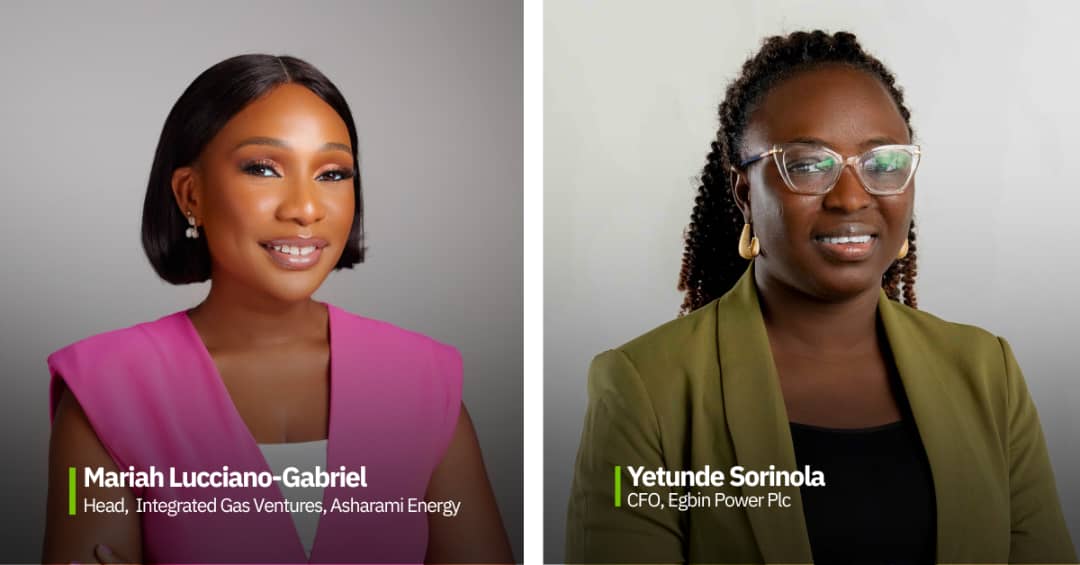
Sahara Group, a leading international energy and infrastructure conglomerate, is celebrating the recognition of two of its business leaders on the African Energy Chamber’s 2025 “20 Under 40 Energy Women Rising Stars” list, a landmark that reinforces the company’s role in shaping the next generation of global energy leadership.
Head of Integrated Gas Ventures at Asharami Energy, Mariah Lucciano-Gabriel, and the Chief Financial Officer of Egbin Power Plc, Yetunde Sorinola, were named among the continent’s rising stars for their outstanding contributions to Africa’s energy sector.
Their recognition reflects a wider global shift as the energy industry navigates the twin imperatives of expanding access to power and advancing a just energy transition.
The “20 Under 40” list shines an international spotlight on women who are redefining Africa’s oil, gas, and renewable industries, at a time when the continent’s leadership in innovation and resilience is increasingly shaping global conversations.
The Executive Director at Sahara Group, Moroti Adedoyin-Adeyinka , described the recognition as evidence of Sahara’s long-standing commitment to empowering leaders who drive impact across Africa and beyond.
“Mariah and Yetunde embody the Sahara spirit of resilience, innovation, and excellence. Their achievements demonstrate our commitment to Making A Difference by nurturing talent that can thrive on the global stage while bringing energy to life responsibly for communities across the continent and the globe,” she said.
Head, Corporate Communications at Sahara Group, Bethel Obioma, said the recognition also reflects Sahara’s people-focused strategy across the energy value chain.
“At Sahara, our people strategy is centered on growing expertise and giving our employees platforms to express their abilities maximally, both within and outside the workplace.
Our core values of being disruptively creative and ambidextrous empower every member of our team to harness their potential, drive innovation, and deliver impact that transcends borders,” Obioma noted.
As Head of Integrated Gas Ventures, Lucciano-Gabriel has been a driving force behind Sahara’s midstream gas business, accelerating revenue growth and expanding access to cleaner energy.
“Being named among such a dynamic cohort of women is a powerful reminder that Africa has the talent and vision to lead global energy conversations,” she said.
“This recognition inspires me to keep pushing boundaries, driving innovative gas solutions that can fuel inclusive growth” Lucciano-Gabriel added.
Sorinola, who leads the finance operations of Egbin Power Plc — Africa’s largest privately-owned thermal power plant — has built a reputation for strong governance, compliance, and financial stewardship of capital-intensive projects.


Mambila hydropower project, 21 identified dams, new private sector investments strategic for expansion
The Federal Government has revealed plans to significantly expand the country’s electricity generation capacity, with projects capable of taking output towards 20,000 megawatts.
A major component of the government’s generation expansion strategy is the development of the Mambila Hydropower Project, which has the potential to generate approximately 3,000 megawatts of electricity.
The government is equally advancing plans to develop small hydropower resources across the country. To drive this, a policy on small hydropower is nearing completion, while 21 dams have been identified along the proposed Sokoto–Badagry Superhighway for potential development.
These initiatives form part of a broader strategy to deliver stable electricity and support the country’s economic growth.
The Minister of Power, Joseph Tegbe, revealed this much while speaking on a national television yesterday.
Outlining the administration’s long-term vision for transforming the electricity sector through increased generation capacity, expanded transmission infrastructure, renewable energy development and greater private sector participation, Tegbe also revealed that the Federal Government is engaging private investors and development partners to accelerate the delivery of these projects, adding that Aliko Dangote had expressed commitment to supporting the country’s ambition to achieve the 20,000-megawatt target.
These, and much more, the minister said, buoys the confidence that Nigerians would begin to experience more stable electricity within the next three to five years, noting that the scale of infrastructure investment required to address decades of underdevelopment makes a sustained, coordinated approach essential.
According to the Minister, the administration is moving beyond the longstanding national conversation around achieving 10,000 megawatts, with several generation projects in the pipeline that could take the country’s capacity towards 20,000 megawatts.
Tegbe said President Bola Tinubu had directed him to engage with northern states to ensure their participation and stake in the project.
He also disclosed that Chinese companies had expressed interest in supporting its development through potential financing from China Exim Bank in collaboration with Sinohydro.
He noted that the President had given the go-ahead for the development of the identified dams, with engagements already underway with prospective investors.
These initiatives are expected to broaden Nigeria’s generation options and create opportunities for additional electricity supply to support economic activities across different regions.
The Minister also highlighted the Electricity Act 2023 as a major enabler of the administration’s long-term electricity expansion strategy, explaining that it has opened the sector to state governments and private investors.
He said the decentralised framework allows states to develop electricity solutions that respond to their specific needs, including mini-grids, gas-fired power plants and independent electricity markets.
This approach, he explained, will complement the national grid while creating additional opportunities for investment and improving electricity access.
The government also expects private sector participation in transmission and distribution to expand, helping to mobilise the capital and operational expertise required to modernise the sector.
Tegbe emphasised that Nigeria’s future electricity requirements will be driven not only by population growth and industrial expansion but also by emerging technologies and the country’s rapidly evolving digital economy.
He specifically identified artificial intelligence, data infrastructure and the growing number of Nigerians working remotely as developments that will significantly increase electricity demand.
According to him, the country must prepare for this changing energy landscape by expanding generation, strengthening transmission and improving the capacity of distribution companies to deliver electricity efficiently.
He noted that the government’s immediate priority remains stabilising the existing grid and optimising available generation capacity while simultaneously investing in the infrastructure required to meet future demand.
Providing a timeline for the administration’s electricity ambitions, the Minister said the combined impact of grid rehabilitation, new transmission infrastructure, generation expansion and private sector investment would progressively improve electricity supply.
He acknowledged that some major power projects require three to five years to develop and deliver, stressing that sustainable improvements cannot be achieved overnight.
“Give me a time horizon of three to five years, and Nigeria will enjoy stable electricity,” he said.
The Minister expressed confidence that the government’s infrastructure programme, supported by improved sector coordination and increased investment, would place Nigeria on a stronger path towards electricity stability.
He reiterated that the administration’s objective is not simply to increase generation figures but to build an electricity system capable of reliably supporting households, businesses, industrial activities and the country’s long-term development aspirations.
TotalEnergies EP Nigeria Limited has commenced drilling of the Akpo Far East B exploration well, days after its Country Chair and Managing Director, Matthieu Bouyer, announced at the 2026 Nigerian Association of Petroleum Explorationists (NAPE) annual conference and exhibition that the company was launching a new deep offshore drilling campaign in Nigeria.
The well, being drilled with the Noble BlackRhino rig, is the first deep offshore exploration well to be drilled in Nigeria in 10 years. It is expected to be followed by exploration and appraisal wells at Egina South and on the PPL 2000 and PPL 2001 licences.
Speaking during an executive panel at the 44th NAPE Annual International Conference and Exhibition in Lagos, Bouyer said the drilling campaign was evidence of improving investor confidence in Nigeria’s energy sector. The conference, held from 8 to 12 November, focused on unlocking reserves growth through exploration, local capabilities and adaptive technology.
“The attractiveness of Nigeria has returned in our portfolio,” Bouyer told the conference.
He said Nigeria’s challenge was not the availability of resources and called for faster conversion of discovered resources into projects and production.
“We need to think fast,” he said, calling for supply-chain constraints and other barriers to investment decisions to be addressed more quickly.
The Akpo Far East B well forms part of a broader exploration programme that will extend to Egina South and PPL 2000 and PPL 2001. TotalEnergies and its partner, SAPETRO, signed a Production Sharing Contract for the two licences in September 2025 after they were awarded through Nigeria’s 2024 Exploration Round. TotalEnergies holds an 80% operating interest, while SAPETRO holds 20%.
TotalEnergies emerged as the successful bidder for PPL 2000 and PPL 2001 in December 2024. The company’s planned drilling on the acreage, less than two years after the award, highlights the pace at which it is progressing the new exploration opportunity.
At the NAPE session, Bouyer said improved transparency in Nigeria’s licensing process had enabled TotalEnergies to secure new acreage through a competitive bid round for the first time in more than a decade.
He also pointed to recent Federal Government reforms, including Executive Orders designed to improve the competitiveness of deepwater and non-associated gas projects, as factors supporting renewed investment.
“The Executive Orders are working,” he said, citing recent investment decisions on the Ima and Ubeta gas developments as evidence of progress.
Commenting on the drilling programme, Bouyer said the Akpo Far East B well and the planned activity at Egina South and PPL 2000 and PPL 2001 demonstrated TotalEnergies’ confidence in Nigeria’s resource potential.
“This momentum goes hand in hand with the efforts of the Nigerian authorities to strengthen transparency and attract investment into the country,” he said.
He acknowledged the teams responsible for the fast-track mobilisation of the Noble BlackRhino and thanked the company’s partners, NNPC Limited, Meren, CNOOC International and SAPETRO, for their support.
The NAPE executive session also featured Aliko Dangote, President and Chief Executive of Dangote Group, and Austin Avuru, NAPE Fellow and Co-founder of Seplat Energy, among others. Discussions centred on the reforms, fiscal stability and government-industry collaboration required to accelerate investment and increase Nigeria’s oil and gas production.
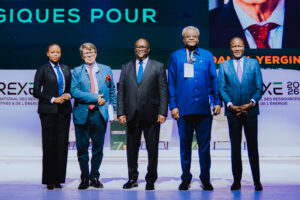
Sahara Group has called for increased African-led investment in energy infrastructure, highlighting its growing partnership with PETROCI as a model for how collaboration between African enterprises can strengthen energy security, build local capacity and create sustainable economic value.Speaking at the 2026 Salon International des Ressources Extractives et de l’Énergie (SIREXE) in Abidjan, during a session on Geopolitics and International Oil and Gas Logistics: Strategic Implications from Africa, Kola Adesina, Group Managing Director, Sahara Power Enterprise Group, said the continent must increasingly convert its abundant energy resources into value through investments in infrastructure, indigenous capacity and partnerships that respond directly to the needs of African markets.According to him, “having natural resources is an advantage, but the real value lies in what we build around them. Africa must move beyond exporting raw materials and importing finished products. We need to develop the capacity to process, distribute and use our resources to power industries, create jobs, and compete in global markets.”Adesina said Côte d’Ivoire provides a compelling example of partnerships, with Sahara and PETROCI working together to strengthen the country’s LPG supply chain and support more reliable access to energy.At the heart of the partnership is SAPET GAS, an 11,500-tonne LPG carrier introduced to strengthen the transportation and security of butane supplies into Côte d’Ivoire, complemented by investment in LPG storage infrastructure in Abidjan.Through SAPET Energy, the partnership is also advancing a 12,000-metric-tonne LPG storage solution with PETROCI, with plans for further expansion. The infrastructure has helped address demurrage costs associated with LPG supply logistics, while improving supply efficiency and strengthening access to cleaner energy for households and businesses across Côte d’Ivoire.“The SAPET GAS partnership is a practical example of what value addition looks like. It brings together local market knowledge, national priorities, investment and operating capability to address a real energy need. The value is not simply in owning an asset; it is in what that asset makes possible for the market and the people it serves,” he said.Adesina noted that partnerships of this nature demonstrate how African institutions and businesses can work together to develop solutions tailored to the continent’s energy requirements while retaining greater economic value within Africa.Sahara is advancing this infrastructure-led LPG strategy across the continent. In Ghana, the company has commissioned an LPG storage facility and deployed MT Asharami Ghana as a dedicated LPG vessel supporting product supply and distribution. In Kenya, Sahara recently broke ground on a 30,000-metric-tonne LPG storage terminal, extending its investment footprint into East Africa.These assets complement Sahara’s growing fleet of LPG shipping capabilities through WAGL Energy, its joint venture with NNPC Limited, creating an increasingly integrated network connecting maritime transportation, storage, supply, and distribution across African markets.Adesina said Africa’s energy transition offers an opportunity to build stronger indigenous businesses and supply chains while attracting the capital and expertise required to close infrastructure gaps and expand energy access.“For Sahara, the approach aligns with its Beyond XXX proposition, building on three decades of operating experience to pursue a new phase of growth, innovation and impact. Sahara will continue collaborating with PETROCI and other partners to advance investments that strengthen energy security, and expand cleaner energy access across Africa.”

-
 Energy1 year ago
Diesel falls to ₦979/L in Lagos
-
 Law & Crime1 year ago
EFCC vs Yahaya Bello: Court adjourns ₦80.2b alleged fraud trial to Nov 11
-

 Business9 years ago
The 9 worst mistakes you can ever make at work
-
Art & Life9 years ago
These ’90s fashion trends are making a comeback in 2017
-
Entertainment9 years ago
The final 6 ‘Game of Thrones’ episodes might feel like a full season
-
Art & Life9 years ago
According to Dior Couture, this taboo fashion accessory is back
-
Business9 years ago
3 Ways to make your business presentation more relatable
-
Entertainment9 years ago
The old and New Edition cast comes together to perform