
Energy
TBI Africa: Regulatory risk, pipelines, slow execution, bane of Nigeria’s 215tcf idle gas









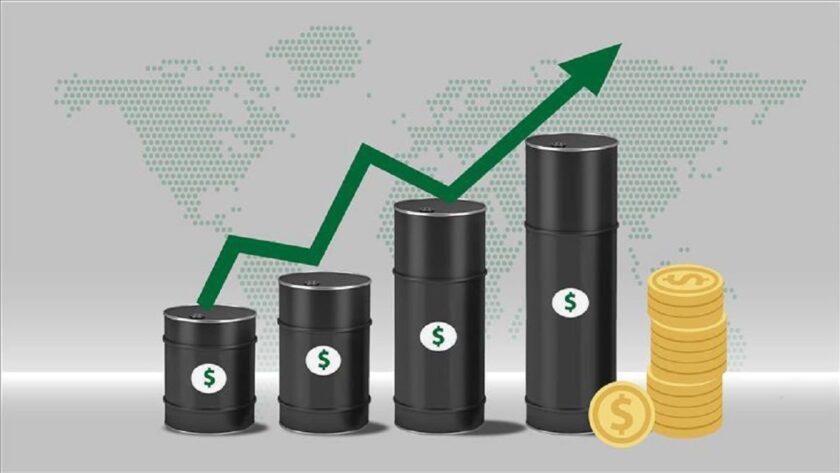
- Brent crude rises to $95.30 per barrel
- Renewed Middle East tensions threaten oil exports
Global crude oil prices rebounded in early Asian trading on Thursday following fresh reports of tankers striking mines in the Strait of Hormuz and a Houthi attack on Saudi Arabia’s Ras Tanura refinery, heightening concerns over potential disruptions to global oil supplies.
Brent crude was trading at $95.30 per barrel, while US benchmark West Texas Intermediate (WTI) stood at $84.36 per barrel at the time of reporting.
According to reports by Oilprice.com, the recovery followed several days of declining prices, during which investors focused largely on forecasts of an impending global oil supply surplus, despite mounting reports of security incidents in the strategically important Strait of Hormuz.
However, the growing frequency of reported tanker incidents, alongside data indicating reduced average daily energy commodity shipments through the waterway, appears to have renewed market concerns about supply constraints.
Oilprice.com, quoting reports by Iranian state media, disclosed that tankers striking mines in the Strait of Hormuz have become increasingly frequent, with multiple incidents reported on some days. The developments have prompted tanker-tracking firms, including Kpler, to report declining average daily crude oil flows out of the Persian Gulf.
The figures suggest that crude exports from the region remain significantly below pre-war levels, following the initial attacks by the United States and Israel against Iran at the end of February.
Market sentiment was further affected by the Houthi attack on Saudi Arabia’s Ras Tanura refinery, one of the kingdom’s largest refining facilities.
Located along Saudi Arabia’s eastern coast on the Persian Gulf, the refinery forms part of a major oil production and export hub, making any threat to its operations a significant concern for global energy markets.
The latest developments have reinforced fears that the widening Middle East conflict could undermine efforts to restore oil shipments and worsen supply disruptions.
ANZ analyst Daniel Hynes, commenting on the situation, said the expansion of the conflict could threaten the recent recovery in oil flows.
“The broadening of the Middle East conflict threatens to halt the recovery in oil flows in recent weeks. Persian Gulf crude exports rose last week but remain on a declining trend,” Hynes said, according to Reuters.
Meanwhile, energy analyst John Kemp observed that although global oil inventories increased in October, the build-up was supported by measures that could prove difficult to sustain.
He noted that the increase had been underpinned by a US-organised shuttle operation and naval blockade targeting Iran, warning that the strategy was expensive to maintain and could face financial and operational constraints in the medium term.
The renewed security threats have therefore introduced fresh uncertainty into the oil market, as traders weigh concerns over supply disruptions against expectations of a potential global crude surplus.
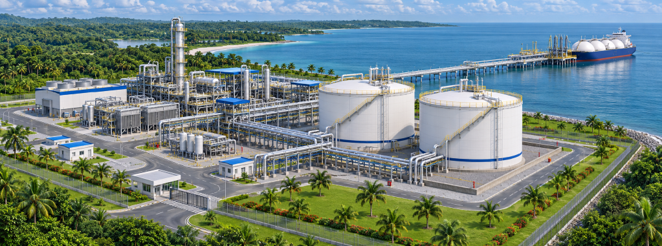
Ibom LNG & Logistics Base Limited has signed a Financial Advisory Agreement with the African Export-Import Bank (Afreximbank) to support the mobilisation of $1.5 billion for its proposed liquefied natural gas project in Eastern Obolo, Akwa Ibom State, Nigeria.
The engagement represents a significant milestone in the development of the project, which has secured a license to establish a facility designed to process 200 million standard cubic feet of gas per day within the Liberty Free Trade Zone.
Under the agreement, Afreximbank will provide financial advisory services to support the project’s financing process, establishing a framework for progressing funding arrangements alongside the technical, commercial and regulatory requirements necessary to achieve financial close.
Commenting on the development, Anietie Isonguyo, Company Secretary of Ibom LNG & Logistics Base Limited, said:
“Our engagement with Afreximbank marks an important step in advancing the financing of the Ibom LNG project and reflects our commitment to attracting the financial and technical partnerships required to bring this investment to fruition. The project is expected to create direct and indirect employment opportunities for our host communities and the wider state, support indigenous businesses and expand gas supply for domestic and export markets.” He added: “We are committed to translating Nigeria’s gas resources into lasting economic value for Akwa Ibom State, the Niger Delta and the country.”
“Afreximbank is committed to supporting the development of Africa’s oil and gas value chain as a catalyst for industrialisation, job creation and intra-African trade. By providing financial advisory support to projects such as Ibom LNG, we aim to help mobilise African capital to transform Africa’s energy resources into value-added industries, exports and shared prosperity,” said Mr. Denys Denya, Senior Executive Vice President, Afreximbank.
The project aligns with the Federal Government of Nigeria’s gas monetisation policy and its commitment to converting the country’s abundant natural gas resources into investment, industrial development, employment and export earnings.
Designed to serve both domestic and international markets, the facility is expected to support LNG exports while providing gas for domestic energy and industrial applications. It is also expected to strengthen Akwa Ibom State’s position as a destination for gas-based investment.
For host communities and the wider state, the project offers prospects for employment during construction and operations, skills development and increased participation by indigenous businesses. Additional opportunities are anticipated across procurement, logistics, transportation, maintenance and other support services.
The combination of an establishment licence and a formal financial advisory engagement with Afreximbank demonstrates concrete progress in Ibom LNG’s project development programme and provides a stronger foundation for engagement with investors, contractors and other stakeholders.
As development activities advance, Ibom LNG aims to translate this progress into a major industrial investment that generates economic opportunities for Akwa Ibom State and the Niger Delta and contributes to Nigeria’s ambition to expand its gas economy.
The Nigerian National Petroleum Company Limited (NNPC) and the Central Bank of Nigeria (CBN) have signed a Memorandum of Understanding (MoU) to strengthen financial coordination, improve foreign exchange inflows and attract investment into the country’s energy sector, as part of efforts to raise crude oil production to three million barrels per day.
The agreement was signed at the CBN headquarters in Abuja on Wednesday, November 18, 2026, according to a statement issued by NNPC and signed by its Chief Corporate Communications Officer, Andy Odeh.
Speaking at the signing ceremony, NNPC Group Chief Executive Officer, Bashir Bayo Ojulari, described the agreement as a significant milestone in the relationship between the national oil company and the country’s monetary authority.
He said the MoU would establish a structured framework for cooperation between both institutions, particularly in areas where energy financing and monetary policy intersect.
“This MoU provides that structure, setting out the principles and framework by which the two institutions will collaborate at the meeting point between energy and finance,” Ojulari said.
He explained that the partnership was designed to align NNPC’s operations with national monetary and energy objectives, address trade and foreign exchange challenges, improve the repatriation of export proceeds and facilitate access to capital through the company’s assets and balance sheet.
Ojulari emphasised that the agreement was intended to create a results-driven partnership that would support the growth of the energy sector and the wider economy.
“We are here to build a working partnership that delivers results,” he added.
Providing further details, NNPC Group Chief Financial Officer, Adedapo Segun, said the agreement would replace previous irregular arrangements for handling financial matters between the two institutions with a more coordinated and transparent framework.
He noted that improved financial coordination would help attract the investments needed to increase crude oil production from the current 1.8 million barrels per day to three million barrels per day.
Segun added that NNPC would align domestic payments, contractor settlements and foreign exchange conversions with CBN regulations to promote exchange rate stability and reduce dollarisation in the economy.
He further disclosed that both institutions had agreed to establish working groups, implementation timelines and accountability mechanisms to ensure the effective execution of the agreement.
The NNPC Treasurer, John Etukudo, will coordinate the implementation of the MoU on behalf of the national oil company.
On his part, CBN Governor, Olayemi Cardoso, described the agreement as a formalisation of the existing relationship between both institutions, stressing that sustained cooperation in financial management and liquidity support was essential to maintaining macroeconomic stability.
“Our continued collaboration in efficient account management, funds transfer and liquidity support directly contributes to macroeconomic stability by ensuring the availability of revenue to achieve fiscal mandates and predictable inflows into the foreign exchange markets,” Cardoso said.
The partnership is expected to strengthen financial cooperation between Nigeria’s energy and monetary sectors, improve the management of oil export proceeds, facilitate investment in oil and gas operations and boost foreign exchange liquidity.
It is also expected to support the Federal Government’s broader efforts to stabilise the economy, increase crude oil production and strengthen Nigeria’s position in the global energy market.


Asharami Synergy Advances Digital Innovation and Operational Resilience in Aviation Fuel Supply

TBI Africa: Regulatory risk, pipelines, slow execution, bane of Nigeria’s 215tcf idle gas

Kano Launches Health Insurance Scheme for 20,000 Vulnerable Women, Children
-

 Energy1 year ago
Diesel falls to ₦979/L in Lagos
-

 Law & Crime1 year ago
EFCC vs Yahaya Bello: Court adjourns ₦80.2b alleged fraud trial to Nov 11
-

 Business9 years ago
The 9 worst mistakes you can ever make at work
-
Art & Life9 years ago
These ’90s fashion trends are making a comeback in 2017
-
Entertainment9 years ago
The final 6 ‘Game of Thrones’ episodes might feel like a full season
-
Art & Life9 years ago
According to Dior Couture, this taboo fashion accessory is back
-
Business9 years ago
3 Ways to make your business presentation more relatable
-
Entertainment9 years ago
The old and New Edition cast comes together to perform