

Business
The unending meter conundrum

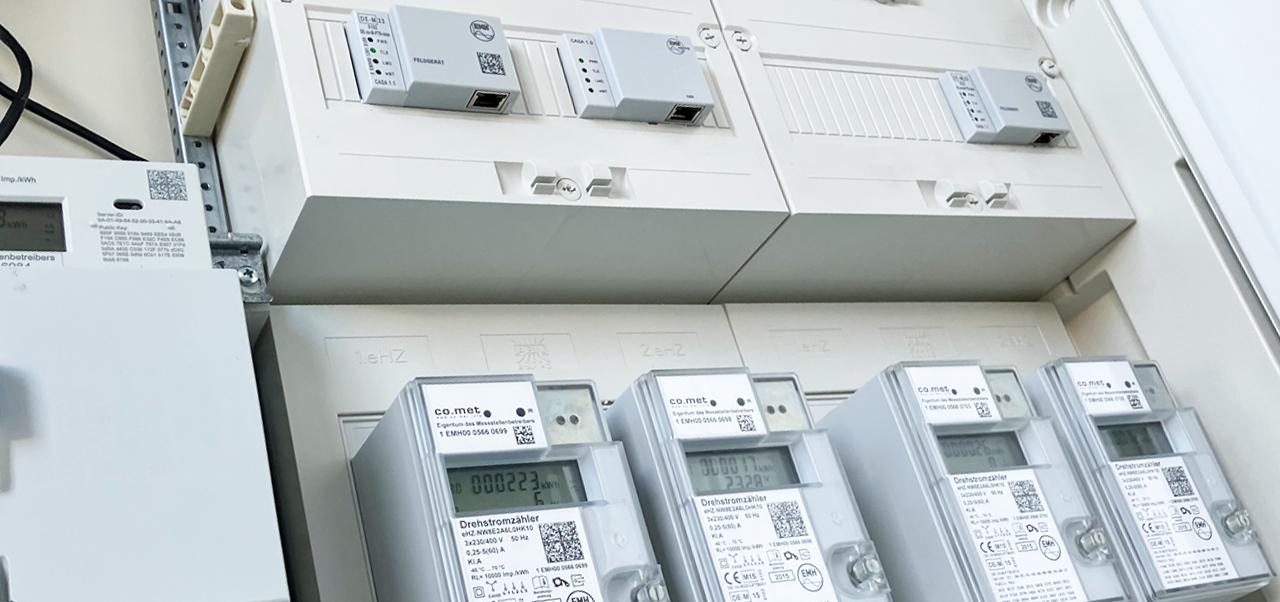
The federal government has implemented several initiatives aimed at ensuring adequacy in electricity metering. These efforts have however proved to be almost ineffective even as the metering gap in the country remains at seven million. Stakeholders in the industry have since called for the liberalisation of meters sales and purchase as a way around the conundrum. Last week, the Power Minister appeared to have stirred the hornet’s nest declaring that meters under DISREP be issued and installed free of charge to consumers. The fallout has caused bickering between the DISCOS, consumers and other stakeholders- threatening over the installation of 1.5 million meters.
The Power Minister, Adebayo Adelabu, may have been a self-effacing man during his time at the Central Bank of Nigeria (CBN). However, owing to the quantum of demands and expectations of the ministry he superintends presently, the Adelabu has had to shout himself to the rooftops.
While the minister may have unwittingly been vocal, stakeholders are convinced that it may be as a result of the need to succeed by delivering power to the Nigerian public, especially at a time when patience seem to be running out.
His latest outburst on metering is one that obviously touches the raw nerves of electricity consumers as well as the utilities.
“I want to mention that it is unprecedented that these meters are to be installed and distributed to consumers free of charge—free of charge! Nobody should collect money from any consumer. It is an illegality. It is an offence for the officials of distribution companies across Nigeria to request a dime before installation; even the indirect installers cannot ask consumers for a dime. It has to be installed free of charge so that billings and collections will improve for the sector,” an elated Adelabu said last week during an on-site inspection of newly imported smart meters at APM Terminals, Apapa, Lagos.
But the statement by the Minister exposed a brewing tension in the sector, leading to divergent tunes from all stakeholders in the electricity value chain, placing the Distribution Companies (DisCos) and the Federal Government at logger heads over who pays for the cost of the meters and installation.
The metering schemes
The issue of meters in the sector remains very touchy given that efforts at ensuring adequately metering of electricity consumers have at best not yielded the desired result. To date, Nigeria has an estimated shortfall of seven million meters- a situation that has both placed a huge revenue loss on the electricity value chain as well as the consumers who are slammed bith bogus estimated billings.
There are various metering schemes initiatives by the federal government aimed at reducing the seven million metering gap in the country. These include Meter Asset Provider (MAP), as enshrined in 2018/2019 via a NERC regulation allowing third-party investors to supply and install meters. Customers under this scheme pay upfront for meters and are refunded through energy tokens over time. MAPs are companies granted approval by NERC to procure and install meters for customers of DisCos. Customers are required to make an upfront payment for the meter and the cost recovered over a period of time approved by the NERC.
In 2020, the National Mass Metering Programme (NMMP), a Federal Government initiative funded by the CBN to provide free meters to Nigerians, aiming to end estimated billing, was introduced. This intervention sought to increase metering rate, eliminate arbitrary estimated billing, strengthen the local meter manufacturing sector, job creation and reduction of collections losses. Under this scheme, meters are provided and installed at no upfront cost to the consumer.
A seed capital of ₦200 billion was invested to facilitate the Nigeria Electricity Supply Industry (NESI) revenue collections through the programme. Under Phase-0 of the NMMP, the sum of ₦59.280 billion was set aside for financing the installation of one million meters.
From inception to date, 89.96 per cent of the funds allocated for NMMP under phase 0 has been disbursed to 11 DisCos for procurement of 962,832 meters through 23 Meter Asset Providers.
The funding under Phase 0 is through the CBN/NESI; financing for the phase 1, with a procurement of 1.5 million meter units, is through the CBN/ DMBs (Deposit Money Banks), while financing for the Phase 2, with a four million meter units procurement, is from the World Bank.
Still is the Presidential Metering Initiative (PMI), established in 2023, as a five-year, 10-million-meter initiative, supported by the Nigeria Sovereign Investment Authority (NSIA) and World Bank, designed to fast-track metering. This initiative aims to close the metering gap for 60 per cent of estimated-billing customers by 2027 through the deployment of over five million smart meters to be funded by the Meter Acquisition Fund (MAF) and Federation-funded initiatives. The Meter Acquisition Fund (MAF) Tranche B, guaranteed NERC-approved funds of ₦28 billion for Discos to provide free meters specifically for Band A and B customers.

Dr. Joy Ogaji
Funding for meters under MAF is built from a pool of contributions from all 12 DisCos based on their market collections. It gives priority in tiers- with the current phase (Tranche B) focusing on completing the metering of all outstanding Band A customers before fully extending to Band B. DisCos must use these funds to procure meters through competitive bidding and complete installations by specific deadlines.
Also is the Distribution Sector Recovery Program (DISREP), a $500 million World Bank-funded initiative to deliver 3.4 million smart meters for free to consumers. It also aims to improve the financial and technical performance of the country’s electricity distribution companies (DisCos). Like the NMMP and MAP Schemes, DisCos are expected to repay the cost of these meters over a period of ten-years. DisCos are also responsible for distribution, installation and maintenance of these meters within their franchise states.
A far older metering scheme was the Credited Advance Payment for Metering Implementation (CAPMI), introduced by the NERC in 2013. The CAPMI allowed electricity customers to pay for their own meters to speed up installation and avoid estimated billing. Customers, who paid for meters directly were to be refunded through energy credits over a set period. The scheme was wound down in 2016 after it was found that only about 500,000 meters were deployed between 2013 and 2016, with many DisCos failing to fulfill their obligations despite receiving funds.
How free are meters?
Adelabu’s free meter installation directed that prepaid meters procured under the World Bank–funded DISREP, has elicited mixed reactions. While the government argued that electricity consumers will only pay for the ongoing free meter installation through deductions from their electricity tokens, the DisCos are concerned over the long period of recovery of such funds which spans over a period of 10 years. They argue that such arrangement has effects on their operations, especially cost recovery, installation expenses and the financial implications.
The position of government is understandable given that suppliers, it claimed, have already been fully paid for both the meters and the installation. Therefore, the reasoning is that Discos charging consumers again for installation would not only slow down the meter uptake, but it will also undermine the goal of the initiative.
The Minister’s team pointed to poor enumeration and inaccurate customer information as the main bottlenecks, disclosing that installers are often sent to wrong addresses or to premises that are not technically ready for metering. The Director-General, Bureau of Public Enterprises (BPE), Ayo Gbeleyi, takes the Discos’ position with a pinch of salt. Gbeleyi, who was in attendance at the N501billion bond issuance signing ceremony to settle legacy debts in the power sector, regretted that the god gesture of government in line with free metering was being antagonised by the utilities.
He maintained that claims of repayment over 10 years assertions were inaccurate and misleading, explaining that cost of meters, transformer, feeders, and other components of investments, are embedded in tariffs and recouped over time.
“We’ve had pushback. The truth is, every component of investment that goes into the DisCos gets recouped through the tariff structure. So, whether it is a feeder pillar, whether it is a transformer, or whether it is a meter, we as consumers will ultimately pay for those pieces of equipment through the tariff design,” the BPE boss clarified.
He explained further: “What they (Discos) are not telling you is that the Federal Government’s major intervention is indeed one of the best loan transactions today extended to the power sector. It is a 20-year loan facility. It comes with a five-year principal moratorium and a two-year interest moratorium to the DisCos. We have never seen any capital lending to that sector of that magnitude in the history of the power sector in Nigeria.”
A public sector analyst, Mayowa Sodipo, corroborated the position of Gbeleyi, insisting that at no point in time was meter allocation ever free of charge. For him, the while Adelabu may have played to the gallery with his statement knowing that these meters and installation costs have been factored into the electricity tariff paid by the consumer, he may have equally saved the consumers from exploitation.
“At no point was meter ever free to any consumer. You pay through your electricity purchase because it is deducted from your token over a period of time. So the Discos are not the ones even paying for the meters as they are now trying to claim, but the consumers because the cost is deducted from their electricity tariff bought. So the Discos are not paying but the consumers are paying for the meters,” Sodipo argued.
But the Discos are worried that as a business concern, the burden on payment for meters still rests with them. An official of a South West Disco who spoke on condition of anonymity depriving payment for installation is an extra burden on the Discos because this segment is contracted out to installers, who are not on the pay roll of the Discos.
“So if consumers are not paying for installation, who should? Is the minster saying that the Discos should still carrying the financial implication of this?” the official asked rhetorically.
In a submission on the development, a Kano state based social commentator, Dr. Abubakar Ibrahim, for Nigeria to close its metering gap, there is need for collaborative policy implementation between the regulators, government authorities, Discos and meter providers and installers.
“They must all agree to work together to establish a clear and sustainable funding framework that covers both meter procurement and installation. The federal government on its part must design a financial framework that will balance customers’ interest with the sector financial sustainability,” Dr. Ibrahim said.
He further said that while the federal government’s objectives is clearly to close the metering gap and ensure fair billing, however, lack of alignment with DisCos could unintentionally delay the very benefits the policy seeks to deliver.
The Executive Director, Emmanuel Egbigah Foundation, Prof Wunmi Iledare, submission in in sync with Dr. Ibrahim’s. He insisted that the development is a symptom of deeper structural and governance failures in the power sector. He said it is appalling for the Federal Government, as a part-owner of the DisCos, to publicly complain about their conduct without addressing underlying regulatory lapses, leaves more to be desired.
Way to go
Dr. Ibrahim and Prof. Iledare’s submissions summarises a critical issue in the metering scheme. Key industry stakeholders in the value chain blamed the Discos shows of apathy of Discos towards meter installation on the fact that they have not been part of the procurement process including the selection of installaters.
“For this DISREP, the federal government nominated the installers, at a low cost expecting DisCos to cover some part of the cost to mobilise the installation activities. As usual since DisCos are not part of the entire procurement and acquisition process unlike other metering mechanisms, then they will show apathy; DisCos always wanted to have a say in some of these projects.
“On paper the paper the meters are free but the last mile issues are cost burdens that the DisCos are not willing to cover. This is why the process is slow and bulk of the facilities are in stores across the DisCos,” a very senior official of a Disco, who asked to be anonymous owing to the sensitivity of the matter, revealed at the weekend.
With a recurring situation, the Managing Director / CEO/ Executive Secretary, Association of Power Generation Companies (APGC), Dr. Joy Ogaji, advocates that metering should be liberalized. To this end, Ogaji argued, both government and Discos should hands off meter matters and allow it to run like the mobile phone is run in the telecommunications sector so that consumers can freely go to the open market to buy meters.
Although she agreed that when customers buy meters from shops instead of DisCos, revenue assurance can become challenging, she nonetheless said this can be addressed through meter registration with DisCos to track usage and ownership; standardistion, by mandating the use of approved, tamper-evident meters with remote monitoring capabilities; implementing a centralised vending systems for meter top-ups, linking purchases to customer accounts and collaboration with shops and regulators to ensure compliance with industry standards, insisting that this approach helps DisCos track revenue and reduce losses
“Design the standard or specifications for the meters for various categories- 1-phase, 3phase etc; make it available in shops for anyone to purchase; train installers and only contact your Discos to inform them of synchronization. With this, no cunnundrum; everyone is happy, except there are ulterior motives,” Ogaji submitted, warning that if after 15 years of privatization of the sector, metering still remains a problem, then there is no point continuing with is the way it is being done.

By Monireoluwa Lucas
Africa risks losing further ground in the global shipping industry as a shortage of internationally certified seafarers and maritime professionals continues to limit the continent’s ability to compete in an increasingly technology-driven sector.
The Manager of Training and Maritime Centre of Excellence (MCOE) at Nigerian Maritime Services Limited (NSML), Dr Effiong Ekanem-Attah, raised the concern at the 2026 Maritime Training Institute organised by the Association of Maritime Journalists of Nigeria (AMJON) in Lagos.
Ekanem-Attah, who represented the Managing Director of NSML, Abdulkadir Kere Ahmed, said the global maritime industry was becoming increasingly regulated, technology-driven and dependent on skilled professionals capable of operating under international standards.
Speaking on the theme: “The Power of Innovation in a Future-Ready Maritime Training Agenda,” he said digitalisation, decarbonisation, automation and stricter safety requirements were reshaping shipping and increasing demand for competent maritime professionals.
He said that despite Africa’s strategic maritime location and extensive coastline, the continent had struggled to produce sufficient internationally certified seafarers to meet the demands of the global maritime labour market.
According to him, limited access to quality maritime training, inadequate simulator facilities, accreditation challenges and insufficient opportunities for practical sea-time were among factors responsible for the skills gap.
The situation, he said, had compelled many shipping companies operating in Africa to rely heavily on expatriates for critical technical and operational positions.
“Consequently, many shipping companies operating in and out of Africa have relied heavily on expatriate personnel for critical technical and operational roles,” he said.
Ekanem-Attah said closing the gap would require an integrated maritime manpower development system combining education, professional certification, practical sea-time, mentorship, technology, research and industry collaboration.
He said the NSML Maritime Centre of Excellence on Bonny Island, Rivers State, was established as part of efforts to address longstanding maritime manpower challenges.
According to him, the centre combines maritime training, simulator-based learning, sea-time development, professional certification support, research, consultancy and industry partnerships.
Ekanem-Attah said the centre had secured international accreditations, including ISO 9001:2015 Quality Management System, DNV standards for maritime simulator and training centres, United Kingdom Maritime and Coastguard Agency accreditation for six courses, Nautical Institute accreditation for Dynamic Positioning programmes, as well as accreditations from Marshall Islands, Bermuda and the Nigerian Maritime Administration and Safety Agency (NIMASA).
He said the accreditations would enable Nigerian and other African maritime professionals to obtain globally recognised qualifications locally instead of travelling abroad for specialist training.
The centre, he added, had invested in advanced facilities, including bridge and engine-room simulators and Dynamic Positioning systems, enabling trainees to simulate operational situations, emergency procedures and other risk-sensitive scenarios.
On the challenge of sea-time, Ekanem-Attah said NSML’s Seafarers Continuous Development Programme had provided opportunities for young professionals seeking to meet certification requirements.
He said 272 cadets had completed sea-time training through the programme, while another 54 were either in college or onboard vessels progressing towards professional certification.
“As of August 2026, NSML employs over 700 seafarers and remains the largest employer of qualified Nigerian seafarers,” he said.
Also speaking, the Lagos Port Complex Manager of the Nigerian Ports Authority (NPA), Mr Adebowale Lawal, who represented the Managing Director, Dr Abubakar Dantsoho, said technology alone could not transform the maritime sector without adequate human capital.
Lawal said digitalisation, artificial intelligence, automation, robotics and data-driven logistics were changing global port and shipping operations.
He said the NPA had deployed technology to improve efficiency, transparency, safety and service delivery, citing the Electronic Call-Up System, Electronic Access Control, digital revenue systems, vessel management platforms and the ongoing development of the Port Community System.
According to him, the Authority was also aligning its processes with the National Single Window to promote greater integration and electronic exchange of information among maritime stakeholders.
“These initiatives demonstrate that the future of our ports will depend increasingly on people who understand and can effectively deploy technology,” he said.
Lawal said maritime training institutions must produce professionals who were technically competent, innovative, adaptable and digitally literate, as the industry moves towards smart ports, autonomous and connected ships, cybersecurity systems, green shipping technologies and data-driven decision-making.
He urged greater collaboration among government, industry and training institutions to develop the manpower required to make Nigeria’s maritime sector globally competitive.
“Let us remember that innovation is not only about machines and technology; it is about people, ideas and the courage to do things better,” he said.
Lawal added that sustained investment in skills development would help Nigeria build a workforce capable of driving safer, smarter, greener and more efficient maritime and port operations.

By Oluwayanmife Lucas, with agency reports
OPEC+ members yesterday at a virtual meeting agreed to keep oil production steady in October. This decision thus puts a stoppage to a six-month run of output increases as the group shifts its focus to determining new production quotas for 2027.
In a press statement uploaded on OPEC website shortly after the meeting, it noted that the producers agreed to have OPEC+ keep its oil output policy unchanged for October as the producer group needs to agree new quotas before deciding its next output steps.
The meeting of seven core OPEC+ members — Saudi Arabia, Russia, Iraq, Kuwait, Algeria, Kazakhstan and Oman — comes as the Iran war continues to disrupt oil exports through the Strait of Hormuz, limiting OPEC+’s influence over prices and market share.
The pause comes as the war with Iran continues to disrupt oil exports through the Strait of Hormuz, reducing the ability of OPEC+ supply decisions to influence crude prices and the group’s market share.
Meanwhile oil prices continue its upward surge wit Brent yesterday selling at $96.28 and West Texas Intermediate selling at $91.48 respectively per barrel.
In August, OPEC+ agreed its production boost for September, completing a phased rollback of a 1.65 million-barrel-per-day supply cut first agreed in 2023. Despite the agreed production increases, the group made up of the Organisation of the Petroleum Exporting Countries and its allies, including Russia, still produces far below its targets because of the war.
“OPEC+ currently has very limited power over the physical oil market. The group can change production targets on paper, but it cannot guarantee that those barrels will be produced or actually reach the market. The focus now shifts away from monthly production adjustments and towards the much more consequential debate over 2027,” said Jorge Leon of Rystad Energy.
OPEC+ still has another layer of production cuts in place, covering most members of the 21-country group until the end of 2026. Before the group decides how to unwind the cuts and return production to the market, it needs to review members’ oil production capacity to set 2027 output baselines, which form the basis for quotas.
According to sources who spoke to Reuters, this debate will likely happen later in 2026 and hence OPEC+ is likely to pause its output increases for the fourth quarter, sources earlier told Reuters.
Actual production remains well below the group’s targets amid the war and disruptions to regional oil flows. The gap means previously announced increases have had a more limited effect on physical supply than the headline quotas suggest.
The 21-member alliance, which includes the Organisation of the Petroleum Exporting Countries, Russia and other producers, still has another layer of production cuts scheduled to remain in place through the end of 2026.
Before deciding how quickly those remaining cuts can be unwound, members need to review their production capacity and establish new 2027 output baselines. Those baselines are critical because they determine the individual production quotas allocated to members.
Discussions over the new baselines are expected later this year, making a pause in output increases during the fourth quarter increasingly likely.
The expected decision also comes at an unusual time for the producer alliance. With the Strait of Hormuz disrupting exports, the amount of crude reaching global markets is being shaped more heavily by wartime shipping constraints than by adjustments to OPEC+ production targets.
That has limited the group’s traditional ability to manage supply and influence prices through coordinated output changes.
The seven countries reiterated their collective commitment to achieve full conformity with the Declaration of Cooperation.



-

 Art & Life9 years ago
These ’90s fashion trends are making a comeback in 2017
-
Business9 years ago
The 9 worst mistakes you can ever make at work
-
Entertainment9 years ago
The final 6 ‘Game of Thrones’ episodes might feel like a full season
-
Art & Life9 years ago
According to Dior Couture, this taboo fashion accessory is back
-
Entertainment9 years ago
The old and New Edition cast comes together to perform
-
Entertainment9 years ago
Mod turns ‘Counter-Strike’ into a ‘Tekken’ clone with fighting chickens
-
 Law & Crime10 months ago
EFCC vs Yahaya Bello: Court adjourns ₦80.2b alleged fraud trial to Nov 11
-
Sports9 years ago
Phillies’ Aaron Altherr makes mind-boggling barehanded play