
Energy
TotalEnergies Spuds Nigeria’s First Deep Offshore Exploration Well in a Decade

TotalEnergies EP Nigeria Limited has commenced drilling of the Akpo Far East B exploration well, days after its Country Chair and Managing Director, Matthieu Bouyer, announced at the 2026 Nigerian Association of Petroleum Explorationists (NAPE) annual conference and exhibition that the company was launching a new deep offshore drilling campaign in Nigeria.
The well, being drilled with the Noble BlackRhino rig, is the first deep offshore exploration well to be drilled in Nigeria in 10 years. It is expected to be followed by exploration and appraisal wells at Egina South and on the PPL 2000 and PPL 2001 licences.
Speaking during an executive panel at the 44th NAPE Annual International Conference and Exhibition in Lagos, Bouyer said the drilling campaign was evidence of improving investor confidence in Nigeria’s energy sector. The conference, held from 8 to 12 November, focused on unlocking reserves growth through exploration, local capabilities and adaptive technology.
“The attractiveness of Nigeria has returned in our portfolio,” Bouyer told the conference.
He said Nigeria’s challenge was not the availability of resources and called for faster conversion of discovered resources into projects and production.
“We need to think fast,” he said, calling for supply-chain constraints and other barriers to investment decisions to be addressed more quickly.
The Akpo Far East B well forms part of a broader exploration programme that will extend to Egina South and PPL 2000 and PPL 2001. TotalEnergies and its partner, SAPETRO, signed a Production Sharing Contract for the two licences in September 2025 after they were awarded through Nigeria’s 2024 Exploration Round. TotalEnergies holds an 80% operating interest, while SAPETRO holds 20%.
TotalEnergies emerged as the successful bidder for PPL 2000 and PPL 2001 in December 2024. The company’s planned drilling on the acreage, less than two years after the award, highlights the pace at which it is progressing the new exploration opportunity.
At the NAPE session, Bouyer said improved transparency in Nigeria’s licensing process had enabled TotalEnergies to secure new acreage through a competitive bid round for the first time in more than a decade.
He also pointed to recent Federal Government reforms, including Executive Orders designed to improve the competitiveness of deepwater and non-associated gas projects, as factors supporting renewed investment.
“The Executive Orders are working,” he said, citing recent investment decisions on the Ima and Ubeta gas developments as evidence of progress.
Commenting on the drilling programme, Bouyer said the Akpo Far East B well and the planned activity at Egina South and PPL 2000 and PPL 2001 demonstrated TotalEnergies’ confidence in Nigeria’s resource potential.
“This momentum goes hand in hand with the efforts of the Nigerian authorities to strengthen transparency and attract investment into the country,” he said.
He acknowledged the teams responsible for the fast-track mobilisation of the Noble BlackRhino and thanked the company’s partners, NNPC Limited, Meren, CNOOC International and SAPETRO, for their support.
The NAPE executive session also featured Aliko Dangote, President and Chief Executive of Dangote Group, and Austin Avuru, NAPE Fellow and Co-founder of Seplat Energy, among others. Discussions centred on the reforms, fiscal stability and government-industry collaboration required to accelerate investment and increase Nigeria’s oil and gas production.

Mambila hydropower project, 21 identified dams, new private sector investments strategic for expansion
The Federal Government has revealed plans to significantly expand the country’s electricity generation capacity, with projects capable of taking output towards 20,000 megawatts.
A major component of the government’s generation expansion strategy is the development of the Mambila Hydropower Project, which has the potential to generate approximately 3,000 megawatts of electricity.
The government is equally advancing plans to develop small hydropower resources across the country. To drive this, a policy on small hydropower is nearing completion, while 21 dams have been identified along the proposed Sokoto–Badagry Superhighway for potential development.
These initiatives form part of a broader strategy to deliver stable electricity and support the country’s economic growth.
The Minister of Power, Joseph Tegbe, revealed this much while speaking on a national television yesterday.
Outlining the administration’s long-term vision for transforming the electricity sector through increased generation capacity, expanded transmission infrastructure, renewable energy development and greater private sector participation, Tegbe also revealed that the Federal Government is engaging private investors and development partners to accelerate the delivery of these projects, adding that Aliko Dangote had expressed commitment to supporting the country’s ambition to achieve the 20,000-megawatt target.
These, and much more, the minister said, buoys the confidence that Nigerians would begin to experience more stable electricity within the next three to five years, noting that the scale of infrastructure investment required to address decades of underdevelopment makes a sustained, coordinated approach essential.
According to the Minister, the administration is moving beyond the longstanding national conversation around achieving 10,000 megawatts, with several generation projects in the pipeline that could take the country’s capacity towards 20,000 megawatts.
Tegbe said President Bola Tinubu had directed him to engage with northern states to ensure their participation and stake in the project.
He also disclosed that Chinese companies had expressed interest in supporting its development through potential financing from China Exim Bank in collaboration with Sinohydro.
He noted that the President had given the go-ahead for the development of the identified dams, with engagements already underway with prospective investors.
These initiatives are expected to broaden Nigeria’s generation options and create opportunities for additional electricity supply to support economic activities across different regions.
The Minister also highlighted the Electricity Act 2023 as a major enabler of the administration’s long-term electricity expansion strategy, explaining that it has opened the sector to state governments and private investors.
He said the decentralised framework allows states to develop electricity solutions that respond to their specific needs, including mini-grids, gas-fired power plants and independent electricity markets.
This approach, he explained, will complement the national grid while creating additional opportunities for investment and improving electricity access.
The government also expects private sector participation in transmission and distribution to expand, helping to mobilise the capital and operational expertise required to modernise the sector.
Tegbe emphasised that Nigeria’s future electricity requirements will be driven not only by population growth and industrial expansion but also by emerging technologies and the country’s rapidly evolving digital economy.
He specifically identified artificial intelligence, data infrastructure and the growing number of Nigerians working remotely as developments that will significantly increase electricity demand.
According to him, the country must prepare for this changing energy landscape by expanding generation, strengthening transmission and improving the capacity of distribution companies to deliver electricity efficiently.
He noted that the government’s immediate priority remains stabilising the existing grid and optimising available generation capacity while simultaneously investing in the infrastructure required to meet future demand.
Providing a timeline for the administration’s electricity ambitions, the Minister said the combined impact of grid rehabilitation, new transmission infrastructure, generation expansion and private sector investment would progressively improve electricity supply.
He acknowledged that some major power projects require three to five years to develop and deliver, stressing that sustainable improvements cannot be achieved overnight.
“Give me a time horizon of three to five years, and Nigeria will enjoy stable electricity,” he said.
The Minister expressed confidence that the government’s infrastructure programme, supported by improved sector coordination and increased investment, would place Nigeria on a stronger path towards electricity stability.
He reiterated that the administration’s objective is not simply to increase generation figures but to build an electricity system capable of reliably supporting households, businesses, industrial activities and the country’s long-term development aspirations.
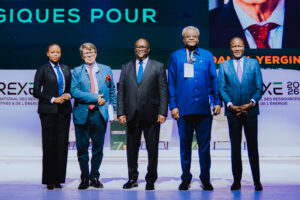
Sahara Group has called for increased African-led investment in energy infrastructure, highlighting its growing partnership with PETROCI as a model for how collaboration between African enterprises can strengthen energy security, build local capacity and create sustainable economic value.Speaking at the 2026 Salon International des Ressources Extractives et de l’Énergie (SIREXE) in Abidjan, during a session on Geopolitics and International Oil and Gas Logistics: Strategic Implications from Africa, Kola Adesina, Group Managing Director, Sahara Power Enterprise Group, said the continent must increasingly convert its abundant energy resources into value through investments in infrastructure, indigenous capacity and partnerships that respond directly to the needs of African markets.According to him, “having natural resources is an advantage, but the real value lies in what we build around them. Africa must move beyond exporting raw materials and importing finished products. We need to develop the capacity to process, distribute and use our resources to power industries, create jobs, and compete in global markets.”Adesina said Côte d’Ivoire provides a compelling example of partnerships, with Sahara and PETROCI working together to strengthen the country’s LPG supply chain and support more reliable access to energy.At the heart of the partnership is SAPET GAS, an 11,500-tonne LPG carrier introduced to strengthen the transportation and security of butane supplies into Côte d’Ivoire, complemented by investment in LPG storage infrastructure in Abidjan.Through SAPET Energy, the partnership is also advancing a 12,000-metric-tonne LPG storage solution with PETROCI, with plans for further expansion. The infrastructure has helped address demurrage costs associated with LPG supply logistics, while improving supply efficiency and strengthening access to cleaner energy for households and businesses across Côte d’Ivoire.“The SAPET GAS partnership is a practical example of what value addition looks like. It brings together local market knowledge, national priorities, investment and operating capability to address a real energy need. The value is not simply in owning an asset; it is in what that asset makes possible for the market and the people it serves,” he said.Adesina noted that partnerships of this nature demonstrate how African institutions and businesses can work together to develop solutions tailored to the continent’s energy requirements while retaining greater economic value within Africa.Sahara is advancing this infrastructure-led LPG strategy across the continent. In Ghana, the company has commissioned an LPG storage facility and deployed MT Asharami Ghana as a dedicated LPG vessel supporting product supply and distribution. In Kenya, Sahara recently broke ground on a 30,000-metric-tonne LPG storage terminal, extending its investment footprint into East Africa.These assets complement Sahara’s growing fleet of LPG shipping capabilities through WAGL Energy, its joint venture with NNPC Limited, creating an increasingly integrated network connecting maritime transportation, storage, supply, and distribution across African markets.Adesina said Africa’s energy transition offers an opportunity to build stronger indigenous businesses and supply chains while attracting the capital and expertise required to close infrastructure gaps and expand energy access.“For Sahara, the approach aligns with its Beyond XXX proposition, building on three decades of operating experience to pursue a new phase of growth, innovation and impact. Sahara will continue collaborating with PETROCI and other partners to advance investments that strengthen energy security, and expand cleaner energy access across Africa.”
Energy
Power Crisis: Stakeholders Warn of Prolonged Blackouts Over Mounting Debts, Gas Supply Challenges
Power
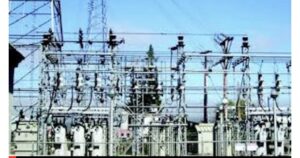
Nigeria’s electricity crisis could persist unless the Federal Government urgently addresses mounting debts in the power sector, inadequate investment in gas production and weak transmission infrastructure, industry stakeholders have warned.
The stakeholders said the absence of a sustainable payment system for gas suppliers, coupled with poor commercial arrangements and insufficient investment, continues to undermine electricity generation and efforts to improve power supply across the country.
The warning was issued at the sixth annual conference of the Power Correspondents Association of Nigeria in Abuja, where industry experts highlighted the financial and structural challenges threatening Nigeria’s ambition of building a $1 trillion economy by 2030 through reliable and affordable electricity.
The concerns come amid renewed power supply disruptions nationwide. On November 5, the Nigerian Independent System Operator attributed the decline in national grid generation to inadequate gas supply to thermal power plants and reduced water inflows into hydroelectric reservoirs. The development resulted in shorter electricity supply hours and increased load shedding.
However, the Nigerian National Petroleum Company Limited maintained that its gas transportation network remained operational, insisting that gas production, commercial supply arrangements and actual deliveries to power plants should be examined as separate issues.
Speaking at the conference, the General Manager, Gas Commercial, Nigerian National Petroleum Development Company, Bashiru Adoke, described the gas-to-power challenge as solvable but stressed that sustained investment and a dependable payment mechanism were necessary.
According to him, the inability of electricity market operators to adequately pay for gas supplied to generating companies remains one of the major obstacles to stable power generation.
Adoke explained that generating companies receive insufficient payments for electricity produced, making it difficult for them to meet their gas supply obligations.
He disclosed that the electricity market currently owes gas suppliers more than N630bn for power generated and consumed by Nigerians.
He further explained that gas accounts for between 60 and 75 per cent of electricity production costs, while payments received by generating companies are often insufficient to cover their operational expenses.
Adoke warned that periodic government interventions to settle outstanding debts would not provide a lasting solution if fresh liabilities continued to accumulate.
He noted that although the government’s intervention programme addresses legacy debts covering 2015 to 2025, outstanding obligations from 2025 onward are already building up and require urgent attention.
He also called for increased investment in non-associated gas production, warning that excessive dependence on associated gas, which is produced alongside crude oil, could expose electricity generation to disruptions whenever oil production is affected.
Although the Federal Government has introduced incentives through executive orders to encourage investment in gas projects, Adoke maintained that additional funding was required to boost production and ensure reliable supply to power plants.
He also expressed concern that high electricity tariffs could encourage more consumers to abandon the national grid in favour of solar energy and other alternative sources of power.
Adoke warned that widespread dependence on independent power solutions could threaten the long-term sustainability of the national electricity grid.
Meanwhile, the General Manager, Engineering, Transmission Company of Nigeria, Mojeed Akintola, identified inadequate electricity generation as a major constraint to effective transmission.
He explained that the transmission company could only distribute the volume of electricity generated by power stations, stressing that improving transmission capacity alone would not resolve the country’s electricity challenges.
Akintola disclosed that the company was expanding its transmission capacity through the installation of additional transformers and construction of new transmission lines.
However, he identified right-of-way disputes and vandalism as major challenges delaying the completion of critical transmission projects.
The stakeholders stressed that addressing the country’s electricity challenges would require a coordinated approach involving sustainable financing, increased gas investment, improved infrastructure and stronger commercial arrangements across the power value chain.

-

 Energy1 year ago
Diesel falls to ₦979/L in Lagos
-
 Law & Crime1 year ago
EFCC vs Yahaya Bello: Court adjourns ₦80.2b alleged fraud trial to Nov 11
-

 Business9 years ago
The 9 worst mistakes you can ever make at work
-
Art & Life9 years ago
These ’90s fashion trends are making a comeback in 2017
-
Entertainment9 years ago
The final 6 ‘Game of Thrones’ episodes might feel like a full season
-
Art & Life9 years ago
According to Dior Couture, this taboo fashion accessory is back
-
Business9 years ago
3 Ways to make your business presentation more relatable
-
Entertainment9 years ago
The old and New Edition cast comes together to perform