
Politics
Ibas: History will be kind to me as Rivers State sole administrator

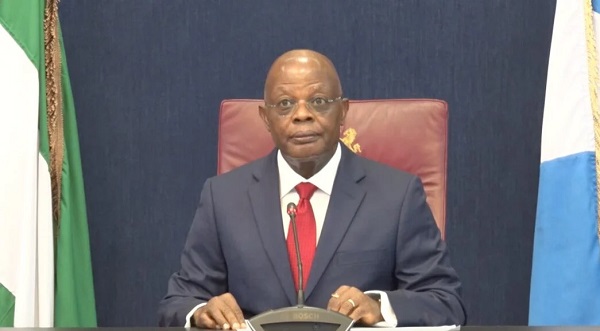
- Reflects on tenure
Following the lift of emergency rule in Rivers State by President Bola Tinubu, the Sole Administrator during the period, Vice-Admiral Ibok-Ete Ibas (rtd), has reflected on his six-month stay in office, summing it up with the with the famous saying of Winston Churchill: “history will be kind to me.”
‘’When I step aside, posterity will not merely reminisce about me just as one who served as a sole administrator but as a proud son of the Niger Delta,’’ Vice-Admiral Ibas said a few hours before President Bola Ahmed Tinubu announced the end of emergency rule in the state, thereby paving the way for Governor Siminialayi Fubara’s return to office.
Also yesterday, the state Elders Council welcomed the latest development in the oil-rich state. It thanked President Tinubu for the return of peace to the state.
The former sole administrator and the elders council consequently pleaded with the people to build on the newfound peace in the state.
Vice-Admiral Ibas spoke at the Government House Banquet Hall in Port Harcourt while launching the state’s International Public Sector Accounting Standards (IPSAS) and new revenue codes.
He said: “Let me use this opportunity to thank all who have supported us throughout the six months of the emergency rule. The reforms we implemented were not always easy. In the process, we made new friends and new enemies.
“History will judge that every action was taken for the general good of Rivers State. In spite of our short time in office, the legacy we leave behind is one of courage, discipline and reforms.
‘’I humbly plead with you to consolidate and sustain these gains for the continuous progress of our dear state.
“When I step aside, posterity will not merely reminisce about me just as one who served as a sole administrator but as a proud son of the Niger Delta who will always desire the best for this great land.”
Vice-Admiral Ibas explained that the IPSAS and the new revenue codes were necessary to address systemic weaknesses in the state’s revenue architecture.
“For too long, our revenue system has suffered from weak or imprecise computation, creating loopholes that encouraged leakages, inconsistencies, and outright losses.
‘’This reform ushers in transparency, accountability, and efficiency. Every transaction will be traceable, every payment verifiable, and every process auditable in real time,” he said.
The former Navy top brass noted that the dual implementation of IPSAS and the revenue codes would fundamentally transform the state’s economy.
He said: “The IPSAS framework will ensure the state’s financial records are comparable, credible, and globally acceptable, significantly boosting confidence among investors and international development partners.”
Vice-Admiral Ibas added that the codes would empower the Rivers State Internal Revenue Service (RSIRS) to capture previously overlooked revenue streams, deepen its tax net, and substantially enhance its Internally Generated Revenue (IGR).
“For taxpayers, it means convenience. For the government, it means more reliable revenue inflows. And fo r our people, it means resources will be better harnessed to provide infrastructure and services that improve daily life,” he said.
RSIRS Chairman Israel Egbunefu described the IPSAS and the new revenue codes as a transformative step that “globalises the fiscal identity of Rivers State.”
“With IPSAS, Rivers State is no longer reporting revenue in isolation. It is speaking a language understood by the World Bank, the United Nations, and global financial institutions,” Egbunefu stated.
“This will unlock billions of naira in revenue that were previously lost or underreported and positions us as a credible destination for investment and international credit.”
Israel praised Vice-Admiral Ibas for seeing through the complex reform within a short period, calling on all stakeholders to consolidate the gains for the benefit of the state.
The Elders Council lauded President Tinubu, Fubara and the Federal Capital Territory(FCT) Minister for ensuring the return of peace to the state.
The council, in a statement by its Chairman, Fednard Anabraba, also praised other parties to the crisis that led to the imposition of emergency rule in the state, including the Martin Amaewhule-led House of Assembly for their patience and decorum while the peace process lasted.
It urged them to maintain the peace and work together to push for accelerated development of the state by avoiding inflammatory comments and allowing the governor as well as the House of Assembly to work as a team.
The elders said: “We urge all stakeholders, without exception, to embrace the peace and reconciliation that has now returned to our dear state.
“We also quickly wish to admonish the few individuals and groups who are still fanning the embers of discord to come to terms with the fact that the crisis is over and stop making inflammatory statements, inciting rhetoric in the media and whipping up sentiments for their selfish interests.
‘’They should prioritise the interest of the state and allow Governor Fubara and the House of Assembly to work together without further distractions.
“We equally commend the governor and the Leadership of the House of Assembly for making peace.
‘’At this point, we can only remind them that they not only agreed on peace in Abuja but also, on their own, went to the Presidential Villa and affirmed their reconciliation before His Excellency, Bola Ahmed Tinubu, the President of the Federal Republic of Nigeria and Commander-in-Chief of the Armed Forces.
‘’That vow before Mr President remains sacrosanct. Therefore, going forward, they must work harmoniously in the interest of the state. The people of Rivers State expect nothing less from them.
“We use this opportunity to salute the good people of Rivers State for their patience and understanding throughout the period of the emergency rule.
‘’It is an attestation of faith in the administration of President Bola Ahmed Tinubu, GCFR, whose proactive action averted the disaster that was about to descend on the state.
“The indefatigable political leader of Rivers State, the former Governor of the State and Minister of the FCT, Chief Nyesom Ezenwo Wike, deserves a special mention for his role in midwifing the entire reconciliation process. Again, he demonstrated that he was a man with a large heart.
‘’He not only brought the parties together but also ensured that the parties went to Mr President to brief him first-hand on the details of their understanding.
“And to our dear President, His Excellency, Bola Ahmed Tinubu, GCFR, we say a very big thank you for bringing Rivers State back from the brink and taking actions to ensure the peace that we now enjoy in the state.”
Semenitari : Rivers people are excited
Former Acting Managing Director of the Niger Delta Development Commission (NDDC), Ibim Semenitari, also hailed President Tinubu for lifting the emergency rule in the state.
“It’s a breath of fresh air, and it’s good to have my state back. It is gratifying, and I think there’s relief all over the state. And the people are feeling good,’’ Semenitari said on a national television programme.
She said that gladiators in the feud that made the state fall under emergency rule must have learnt some lessons. “It didn’t feel good being the only state that didn’t have her democratically elected governor, and I’m sure that most Rivers people felt the same way.
“I guess that lessons have probably been learnt across the board.
“What happened has happened, and we just want to move forward.
“What is critical is that the people of Rivers State deserve to have governance, development and to enjoy the gains of democracy and that is for me, is critical at this time.”
She urged the gladiators to always remember that governance should be about the people.


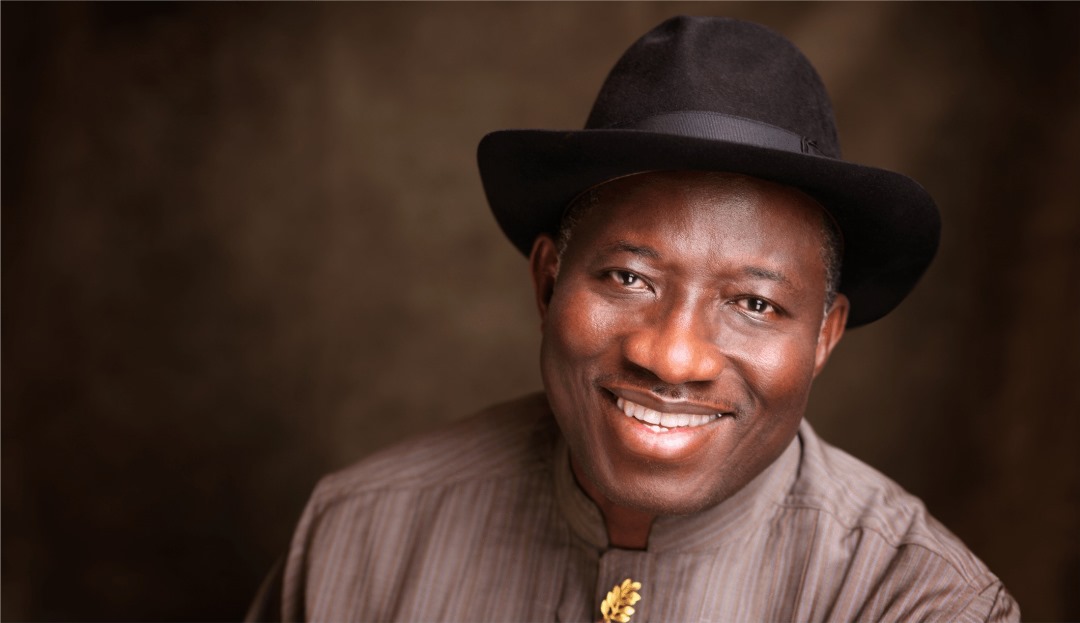
• Ex-President cites WAEF rules
Former President Goodluck Jonathan has explained that his membership in the West African Elders Forum (WAEF) is a key reason behind his absence from active, partisan politics in recent years.
Jonathan, who marked both his 68th birthday and the 10th anniversary of the Goodluck Jonathan Foundation (GJF) in Abuja on Monday, told guests that the forum’s strict non-partisan mandate precludes him from engaging in political activities.
“The condition to be a member of the WAEF is that you must no longer be an active politician,” Jonathan said during his speech at the anniversary event, which also featured a gala dinner.
“And that is why I have disappointed many of my political associates. They expect me to play an active role in politics, but before I do, I will first and foremost resign from the WAEF.”
Jonathan emphasised that WAEF’s primary mission is to mediate during election periods to prevent violence and crises.
“We don’t just observe the elections; we intervene if we notice any issues that might escalate into conflict,” he explained.
WAEF, made up of former heads of state from across West Africa, aims to stabilise the region by using its members’ influence to prevent electoral violence.
Shifting Focus: From Politics to Democracy Advocacy
Jonathan, who became a symbol of democratic integrity after conceding defeat in the 2015 elections, also reflected on the broader state of Nigerian politics. He lamented the lack of basic training for many politicians, stressing that politics should be treated as a profession that demands responsibility and competence. “We must see politics as the business of responsible individuals,” he said.
He also condemned the recent kidnapping of 25 girls in Kebbi State, drawing a painful parallel to the infamous Chibok schoolgirls’ abduction during his tenure.
“This is a reminder of the dark period in our history. We must pray for the safe return of the victims and work toward ending such tragedies in the future,” Jonathan said.
At the event, the former president detailed the origins of his foundation, explaining how businessman Tony Elumelu suggested he create an organisation focused on promoting democracy. Despite his background in environmental protection, Jonathan said he decided to focus the foundation’s work on democracy and governance, areas where he had earned international recognition.
The GJF has focused on advancing democratic values, election mediation, and peace-building across Africa. The foundation’s Executive Director, Ann Iyonu,
highlighted its decade-long impact in strengthening democratic institutions and fostering inclusive governance.
“Through strategic advocacy, we’ve helped to ensure peaceful transitions and contributed to preventing violent extremism across the continent,” Iyonu said.
Under the GJF’s leadership, the foundation has pioneered initiatives that bring together voices from across Africa to reflect on and rejuvenate democratic practices. Iyonu noted that the foundation’s annual democracy dialogues, launched in 2021, have become vital forums for discussing critical issues like the future of democracy.
“In Accra this year, we explored the theme, ‘Why Democracies Die,’ an essential conversation on the structural factors undermining democratic resilience, both within Africa and globally,” she said.
The foundation has also been instrumental in promoting the security of African states and their citizens, advancing the rule of law, and fostering collaboration between governments and civil society.
“We are proud of our work in fostering peace and promoting human rights through policy dialogues and strategic partnerships,” Iyonu added.
Reflecting on his journey, Jonathan reiterated his belief that effective governance must be built on principles of peace, democracy, and human rights.
As political tensions continue to rise in Nigeria and across the African continent, Jonathan’s words underscored the urgency for a more responsible and well-trained political class that prioritises the welfare of citizens above personal or partisan interests.
“Politics should not be a game of power but a platform for improving people’s lives,” Jonathan concluded, emphasising the need for a more inclusive, democratic future for Africa.

By Grace Edet
The leadership crisis rocking the Peoples Democratic Party (PDP) erupted into a violent confrontation on Tuesday as governors Bala Mohammed of Bauchi and Seyi Makinde of Oyo led a factional takeover attempt at the party’s National Secretariat in Abuja, clashing with supporters of the Federal Capital Territory (FCT) Minister, Nyesom Wike.
The standoff, which lasted nearly six hours, saw police firing multiple rounds of tear gas, rival supporters engaging in physical fights, and senior PDP leaders accusing security agencies of aiding one faction against the other.
The conflict was triggered by a dual claim to the party’s leadership. The Bala–Makinde camp had on Monday elected former minister Tanimu Turaki as its National Chairman and requested police protection ahead of its first National Working Committee (NWC) meeting scheduled for Tuesday at Wadata Plaza.
But the rival Wike–Anyawu group simultaneously announced its own NEC and Board of Trustees meetings for the same time and venue, an action Turaki later described as “a deliberate attempt to cause confusion and breach the peace.”
Heavy Security, Hired Thugs and Tension Before Dawn
By 8:00 am, heavy police deployment had cordoned off the PDP headquarters and surrounding buildings, while dozens of suspected hired thugs, some armed with daggers and smoking hemp, lurked in strategic corners.
A small pro-Wike procession displayed banners reading “Turaki Must Go,” while another group chanted against the FCT Minister.
The tension escalated when police fired tear gas to disperse the rival supporters after clashes broke out around the entrance of the secretariat.
‘I Remain National Secretary Till December 8’ — Anyanwu
Speaking earlier, the embattled former National Secretary, Senator Samuel Anyanwu, dismissed the Ibadan convention of November 15 which expelled him, Wike, and ex-Governor Ayo Fayose.
He described the convention as illegitimate, saying due process was ignored.
“As the national secretary of the party in our constitution, it was very clear that for every convention, the national secretary will state the affairs of the party in the convention,” he said.
Anyanwu added that the individuals who announced his suspension “had no such powers,” insisting that “Damagum was already suspended and has no moral or legal standing to act.”
Governors Storm Secretariat, Confront Bouncers
At about 10:55 am, Bala Mohammed and Seyi Makinde arrived with their supporters, forcing their way through bouncers who attempted to block them.
The move sparked a second wave of tear-gassing as police attempted to disperse the surging crowd.
Members loyal to Turaki later overpowered the bouncers and pushed Wike’s supporters out of the NEC hall—only for Wike to arrive around 11:20 a.m., prompting a fresh cycle of confrontations.
‘We Were Tear-Gassed and Harassed’ — Turaki
Addressing journalists during the chaos, Turaki accused the police of siding with Wike and attacking his members.
“Our serving and former governors are here. Our members of the National Assembly are here. And you have seen how they are now granted access to the minister of the FCT, a person that has been declared a persona non grata in the PDP,” he said.
“They have tear-gassed us and tear-gassed even our governors. Some of our boys, some of our members who have come here to attend meetings have been shot by the police.”
Turaki made an unusual appeal, calling on U.S. President Donald Trump to “save democracy in Nigeria,” and declared that his faction was “ready to lay down their lives” to protect its mandate.
‘We Were Molested Despite Immunity’ — Bala Mohammed
Bauchi State Governor Bala Mohammed also accused security operatives of taking sides.
“We have been teargassed and molested in spite of our immunity and whatever we have as leaders. It is for the nation to gaze at the kind of democracy we have, the kind of leadership we have,” he said.
He insisted that the individuals backing Wike were “imposters who have been expelled by the convention.”
Wike in Standoff, Stayed in Car for Two Hours
Wike’s arrival triggered the biggest disruption of the day. He remained in his car for over two hours as rival leaders blocked entry to the NEC hall, with police firing more tear gas to clear a path for the minister’s convoy.
Despite multiple appeals, including Bala’s direct request to the police to remove Wike from the premises, the standoff continued until after 2:00 p.m., when police launched another round of tear gas to disperse those still protesting the minister’s presence.
A Crisis With No End in Sight
Today’s dramatic events underline the depth of the PDP’s internal breakdown, with two factions now laying claim to the same headquarters, same leadership, and same mandate—each accusing the other of hijacking the party.
With both sides refusing to back down, the crisis risks pushing the nation’s largest opposition party further into fragmentation ahead of critical national elections.
The factional convention of the Peoples Democratic Party (PDP) at the weekend has escalated the crisis in the party.
More chapters and stakeholders have continued to fault the procedure and rejected the expulsion of 11 stalwarts, including Federal Capital Territory (FCT) Minister Nyesom Wike, former Ekiti State Governor Ayodele Fayose and National Secretary, Senator Samuel Anyanwu.
A party source said over the weekend that both factions are gearing up for the next phase of legal fireworks at the court.
The Umar Iliya Damagun-led faction had ignored the judgments of the Federal High Court that restrained the party from conducting the convention, leaning on the exparte order of the Ibadan High Court, which adjourned till December 8 for the resumption of hearing in the case instituted against the party by a chieftain, Folahan Malomo Adelabi.
Rejecting the outcome of the Ibadan convention, the Imo State chapter, in a statement by its Publicity Secretary, Lancelot Obiaku, described it as a “mere gathering of a lawless Committee of Friends,” which ignored court rulings, violated internal procedures, and paraded suspended and expelled members as delegates.
Obiaku said: “It was a tea party of lawless friends, a sham convention drenched in illegality.”
The party officer reaffirmed the loyalty of the chapter to Acting National Chairman Abdulrahman Mohammed and National Secretary Senator Samuel Anyanwu and Senator Samuel Anyanwu as National Secretary, stressing that the refusal of the Independent National Electoral Commission (INEC) to monitor the event underscored its lack of legitimacy.
Obiaku described the dissolution of Imo PDP executives as “wishful” thinking.
He said: “We completely disregard the news making the rounds that our structure has been dissolved, as such is only a wishful thought existing in the imaginations of its purveyors.”



-

 Energy11 months ago
Diesel falls to ₦979/L in Lagos
-
 Law & Crime12 months ago
EFCC vs Yahaya Bello: Court adjourns ₦80.2b alleged fraud trial to Nov 11
-

 Art & Life9 years ago
These ’90s fashion trends are making a comeback in 2017
-
Business9 years ago
The 9 worst mistakes you can ever make at work
-
Entertainment9 years ago
The final 6 ‘Game of Thrones’ episodes might feel like a full season
-
Art & Life9 years ago
According to Dior Couture, this taboo fashion accessory is back
-
Entertainment9 years ago
The old and New Edition cast comes together to perform
-
Entertainment9 years ago
Mod turns ‘Counter-Strike’ into a ‘Tekken’ clone with fighting chickens