
Energy
NUPRC targets $4.9b capex in non-associated gas


Nigeria’s ambition to become Africa’s gas powerhouse received a major boost with the unveiling of a regulatory roadmap at the Nigerian Upstream Petroleum Regulatory Commission (NUPRC) aimed at unlocking over 55 trillion cubic feet of uncommitted gas reserves and attracting billions of dollars in new investments into the country’s gas value chain.
This is as the NUPRC revealed that since the enactment of the Petroleum Industry Act (PIA), the Commission has approved over 25 Non-Associated Gas (NAG) Field Development Plans, unlocking nearly 9,790 BSCF of reserves, 3.54 BSCF/D of gas, and attracting over $4.9 billion dollars in capital expenditure (CAPEX) investments, according to a statement yesterday.
Speaking at the third Gas Investment Forum held in Lagos, the Commission Chief Executive (CCE), Engr. Gbenga Komolafe, represented by the Executive Commissioner, Development and Production, Engr. Enorense Amadasu, outlined the Commission’s strategic focus on driving gas development, monetisation, and infrastructure expansion to secure Nigeria’s energy future and support economic transformation.
Nigeria’s proven gas reserves currently stand at 210.54 trillion cubic feet (TCF) comprising 109.51 TCF of Non-Associated Gas (NAG) and 101.03 TCF of Associated Gas (AG). Of this, about 55 TCF representing 26 percent of total gas reserves remains uncommitted to existing or planned monetisation projects, signalling a massive investment opportunity for both domestic and international investors.
Amadasu, according to the statement, noted that with an annual average daily gas production of 6.99 billion standard cubic feet (BSCF/D) in 2024, Nigeria’s Reserves Replacement Ratio (RRR) stands at 1.56, while the Reserves Life Index (RLI) is about 92.7 years an indication of long-term sustainability for investors in the country’s gas sector.
The statement said the national gas reserves, he said, grew from 208.83 TCF in 2023 to 210.54 TCF in 2025, while gas production rose from 6.91 BSCF/D to 7.61 BSCF/D, reflecting steady growth across the value chain. The domestic market currently accounts for about 28 percent of total gas utilisation, while exports via LNG and WAGP take up 35 percent, and field use including gas lift and reinjection represents 29 percent.
On Policy Reforms and Regulatory Milestones, Engr. Amadasu enumerated several regulatory instruments that have shaped Nigeria’s gas development journey, including the Associated Gas Re-injection Act (1979), National Gas Policy (2008), Flare Gas (Prevention of Waste and Pollution) Regulations (2018), Decade of Gas Initiative, and the landmark Petroleum Industry Act (PIA) 2021.
Recent instruments such as the Domestic Gas Delivery Obligation Regulations (2022), the Gas Flaring, Venting and Methane Emissions Regulations (2023), and the Oil and Gas Companies (Tax Incentives) Order (2024) further consolidate the Commission’s pro-investment posture.
Since the enactment of the PIA, the Commission has approved over 25 Non-Associated Gas (NAG) Field Development Plans, unlocking nearly 9,790 BSCF of reserves, 3.54 BSCF/D of gas, and attracting over 4.9 billion dollars in CAPEX investments.
He further disclosed that the Commission is actively facilitating regulatory approvals and negotiations for upstream gas supply to major projects such as NLNG Train 7, the Ajaokuta–Kaduna–Kano (AKK) Pipeline, and the Brass Fertilizer and Petrochemical Project.
Engr. Amadasu also observed that, NUPRC is currently monitoring 19 active gas development projects, comprising 10 production facilities and nine pipeline projects, with a combined capacity of 3.55 BSCF/D. About 88 per cent of these projects are in the engineering phase, while 12 percent have progressed to construction or fabrication.
He explained that 86 percent of the new gas production projects are targeted at the export market, particularly feed gas supply to the Nigerian LNG, while 23 percent (142 MMSCFD) are directed toward the domestic market.
Amadasu emphasised that the NUPRC’s regulatory roadmap aligns with the Federal Government’s National Gas Policy and Energy Transition Plan, which prioritise decarbonisation, clean energy adoption, and inclusive economic growth.
According to him, the Commission is intensifying efforts to attract new investments by eliminating entry barriers through the drill or drop provision in the PIA, driving full implementation of the Decade of Gas Initiative, facilitating access to fiscal incentives, promoting cluster and nodal gas infrastructure development, and Organising a Gas Production Ramp-up Strategy Workshop in Q4 2025.
He concluded by reaffirming that Nigeria stands at a pivotal juncture in its energy journey one that demands innovation, collaboration, and sustainable investment.

• It’s a mixed bag for Nigeria, says Dr. Muda Yusuf
Oil prices fell sharply yesterday following a peace deal secured between the U.S and Iran to end the war that began on February 28 and also an agreement to reopen the Strait of Hormuz more than 100 days after its closure.
By yesterday, Brent crude had dropped by about 4.53 per cent to trade at $83.37 per barrel, while West Texas Intermediate (WTI) had fallen 4.69 per cent to $80.90 per barrel. Oil prices, which peaked in mid-May, have been slowly but surely trending downward in recent weeks on rumors of a deal, even after multiple escalatory strikes.
An economist and policy analyst, Dr. Muda Yusuf, described the development as a mixed bag for Nigeria. According to him, while the price drop will naturally translate to a reduction in the pump prices of petrol, diesel, Jet A1 and gas, on the flip side, it portends a drop in revenue for the federal government.
“With the peace deal, crude oil prices will plummet and naturally this should cascade into the local oil market. So I expect that petrol prices should revert to what it used to be before the war. However, this will not be immediate because many of these distributors are carrying old stock, which they bought at a higher price before today (yesterday). Remember that the Middle East is a major producer and supplier to the market; Qatar has left OPEC, so they will be free now to flood the market, meaning we are likely to see an even more drastic reduction in price.
“However, the price reduction is likely to be gradual. But within the next four weeks or so, the situation should normalise and prices should come down to what normally it used to be. It should come to pre-war situation. If oil price comes to around $65 or so, then it should come to close to N800 or N900 per litre,” he said.
According to Yusuf, who is also the Chief Executive Officer, Center for the Promotion of Private Enterprise (CPPE), there is also a flip side to the price reduction for Nigeria.
“The flip side for Nigeria’s revenue is going to be negative because for all producing countries that were not caught up in this Middle East or Strait of Hormuz problem, who have been benefiting from the windfall, of course this will mean that the windfall will disappear. And earnings from crude oil will also affect revenue negatively.
“So we are likely to see a reduction in our oil revenue arising from this deal or the likely drop in crude oil price. It’s a no-brainer. The revenue will drop and of course it means that there are some benefits and some demerits,” Yusuf submitted.
The peace agreement, which will be formally signed on Friday in Switzerland, got further boost when President Donald Trump declared that a deal with Iran was complete, and writing on social media that “oil will flow” through the Strait of Hormuz once the deal is signed on Friday.
The peace deal remains very significant for the global oil market as tension around the commodity is expected to ease up. Iran, for instance, will be able to resume crude exports during the 60-day ceasefire period, meaning a suspension of sanctions on Iranian oil, while broader nuclear negotiations continue.
Stakeholders argued that while the agreement represents the most serious diplomatic breakthrough since the war began, they are however concerned that oil markets will remain on edge until the Strait of Hormuz is cleared of mines, the deal is signed, and normal shipping flows resume.

Axxela Limited has announced the appointment of new non-executive Board members to deepen strategic oversight and strengthen corporate governance in support of the company’s next phase of exponential growth.
The newly appointed Board members are Nzan Ogbe (Chairman of the Board), Eric Idiahi, Dolu Olugbenjo, Olufemi Okin, Moshood Olajide, Kaat Van Hecke and Jeremy Bending. Their combined experience in business leadership, financial management, and infrastructure development will strengthen the company’s post-divestment governance framework and guide the company as it expands its gas infrastructure footprint and delivers sustainable energy solutions across industries and markets.
Nzan Ogbe, Chairman of the Board, is the founder and first CEO of Levene Energies and the chairman of LPV Energies. He is a serial entrepreneur with over 30 years of experience building businesses across sectors, including commercial trading, energy, real estate, and telecoms. His leadership and commitment to sustainability have established him as one of Africa’s most resourceful business leaders.
Eric Idiahi is a seasoned entrepreneur and strategic investor with over 20 years of experience building and backing businesses that are shaping Africa’s future. He co-founded Evercorp Industries and previously served as a partner at Verod Capital Management. He has raised more than $1 billion for businesses across key sectors of the African economy.
Dolu Olugbenjo is an Executive Director at Stanbic IBTC Asset Management and serves as Chief Investment Officer of the Stanbic IBTC Infrastructure Fund. He has over 20 years of experience, including leading debt advisory transactions for a wide range of clients.
Moshood Olajide is an experienced oil and gas industry operator with an extensive track record in operational excellence, business growth, and strategic transformation. He holds a Bachelor of Laws degree from Obafemi Awolowo University and a Master of Law degree from Columbia University in New York. He is a fellow of the Association of Chartered Certified Accountants and licensed to practice law in Nigeria and New York. He takes over from Timothy Ononiwu as the new Group Chief Executive Officer.
Kaat Van Hecke has over two decades of relevant professional experience spanning several jurisdictions, including Nigeria, Austria, the Netherlands, Russia, and Kazakhstan. She serves as an Independent Non-Executive Director in Serica Energy PLC, London/Aberdeen, and in Trinity Exploration and Production PLC, London/Trinidad and Tobago.
Jeremy Bending has wide experience of unbundling and market liberalization in the UK energy industry. He is also experienced in international M&A activities and disposals. He is a Chartered Engineer who has been closely involved in implementing and maintaining safety and engineering management systems.
Olufemi Okin is a seasoned financial services executive with over a decade of progressive experience, spanning trusteeship, capital markets, corporate governance and legal advisory services. He is recognised for driving sustainable profitability, securing high-value corporate and public trust mandates, and fostering strong relationships across key stakeholders.
Speaking on the Board appointments, the Chairman, Nzan Ogbe, said, “It is a privilege to assume the role of Chairman and to work alongside my fellow directors and the management team to provide strong governance, strategic oversight, and guidance as the company continues its growth journey.”
The new board members bring a wealth of experience across oil & gas, banking, consulting, asset management, and private equity, and are well-positioned to strengthen oversight and drive sustainable growth.
As Axxela continues to expand its infrastructure investments and deepen its role in advancing cleaner, more reliable energy solutions, the expertise and perspective of the new board members will be key to shaping the company’s strategic direction.
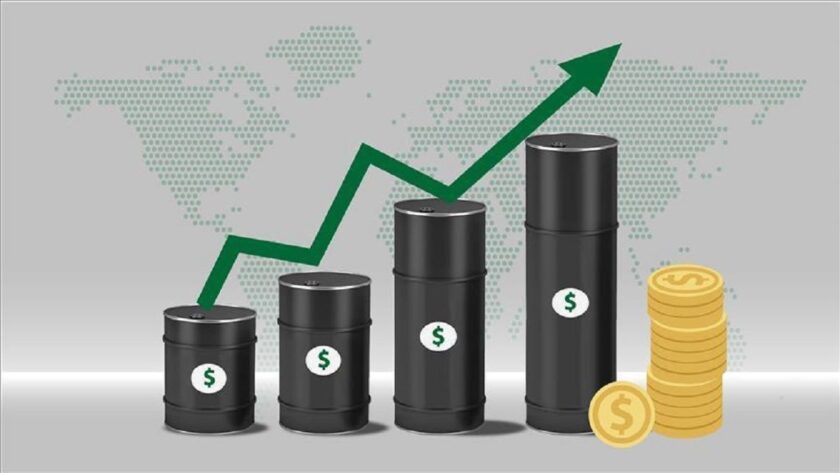
The international oil market tumbled at the weekend as U.S.-Iran peace negotiations gain momentum. As at the time of going to press last night, words were still being awaited of the signing of a peace deal between the U.S and Iran to end the war- a position the U.S President, Donald Trump, had maintained would happen and lead to the full reopening of the Strait of Hormuz.
But experts caution that a return to pre-war oil price levels remains a distant prospect. The reopening of the Strait of Hormuz, experts say, does not, in itself, signal an immediate normalisation of energy supplies.
Still, forecasts for oil are split, with Goldman Sachs lowering its 2027 Brent crude outlook to $80 per barrel, while ING warns prices could spike to $120–$130 if supply disruptions persist.
Biggo.com news, quoting the Seoul Economic Daily’s energy series “Petro-Electro” and Reuters, noted that the market’s primary focus is now on whether the so-called “Islamabad Declaration”—a memorandum of understanding (MOU) to end hostilities between the U.S. and Iran—will be signed.
Reuters reported that the two nations have agreed to reopen the Strait of Hormuz within 30 days in exchange for releasing billions of dollars in frozen Iranian assets and waiving sanctions on Iranian crude exports. Negotiations over Iran’s nuclear programme are also slated to proceed for 60 days following the cessation of hostilities.
Based on these, Brent crude futures fell $3.05, or 3.37 per cent to settle at $87.33 per barrel, marking their lowest level since early March. West Texas Intermediate (WTI) also dropped $2.83 or 3.23 per cent to $84.88 per barrel, its weakest since April 17.
However, reopening the strait does not equate to a full restoration of Middle Eastern energy flows. A severe bottleneck is inevitable as hundreds of vessels currently stranded in the Persian Gulf attempt to transit the narrow waterway simultaneously.
Javier Blas, an energy columnist for Bloomberg, noted: “We will see the simultaneous effort to evacuate trapped tankers while new vessels attempt to enter. There is no precedent for this, and no playbook exists.”
The recovery on the production side is also proving sluggish. Kuwait Petroleum Corporation estimates it will take six to eight weeks to restore roughly 70% of crude output after the strait reopens, with an additional month needed to bring the remaining 30% back online. As supply recovers only gradually, the extent of any oil price decline will be inherently capped.
A sharp drawdown in global petroleum inventories is another factor underpinning prices. According to the International Energy Agency (IEA), global oil stockpiles fell by 250 million barrels between February—when the conflict began—and May. Once peace is restored, efforts by governments and refiners to replenish strategic and commercial reserves are expected to generate additional demand, further limiting downside for crude.
Conversely, significant downward pressures on oil prices remain formidable. Just before the war, the dominant concern in global crude markets was oversupply. With non-OPEC producers such as the United States, Brazil, and Canada already poised to increase output, the United Arab Emirates’ (UAE) withdrawal from OPEC has amplified the potential for a supply surge. The UAE has long chafed under production quotas, and any unilateral move to boost output could intensify the glut.
On the demand side, China’s slowing oil consumption is particularly pronounced. In May, China’s average daily crude imports fell to 7.8 million barrels, down more than 3 million barrels from the roughly 11 million barrels per day maintained in recent years. The structural shift in energy consumption—driven by the expansion of electric vehicles and increased use of petrochemical feedstocks—is cited as the root cause.
Major institutions are also diverging in their oil price outlooks. Goldman Sachs has lowered its 2027 average Brent crude forecast to $80 per barrel, reflecting rising supply and weakening demand. OPEC, meanwhile, cut its 2026 global oil demand growth estimate from 1.17 million barrels per day to 970,000 barrels, but left the door open to a demand recovery by projecting an increase of 1.73 million barrels per day in 2027. ING analysts warned that “if Middle Eastern crude supply is not restored by the end of July, inventory levels and seasonal demand increases could send oil prices soaring to $120–$130 per barrel.”
Saadé, CEO of French shipping giant CMA CGM, told the French parliament that “even if a peaceful solution is reached in the coming weeks, there is no guarantee that another crisis will not erupt,” underscoring the persistence of geopolitical uncertainty. Indeed, Iran has indicated that terms could change before the MOU is signed and has firmly stated that its missile program will be excluded from negotiations.
Ultimately, even if peace materializes, international oil prices appear set to navigate a complex path toward a new equilibrium—one shaped by the interplay of shipping bottlenecks, delayed production restarts, lingering Middle Eastern tensions, and shifting global demand patterns.
….Culled from Biggo.com



-

 Art & Life9 years ago
These ’90s fashion trends are making a comeback in 2017
-
Business9 years ago
The 9 worst mistakes you can ever make at work
-
Entertainment9 years ago
The final 6 ‘Game of Thrones’ episodes might feel like a full season
-
Art & Life9 years ago
According to Dior Couture, this taboo fashion accessory is back
-
Entertainment9 years ago
The old and New Edition cast comes together to perform
-
Entertainment9 years ago
Mod turns ‘Counter-Strike’ into a ‘Tekken’ clone with fighting chickens
-
Sports9 years ago
Phillies’ Aaron Altherr makes mind-boggling barehanded play
-
Entertainment9 years ago
Disney’s live-action Aladdin finally finds its stars