
Economy
‘New tax regime to end multiple levies, boost profitability in haulage industry’

By Olamide Akintunde
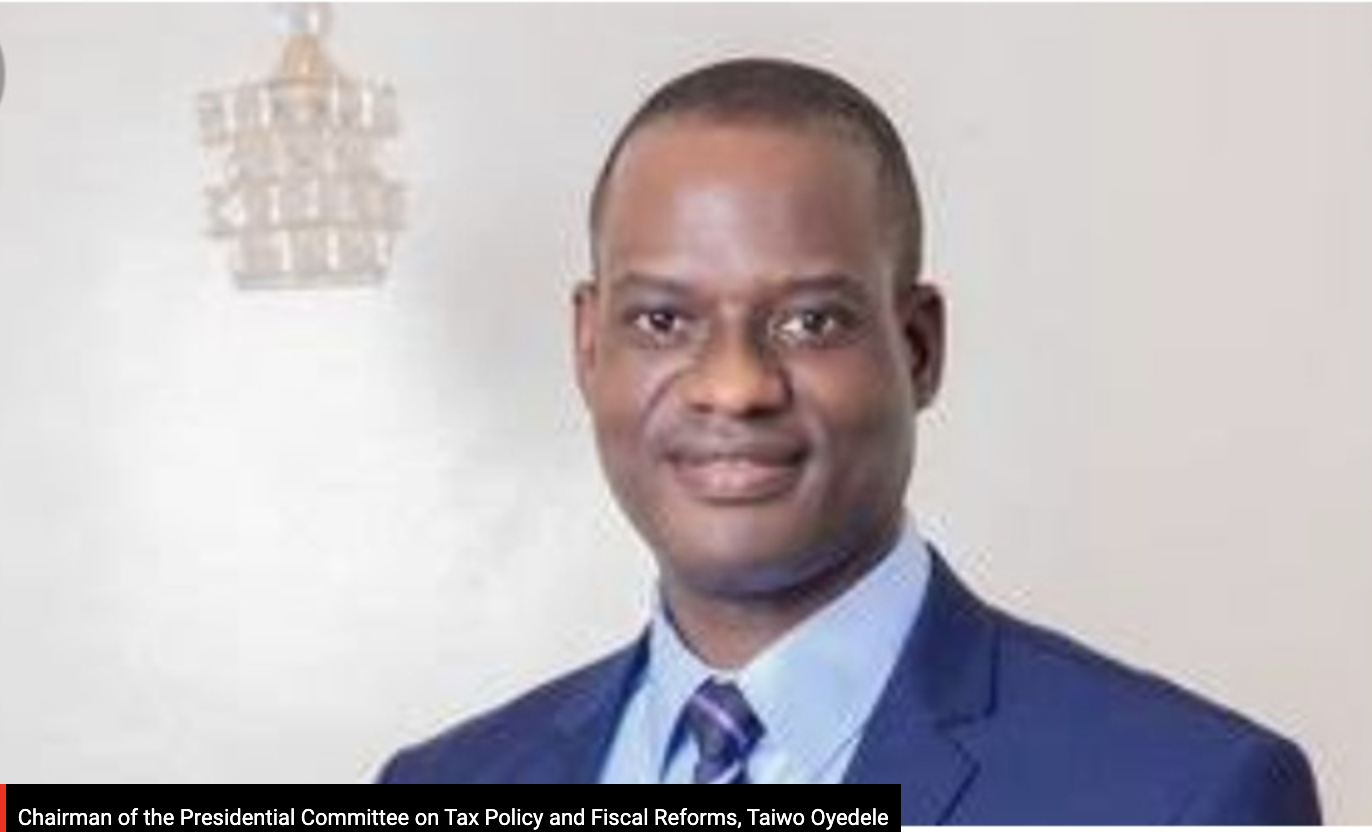
The Federal Government’s new tax regime, scheduled to take effect in January 2026, is expected to improve efficiency and profitability in Nigeria’s haulage and logistics industry by eliminating multiple taxation and curbing extortion on the nation’s roads.
Chairman of the Presidential Committee on Fiscal Policy and Tax Reforms, Taiwo Oyedele, said the reforms were part of a deliberate effort to stabilise the economy and translate macroeconomic gains into tangible relief for businesses and citizens.
Speaking at the Haulage and Logistics Magazine Annual Conference and Exhibition held in Lagos, with the theme “Tax Reforms From Policy to Practice: Challenges and Opportunities for the Nigerian Haulage Industry,” Oyedele said the sector stands to be among the biggest beneficiaries of the sweeping changes.
He said: ” There is no doubt that the haulage and logistics industry in Nigeria stands to be one of the biggest beneficiaries of this tax reform in view of the fact that the reform intends to tackle headlong the issue of multiple taxation.
“Officially, there are over 60 taxes and levies that businesses pay in Nigeria. Officially, even that does not make sense. By the time you add unofficial to it, it is more than 200 taxes in a country where they want to create employment. Some of those nuisance levies and taxes are even in our constitution.”
He pointed out that the tax reforms have outlawed road extortion.
The other thing we have done with this tax harmonisation is to outlaw physical barriers for tax collection. Why do we have to put wood on the road with nails? We are now saying under these reforms nobody should have to physically provide any hindrance, roadblock, impediment because they want to collect tax.
“No one should collect taxes in cash because that cash is not even getting to the government,” Oyedele said.
He added that government will deploy technology as a substitute for tax collection.
He said: “If the government decides that you are a big transport company, your vehicle should pay N100,000. We ask you to pay and say Madame Transporter or Mr Transporter you have up until the end of March for example, I’m not saying that’s what is in the law, to pay for the year, if by March you have not and you can even pay in installment the day you find N5,000 go and pay you find N10,000, pay if you have not finished paying by the end of March, you know I can collect that money without showing up.
“I’m trying to demonstrate to you that we are in 2025. It’s called the age of technology. It is embarrassing as a country to go and put wood with nails on the road and be fighting people.”
The convener of the conference, Alfred Okugbeni, in his opening remarks, reiterated that the haulage sector was one impacted by the tax reforms.
He said: “A critical aspect of the reform is the elimination of several taxes, multiple taxation, and illegal levies which continue to inflate the cost of transporting goods in our country.”



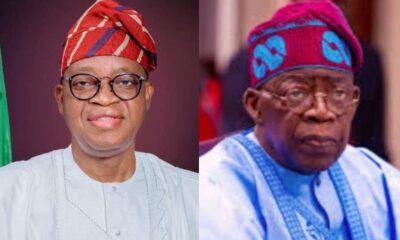





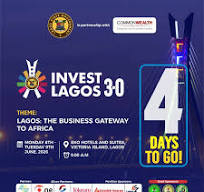
Vice President Kashim Shettima and Lagos State Governor Babajide Sanwo-Olu has projected Lagos as Africa’s foremost investment destination, describing the state as the continent’s gateway to global wealth, trade and economic opportunities.
They spoke at the opening ceremony of Invest Lagos 3.0 held at Eko Hotels and Suites, Victoria Island, where policymakers, investors, development finance institutions and business leaders gathered to explore investment opportunities across key sectors of the economy.
Speaking on the theme: “Lagos: The Business Gateway to Africa, Powering Africa’s Next Era of Trade, Talent and Global Economic Leadership,” Shettima said Lagos was increasingly emerging as Africa’s gateway to global wealth and a strategic hub for international investors seeking access to the continent’s expanding markets.
According to him, Nigeria possesses the demographic strength, entrepreneurial talent and economic potential to rank among the world’s largest economies by 2050, provided the country continues to invest in innovation, infrastructure and effective leadership.
He noted that Lagos had sustained its position as Africa’s commercial nerve centre through deliberate policies, strong institutions and a business-friendly environment that continues to attract multinational corporations and foreign investments.
The Vice President also reaffirmed the Federal Government’s commitment to collaborating with states and the private sector to improve infrastructure, expand trade opportunities and strengthen the ease of doing business across the country.
In his keynote address, Governor Sanwo-Olu said Lagos had evolved significantly since the inaugural edition of the summit in 2024 and was strategically positioned to leverage opportunities presented by the African Continental Free Trade Area (AfCFTA).
He noted that with a population exceeding 23 million and a Gross Domestic Product (GDP) estimated at about $259 billion measured by purchasing power parity, Lagos remains the largest sub-national economy within the AfCFTA bloc.
”We are announcing to the world that if you want to reach Africa and benefit from its boundless market and economic potential, Lagos offers the most viable and appealing route,” the governor said.
Sanwo-Olu highlighted Lagos’ economic credentials, noting that the state handles about 70 per cent of Nigeria’s sea freight activities, hosts the country’s leading financial institutions and boasts one of Africa’s most vibrant startup ecosystems.
The governor outlined major infrastructure projects undertaken by his administration, including the Blue and Red Rail Lines, the operationalisation of the Lekki Deep Sea Port, the ongoing construction of the Fourth Mainland Bridge and plans for the Lekki-Epe International Airport.
He added that investments in agriculture, technology and logistics were transforming Lagos into a regional hub for food security and digital innovation.
Sanwo-Olu pointed to the emergence of globally recognised technology firms such as Flutterwave, Moniepoint, Andela and Interswitch as evidence of Lagos’ growing influence in Africa’s digital economy.
He also disclosed that the Lagos International Financial Centre (LIFC) project was progressing steadily and would serve as a major financial gateway connecting Africa to global capital markets.
The governor further revealed that Lagos had secured hosting rights for the Creative Africa Nexus (CANEX) 2026 and the Intra-African Trade Fair (IATF) 2027, describing both developments as evidence of growing international confidence in the state.
According to him, the summit’s deal rooms were deliberately designed to facilitate investment decisions and mobilise financing for critical projects.
”The singular goal is to spotlight and mobilise financing for the most consequential investment decisions across the public and private sectors that Nigeria has ever seen,” he said.
Sanwo-Olu added that the success of the summit would be measured not by attendance figures or speeches, but by investments capable of creating jobs and transforming lives.
Minister of Finance and Coordinating Minister of the Economy, Taiwo Oyedele, said ongoing fiscal and tax reforms were improving Nigeria’s investment climate, boosting investor confidence and creating new opportunities for economic growth across states.
Also speaking, Commonwealth Secretary-General Shirley Botchwey called for stronger regional cooperation through improved power supply, efficient logistics systems and enhanced security across Africa.
She urged African leaders to harness innovation and human capital as drivers of job creation and sustainable development.
Delivering the welcome address, Lagos State Commissioner for Commerce, Cooperatives, Trade and Investment, Folashade Ambrose-Medebem, described the summit as a strong vote of confidence in Lagos and its economic potential.
She said delegates, investors, business leaders and development partners from Nigeria, Africa, the Commonwealth and other parts of the world had gathered to explore opportunities in Africa’s largest commercial city.
According to her, Lagos remains Nigeria’s economic powerhouse and one of the world’s fastest-growing megacities, accounting for a significant share of national GDP while attracting the highest volume of domestic and foreign investments.
”Lagos is open for business, open for partnerships and open for investments. The opportunities are here, the market is here, the talent is here and the leadership is here,” she said.
Chairman of the Commonwealth Enterprise and Investment Council (CWEIC), Lord Marland, described Nigeria as a country with immense entrepreneurial potential and a critical player in Africa’s economic future.
He commended ongoing economic reforms and expressed optimism about Nigeria’s investment climate, noting that Lagos was well positioned to attract greater investment flows from across the Commonwealth and beyond.
A major highlight of the summit was the Governors’ Investment Showcase, where governors from Lagos, Abia, Imo, Nasarawa and Plateau states presented investment opportunities in key sectors of their economies.
The two-day summit was convened by the Lagos State Government in partnership with the Commonwealth Enterprise and Investment Council (CWEIC) to deepen investment partnerships and position Lagos as the preferred gateway to Africa’s next phase of economic growth.
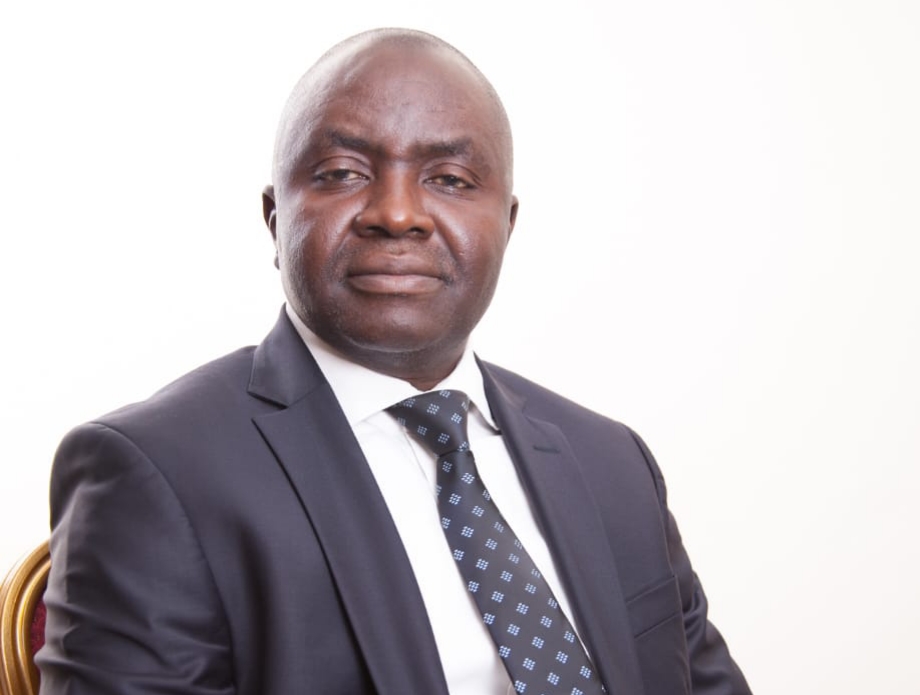
The Centre for the Promotion of Private Enterprise [CPPE] yesterday expressed concerns over what it called the “growing advocacy for unbridled importation of petroleum products.”
The Chief Executive Officer of the CPPE, Dr. Muda Yusuf, noted that such advocacy is particularly of concern especially at this period when the country should be consolidating domestic refining capacity and accelerating its industrialisation journey.
According to him, prosperous economies are built on production, refining, manufacturing, value addition and the strengthening of domestic productive capacity, noting that countries that become excessively dependent on imports inevitably export jobs, weaken domestic industries, erode local investments and mortgage their economic sovereignty.
The CPPE boss warned that excessive import dependence was one of the major factors that pushed Nigeria’s foreign exchange market dangerously close to systemic distress before the recent reforms of the current administration restored stability and improved investor confidence. He therefore said it would be economically imprudent to recreate the very conditions that previously weakened the economy.
“This debate goes far beyond petroleum products. It speaks to the very architecture of Nigeria’s economic philosophy, the future of industrialisation, the resilience of the macroeconomy and, ultimately, the preservation of the country’s economic sovereignty. No nation has ever imported its way to industrial greatness. Nigeria must therefore avoid drifting into a policy regime that undermines domestic production in the name of competition or liberalization,” Dr. Yusuf warned.
Yusuf, an economist and financial analyst, said that import dependence carries profound economic consequences. He recalled that for decades, Nigeria’s dependence on imported petroleum products created deep distortions within the economy, exerting enormous pressure on foreign reserves, weakened the naira, accelerated the collapse of domestic refineries, entrenched a rent-seeking ecosystem, worsened FX illiquidity, fuelled corruption within the subsidy regime and imposed severe fiscal burdens on public finances.
At the height of the fuel subsidy era, he further argued, the country spent trillions of naira annually subsidising imported fuel, thereby effectively transferring national wealth, jobs, industrial opportunities and value creation to foreign economies and their local collaborators. “The country was also spending over $10 billion annually on petroleum product imports. The consequences were severe and far-reaching- persistent pressure on the exchange rate; widening trade deficits; weak industrial competitiveness; massive fiscal leakages; investor uncertainty and macroeconomic fragility,” he noted.
According to him, the current policy conversation around petroleum product imports appears fundamentally inconsistent with Nigeria’s industrial aspirations. Nigeria, he said, has just witnessed one of the most consequential industrial investments in Africa through the establishment of the Dangote Refinery, alongside growing investments in modular refineries across the country.
These investments, he argued, should ordinarily be strategically supported, celebrated and strengthened, instead of the mounting pressure for unrestricted importation of refined petroleum products- a policy orientation capable of undermining domestic refining investments and discouraging future industrial commitments.
“What message are we sending to investors if a multi-billion-dollar refinery investment of continental significance is confronted with regulatory uncertainty and policy headwinds? The pathway to competition is not the promotion of imports. The pathway to competition is the encouragement of additional domestic refining investments. A country that cannot refine its own petroleum products despite being a major crude oil producer exposes itself to profound economic vulnerability. Energy security is national security. A nation that persistently imports what it should ordinarily produce locally gradually weakens its productive base, destroys industrial capabilities and compromises long-term economic stability,” Dr. Yusuf argued.
Buttressing his position further, he noted that advocacy for fiscal protection of domestic refining is neither unusual nor extraordinary because every serious economy protects its strategic sectors. For instance, he cited the United States is deploying tariffs and industrial subsidies to support manufacturing competitiveness. China aggressively protects strategic industries. Europe is increasingly embracing industrial policy intervention. India continues to deepen domestic manufacturing through its “Made in India” agenda.
“Industrialisation has never been built on extreme liberalisation. No nation develops by turning itself into an attractive destination for imported goods. Self-reliance is not economic isolationism. It is economic pragmatism anchored on national interest. It is the deliberate strengthening of domestic productive capacity in order to reduce vulnerability to external shocks and reinforce long-term economic resilience,” the CPPE argued.
He noted that Nigeria already provides varying degrees of tariff and fiscal protection to several manufacturing subsectors under existing fiscal policy frameworks. For instance,there is currently an Import Adjustment Tax covering 192 tariff lines designed to support domestic industries, including: Pharmaceuticals, Textiles, Chemicals and allied products, Iron and steel, Cement, Ceramics and sanitary wares, Furniture, Food processing, Automobile assembly, Wires and cables, Soap and detergents and many more.
“The same strategic policy support should naturally extend to domestic refining because refining is not merely a commercial activity; it is a critical industrial, economic and national security investment,” Dr. Yusuf submitted.
Economy
EIU report: Dangote Refinery ends Nigeria’s era of fuel import dependence, boosts GDP, FX earnings
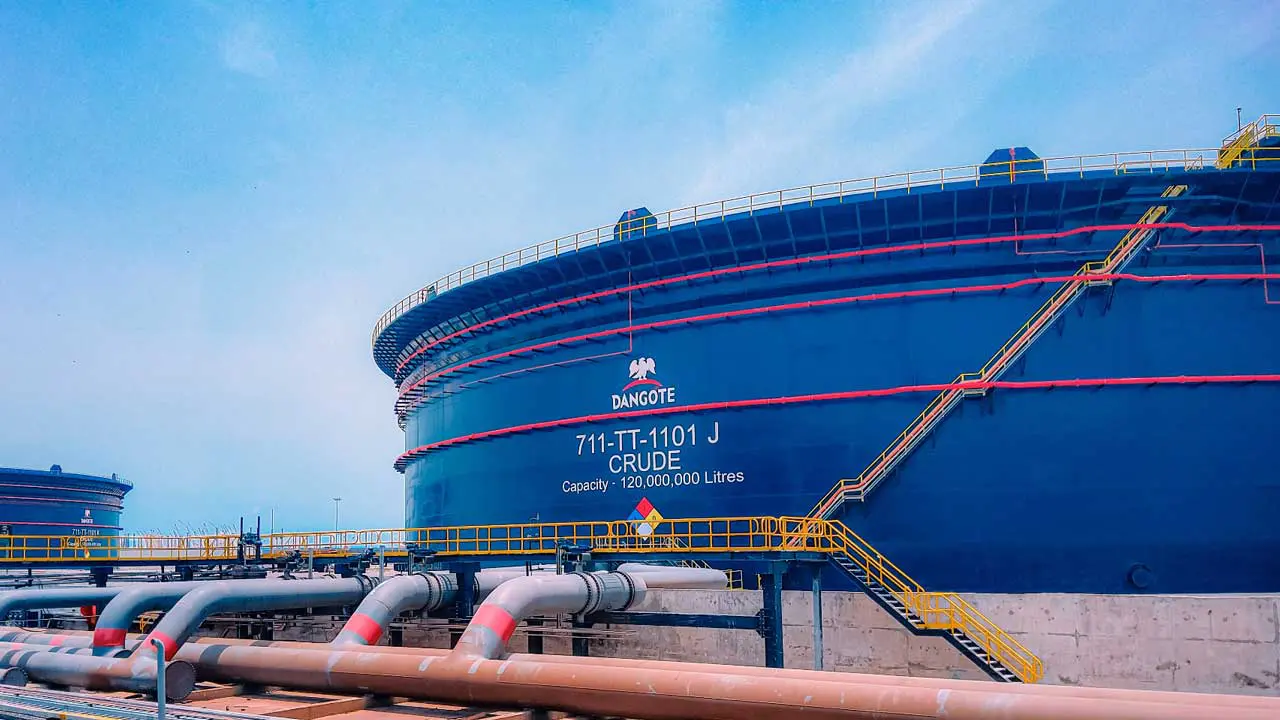
The operational ramp up of the 650,000 barrels per day Dangote Petroleum Refinery & Petrochemicals is fundamentally reshaping Nigeria’s downstream oil sector, significantly reducing the country’s dependence on imported refined petroleum products and strengthening its external position, according to the Economist Intelligence Unit (EIU).
In its latest assessment on Nigeria’s fuel market and regulatory environment, the EIU said the refinery has already transformed a sector that was previously characterised by heavy reliance on imported fuel despite Nigeria being Africa’s largest crude oil producer. The report noted that the refinery met nearly 80 per cent of domestic petrol demand in April and produced enough volumes to satisfy local consumption requirements as operations approached full capacity.
The EIU described Nigeria’s downstream petroleum sector before the refinery as “long dysfunctional”, noting that the country had remained almost entirely dependent on costly imported fuel while producing nearly 1.5 million barrels of crude oil daily.
According to the report, the emergence of the refinery has reduced import dependence, improved domestic fuel availability and strengthened Nigeria’s balance of payments position through lower import demand and rising exports of refined petroleum products. “The gradual ramp up of the 650,000 barrel/day Dangote refinery since May 2023 has transformed Nigeria’s long dysfunctional downstream sector,” the report stated. “The country’s main refineries, all state owned, had been inoperative for years and Nigeria was almost entirely reliant on costly imported fuel.”
The EIU, a research and analysis division of The Economist Group, London, added that the refinery’s attainment of full operational capacity and its planned expansion would further support Nigeria’s economic growth and foreign exchange earnings over the medium term.
“Meanwhile, the attainment of full capacity and an increase in exports from the Dangote refinery will support real GDP growth and foreign exchange earnings in 2026 and 2027 and beyond, as a planned doubling of the plant’s output comes on stream around the end of the decade,” it added.
Industry analysts said the refinery is increasingly positioning Nigeria as an emerging refining and export hub, altering energy trade flows across Africa and reducing the vulnerability associated with fuel import dependence.
The EIU noted that the refinery’s expansion has coincided with major reforms in Nigeria’s downstream sector, including the removal of fuel subsidies and the introduction of market driven pricing mechanisms.
The report, however, said the transition from a state dominated fuel import structure to large scale domestic refining has triggered resistance from interests linked to the old import regime.
The latest tensions emerged following the decision by the Nigerian Midstream and Downstream Petroleum Regulatory Authority (NMDPRA) to relax restrictions on petrol imports despite the refinery’s growing capacity to meet domestic demand.
Dangote Industries subsequently initiated legal action, arguing that continued import approvals undermine domestic refining investments and conflict with the objectives of the Petroleum Industry Act, which seeks to encourage local refining capacity and reduce import dependence.
Analysts noted that the availability of large-scale domestic refining capacity has improved Nigeria’s energy security and reduced exposure to external supply shocks and foreign exchange volatility.
The refinery’s growing impact is also being reflected in Nigeria’s broader macroeconomic indicators. Earlier this month, S&P Global Ratings cited increased domestic refining capacity and rising hydrocarbon exports among the major factors supporting Nigeria’s sovereign credit rating upgrade – the first in 14 years.
Beyond Nigeria, analysts said the refinery is increasingly being viewed as a strategic industrial asset for Africa, where many countries remain heavily dependent on imported fuel despite rising demand for transportation, manufacturing, and power generation.

-

 Art & Life9 years ago
These ’90s fashion trends are making a comeback in 2017
-
Entertainment9 years ago
The final 6 ‘Game of Thrones’ episodes might feel like a full season
-
Business9 years ago
The 9 worst mistakes you can ever make at work
-
Art & Life9 years ago
According to Dior Couture, this taboo fashion accessory is back
-
Entertainment9 years ago
The old and New Edition cast comes together to perform
-
Entertainment9 years ago
Mod turns ‘Counter-Strike’ into a ‘Tekken’ clone with fighting chickens
-
Sports9 years ago
Phillies’ Aaron Altherr makes mind-boggling barehanded play
-
Entertainment9 years ago
Disney’s live-action Aladdin finally finds its stars