
Economy
Marketers, stakeholders, warn against 15% petrol tax suspension

• Reversal will trigger rise in forex, says Dr. Yusuf
• Policy is fiscal and market-stabilising instrument, says Prof Iledare
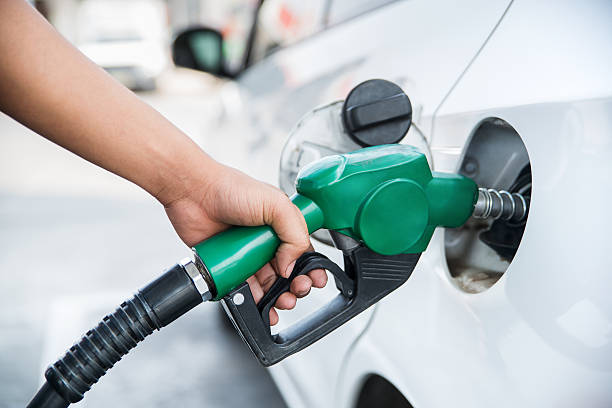
Experts and other stakeholders yesterday warned the country of jeopardisng long term national interests for short term measures. The experts, including economists, oil marketers, chambers of commerce and industry leaders, and other stakeholders, were reacting to the suspension of the of the implementation of the 15 per cent ad valorem import duty on imported Premium Motor Spirit and Diesel by the federal government.
Last week, the Nigerian Midstream and Downstream Petroleum Regulatory Authority (NMDPRA), in a statement posted on its X handle had informed the public of government’s suspension of the implementation of the tax.
“It should also be noted that the implementation of the 15 per cent ad-valorem import duty on imported Premium Motor Spirit and Diesel is no longer in view,” the Director, Public Affairs Department, NMDPRA, George Ene-Ita, said in the post.
“Nigeria must avoid short-term measures that jeopardise long-term national interests. The suspension of the 15 per cent import duty on petroleum products puts at risk energy security; industrialization; foreign exchange stability; job creation; backward integration and national economic sovereignty.
“Therefore, protecting domestic refining capacity is an urgent national imperative. Reinstating protective measures, supporting local refiners, ensuring policy predictability and regulating import volumes are essential steps toward securing Nigeria’s industrial future,” the Chief Executive Officer, Center for the Promotion of Private Enterprise (CPPE), Dr. Muda Yusuf, in a statement made available to TheTrustNews.com, yesterday.
For professor of petroleum economics, Prof. Wumi Iledare, the 15 per cent import duty should have been viewed as a fiscal and market-stabilising instrument, not a political gesture.
While some stakeholders see the development as a step in the right direction, yet, others argued that it is a disservice to local refinery, investment in the sector and by extension, a negative for the country’s overall economy.
For the Independent Petroleum Marketers Association of Nigeria (IPMAN), the suspension of the tax will affect sector and economy in both the short and long term.
“Well, if we view the suspension for the immediate gain, then we can say it is a good development; but for the future, it is not a good development. The reason is that provided that there is no tax or charges on the imports, our local refineries will not be patronised because their product will be a little bit costlier than imported products,” IPMAN President, Abubakar Maigandi, told TheTrustNews.com in a telephone chat at the weekend.
Yet another oil marketer who pleaded anonymity, agreed that government should go ahead with the implementation of the tax if only for the benefits it offers. These benefits our source listed to include reduced pressure on foreign exchange considering that importation of petroleum products is dollar denominated.
“The truth and reality is that government should implement that 15 per cent tax on petroleum products importation because it will help our economy. The reason why you see Naira now a little bit stable compared to before, is because of the reduction of purchasing outside. And if we want to encourage the Nigerian company, actually we have to, the government has to do that; they have to put that tax.
“This is a reality, but you know people don’t want to hear it, they put politics into it and is not good for our economy. The 15 per cent tax on fuel import will help the indigenous companies or refineries- all these refineries just coming up, people doing business; it will encourage them to do business, an foreign investors too will come into the sector with the needed investment,” the source, a high ranking stakeholder in the oil industry, said.
On fears that there could be fuel shortage as the yuletide approaches if the policy is implemented, the CPPE boss argued that while domestic refineries are expected to meet national demand within a short horizon, temporary supply gaps should be addressed not by dismantling protective measures but through guided, quota-based importation to supplement domestic output.
Yusuf noted that the suspension of the 15 per cent import duty on petrol and diesel carries profound implications for domestic refining, investment confidence, macroeconomic stability and the long-term competitiveness of the petroleum downstream sector.
He called for the reinstatement of the tax which he described as “essential to restoring competitive balance and safeguarding domestic refining investments.” According to him, the policy was aimed to serve as an industrial protection instrument designed to support emerging private refineries; promote backward integration and industrial development; ensure a level playing field for domestic producers; conserve scarce foreign exchange; protect jobs, stimulate local value addition; reduce exposure to global supply instability and encourage long-term investments in refining and petrochemicals
These objectives, laudable as they are, are now being threatened with the policy suspension. For instance, Dr. Yusuf noted that investors, including the Dangote Refinery and other modular refinery operators, made multi-billion-dollar commitments based on policy stability and the assurance of an environment that rewards local production. Therefore, he argued, suspending the duty undermines this protective framework and exposes domestic refiners to inequitable competition from importers benefiting from vastly superior international conditions.
According to the CPPE boss, local refiners operate within a high-cost environment shaped by expensive energy and self-generation; infrastructure gaps and logistics bottlenecks; high cost of capital; security-related risks and inefficiencies in ports and transport systems. These structural disadvantages, he argued, make parity with imported products impossible without protective measures.
He warned that reverting to heavy import dependence reopens vulnerabilities to global price volatility, geopolitical disruptions and supply insecurity- the same conditions that previously collapsed public refineries and created a fiscally ruinous subsidy regime.
Yusuf, an economist, equally agreed that petroleum importation is one of Nigeria’s largest consumers of foreign exchange. Consequently, he explained that increased imports of the product will heighten pressure on the naira; fuel inflation through exchange-rate pass-through; deepen balance-of-payments deficits and undermine macroeconomic stability.
This, he said will further come with loss of jobs and industrial value chains given that domestic refining stimulates broad value-chain activities in petrochemicals; plastics; logistics and transport; engineering services and fabrication and construction. Therefore, having an unrestrained importation effectively exports these jobs and opportunities to foreign economies.
The CPPE warned that frequent policy reversals weaken investor sentiment across the economy including refining and downstream operations; domestic manufacturing; financial institutions and global investment partners.
“Undermining confidence at this stage threatens the viability of transformational national assets such as the Dangote Refinery and modular refineries,” Dr. Yusuf said.
Justifying the need to protect indigenous firms, the CPPE boss explained that fair competition requires comparable operating conditions. He enumerated the challenges faced by Nigerian refiners to include infrastructure deficits; higher finance costs; insecure operating environments; elevated logistics costs and demurrage and weak transport and storage systems.
“Importers face none of these disadvantages. Without protective measures, domestic refiners operate at a structural disadvantage. The Dangote Refinery and emerging modular refineries are transformative national assets. Safeguarding them aligns squarely with Nigeria’s long-term economic and strategic goals,” the CPPE said.
He cited major economies that protects their strategic industries to include the United States which jealously guards her steel, agriculture, aviation, energy sectors; European Union which protects its manufacturing, agriculture, pharmaceuticals; India guards her refining and petrochemicals and China, which devised a comprehensive industrial policy to protect local capacity.
“Nigeria already maintains an Import Adjustment Tax List for strategic sectors such as agro allied, cement, sugar, steel, pharmaceuticals and automobiles. Therefore, extending similar protection to domestic refining is both logical and necessary,” Dr. Yusuf said.
He further argued that there exists a false dichotomy between domestic refining and price stability. “Strengthening refining capacity and moderating fuel prices are not mutually exclusive. With the right policy mix—including fiscal incentives, logistics support, transparent pricing and guided importation, Nigeria can achieve both goals simultaneously, because domestic refining, over the long term, reduces costs by limiting forex exposure, import-related logistics and premiums associated with global volatility,” Dr. Yusuf said.
In similar vein, the Ogun State Chamber of Commerce, Industry, Mines and Agriculture (OGUNCCIMA) also faulted the Federal Government’s decision to suspend the proposed implementation of the 15 per cent import duty on petrol and diesel imports. It insisted that the rescinding of the policy could slow down the nation’s progress toward energy independence and weaken investor confidence in the refining sector.
“The suspension of the 15 per cent fuel import tariff is disappointing. The policy was a step in the right direction to promote local refining, reduce dependence on imports, conserve foreign exchange and create a fair competitive environment for domestic producers. Its reversal sends a wrong signal to investors who have shown confidence in Nigeria’s energy sector,” OGUNCCIMA’s President, Niyi Oshiyemi, said.
A professor of petroleum economics, Prof. Wumi Iledare, argued that the 15 per cent import duty should have been viewed as a fiscal and market-stabilising instrument, not a political gesture.
“The intent is clear — to protect emerging local refineries, encourage domestic value addition, and gradually align Nigeria’s downstream market with its growing industrial capacity. In economic terms, this policy aimed to reduce import dependence, conserve foreign exchange, and support refinery viability. Domestic producers like Dangote Refinery and the rehabilitated NNPC plants need a short breathing space to stabilise operations and recover heavy capital investments. Many countries have used such temporary tariffs to nurture new industries.
“Of course, prices may rise slightly in the short term — but that’s part of the transition toward long-term efficiency where Nigeria meets its own fuel needs competitively. Let’s keep things in perspective: petrol here sells around N890–N965 per litre, while in Benin N1,800–N1,875, Togo N1,835, Ghana N1,550–N1,995, and Senegal N2,538. Nigeria still remains the lowest-priced market in the sub-region. The task now is ensuring border vigilance and market discipline to prevent arbitrage,” he contended.









By Olamide Akintunde
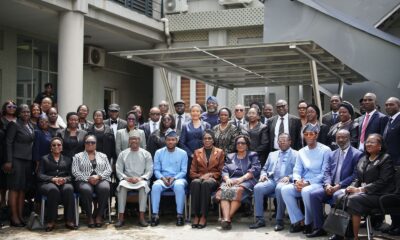
Experts in corporate governance, finance and public policy have said Nigeria must institutionalise good governance, sustain economic reforms and strengthen collaboration between the public and private sectors to accelerate economic growth and realise its ambition of becoming a $1 trillion economy.
The call came at the 2026 National Corporate Governance Summit themed “Implementing Good Governance for Economic Acceleration: Consolidating Public and Private Sector Partnership,” organised by the Institute of Directors (IoD) Centre for Corporate Governance, the Financial Reporting Council of Nigeria (FRC), the Ministry of Finance Incorporated (MOFI) and the Institute of Chartered Secretaries and Administrators of Nigeria (ICSAN).
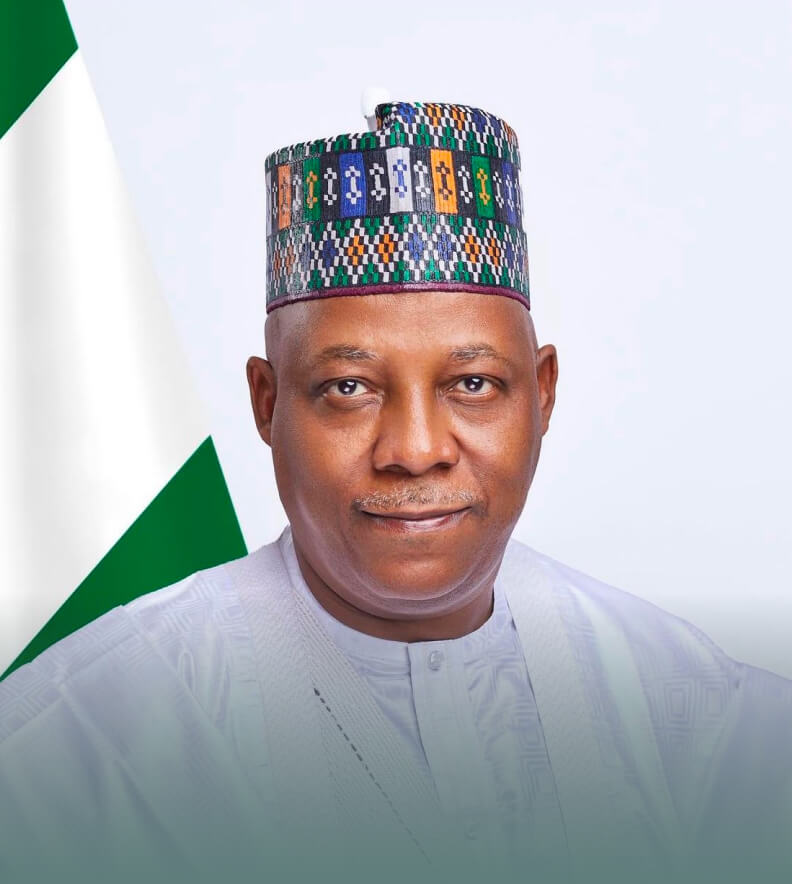
Speaking on the theme, the Special Adviser to the President on Economic Affairs, Dr. Tope Fasua, who represented the Vice President, Kashim Shettima, said President Bola Tinubu’s administration remained committed to implementing reforms capable of building a resilient and competitive economy.
He said the government’s economic reforms including foreign exchange reforms, tax reforms and subsidy removal must be complemented by strong corporate governance in both public institutions and private enterprises.
“The public sector can create the enabling environment through reforms, but it is the private sector that translates those policies into investments, jobs and wealth creation. Both sectors must operate with integrity, accountability and transparency,” he said.
Fasua emphasised that governance should not be treated as a mere compliance exercise but as the foundation upon which investor confidence and sustainable economic development are built.
Speaking on the sidelines of the summit, he explained that the Federal Government’s reforms were designed to create long term economic transformation rather than deliver short term political gains, while calling for greater support for domestic investment and industrialisation.
Delivering the keynote address, the Chairman of Nigerian Breweries Plc, Mrs. Juliet Anammah, described the summit’s theme as timely, saying good governance must move beyond compliance and accountability to become a strategic tool for driving Nigeria’s economic rebirth. She maintained that stronger partnerships between government and the private sector would be critical to achieving sustainable economic acceleration and improving the quality of life of Nigerians.
According to her, the country’s immediate objective should be to move from a lower-middle-income economy to an upper-middle-income economy through sustained industrialisation, innovation and long-term policy implementation.
She acknowledged that the Federal Government had undertaken bold reforms, including fuel subsidy removal, foreign exchange unification and bank recapitalisation, saying the difficult decisions had helped stabilise the economy.
While noting that macroeconomic stability was encouraging, Anammah said it was not the final destination.
“Stabilisation is not the end goal. The destination is economic rebirth that improves household incomes, creates quality careers, expands access to healthcare and education and delivers reliable infrastructure,” she said.
Drawing lessons from countries such as Vietnam and Morocco, she argued that Nigeria must embrace industrialisation by producing more sophisticated and value-added products instead of relying on primary commodities.
She noted that sectors such as petrochemicals, agro-processing, automotive, renewable energy and manufacturing already possess enormous growth potential but require consistent industrial policies supported by sound governance to unlock higher levels of economic complexity.
According to her, policy inconsistency remains one of Nigeria’s greatest development challenges, urging governments at all levels to sustain industrial policies beyond political administrations.
She also advocated stronger competition among states, independent evaluation of industrial policies and closer collaboration between government and the private sector to deepen investment and accelerate economic growth.
She concluded that achieving meaningful economic acceleration would require strong corporate governance, sustained industrial policies and close collaboration between government and the private sector, noting that only through such coordinated efforts can Nigeria transition from an economy driven by informal livelihoods to one characterised by productive industries, quality careers and rising prosperity for its citizens.
Earlier, Chairman of the Board of Governors of the IoD Centre for Corporate Governance, Dr. Uche Eke, said the summit deliberately shifted the conversation from governance principles to implementation, stressing that sustainable economic growth would only be achieved when sound governance becomes embedded across both public institutions and private enterprises.
He explained that Nigeria had spent years identifying governance challenges and developing frameworks, stressing that the time had come for practical execution.
“We have stayed too long articulating the issues. The focus now is implementation. We must embed sound corporate governance practices in both public institutions and private organisations to guarantee sustainability beyond current leadership,” he said.
Eke noted that the summit sought to build national consensus among regulators, government institutions and the private sector on practical governance reforms capable of improving transparency, accountability and economic competitiveness.
He stressed that merit, competence and diversity should determine appointments into leadership positions rather than nepotism or political considerations.
“If Nigeria is serious about building a one trillion dollar economy, we must consistently place the right people in leadership positions, promote diversity of skills and hold leaders accountable for results,” he said.
Also speaking, Managing Director and Chief Executive Officer of MOFI, Dr. Armstrong Takang, said government alone cannot build the economy Nigeria desires, stressing that strong corporate governance is the foundation for effective public-private partnerships, investor confidence and long-term economic development.
He argued that contrary to the belief that government should not participate in business, successful economies such as China had demonstrated that well-governed state-owned enterprises could become major drivers of investment, industrialisation and economic growth.
Takang said MOFI’s recent experience showed that institutions with strong corporate governance frameworks consistently attracted greater investment and delivered better value creation.
According to him, governance reforms introduced across MOFI’s portfolio companies had significantly improved investor confidence and strengthened the performance of government-owned assets.
He cited initiatives including the MOFI Real Estate Investment Fund and the proposed Metro Rail Infrastructure Programme as examples of projects attracting institutional investment because of strong governance structures.
“Government alone cannot build the economy we desire. We need partnerships with the private sector and institutional investors, and corporate governance remains the common denominator that inspires confidence and mobilises capital,” he said.
Stakeholders and participants at the summit agreed that sustaining reforms, strengthening institutions and entrenching transparency across both public and private organisations would be critical to accelerating economic growth, boosting investor confidence and positioning Nigeria to achieve its long-term development ambitions.

- CPPE hails H1 economic fundamentals
An economist and policy analyst, Dr. Muda Yusuf, said Nigeria is entering the second half of 2026 with its strongest macroeconomic fundamentals in several years than what obtained at the beginning of the year.
Instrumental to this feat are exchange-rate stability, moderating inflation relative to the exceptionally elevated levels of 2025, stronger external reserves, improved oil production and resilient financial markets, which have all contributed to reducing macroeconomic vulnerabilities and strengthening investor confidence.
Given the renewed confidence in the economy, Yusuf, who is also the Chief Executive Officer, Center for the Promotion of Private Enterprise (CPPE), noted that while the body remains remains cautiously optimistic of an improved economy, yet, the economic output performance is expected to remain positive, supported by financial services, telecommunications, construction, trade, oil refining and other service-sector activities. It noted that although growth is likely to remain below Nigeria’s long-term potential, the economy appears firmly on a gradual recovery path.
“Inflation is expected to remain substantially below 2025 levels, although food supply disruptions, energy costs and developments in global commodity markets remain important upside risks. Exchange-rate stability should be sustained by stronger foreign exchange inflows, healthier reserves and improved market confidence,” Yusuf said.
Still, the economist’s optimism of an upscale in the economy is further buoyed by the financial markets which are expected to remain broadly resilient, supported by banking-sector recapitalisation, stronger corporate earnings, improved regulatory oversight and sustained institutional participation.
Importantly, Yusuf said improved domestic refining capacity and stronger crude oil production will also significantly support fiscal revenues, foreign exchange earnings and energy security.
He however cautioned that the second half of the year also presents an important downside risk to the gains recorded in the economy so far owing to the increasing intensity of political and electioneering activities ahead of the 2027 elections.
“Election-related spending could inject additional liquidity into the economy, with possible implications for inflationary pressures, foreign exchange demand and macroeconomic management. There is also a risk that growing political activity could distract policymakers from economic governance, reform implementation and the execution of critical fiscal and structural policy initiatives,” Yusuf cautioned.
The prospects now offered in the second half of the year, the CPPE boss said, are built on the gains recorded during the first half which was characterised the first half of the year. These, he explained, were reflected in the continued progress in macroeconomic stabilisation as economic growth remained positive, the foreign exchange market became more orderly, external reserves improved, crude oil production strengthened modestly and government revenues benefited from improved oil receipts and stronger non-oil tax collections, including the financial markets which also remained resilient, supported by improving investor confidence and policy credibility.
But notwithstanding these encouraging developments, the real economy, he argued, remained under considerable pressure with high interest rates continuing to constrain private-sector investment and access to credit, while elevated energy costs, inadequate electricity supply, logistics inefficiencies and weak transport infrastructure sustained a high-cost operating environment. Manufacturing, agriculture and MSMEs, he said, faced persistent competitiveness challenges despite improvements in macroeconomic stability.
“Insecurity continued to undermine agricultural production, disrupt supply chains and discourage investment across several sectors. Meanwhile, capital expenditure implementation remained below expectations because of procurement delays, funding constraints and debt-service pressures, limiting the growth impact of fiscal policy.
“Overall, H1 2026 was characterised by stronger macroeconomic stability but only modest improvements in real-sector performance and household welfare, underscoring the need for deeper structural reforms,” he said.
While Yusuf explained that the improvement in macroeconomic indicators provides an important foundation for sustainable growth, he nonetheless cautioned that these indicators are not all sufficient.
“The next phase of reform should focus on lowering production costs, improving productivity and strengthening the competitiveness of Nigerian enterprises. Priority should be given to improving electricity supply, transport infrastructure, logistics efficiency, and port operations; strengthening security in farming communities and along transport corridors; expanding access to affordable long-term finance for productive sectors; accelerating budget implementation, strengthening budget process credibility, and improving infrastructure delivery; and deepening domestic value addition.
“Government revenue should increasingly be driven by efficiency-enhancing reforms rather than additional tax burdens, while policy consistency should be preserved despite increasing political activity ahead of the 2027 elections. It is equally important to minimise governance distractions and ensure that electioneering does not weaken the pace of reforms, budget implementation or the quality of economic management,” Dr. Yusuf submitted.
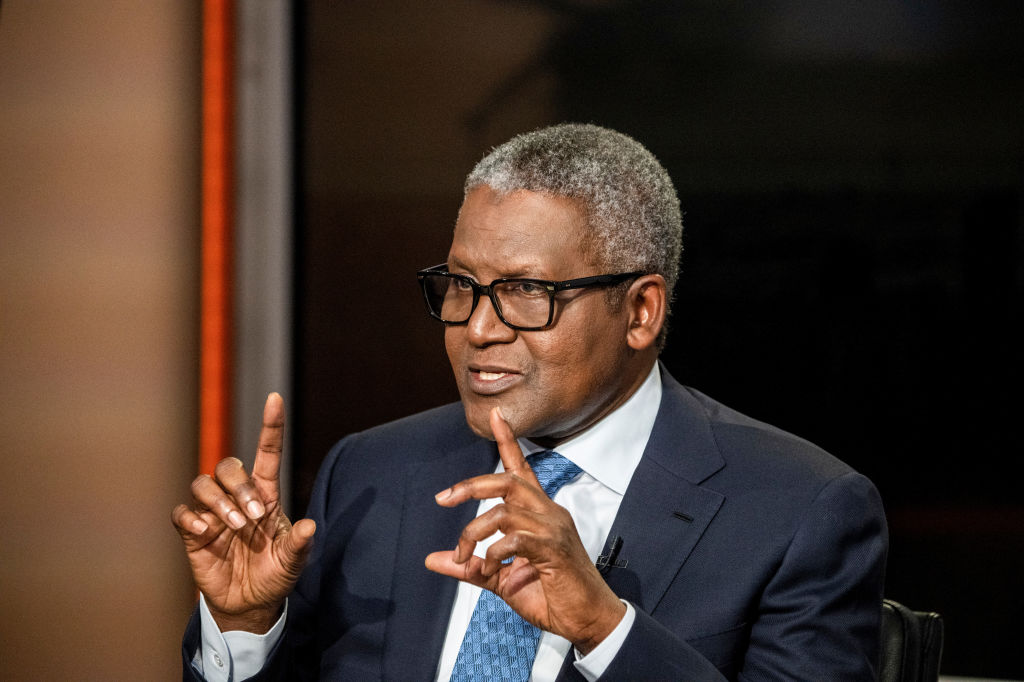
The Federal Government has called on host communities in Ogun and Ondo states to give maximum support to the proposed Dangote Industrial City and Deep Seaport project, describing it as a transformative initiative that will create opportunities for economic growth and community development.
Representing the Minister of Environment, Balarabe Lawal, at the combined Environmental and Social Impact Assessment (ESIA) site visit, the Director of Assessment, Federal Ministry of Environment, Mrs. Rofikat Odetoro commended Dangote Industries Limited (DIL) for its commitment to environmental sustainability and inclusive stakeholder engagement.
Speaking during the three-day assessment tour across Ode-Omi Waterside Community in Ogun State and Araromi Community in Ondo State, Odetoro expressed satisfaction with the level of community consultations and groundwork undertaken to ensure the project aligns with environmental regulations and the interests of host communities.
Odetoro stressed the need for inclusive dialogue, urging traditional rulers and community leaders not to overlook women and children during consultations. “I urge you to factor women into every engagement. Women and children are as important as every other member of the community and they have unique needs that must not be ignored. Please give this project every support possible. It presents enormous opportunities for youths, women, and children to benefit from employment and the mandatory corporate social responsibility initiatives that will accompany it,” she said.
Speaking during the community engagement at Araromi Seaside Kingdom, Managing Director, Infrastructure and Logistics, Dangote Industries Limited, Capt. Jamil Abubakar, assured the indigenes of transparency, fairness, and continuous engagement throughout the project’s implementation.
According to him, the President of Dangote Industries Limited, Aliko Dangote, is committed to ensuring Africa becomes more self-sufficient through strategic infrastructure investments.
“Our President is committed to positioning Africa for greater self-sufficiency and Araromi has been chosen as the location where one of the world’s biggest deep seaports will be built. We are excited about the prospects of this project. We are here to listen to the community’s concerns and work together to achieve a win-win outcome for every stakeholder involved,” he said.
Abubakar further disclosed that Aliko Dangote had directed the project team to carry out a comprehensive needs assessment of the host communities and provide critical interventions regardless of the project’s stage of development.
Presenting the ESIA, Group Lead, Environment and Sustainability, DIL, Dr. Adeyemi Adun, said the study was designed to establish the current environmental and socio-economic baseline of the host communities before project execution. He explained that the assessment would evaluate the quality of air, water and soil, as well as the socio-economic conditions of residents, in line with Federal Ministry of Environment guidelines.
“This phase of the project is intended to establish the current status of the community in terms of air quality, water resources, soil conditions, and socio-economic indicators, as required by the Federal Ministry of Environment. We also assure you that this project will have a positive impact on your communities, just as Dangote Industries has done in other host communities across the country,” Adun added.
Also speaking during the tour, the representative of the Ondo State Commissioner for Environment and Director of the Environmental Assessment Department, Isaac Ojo, welcomed the commencement of the assessment process, describing it as inclusive and beneficial to all stakeholders. “We are delighted that this process has begun and that it accommodates every stakeholder. We are confident the project will benefit the communities, and we encourage everyone to give the Dangote team the maximum support required for its success”, Ojo said.
The Alara of Araromi Seaside Kingdom, Oba Adeoloye Olawole, also expressed strong support for the project, describing Aliko Dangote as “a genius” whose investments would accelerate the development of the kingdom. “We are counting on Aliko Dangote to help develop our kingdom. He is a genius, and we are ready to provide every support necessary to ensure the success of this project. We have always maintained that our community is peaceful, cooperative, and committed to progress. We want him to help develop our land as he doing all over Africa,” the monarch added.

-

 Art & Life9 years ago
These ’90s fashion trends are making a comeback in 2017
-
Business9 years ago
The 9 worst mistakes you can ever make at work
-
Entertainment9 years ago
The final 6 ‘Game of Thrones’ episodes might feel like a full season
-
Art & Life9 years ago
According to Dior Couture, this taboo fashion accessory is back
-
Entertainment9 years ago
The old and New Edition cast comes together to perform
-
Entertainment9 years ago
Mod turns ‘Counter-Strike’ into a ‘Tekken’ clone with fighting chickens
-
Sports9 years ago
Phillies’ Aaron Altherr makes mind-boggling barehanded play
-
Entertainment9 years ago
Disney’s live-action Aladdin finally finds its stars