
Energy
NNPC/Heirs Energies lead responsible gas commercialisation at OML 17

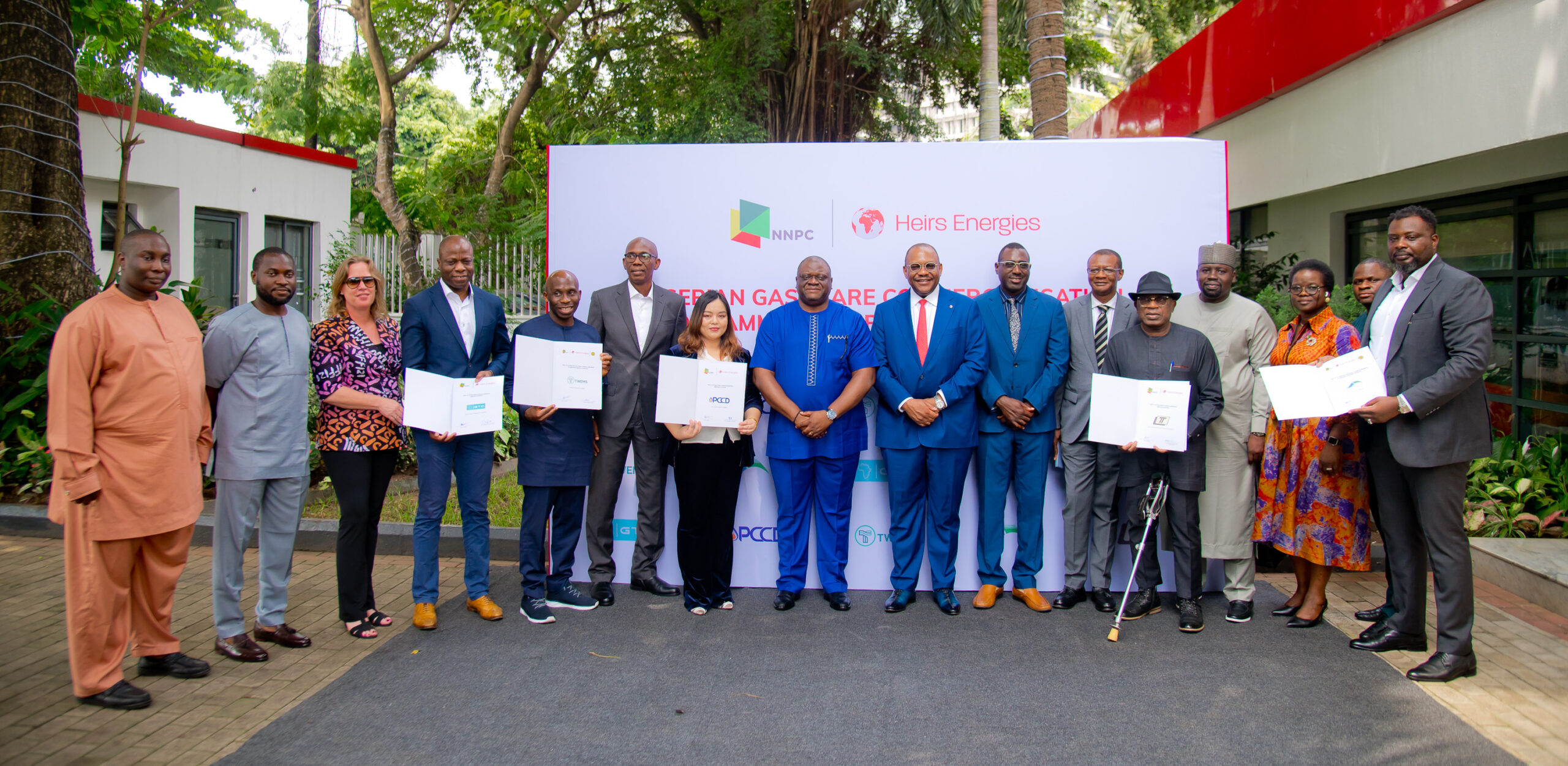
The NNPC/Heirs Energies OML 17 Joint Venture yesterday advanced Nigeria’s gas commercialisation and environmental initiative with the symbolic signing of Gas Flare Commercialisation Agreements under the Nigerian Gas Flare Commercialisation Programme (NGFCP) and approved Non-NGFCP frameworks.
The ceremony, which held in Lagos, marks a significant transition from regulatory approvals to structured commercial execution, enabling flare gas volumes across OML 17 to be captured and deployed for productive use, including power generation, industrial applications, LPG and CNG, in alignment with Nigeria’s gas development priorities and energy-transition objectives.
The agreements was signed between Heirs Energies, as operator of the OML 17 JV and approved flare gas offtakers – AUT Gas, Twems Energies, Gas & Power Infrastructure Development Limited (GPID), PCCD and Africa Gas & Transport Company Limited (AGTC) – under frameworks designed to eliminate routine flaring while converting previously wasted resources into economic value.
Speaking at the ceremony, the Chief Upstream Investment Officer, NNPC Upstream Investment Management Services (NUIMS), Seyi Omotowa, an engineer, representing NNPC Limited, described the milestone as a practical demonstration of Nigeria’s commitment to gas-based development.
“For us at NNPC Limited and NUIMS, flare gas commercialisation is not a compliance exercise; it is a strategic pathway to improving energy availability, deepening gas-based industrialisation and strengthening Nigeria’s position as a responsible energy producer. OML 17 has become a practical model of this vision, moving decisively from approval to delivery,” Omotowa said.
He commended Heirs Energies for disciplined execution and investment, noting that the JV continues to set benchmarks for operational delivery and gas development within Nigeria’s upstream sector.
The Nigerian Upstream Petroleum Regulatory Commission (NUPRC) Chief Executive, Engr. Gbenga Komolafe, who was represented by Senior Manager, Ojo Ezekiel, reaffirmed the Commission’s support for the project, describing flare gas commercialisation as a cornerstone of Nigeria’s decarbonisation pathway under the Petroleum Industry Act (PIA) 2021.
“This ceremony demonstrates Heirs Energies’ commitment to eliminating routine gas flaring across OML 17 and aligns fully with the Commission’s Gas Flare Commercialisation Programme and national energy and emission-reduction objectives,” Ezekiel said.
Heirs Energies’ Chief Executive Officer, Osa Igiehon, noted that the agreements reflect the company’s broader gas-led strategy and brownfield excellence approach, focused on creating long-term value for Nigeria.
“Gas sits at the heart of Nigeria’s development journey. Through disciplined investment, partnership with regulators and credible offtakers, and a clear execution focus, we are converting waste into value, strengthening domestic energy supply and supporting responsible operations across OML 17,” he said.
The NGFCP and Non-NGFCP flare gas projects build on recent operational progress by the OML 17 JV, including a significant increase in gas delivery to the domestic market through brownfield interventions and infrastructure optimisation. The JV has also continued to deepen its host-community partnerships through targeted healthcare interventions, education support and skills-development programmes across its areas of operation.
With the symbolic signing completed, the flare gas offtakers are expected to progress into full project implementation, working closely with the JV, regulators and communities to deliver commercial, environmental and social outcomes.
The OML 17 NGFCP initiative reinforces Nigeria’s position as a gas-led economy, supporting domestic power generation, industrial growth and responsible resource development while advancing the country’s energy-transition objectives.










….Culled from Reuters
Oil prices could extend gains today as the U.S.-Israeli war against Iran entered a third week, putting oil infrastructure at risk and keeping the Strait of Hormuz shut in the world’s largest supply disruption. U.S. President Donald Trump threatened further strikes on Iran’s Kharg Island oil export hub, drawing a defiant response of further retaliation from Tehran.
Brent and U.S. West Texas Intermediate crude futures have already spiked sharply and rattled global financial markets. Both contracts have surged more than 40 per cent so far this month to their highest levels since 2022 after the U.S.-Israeli attacks on Iran prompted Tehran to halt shipping through the Strait of Hormuz – a key chokepoint for a fifth of global oil supply.
Trump has urged China, France, Japan, South Korea, Britain and others to deploy warships to secure the strategic gateway.
The United States struck military targets on Kharg Island on Saturday, which was swiftly followed by Iranian drone attacks on a key oil terminal in the United Arab Emirates.
“This marks an escalation in the conflict,” JP Morgan analysts led by Natasha Kaneva said.
“Until now, the region’s oil infrastructure has largely been spared.”
Besides UAE’s Fujairah, Saudi Arabia’s Ras Tanura export terminal and Abqaiq oil processing facilities have been listed as critical and highly vulnerable energy nodes in the Gulf, the analysts said.
However, oil loading operations at Fujairah have resumed, a Fujairah-based industry source told Reuters yesterday.
Fujairah, outside the Strait of Hormuz, is the outlet for about one million barrels per day of the UAE’s flagship Murban crude oil – a volume equal to about one per cent of world demand.
Global oil supply is expected to fall by eight million bpd in March due to disruptions to shipping while Middle Eastern producers have cut output by at least 10 million bpd, according to the International Energy Agency (IEA).
Last week, the IEA agreed to release a record 400 million barrels of oil from strategic stockpiles held by member nations to combat price spikes. Japan plans to start releasing its oil today.
Meanwhile, the Trump administration has rebuffed efforts by Middle Eastern allies to start diplomatic negotiations, according to three sources familiar with the efforts, while Iran has rejected the possibility of any ceasefire until U.S. and Israeli strikes end, dimming hopes of a quick end to the conflict.
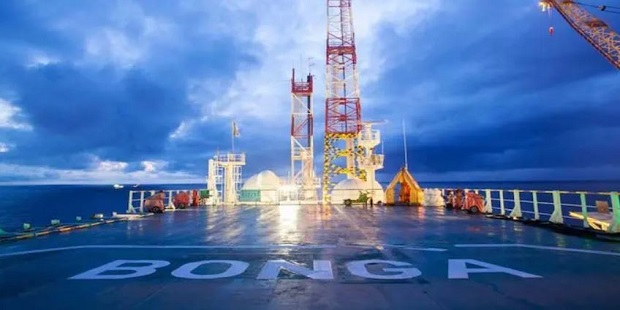
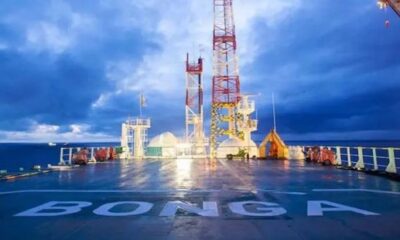
Shell Nigeria Exploration and Production Company Limited (SNEPCo) has completed the turnaround maintenance on the Bonga Floating Production, Storage and Offloading (FPSO) vessel, leading to resumption of production at Nigeria’s premier deepwater field on March 6, 2026. The project was delivered 11 days ahead of schedule and without any safety incident, reinforcing SNEPCo’s longstanding commitment to operational excellence and asset integrity.
SNEPCo Managing Director, Ronald Adams, noted that completing the turnaround safely and ahead of schedule is a testament to the dedication and professionalism of her Nigerian workforce and the helpful support of our partners.
“The achievement not only secures the long‑term integrity of the Bonga FPSO but also positions us strongly for the successful delivery of the Bonga North project, which will leverage the improved reliability of the FPSO,” Adams said.
The exercise which began on February 1, 2026, highlights SNEPCo’s leading role in advancing deep‑water expertise in Nigeria. Of the 55 companies involved in the execution, 43 were wholly Nigerian. Additionally, eight of the 12 international service providers maintain operational bases in Nigeria, contributing to knowledge transfer and increased local investments.
More than 1,000 personnel worked offshore during the turnaround, with over 95 per cent being Nigerians involved in maintenance, engineering, operations, inspection and construction. Thousands more supported activities from onshore locations, reflecting the depth of Nigerian capability in offshore oil and gas operations.
Adams added: “We acknowledge the support of several stakeholders towards the successful execution of the exercise, including the NNPC Upstream Investment Management Services (NUIMS), the Nigerian Upstream Petroleum Regulatory Commission (NUPRC), the Nigerian Content Development and Monitoring Board (NCDMB) and our partners.”
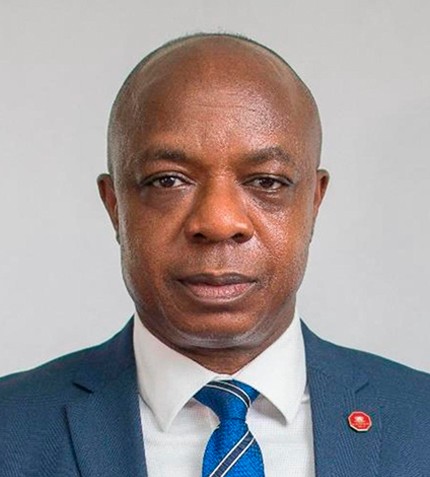
The Chairman, Petroleum Technology Association of Nigeria (PETAN), Wole Ogunsanya, has blamed petroleum industry regulators for persistent delays in oil and gas contracting processes, despite a presidential directive requiring tenders to be concluded within six months. Ogunsanya disclosed this during his presentation at the opening ceremony of the Nigeria International Energy Summit (NIES) 2026 in Abuja, yesterday. The Presidential directive is aimed at accelerating project execution across the energy sector.
Recall that President Tinubu in March 2024, issued Executive Order (OE) 42 mandating reduction of petroleum sector contracting costs and timelines, being part of a wider set of oil and gas reforms signed by the administration.
“We are not concluding contract processes in six months as directed and reports sent to the Presidency often fail to reflect the realities faced by industry players,” the PETAN boss said.
Ogunsanya disclosed that his Association is currently monitoring ongoing tenders, emphasising that several projects scheduled to commence in 2026 and 2027 remain stalled due to prolonged contracting cycles.
He noted that execution gaps persist despite a significant increase in contracting activities involving expressions of interest, tenders, pre-qualifications, and technical and commercial evaluations since the fourth quarter of 2024. He also identified prolonged internal approvals, delayed Final Investment Decisions (FIDs), slow commercial negotiations, extended regulatory and compliance procedures, and funding and financial close challenges as major bottlenecks undermining project delivery.
According to him, a study conducted by PETAN revealed that the current rate of contract awards falls significantly short of the Presidential benchmark of completing tenders within six months, with most contracts structured for five years and a possible two-year renewal.
Ogunsanya therefore called on the Presidency to give closer monitoring of the contracting process to ensure that awards and project execution align with presidential timelines, warning that continued delays could weaken investor confidence and slow sector growth.

-

 Art & Life9 years ago
These ’90s fashion trends are making a comeback in 2017
-
Entertainment9 years ago
The final 6 ‘Game of Thrones’ episodes might feel like a full season
-
Business9 years ago
The 9 worst mistakes you can ever make at work
-
Art & Life9 years ago
According to Dior Couture, this taboo fashion accessory is back
-
Entertainment9 years ago
The old and New Edition cast comes together to perform
-
Entertainment9 years ago
Mod turns ‘Counter-Strike’ into a ‘Tekken’ clone with fighting chickens
-
Sports9 years ago
Phillies’ Aaron Altherr makes mind-boggling barehanded play
-
Entertainment9 years ago
Disney’s live-action Aladdin finally finds its stars