
Maritime
CVFF disbursement: Shipowners to expand fleet, create jobs for cadets, says Rep

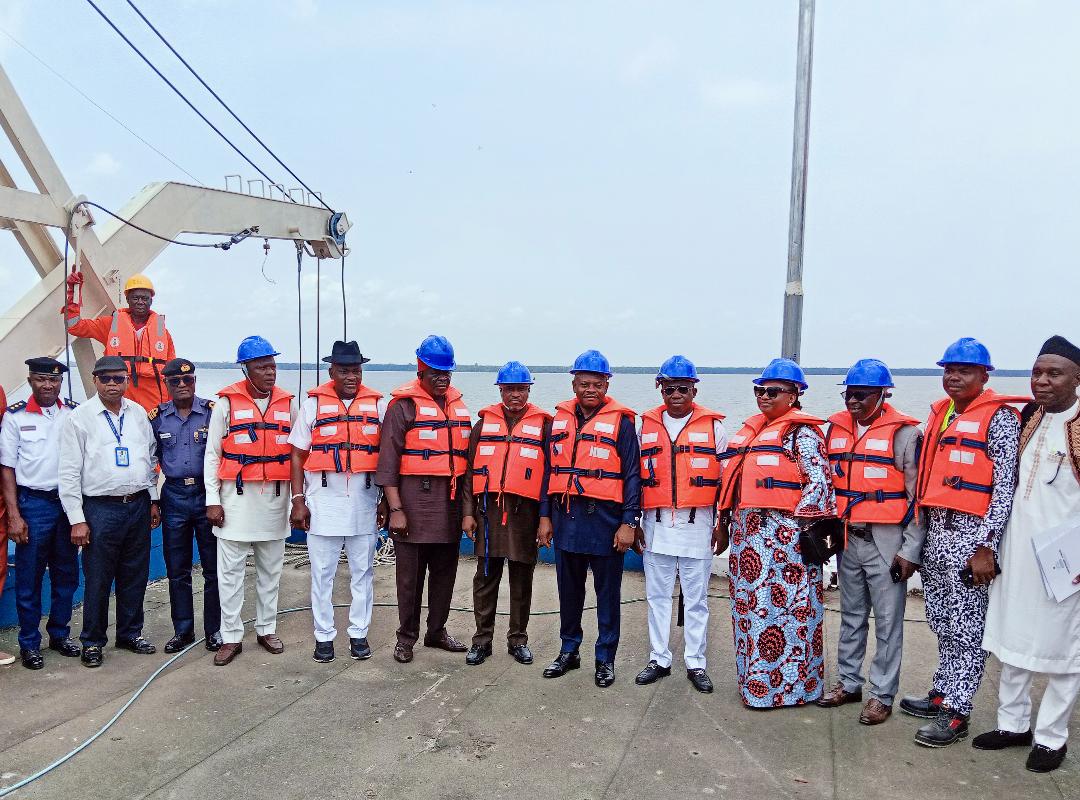
The process of disbursing the long-awaited Cabotage Vessel Financing Fund (CVFF) to Nigerian shipowners has commenced, the Deputy Chairman of the House of Representatives Committee on Maritime Safety, Education and Administration, Uduak Odudoh, has said.
He credited the Minister of Marine and Blue Economy, Dr. Adegboyega Oyetola and the Director-General of the Nigerian Maritime Administration and Safety Agency (NIMASA) Dr. Dayo Moberola, for driving the milestone.
Odudoh made the disclosure during the committee’s oversight visit to the Maritime Academy of Nigeria (MAN), Oron, Akwa Ibom State – a visit that also laid bare the institution’s most ambitious one-year performance record in recent memory under Acting Rector Dr. Kevin Okonna.
“By the grace of God, and the wisdom of the Minister of Marine and Blue Economy, and the effort of the Director-General of NIMASA, the processes of releasing those funds to shipowners in Nigeria has started,” Odudoh told cadets assembled at the parade ground. “In less than no time, those monies will be disbursed. Once they are disbursed, shipowners will now expand — if they were having one ship, they will go to two ships, more vessels.”
The lawmaker, who represents Ikot Abasi/Mkpat Enin/Eastern Obolo Federal Constituency in Akwa Ibom State, said the fleet expansion triggered by CVFF disbursement would directly benefit MAN graduates, describing the institution as the most efficient maritime training academy in West Africa, recognised by the International Maritime Organisation (IMO). “It is our wish that once you finish, like your predecessors who are today onboard vessels, you will also be onboard vessels when you leave,” he told the cadets.
The committee’s visit came against the backdrop of a presentation by Acting Rector Dr. Kevin Okonna, who laid out a sweeping account of the academy’s 2025 performance that drew sustained commendation from lawmakers across party and state lines.
Okonna disclosed that of the 212 cadets who graduated from MAN in November 2025, 80 have since secured employment onboard vessels, a figure that electrified the committee and addressed the academy’s most persistent challenge: post-graduation unemployment. “During those years, the challenges had always been: where would the graduating cadet officers go after graduation? Today, the rector reeled out that about 80, as we speak, have onboard vessel. That gives you hope” Odudoh recalled.
A centerpiece of the academy’s employment drive is a three-year Memorandum of Agreement signed with NLNG Shipping and Marine Services Limited (NLMSL), which has already placed 43 cadets aboard NLNG vessels — 13 in December 2024 and a further 30 in late February 2026. Okonna noted that the Nigerian Shipowners Association also provided critical onboarding opportunities during the graduation period, with stakeholders visibly competing to recruit MAN cadets.
“It was during the graduation when I saw how stakeholders scrambled for cadets that it dawned on me that the Maritime Academy under Okonna has indeed made a lot of improvements,” Rep. Paul Ekpo, representing Etinan/Nsit Ibom/Nsit Ubium Federal Constituency in Akwa Ibom, said. “The graduation ceremony was a very rewarding event — not just taking a child here and at the end of the day they struggle to get a place to work.”
Okonna noted that on March 11, 2026, the eve of the committee’s visit, MAN Oron received certification of its quality management system from the Standards Organisation of Nigeria, conforming to ISO 9001:2015 and ISO 21001:2025. He described it as a landmark, noting the academy had never held quality management certification since its establishment in 1977.
The rector also announced active partnership negotiations with the Liberia Maritime Authority, driven by MAN’s ambition to attract foreign students and generate additional sea-time opportunities for Nigerian cadets.
“Liberia has the largest fleet of vessels in the world, yet does not have an institution near what we have. We approached Liberia to send their youths to MAN Oron, and in return, our cadets will gain sea-time training advantages aboard Liberian vessels,” Okonna explained.
He said a delegation including members of the academy’s governing council recently visited Monrovia for talks, with officials from the Liberian Maritime Training Institution expressing eagerness to visit the Oron campus.
Other 2025 milestones presented by Okonna included the establishment of the academy’s first-ever staff conditions of service, approved by the Head of Service of the Federation, and the development of a five-year strategic development plan submitted to the Federal Ministry of Marine and Blue Economy.
The academy, he said, also registered all graduating cadets with at least one international professional body: nautical science cadets with the Nautical Institute, marine engineering cadets with E-Marit, and maritime transport studies cadets with the Chartered Institute of Logistics and Transport (CILT). An MOU with the Abuja Memorandum of Understanding on Port State Control was also signed, following the academy’s development of a training course for Port State Control Officers in the sub-region.
He said wtudent numbers rose from 180 graduates in 2024 to 221 in 2025, while participation in specialised training courses climbed from 4,595 to 4,959 in the same period. The campus, he said, currently hosts 654 regular cadets across programmes in nautical science, marine engineering, electrical and electronics engineering, and maritime transport and business management.
The visit included an on-the-spot inspection of capital projects funded through the 2025 appropriation, including rehabilitation of the academy’s fire bay and survival pools, construction of a 500-seater auditorium complex, new access and internal roads, and the installation of solar-powered boreholes for the campus and host community.
Engr. Rodney Ambaiowei, the lawmaker representing Southern Ijaw in Rivers State and himself a former beneficiary of MAN’s practical training facilities during his engineering studies, commended the management while flagging budget inadequacies. “It is very appalling to see the meagre sums allocated for trainings for cadets and the even smaller amounts actually released,” he told the committee. “If we want this school to move forward, we have to improve on the budget to fund the institution in order to attract foreign students.”
Ambaiowei also advised the academy’s management to actively lobby National Assembly members to channel constituency capital projects to the institution.
Olufemi Ogunbanwo, representing Ijebu Ode/Odogbolu/Ijebu North East Federal Constituency in Ogun State, echoed those calls. “I want to commend you on the way and manner you have managed the meagre amount made available to you, and I plead with my colleagues that we should look at ways of bringing projects to support the academy,” he said, pledging the committee’s continued backing.
Mark Esset, representing Uyo/Uruan/Nsit Atai/Asutan/Ibesikpo Federal Constituency in Akwa Ibom and a self-described “son of the soil,” gave perhaps the most pointed assessment. Contrasting this visit with a previous oversight that devolved into open conflict between management and staff, Esset declared the transformation remarkable. “Last time we came, there was almost a physical fistfight between the Rector and the staff. Today the reverse is the situation — you have shown capacity, leadership, and the spirit of teamwork.”
He also raised the question of pending litigation between MAN and staff, as well as with the host community, and Okonna confirmed that while cases remain active, many have been resolved and no new ones are being added.
On the corporate social responsibility front, Okonna detailed how the academy constructed a market for the Eyo Abasi host community, installed a solar-powered borehole in response to complaints about river water consumption, restored public electricity supply to the Oron community after an eight-year blackout, and provided solar power to the palace of the Paramount ruler — initiatives Odudoh specifically commended.
Wrapping up the oversight, Odudoh delivered the committee’s verdict unequivocally. “From what the rector briefed us and what we have seen on ground, we are satisfied — satisfied in the areas of infrastructure, satisfied in the area of international partnership. What we noticed is that the rector has consolidated on the performances of his predecessor and improved upon that.”
Asked what MAN should expect from the National Assembly in 2026’s budgetary cycle, Odudoh drew a direct link between accountability and funding. “The most important thing is not approving the budget, the most important thing is accountability. Today, the rector has displayed the level of accountability we expected. Going forward, we will not hesitate giving him subsequent approvals.”
Okonna further noted the institution sits on about 100 hectares of land and remains committed to delivering internationally recognised maritime education and training in line with global standards.
“Our vision is to be internationally recognised as a centre of excellence in maritime education and training, and the support from the National Assembly has been instrumental in helping us maintain and upgrade our facilities,” he said.
In his closing remarks, Okonna urged Nigerians and international stakeholders alike to view the academy as a national asset worth protecting. “You don’t have two or many institutions with the size of this one and these facilities. We have to put hands together to get the benefit from the academy and that’s why we are driving this international partnership with every energy in us to bring international students to benefit because it’s enormous. We have to protect it, promote it, and get the best benefit from this facility,” he said.


By Monireoluwa Lucas
Africa risks losing further ground in the global shipping industry as a shortage of internationally certified seafarers and maritime professionals continues to limit the continent’s ability to compete in an increasingly technology-driven sector.
The Manager of Training and Maritime Centre of Excellence (MCOE) at Nigerian Maritime Services Limited (NSML), Dr Effiong Ekanem-Attah, raised the concern at the 2026 Maritime Training Institute organised by the Association of Maritime Journalists of Nigeria (AMJON) in Lagos.
Ekanem-Attah, who represented the Managing Director of NSML, Abdulkadir Kere Ahmed, said the global maritime industry was becoming increasingly regulated, technology-driven and dependent on skilled professionals capable of operating under international standards.
Speaking on the theme: “The Power of Innovation in a Future-Ready Maritime Training Agenda,” he said digitalisation, decarbonisation, automation and stricter safety requirements were reshaping shipping and increasing demand for competent maritime professionals.
He said that despite Africa’s strategic maritime location and extensive coastline, the continent had struggled to produce sufficient internationally certified seafarers to meet the demands of the global maritime labour market.
According to him, limited access to quality maritime training, inadequate simulator facilities, accreditation challenges and insufficient opportunities for practical sea-time were among factors responsible for the skills gap.
The situation, he said, had compelled many shipping companies operating in Africa to rely heavily on expatriates for critical technical and operational positions.
“Consequently, many shipping companies operating in and out of Africa have relied heavily on expatriate personnel for critical technical and operational roles,” he said.
Ekanem-Attah said closing the gap would require an integrated maritime manpower development system combining education, professional certification, practical sea-time, mentorship, technology, research and industry collaboration.
He said the NSML Maritime Centre of Excellence on Bonny Island, Rivers State, was established as part of efforts to address longstanding maritime manpower challenges.
According to him, the centre combines maritime training, simulator-based learning, sea-time development, professional certification support, research, consultancy and industry partnerships.
Ekanem-Attah said the centre had secured international accreditations, including ISO 9001:2015 Quality Management System, DNV standards for maritime simulator and training centres, United Kingdom Maritime and Coastguard Agency accreditation for six courses, Nautical Institute accreditation for Dynamic Positioning programmes, as well as accreditations from Marshall Islands, Bermuda and the Nigerian Maritime Administration and Safety Agency (NIMASA).
He said the accreditations would enable Nigerian and other African maritime professionals to obtain globally recognised qualifications locally instead of travelling abroad for specialist training.
The centre, he added, had invested in advanced facilities, including bridge and engine-room simulators and Dynamic Positioning systems, enabling trainees to simulate operational situations, emergency procedures and other risk-sensitive scenarios.
On the challenge of sea-time, Ekanem-Attah said NSML’s Seafarers Continuous Development Programme had provided opportunities for young professionals seeking to meet certification requirements.
He said 272 cadets had completed sea-time training through the programme, while another 54 were either in college or onboard vessels progressing towards professional certification.
“As of August 2026, NSML employs over 700 seafarers and remains the largest employer of qualified Nigerian seafarers,” he said.
Also speaking, the Lagos Port Complex Manager of the Nigerian Ports Authority (NPA), Mr Adebowale Lawal, who represented the Managing Director, Dr Abubakar Dantsoho, said technology alone could not transform the maritime sector without adequate human capital.
Lawal said digitalisation, artificial intelligence, automation, robotics and data-driven logistics were changing global port and shipping operations.
He said the NPA had deployed technology to improve efficiency, transparency, safety and service delivery, citing the Electronic Call-Up System, Electronic Access Control, digital revenue systems, vessel management platforms and the ongoing development of the Port Community System.
According to him, the Authority was also aligning its processes with the National Single Window to promote greater integration and electronic exchange of information among maritime stakeholders.
“These initiatives demonstrate that the future of our ports will depend increasingly on people who understand and can effectively deploy technology,” he said.
Lawal said maritime training institutions must produce professionals who were technically competent, innovative, adaptable and digitally literate, as the industry moves towards smart ports, autonomous and connected ships, cybersecurity systems, green shipping technologies and data-driven decision-making.
He urged greater collaboration among government, industry and training institutions to develop the manpower required to make Nigeria’s maritime sector globally competitive.
“Let us remember that innovation is not only about machines and technology; it is about people, ideas and the courage to do things better,” he said.
Lawal added that sustained investment in skills development would help Nigeria build a workforce capable of driving safer, smarter, greener and more efficient maritime and port operations.
By Monireoluwa Lucas
The Federal Government has directed the transfer of the Inland Dry Port (IDP) functions of the Nigerian Shippers’ Council (NSC) to the Nigerian Ports Authority (NPA) as part of ongoing reforms in the nation’s maritime sector.
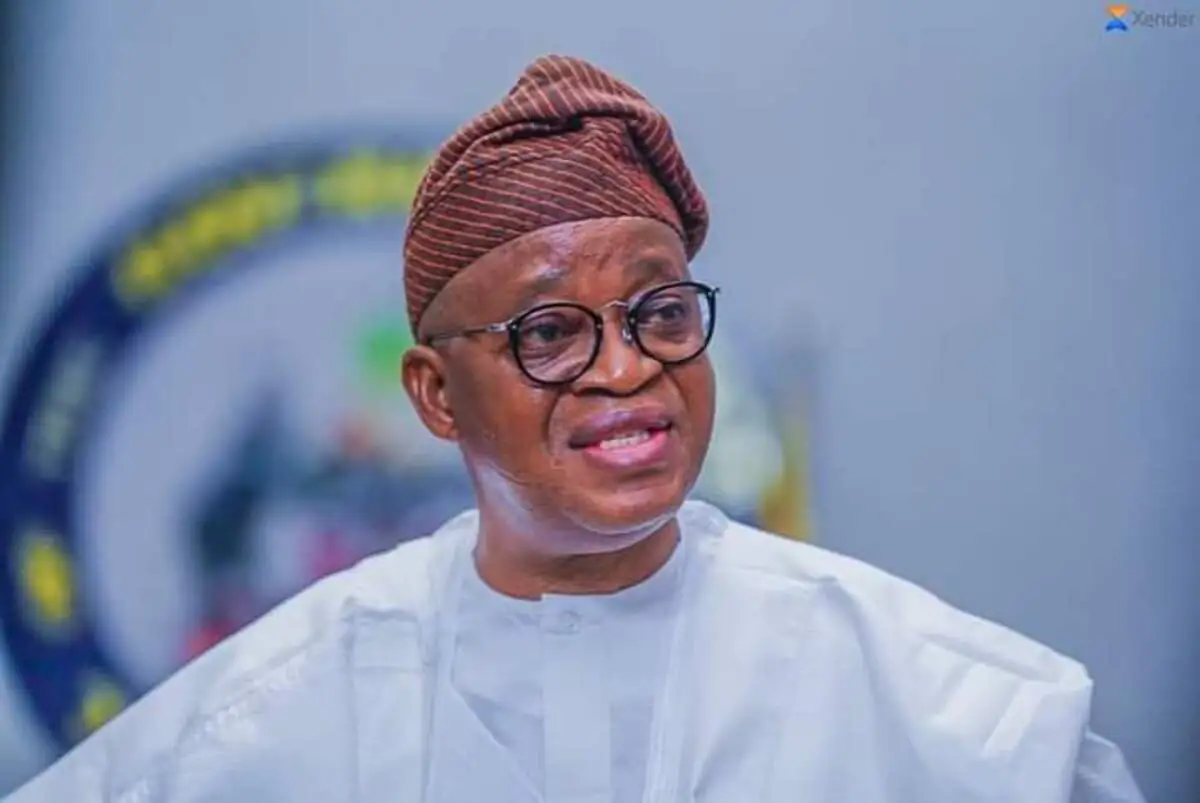
The Minister of Marine and Blue Economy, Dr Adegboyega Oyetola, announced the directive while disclosing plans for the transition of the NSC into the newly established Nigeria Ports Economic Regulatory Agency (NPERA).
Oyetola said the changes were aimed at ensuring a clear separation between port economic regulation, infrastructure development and port operations.
According to him, a Ministerial Committee has been constituted to oversee the transition of the NSC into NPERA following President Bola Ahmed Tinubu’s assent to the NPERA Act, 2026.
The minister described the new legislation as a landmark reform that would establish a substantive statutory economic regulator for Nigeria’s port sector after about two decades of efforts to achieve such a framework.
The NSC has served as the country’s interim port economic regulator since 2014.
Under the new arrangement, NPERA will be responsible for key economic regulatory functions, including the regulation of tariffs and charges, promotion of competition, licensing, service standards, commercial dispute resolution and protection of port users.
Oyetola said the separation of regulatory and operational responsibilities was necessary to strengthen confidence in the sector and prevent actual or perceived conflicts of interest.
He said an economic regulator must be able to operate as an impartial referee and should not simultaneously perform functions that could compromise that role.
The minister said the government’s objective was to ensure that agencies under the Federal Ministry of Marine and Blue Economy operated within clearly defined mandates.
This, he said, would eliminate overlapping responsibilities, improve transparency and provide a more predictable business environment for port users, investors, terminal operators, shipping companies and other stakeholders.
On the transfer of the IDP functions, Oyetola said moving the responsibility to the NPA would strengthen the development and integration of inland dry ports into Nigeria’s wider port infrastructure and operational network.
He said the NPA was better positioned to promote the facilities as part of an integrated national port system.
The minister said the emergence of NPERA marked a new phase in the governance of Nigeria’s port sector, assuring that the government would work to ensure a smooth transition.



-

 Energy11 months ago
Diesel falls to ₦979/L in Lagos
-
 Law & Crime12 months ago
EFCC vs Yahaya Bello: Court adjourns ₦80.2b alleged fraud trial to Nov 11
-

 Art & Life9 years ago
These ’90s fashion trends are making a comeback in 2017
-
Business9 years ago
The 9 worst mistakes you can ever make at work
-
Entertainment9 years ago
The final 6 ‘Game of Thrones’ episodes might feel like a full season
-
Art & Life9 years ago
According to Dior Couture, this taboo fashion accessory is back
-
Entertainment9 years ago
The old and New Edition cast comes together to perform
-
Entertainment9 years ago
Mod turns ‘Counter-Strike’ into a ‘Tekken’ clone with fighting chickens