
Maritime
Nigeria eyes €59m EU ocean programme to tackle illegal fishing


Nigeria has expressed readiness to leverage the €59 million West Africa Sustainable Ocean Programme (WASOP) to intensify efforts against illegal, unreported and unregulated (IUU) fishing and strengthen the sustainable management of its marine resources.
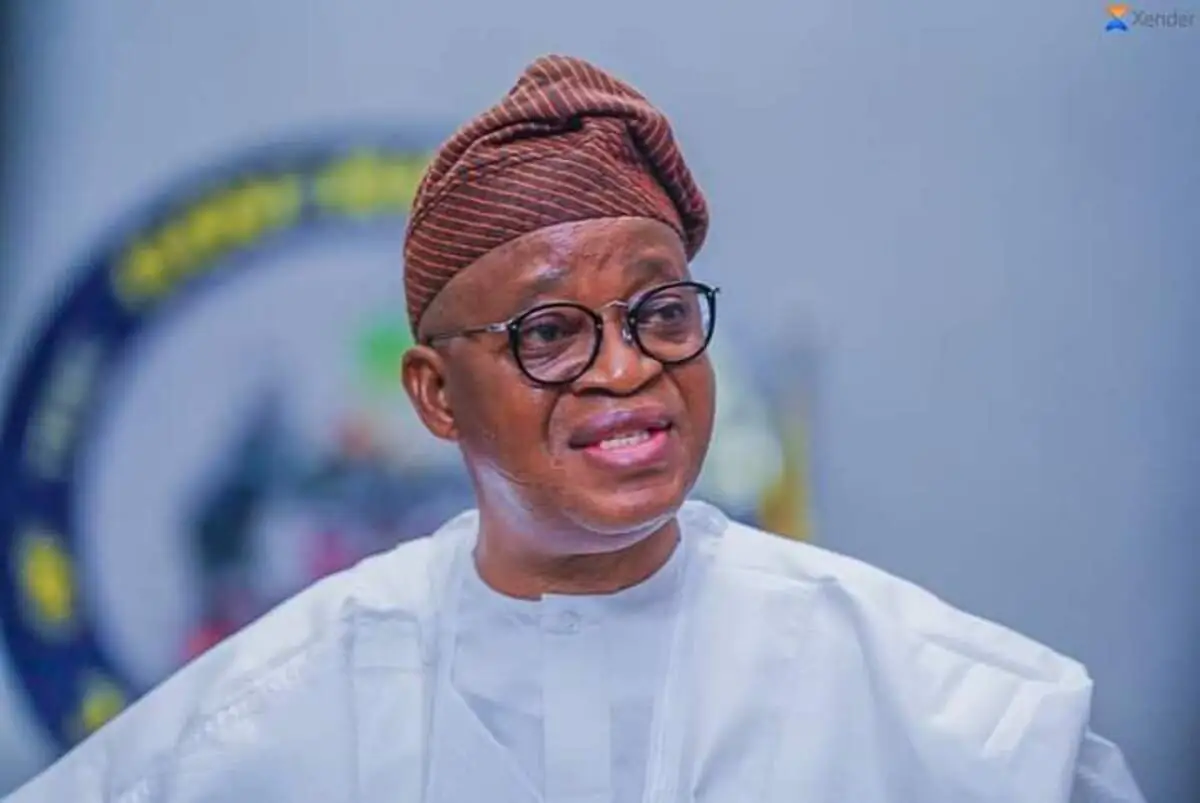
The Minister of Marine and Blue Economy, Adegboyega Oyetola, disclosed this during a meeting with the European Union Ambassador to Nigeria, Gautier Mignot, in Abuja.
The meeting focused on deepening cooperation between Nigeria and the European Union on maritime security, ocean governance and the sustainable development of marine resources.
Oyetola described illegal fishing as a major threat to Nigeria’s marine ecosystem and coastal livelihoods, warning that the practice continues to deplete fish stocks, undermine food security and weaken the economic wellbeing of communities that depend on fishing activities.
According to the minister, IUU fishing poses broader risks beyond environmental degradation, affecting national security and economic stability.
“Illegal, unreported, and unregulated fishing is a direct threat to national security, food sovereignty, and the survival of our coastal communities. We cannot afford to stand by and watch our marine ecosystems depleted and economic livelihoods eroded,” he said.
He stressed the need for stronger international collaboration, backed by enhanced monitoring and enforcement mechanisms, to curb illegal fishing activities and protect the country’s territorial waters.
Welcoming the EU envoy, Oyetola commended the European Union for its sustained partnership with Nigeria, particularly its support for maritime stability in the Gulf of Guinea, which remains a strategic corridor for global shipping and regional trade.
The minister noted that the WASOP initiative presents a significant opportunity for countries in the region to strengthen coordinated action against illegal fishing, improve ocean governance and promote the sustainable utilisation of marine resources.
He said Nigeria was prepared to actively participate in the programme to attract technical and financial support aimed at enhancing enforcement capabilities and advancing the country’s blue economy agenda.
Oyetola also highlighted ongoing reforms under the National Policy on Marine and Blue Economy, which seeks to drive innovation, encourage private sector investment and ensure sustainable exploitation of ocean resources.
He cited improvements in port operations, logistics and maritime security, while noting that efforts were underway to expand maritime infrastructure and boost Nigeria’s competitiveness in international trade.
The minister further called for broader cooperation beyond anti-piracy initiatives, urging development partners to support Nigeria in tackling environmental crimes, human trafficking and illegal fishing through a more integrated approach.
He specifically sought increased technical assistance from the European Union in areas such as surveillance technology, fisheries monitoring and enforcement systems to strengthen Nigeria’s capacity to combat illegal fishing across the Gulf of Guinea.
In his remarks, Mignot reaffirmed the European Union’s commitment to strengthening maritime cooperation with Nigeria and supporting regional efforts aimed at ensuring safer and more sustainable oceans.
He said the WASOP initiative, funded by the EU, was designed to promote integrated ocean governance, sustainable fisheries management and the protection of coastal and marine ecosystems across West Africa.
According to the ambassador, the programme will support improved coordination among coastal states, strengthen enforcement mechanisms, and promote a more inclusive and sustainable blue economy in the region


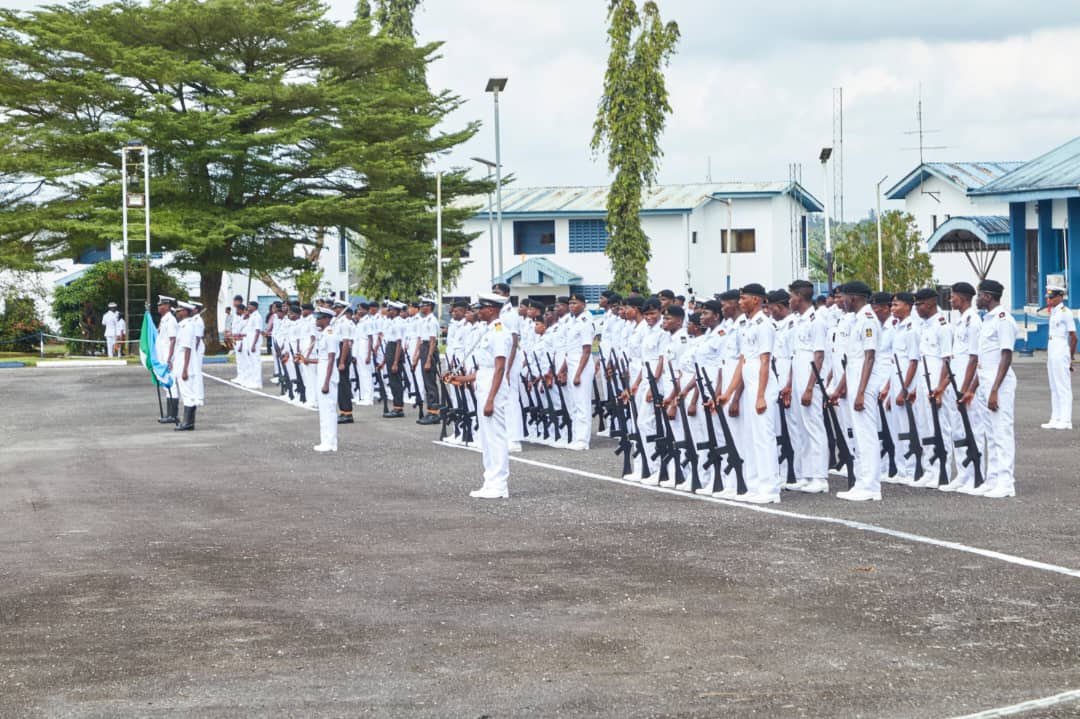
The Maritime Academy of Nigeria (MAN), Oron, has secured sea-time placements for more than 50 cadets on internationally trading vessels, including 43 currently training aboard ships operated by NLNG Shipping and Marine Services Limited (NSML), as the institution intensifies efforts to prepare Nigerian seafarers for global employment.
The placements address one of the maritime industry’s persistent manpower challenges: access to mandatory onboard training required for cadets to obtain professional certification and qualify for seafaring careers.
The Minister of Marine and Blue Economy, Dr Adegboyega Oyetola, represented by the ministry’s Permanent Secretary, Fatima Sugra Mahmood, disclosed this at the academy’s 2026 cadets’ graduation ceremony in Oron, Akwa Ibom State.
Oyetola said the Federal Government was committed to ensuring that maritime education translated into meaningful employment, internationally recognised qualifications and a skilled workforce capable of supporting the country’s shipping industry.
“For the Federal Government, the ultimate objective of maritime education is not simply to produce graduates, but to develop competent professionals who can find meaningful employment, compete internationally and contribute to the growth of our marine and blue economy,” he said.
The minister commended NSML, the Shipowners Association of Nigeria, Starzs Investment Limited, Sea Transport Services Nigeria Limited, Arion Energy Services Limited and other industry partners for providing onboard training opportunities.
“I encourage more indigenous shipowners and maritime operators to embrace this responsibility. Providing sea-time opportunities is not merely a contribution to the Academy; it is an investment in the future of Nigeria’s shipping industry,” he said.
The Acting Rector of the academy, Dr Kevin Okonna, said the institution had placed more than 50 cadets on internationally trading ships since its November 2025 graduation ceremony, including the 43 cadets undertaking their mandatory one-year sea service aboard NLNG vessels.
He added that reports on the cadets’ performance had been impressive, ranging from very good to excellent in both professional competence and character.
He also announced that arrangements had been concluded with NSML to sponsor another batch of cadets for sea-time training aboard its vessels.
Beyond onboard training, Okonna said the academy had strengthened its quality assurance and international partnerships, securing ISO 9001:2015 certification for quality management and ISO 21001:2025 certification for educational organisations through the Standards Organisation of Nigeria earlier this year.
With support from the Nigerian Maritime Administration and Safety Agency (NIMASA), the academy, he said, also won a competitive expression of interest to partner with the International Maritime Organization and the World Maritime University on the Future Ready Shipping in Africa project, which supports integrated pilot initiatives for green and digital shipping in sub-Saharan Africa.
The rector said all cadets were registered with professional bodies, including the Nautical Institute, UK; the Institute of Marine Engineering, Science and Technology; the Chartered Institute of Logistics and Transport; or the Chartered Institute of Transport Administration.
In his goodwill message, NSML Managing Director, Abdulkadir Ahmed, reaffirmed the company’s commitment to developing Nigerian maritime professionals through structured training and industry partnerships.
“Our partnership with the Maritime Academy of Nigeria, including the training collaboration facilitated through our Maritime Centre of Excellence, reflects this commitment,” Ahmed said.
He said classroom instruction must be complemented by practical skills, discipline and safety consciousness to develop professionals capable of meeting international maritime standards.
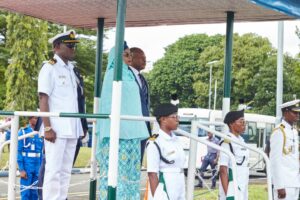
The graduation ceremony also featured the official launch of the academy’s Enterprise Content Management System (ECMS), designed to move administrative operations from manual, paper-based processes to a more efficient, transparent and secure digital environment.
Oyetola said the system aligned with the Federal Government’s digital transformation reforms, aimed at improving efficiency, accountability and public service delivery. He urged the academy’s management to ensure its effective use and sustainability.
He further stressed that the academy’s performance should be measured not only by the number of graduates it produces but also by their transition into professional certification and productive maritime careers.
The minister urged the graduating cadets to uphold discipline, integrity and safety, embrace emerging technologies and pursue continuous professional development as they enter an increasingly competitive global shipping industry.
“Wherever your careers take you, whether onboard Nigerian vessels or international fleets, remember that you represent not only yourselves and this Academy but also the Federal Republic of Nigeria,” he said.
By Monireoluwa Lucas
Africa risks losing further ground in the global shipping industry as a shortage of internationally certified seafarers and maritime professionals continues to limit the continent’s ability to compete in an increasingly technology-driven sector.
The Manager of Training and Maritime Centre of Excellence (MCOE) at Nigerian Maritime Services Limited (NSML), Dr Effiong Ekanem-Attah, raised the concern at the 2026 Maritime Training Institute organised by the Association of Maritime Journalists of Nigeria (AMJON) in Lagos.
Ekanem-Attah, who represented the Managing Director of NSML, Abdulkadir Kere Ahmed, said the global maritime industry was becoming increasingly regulated, technology-driven and dependent on skilled professionals capable of operating under international standards.
Speaking on the theme: “The Power of Innovation in a Future-Ready Maritime Training Agenda,” he said digitalisation, decarbonisation, automation and stricter safety requirements were reshaping shipping and increasing demand for competent maritime professionals.
He said that despite Africa’s strategic maritime location and extensive coastline, the continent had struggled to produce sufficient internationally certified seafarers to meet the demands of the global maritime labour market.
According to him, limited access to quality maritime training, inadequate simulator facilities, accreditation challenges and insufficient opportunities for practical sea-time were among factors responsible for the skills gap.
The situation, he said, had compelled many shipping companies operating in Africa to rely heavily on expatriates for critical technical and operational positions.
“Consequently, many shipping companies operating in and out of Africa have relied heavily on expatriate personnel for critical technical and operational roles,” he said.
Ekanem-Attah said closing the gap would require an integrated maritime manpower development system combining education, professional certification, practical sea-time, mentorship, technology, research and industry collaboration.
He said the NSML Maritime Centre of Excellence on Bonny Island, Rivers State, was established as part of efforts to address longstanding maritime manpower challenges.
According to him, the centre combines maritime training, simulator-based learning, sea-time development, professional certification support, research, consultancy and industry partnerships.
Ekanem-Attah said the centre had secured international accreditations, including ISO 9001:2015 Quality Management System, DNV standards for maritime simulator and training centres, United Kingdom Maritime and Coastguard Agency accreditation for six courses, Nautical Institute accreditation for Dynamic Positioning programmes, as well as accreditations from Marshall Islands, Bermuda and the Nigerian Maritime Administration and Safety Agency (NIMASA).
He said the accreditations would enable Nigerian and other African maritime professionals to obtain globally recognised qualifications locally instead of travelling abroad for specialist training.
The centre, he added, had invested in advanced facilities, including bridge and engine-room simulators and Dynamic Positioning systems, enabling trainees to simulate operational situations, emergency procedures and other risk-sensitive scenarios.
On the challenge of sea-time, Ekanem-Attah said NSML’s Seafarers Continuous Development Programme had provided opportunities for young professionals seeking to meet certification requirements.
He said 272 cadets had completed sea-time training through the programme, while another 54 were either in college or onboard vessels progressing towards professional certification.
“As of August 2026, NSML employs over 700 seafarers and remains the largest employer of qualified Nigerian seafarers,” he said.
Also speaking, the Lagos Port Complex Manager of the Nigerian Ports Authority (NPA), Mr Adebowale Lawal, who represented the Managing Director, Dr Abubakar Dantsoho, said technology alone could not transform the maritime sector without adequate human capital.
Lawal said digitalisation, artificial intelligence, automation, robotics and data-driven logistics were changing global port and shipping operations.
He said the NPA had deployed technology to improve efficiency, transparency, safety and service delivery, citing the Electronic Call-Up System, Electronic Access Control, digital revenue systems, vessel management platforms and the ongoing development of the Port Community System.
According to him, the Authority was also aligning its processes with the National Single Window to promote greater integration and electronic exchange of information among maritime stakeholders.
“These initiatives demonstrate that the future of our ports will depend increasingly on people who understand and can effectively deploy technology,” he said.
Lawal said maritime training institutions must produce professionals who were technically competent, innovative, adaptable and digitally literate, as the industry moves towards smart ports, autonomous and connected ships, cybersecurity systems, green shipping technologies and data-driven decision-making.
He urged greater collaboration among government, industry and training institutions to develop the manpower required to make Nigeria’s maritime sector globally competitive.
“Let us remember that innovation is not only about machines and technology; it is about people, ideas and the courage to do things better,” he said.
Lawal added that sustained investment in skills development would help Nigeria build a workforce capable of driving safer, smarter, greener and more efficient maritime and port operations.



-

 Energy12 months ago
Diesel falls to ₦979/L in Lagos
-
 Law & Crime1 year ago
EFCC vs Yahaya Bello: Court adjourns ₦80.2b alleged fraud trial to Nov 11
-

 Business9 years ago
The 9 worst mistakes you can ever make at work
-
Art & Life9 years ago
These ’90s fashion trends are making a comeback in 2017
-
Entertainment9 years ago
The final 6 ‘Game of Thrones’ episodes might feel like a full season
-
Art & Life9 years ago
According to Dior Couture, this taboo fashion accessory is back
-
Business9 years ago
3 Ways to make your business presentation more relatable
-
Entertainment9 years ago
The old and New Edition cast comes together to perform