
News
Number of work visas to foreign nationals plunged drastically, says UK Home Office

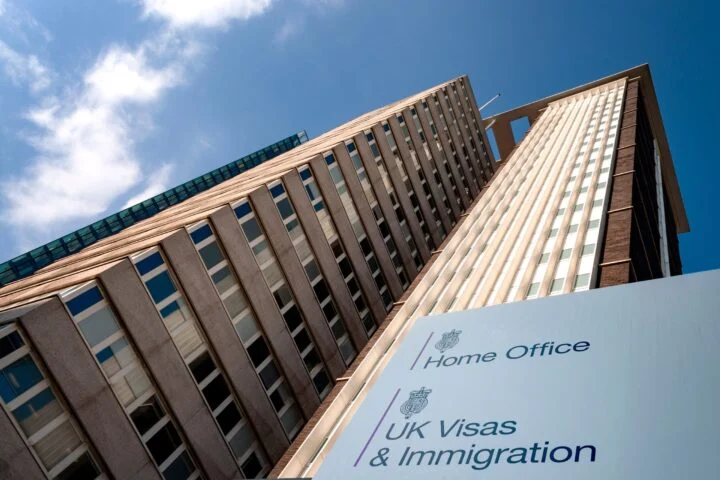
The number of visas issued to foreign nationals entering the UK for work, study, family, or humanitarian purposes has fallen sharply.
According to new data by the UK Home Office, 834,977 entry visas were granted in the year to June 2025 across these categories, down nearly a third (32 percent ) from 1.23 million in the previous 12 months.
The data shows that work-related visas saw the steepest decline, plunging 48 percent from 545,855 to 286,071.
Study visas dropped by 18 percent, falling from 530,312 to 435,891, while family visas decreased by 15 percent, from 83,912 to 70,961.
Among humanitarian and resettlement categories, 14,216 visas were issued under the Ukraine schemes (down 48 percent year-on-year), 11,804 to British National Overseas (BNO) status holders from Hong Kong (down 47 percent), and 9,357 under the EU Settlement Scheme (down 34 percent).
Additionally, 3,640 visas were granted to dependants joining or accompanying others, while 3,037 were issued under other settlement schemes.
The overall total is the lowest for any 12 months since the year to September 2021, when 802,415 visas were issued.
The sharp decline follows changes to legal migration rules introduced early last year by the previous conservative government.
These included restrictions on most international students bringing family members to the UK and a ban on overseas care workers bringing dependants.
Yvette Cooper, the home secretary, said the government’s actions have been key to “restoring order” to the immigration system.
“We inherited a broken immigration and asylum system that the previous government left in chaos,” she said.
“Since coming to office, we have strengthened Britain’s visa and immigration controls, cut asylum costs and sharply increased enforcement and returns, as today’s figures show.
“The action we have taken in the last 12 months — increasing returns of failed asylum seekers by over 30 percent, cutting asylum costs by 11 percent, reducing the backlog by 18 percent and our forthcoming plans to overhaul the failing asylum appeal system — are crucial steps to restoring order and putting an end to the chaotic use of asylum hotels that we inherited from the previous government.
“At the same time, we are bringing legal migration back under control, with a 48 percent reduction in work visas this year — and further stronger visa controls and higher skill requirements introduced through our White Paper expected to bring those overall numbers down further.”


The United States government has announced a sweeping review of all Green Cards issued to citizens of 19 countries, following Wednesday’s attack on National Guard troops in Washington, D.C.
The Trump administration disclosed the move on Thursday after authorities identified the detained suspect as a 29-year-old Afghan national who had previously worked with American forces in Afghanistan.
According to AfghanEvac, an organisation involved in the resettlement of Afghans after the 2021 Taliban takeover, the suspect was granted asylum in April 2025, not permanent residency.
In a statement on X, the Director of the US Citizenship and Immigration Services (USCIS), Joseph Edlow, said, “I have directed a full-scale, rigorous re-examination of every Green Card for every alien from every country of concern.”
The order had earlier banned nearly all nationals from 12 of those countries, including Afghanistan, from entering the United States.
Here is a full list of countries under the travel ban:
Countries with Full Travel Ban (12)
1. Afghanistan
2. Myanmar
3. Chad
4. Congo-Brazzaville
5. Equatorial Guinea
6. Eritrea
7. Haiti
8. Iran
9. Libya
10. Somalia
11. Sudan
12. Yemen
Countries with Partial Ban (7)
1. Burundi
2. Cuba
3. Laos
4. Sierra Leone
5. Togo
6. Turkmenistan
7. Venezuela
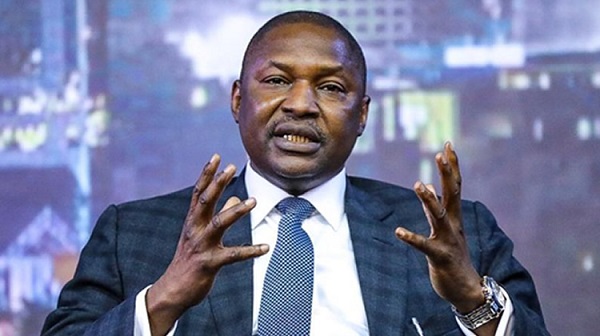
The Economic and Financial Crimes Commission (EFCC) has invited former Attorney-General of the Federation and Minister of Justice, Abubakar Malami, for questioning.
Malami served as Attorney-General and Minister of Justice from 2015 to 2023 under former President Muhammadu Buhari.
Malami announced the development on his Facebook page on Friday, confirming that he had received a formal invitation from the anti-graft agency.
“I would like to inform my family and friends that I have been summoned by the EFCC to provide clarification on certain matters, and as a law-abiding and patriotic citizen, I am determined to honour this invitation without any hesitation,” he wrote.
The former minister reiterated his commitment to the principles of honesty, integrity, and accountability, which he said guided his years in public service.
“I believe in the importance of honesty, integrity, and accountability in governance; these are principles that I have long supported and upheld over the years of my public service,” he added.
Malami also stated that he would keep Nigerians informed of any developments that may arise from the invitation.
• South South most equal
By Grace Edet
New data from the 2024 Nigeria Demographic and Health Survey (NDHS) has revealed major regional disparities in spousal earnings, showing that most Nigerian wives aged 15–49 earn less than their husbands, despite growing pockets of income equality across the country.
According to figures shared by Statisense on Tuesday, the trend is most pronounced in the North-West, where 941 in 1,000 wives earn less than their husbands, while only 29 in 1,000 earn more. The region also recorded the lowest rate of non-earning husbands, with just 7 in 1,000 women reporting partners with no income.
In contrast, the South South posted the strongest levels of income parity. The region recorded 113 in 1,000 wives earning the same as their husbands, the highest nationwide. It also had the largest share of women earning more than their spouses at 61 in 1,000.
The North East also showed notable shifts. While 30 in 1,000 wives out-earn their husbands, one of the highest shares in the country, the region still reported that 888 in 1,000 women earn less, reflecting wide inequality despite emerging improvements.
The North Central displayed more balanced figures, with 46 in 1,000 women earning more, and 65 in 1,000 earning equally, though 848 in 1,000 wives still fall below their husbands’ income levels.
In the South East, income gaps remain significant but show signs of narrowing. The data shows 57 in 1,000 wives earn more, 82 in 1,000 earn equally, while 775 in 1,000 still earn less than their husbands.
For the South West, 45 in 1,000 wives earn more, and 75 in 1,000 earn the same, but 824 in 1,000 wives still earn below their husbands’ earnings. Only 11 in 1,000 husbands reported having no income.
The NDHS 2024 findings highlight a consistent national pattern: while traditional income structures remain strong, especially in northern regions, the southern zones, particularly the South South, are showing faster shifts toward income equality within households.
Experts say the trend reflects broader economic realities, including rising female participation in formal work, regional differences in literacy levels, and contrasting socio-cultural expectations about household roles.
The full survey continues to shape policy discussions on women’s economic empowerment, labour participation, and regional development priorities.



-

 Art & Life9 years ago
These ’90s fashion trends are making a comeback in 2017
-
Entertainment9 years ago
The final 6 ‘Game of Thrones’ episodes might feel like a full season
-
Business9 years ago
The 9 worst mistakes you can ever make at work
-
Art & Life9 years ago
According to Dior Couture, this taboo fashion accessory is back
-
Entertainment9 years ago
The old and New Edition cast comes together to perform
-
Sports9 years ago
Phillies’ Aaron Altherr makes mind-boggling barehanded play
-
Entertainment9 years ago
Mod turns ‘Counter-Strike’ into a ‘Tekken’ clone with fighting chickens
-
Entertainment9 years ago
Disney’s live-action Aladdin finally finds its stars