
Economy
PAYE tax: 98% of Nigerian Workers to Be Exempted from from January 2026, says Oyedele

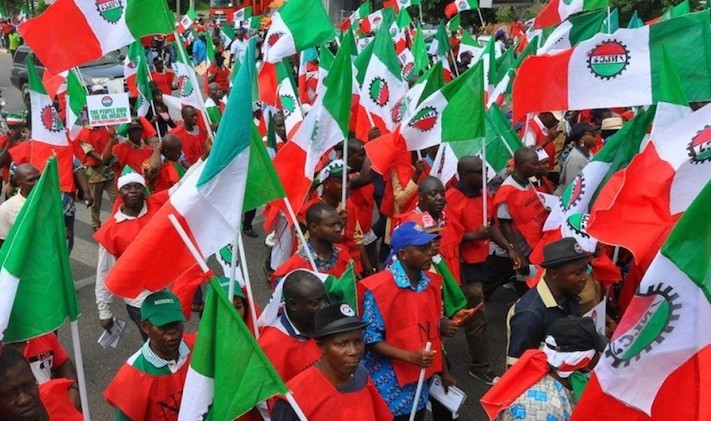
The Chairman of the Presidential Fiscal Policy and Tax Reforms Committee, Mr. Taiwo Oyedele, has disclosed that about 98 percent of Nigerian workers will be exempted from paying Pay-As-You-Earn (PAYE) tax when the new tax laws take effect from January 2026.
Oyedele made the disclosure while speaking during a session at the ongoing 31st Nigerian Economic Summit (NES31) in Abuja, explaining that the upcoming tax reforms are designed to protect low-income earners and those living around the poverty line, while ensuring a more equitable and efficient tax system.
“The more inequality you create, the more time-bomb you have,” Oyedele said. “These reforms are designed to strengthen governance around revenue generation, improve accountability, and ensure that tax revenues are effectively utilised.”
According to him, the comprehensive tax reforms, which form part of President Bola Tinubu’s broader fiscal policy agenda, aim to enhance Nigeria’s sovereign credit rating, lower borrowing costs for both government and businesses, and stimulate private-sector investment.
Oyedele said the reform effort was not without personal risk, revealing that he had received death threats because of his role in driving the initiative.
“Reform is tough,” he said. “I have suffered all kinds of things including death threats. But I am not scared. I recently celebrated my 50th birthday. Even if anything happens, I have done my bit. The reforms belong to Nigerians. The reforms don’t belong to Mr. President.”
He explained that the reforms seek to build a fairer system in which wealthy individuals and large corporations contribute more to the country’s development.
According to him, “If we don’t pay our taxes in an orderly manner, we’ll pay it in a disorderly manner. We’ve seen that in the past few years with over N30 trillion printed, which is part of the inflation we’re dealing with and the devaluation of the naira. We don’t want that to happen. We’ve seen countries like Zimbabwe where prices double every other day.”
Under the new tax structure, he said, poor Nigerians would be exempted from personal income tax, while high-net-worth individuals would be subject to higher rates.
“The poor will not pay personal income tax,” he said. “Those who earn more and have greater means will pay more. That is how fairness works in a modern economy.”
Oyedele further stated that small and low-income companies would also enjoy tax exemptions to strengthen their operations and create more jobs.
He said, “We are considering tax-exempt stickers for nano businesses to protect them from harassment by state and local government officials. These are the smallest operators — street vendors, petty traders, artisans — they should be allowed to thrive.”
Responding to concerns that state and local governments might resist the reforms, Oyedele assured that members of the Joint Tax Board (JTB), representing all 36 states and the FCT, were fully part of the committee’s deliberations and had expressed support for the new framework.
He explained that the Implementation Guidelines and Explanatory Notes for the reforms were being developed by relevant institutions, including the Federal Ministry of Finance, the International Financial Reporting Standards (IFRS) Foundation, and the JTB.
According to him, the new system would not deprive states of revenue but would, in fact, help them earn more from the Federation Account without burdening vulnerable citizens.
“Last year, all the states generated N3.36 trillion from taxes imposed on their people,” he said. “If that N3.36 trillion is not generated in 2026, the states will not do worse. We are convinced that no state will be bankrupt. We can’t do better by taxing our most vulnerable.”
Oyedele cited recent improvements in national revenue distribution as evidence that the fiscal reforms were already beginning to yield results. “Last month, the Federation Account Allocation Committee (FAAC) shared over N2 trillion to the three tiers of government,” he said.
He also criticised outdated and regressive tax provisions that burden the poor, citing examples such as the so-called “wheelbarrow tax.”
“Some of the tax provisions in our constitution are retrogressive,” Oyedele said. “How will you ask anyone to pay wheelbarrow tax? That is why we have sent ten amendment proposals to the National Assembly to amend sections that need to change in line with the tax reforms.”
According to him, the committee is also working on expenditure reforms to ensure that tax revenues are used efficiently and transparently.
“We have worked on the expenditure side,” he explained. “We are working seriously on fiscal regimes to ensure transparency and prudence in government expenditure so that Nigerians get full benefits of their taxes.”
While he declined to reveal specific details about the fiscal regime proposals, Oyedele said doing so prematurely could compromise the committee’s objectives.
“The work we are doing is for the long-term good of Nigeria’s economy,” he said. “Our goal is to create a tax system that is simple, fair, and efficient — one that promotes growth, attracts investment, and ensures that the burden of taxation is shared justly across all segments of society.







• Targets over $4b annual forex earnings
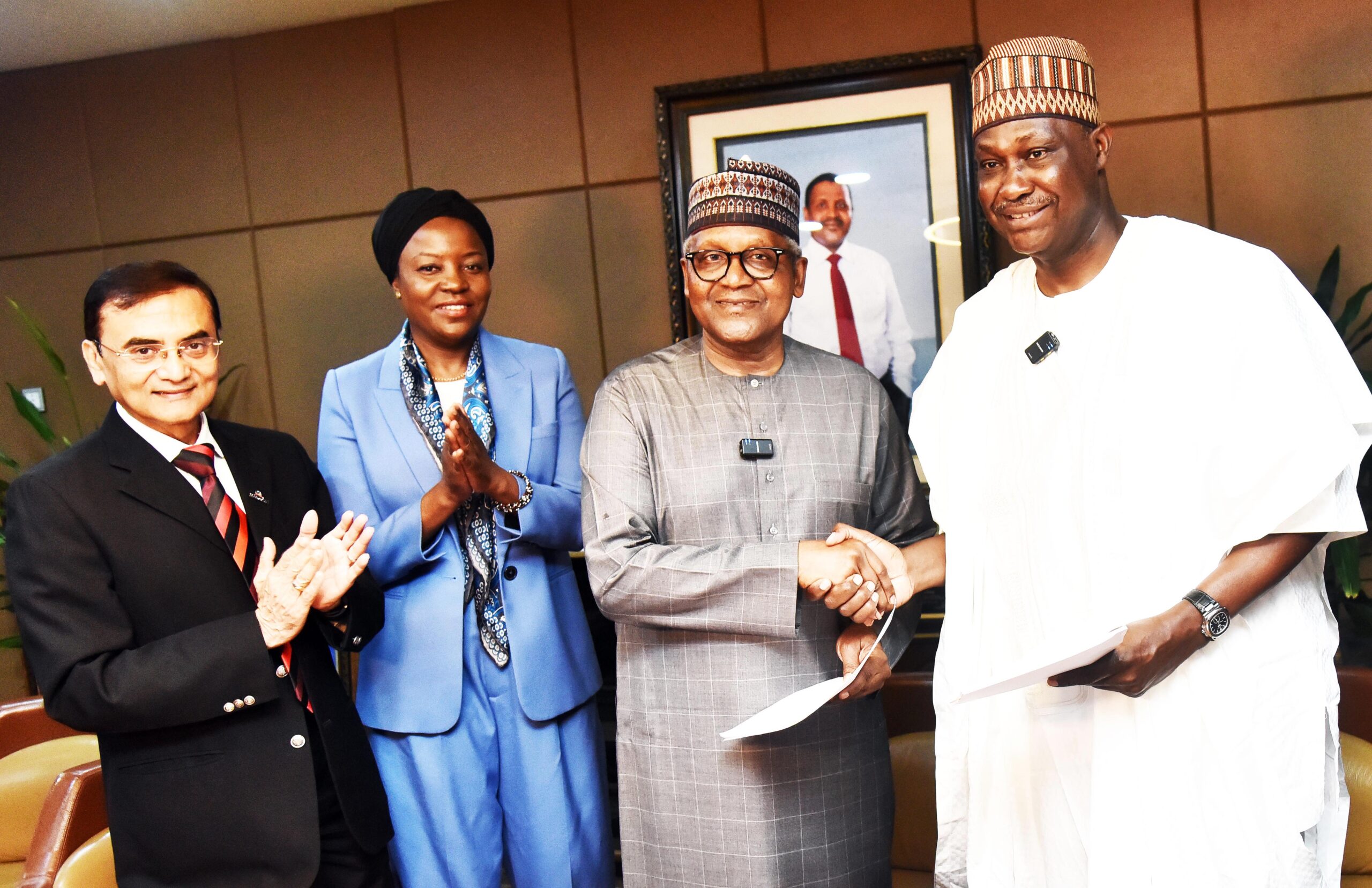
The Dangote Group has reinforced its long-standing partnership with the Africa Finance Corporation (AFC) through the signing of a $600 million loan facility to support the expansion of its fertiliser production capacity, an important milestone in advancing food security across Nigeria and the African continent.
The financing, extended to GreenView Fertilizer Corporation (Greenview), the Dangote Fertiliser Holding Company, will partly fund the expansion of urea production capacity in Nigeria as well as the development of a new fertiliser plant in Ethiopia.
This investment forms a key component of the Dangote Group’s broader $7 billion fertiliser expansion programme. The initiative is expected to increase production capacity in Nigeria from three million metric tonnes per annum (MTPA) to nine MTPA, while also supporting the establishment of a new three MTPA urea plant in Ethiopia.
Upon completion, the programme is expected to significantly boost Africa’s fertiliser output, strengthen regional food security, enhance agricultural productivity and reduce dependence on imports.
The facility underscores AFC’s strong confidence in Dangote Group’s vision to drive industrial growth and agricultural transformation through large-scale infrastructure investments. The funds will primarily support the ongoing expansion of the Dangote Fertiliser Plant at Ibeju-Lekki, Lagos, one of the largest granulated urea fertiliser complexes in the world.
The expansion is expected to substantially scale up production, improve supply chain efficiency, and ensure consistent availability of high-quality fertilisers to farmers across the continent. It will also contribute to price stability, reduce import dependency, and enhance crop yields, strengthening Africa’s overall food security framework.
Speaking on the development, President of Dangote Group, Aliko Dangote, said the expansion would generate significant foreign exchange earnings for the country.
“This investment positions us to deliver over $4 billion annually in fertiliser exports within the next three years. It represents a major contribution to Nigeria’s foreign exchange earnings and underscores our commitment to national economic growth. Our growth vision is not in isolation, we are building alongside strategic African partners like AFC and other institutions committed to the continent’s progress,” he explained.
President and CEO of AFC, Samaila Zubairu, highlighted the strategic importance of the deal.
“This transaction reflects AFC’s capital recycling model in action. Following the successful repayment of our earlier investment in Dangote Industries Limited, we are reinvesting and doubling that capital into Dangote Group’s next growth phase.
“By supporting the expansion of Dangote Fertilizer, AFC is backing a proven African industrial leader whose investments will strengthen food security, reduce import dependence, and create long-term economic value across the continent.”
This development builds on AFC’s strong track record of successful investments and exits across Africa, including projects in renewable energy, port infrastructure, digital connectivity, and industrial platforms.
The Dangote Fertiliser Plant currently plays a critical role in meeting domestic demand while exporting to international markets, thereby generating valuable foreign exchange for the country. With this new phase of expansion, the company is poised to consolidate its leadership position in the global fertiliser market while advancing Africa’s agricultural and economic resilience.
Nigeria’s Value Added Tax (VAT) collections rose to N2.42 trillion in the first quarter of this year, National Bureau of Statistics (NBS) data have shown.
The figure represents 17.06 per cent increase from the N2.07 trillion generated in the corresponding period of 2025.
The strong VAT performance recorded in the first quarter of 2026 reflects sustained economic activity across key sectors such as manufacturing, telecommunications, and mining.
The increase in VAT collections suggests that Nigeria’s non-oil revenue base continues to expand, providing additional resources for government spending and fiscal management.
The NBS also reported that VAT revenue grew by 9.98 per cent on a quarter-on-quarter basis from N2.20 trillion recorded in the fourth quarter of 2025, reflecting improved tax collections across key sectors of the economy.
Of the total VAT generated during the quarter, local payments accounted for N1.11 trillion, foreign VAT payments contributed N830.47 billion, while import VAT stood at N477.55 billion.
According to the NBS, several sectors recorded significant growth in their Value Added Tax (VAT) contributions during the first quarter of 2026, reflecting varying levels of economic activity across the country.
On a quarter-on-quarter basis, the strongest growth was recorded in activities of households as employers and undifferentiated goods-and-services-producing activities for own use, which surged by 74.36 per cent.
This was followed by the arts, entertainment and recreation sector, which expanded by 20.91 per cent, while the manufacturing sector posted a robust 12.82 per cent increase in VAT contributions.
Sectoral performance shows that education sector recorded the sharpest drop, with VAT contributions falling by 31.96 per cent. This was closely followed by public administration and defence, including compulsory social security, which declined by 31.38 per cent, while activities of extraterritorial organisations and bodies decreased by 29.89 per cent.
In terms of overall contribution to VAT revenue, the manufacturing sector maintained its position as the largest contributor, accounting for 29.75% of total collections in the first quarter.
The information and communication sector followed with 20.61%, underscoring the growing importance of digital and telecommunications services to the economy. Mining and quarrying ranked third, contributing 12.32 per cent of total VAT revenue.
At the lower end of the spectrum, activities of households as employers and undifferentiated goods-and-services-producing activities for own use accounted for just 0.01 per cent of total VAT collections.
Activities of extraterritorial organisations and bodies contributed 0.02 per cent, while water supply, sewerage, waste management and remediation activities made up 0.06 per cent.
The figures highlight the continued dominance of manufacturing, telecommunications, and extractive industries in Nigeria’s VAT revenue profile, while also reflecting the uneven pace of growth across different sectors of the economy.
The NBS added that overall VAT collections in Q1 2026 increased by 17.06 per cent compared with the same period of 2025.
VAT has emerged as one of Nigeria’s most important sources of non-oil revenue as the government intensifies efforts to diversify its income base and reduce dependence on crude oil earnings.
Nigeria’s positive assessment of her economic reforms by the International Monetary Fund (IMF) as contained in its Article IV Consultation Report, has drawn applause from economic expert and Chief executive Officer, Center for the Promotion of Private Enterprise (CPPE), Dr. Muda Yusuf.
He noted that the IMF’s acknowledgement of the progress made in restoring macroeconomic stability is broadly consistent with the position consistently advanced by CPPE and many stakeholders within the Nigerian private sector.
According to him, the reforms have helped to stabilise the foreign exchange market, improve external sector balances, strengthen investor confidence and restore a measure of policy credibility. Besides, Yusuf said the moderation in exchange rate volatility, the improvement in foreign reserves, the recovery in capital inflows and the stronger performance of many quoted companies underscore the positive outcomes of the stabilisation measures undertaken over the past three years.
“These gains are significant. After years of macroeconomic distortions, the economy is gradually moving from a regime of instability to one of greater predictability. This is an important foundation for investment, productivity and sustainable growth,” Dr. Yusuf said.
The CPPE, he said, equally agrees with the IMF’s concern about the persistence of poverty and food insecurity despite the progress made on macroeconomic stabilisation. This is because economic reforms are ultimately judged not only by their impact on macroeconomic indicators but by their ability to improve the welfare of citizens. He argued that while exchange rate stability, reserve accumulation and fiscal consolidation are important, however, he said, the true test of reform is whether they translate into lower food prices, better jobs, improved incomes and enhanced living standards.
He therefore proffered that the next phase of economic management should focus on converting macroeconomic gains into welfare gains, noting that the challenge before policymakers is no longer merely one of economic stabilisation but increasingly one of inclusive prosperity.
Yusuf warned of a situation that may lead to a risk of extreme monetary orthodoxy. According to him, while the IMF’s support for monetary tightening reflects conventional stabilisation thinking, he nonetheless expressed worries about the IMF’s continued emphasis on high interest rates without sufficient consideration of the adverse consequences for investment, enterprise growth, job creation and sovereign debt service pressures.
“The current monetary policy stance has delivered some benefits in terms of inflation moderation and exchange rate stability. However, every policy instrument has a point of diminishing returns. Beyond that point, the costs may begin to outweigh the benefits.
“The cost of credit in Nigeria has reached levels that are becoming increasingly prohibitive for productive investment. Lending rates remain among the highest in the world, making it difficult for businesses to expand, invest or create jobs.
“High yields on government securities have also intensified the crowding-out effect in the financial system. Banks and investors are increasingly channeling resources into treasury bills and government bonds rather than financing productive sectors of the economy. As a consequence, capital is gravitating towards financial assets rather than productive assets.
“An economy cannot achieve sustainable development when financial capital earns higher returns from government financial instruments than from supporting enterprise, innovation and industrialization,” Dr. Yusuf argued.
He also flayed the IMF for not sufficiently appreciating the developmental role of targeted financing interventions in an economy like Nigeria. He explained that development finance is not merely a policy choice, but an economic necessity. He warned that leaving such entirely to market forces, critical sectors such as agriculture, manufacturing, housing and infrastructure would remain chronically underfunded, thereby constraining productivity, job creation, industrialisation and long-term economic growth.
“Nigeria’s economic structure differs fundamentally from those of advanced economies. Strategic sectors such as agriculture, manufacturing, housing and infrastructure require long-term, patient capital which conventional market-based financing channels are often unable or unwilling to provide efficiently.
“In an economy where commercial lending is largely short-term, costly and risk-averse, development finance remains indispensable for unlocking productivity, supporting investment, expanding output and driving inclusive growth. A purely market-driven financing model cannot adequately address Nigeria’s structural financing gaps.
“Agriculture, for instance, cannot sustainably absorb commercial credit priced at prevailing market rates. Infrastructure projects often require financing tenors extending beyond what conventional banking structures can support.
“Development finance, therefore, should not be perceived as a distortion of the financial market; it is often a necessary response to market failure. Economic transformation has historically been supported by development finance institutions across both developed and emerging economies,” Dr. Yusuf warned.

-

 Art & Life9 years ago
These ’90s fashion trends are making a comeback in 2017
-
Business9 years ago
The 9 worst mistakes you can ever make at work
-
Entertainment9 years ago
The final 6 ‘Game of Thrones’ episodes might feel like a full season
-
Art & Life9 years ago
According to Dior Couture, this taboo fashion accessory is back
-
Entertainment9 years ago
The old and New Edition cast comes together to perform
-
Entertainment9 years ago
Mod turns ‘Counter-Strike’ into a ‘Tekken’ clone with fighting chickens
-
Sports9 years ago
Phillies’ Aaron Altherr makes mind-boggling barehanded play
-
Entertainment9 years ago
Disney’s live-action Aladdin finally finds its stars