
Economy
President Tinubu directs NIPSS to lead nationwide reforms

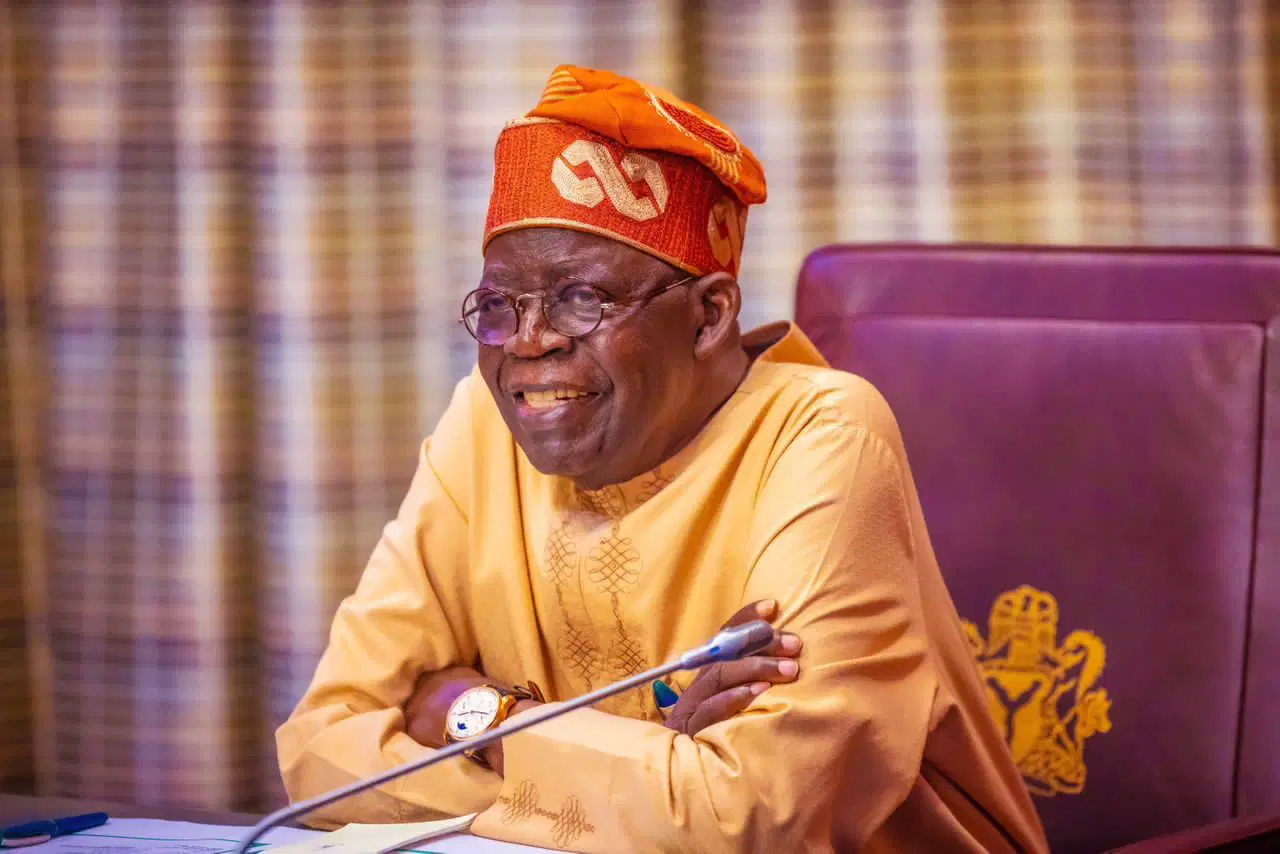
PRESIDENT Bola Tinubu has unveiled a comprehensive security and economic framework aimed at harnessing Nigeria’s marine and aquatic resources, positioning the blue economy as a key driver of economic diversification, job creation, and long-term prosperity.
The President stated this on Wednesday during a Presidential Parley with participants of Senior Executive Course 47 of the National Institute for Policy and Strategic Studies (NIPSS) at the Presidential Villa, Abuja.
President Tinubu, who was represented by Vice President Kashim Shettima, said his administration is committed to converting Nigeria’s maritime potential into sustainable national wealth.
According to him: “The blue economy offers a strategic pathway to diversify revenue, create employment, and revitalise ecosystems that underpin development.
He welcomed the NIPSS study on Blue Economy and Sustainable Development in Nigeria, describing it as a timely guide outlining opportunities, challenges, and policy priorities.
Highlighting Nigeria’s rich marine endowments, including an 853-kilometre coastline, inland waterways, fisheries, and a strategic position in the Gulf of Guinea, Tinubu directed the establishment of the Ministry of Marine and Blue Economy, modernisation of ports, expansion of aquaculture, coastal tourism, marine biotechnology, and renewable ocean energy.
Acknowledging security challenges such as oil theft, illegal fishing, smuggling, and piracy, the President assigned NIPSS an expanded mandate to conduct a nationwide security diagnostic and provide actionable reforms for Nigeria’s security architecture.
He emphasised that the sector’s success depends on a safe and stable environment, institutional coordination, and robust policy frameworks, while also urging the launch of a national fisheries expansion programme and strengthened financing mechanisms to unlock the blue economy’s full potential.
Senior Executive Course (SEC) 47 is the 2025 cohort of the flagship Senior Executive Course run by the National Institute for Policy and Strategic Studies (NIPSS), Kuru, for top-level public and private sector leaders in Nigeria.
SEC 47 is the forty‑seventh edition of the annual 10‑month Senior Executive Course, typically running from February to November at NIPSS, Kuru, near Jos.
Participants are drawn from the federal and state civil services, armed forces, paramilitary agencies, academia, organized private sector, and professional bodies, and successful graduates earn the “Member of the National Institute” (mni) designation.
SEC 47 is built around the theme “Blue Economy and Sustainable Development in Nigeria: Issues, Challenges and Opportunities.”
Under this theme, participants engage in lectures, seminars and fieldwork focused on how Nigeria can harness marine and aquatic resources for economic growth while ensuring environmental sustainability and inclusive development.
The course combines self‑study with intensive lectures by invited experts, round‑table discussions with policymakers, and continuous training in computer applications and French.
Participants also undertake local study tours across states and strategic institutional visits, producing group reports and policy proposals that feed into national decision‑making.
Each participant proposes research topics of policy relevance, from which one is approved and developed under supervision into a substantial project aligned with the national development agenda.
Towards the end of the course, study groups present a concluding seminar on a strategic national theme, whose distilled recommendations form part of an executive brief for the annual presidential parley and other high‑level engagements.
SEC 47 delegations have been reported paying courtesy visits to key traditional, governmental and corporate institutions as part of their study tours on the blue economy theme.
There is also ongoing litigation by at least one nominee challenging alleged unlawful withdrawal from SEC 47, which has brought additional public attention to the course and NIPSS’s selection and administrative processes.


The current surge in global energy prices, driven by escalating geopolitical tensions in the Middle East, has intensified cost pressures for businesses across many economies. Yesterday, Brent crude sold at $103.1 per barrel while West Texas Intermediate was $98.71 per barrel.
The effect has triggered the pump prices of premium motor spirit (PMS) or petrol and the Automotive Gas Oil (AGO) otherwise known as diesel. As at yesterday, petrol prices ranged from N1, 235 and N1, 500 per litre; while diesel sold for between N1, 529 and N1, 800 per litre in the country.
A more reliable electricity supply would significantly reduce the heavy dependence of businesses on diesel and petrol generators, which currently constitute a major component of operating costs. Improving power sector performance would therefore lower production costs across the economy, enhance business competitiveness, and provide much-needed relief for small and medium enterprises.
The impact of the escalating fuel price has become especially severe because on business in the country who are heavily reliant on the commodity for their businesses. The pressure on businesses has been further intense amid persistent electricity supply challenges, while also facing rising transport and distribution costs due to higher energy prices.
The combined effect of these has led to a significant escalation in operating expenses, mounting pressure on profit margins and heightened risks to business sustainability, particularly for small and medium enterprises.
Still, the woes of enterprises are being further complicated as they continue to contend with multiple macroeconomic pressures including high inflation, elevated interest rates and weak consumer purchasing power.
The latest escalation in energy costs, experts said, compounds an already challenging operating environment. They warned that without deliberate adjustments by businesses and supportive policy interventions from government, rising energy costs could significantly erode profit margins, weaken business sustainability and dampen economic growth.
Policy analysts and economists at the weekend warned that the resilience of Nigerian businesses at this period will depend on improving energy efficiency, diversifying energy sources, strengthening financial management and improving logistics efficiency. For government, they further clarified, the oil spike arising from the Middle-East crises, underscores the urgency of accelerating reforms in electricity supply, renewable energy adoption and domestic refining capacity.
They are convinced that with the right combination of proactive business adaptation and supportive public policy, Nigeria can significantly mitigate the impact of the current energy price shock and strengthen the resilience and competitiveness of its business environment.
But central to achieving this, is the need to strengthen domestic refining capacity. According to the Chief Executive Officer, Center for the Promotion of Private Enterprise (CPPE), Dr. Muda Yusuf, domestic refining is a critical pillar of Nigeria’s energy security and an important buffer against volatility in the global energy market.
Therefore, expanding local refining capacity and ensuring a stable and predictable supply of crude oil to domestic refineries, he said, are essential for strengthening the resilience of the country’s petroleum products market. He further contended that beyond supply security, domestic refining also has significant macroeconomic benefits.
“By reducing the country’s dependence on imported petroleum products, local refining lowers the demand for foreign exchange used for fuel imports, thereby easing pressure on the exchange rate and improving Nigeria’s balance of trade. Over time, a strong domestic refining base can also support export opportunities for refined products within the African region, further strengthening external reserves and Nigeria’s position in regional energy markets. A well-functioning domestic refining ecosystem can help moderate the transmission of global supply disruptions into the domestic economy,” Yusuf said.
Yet, the CPPE boss maintained that the most sustainable solution to Nigeria’s high energy cost environment lies in improving the reliability and availability of grid electricity. Government, he said, therefore needs to intensify efforts to expand electricity generation capacity, strengthen transmission infrastructure and enhance the efficiency and financial viability of electricity distribution networks across the country.
Yusuf argued that improving energy efficiency remains the quickest and most cost-effective strategy for businesses to manage rising energy costs. Firms, he said, should undertake a comprehensive review of their energy consumption patterns with the objective of minimising waste and maximising productivity per unit of energy used.
Besides, he advised that businesses should intensify efforts to improve energy efficiency within their operations as a key strategy for managing rising fuel costs. This includes optimising generator operating hours, deploying energy-efficient machinery and equipment, strengthening internal energy management practices and promoting energy conservation among staff.
According to him, the current crisis on the Middle East highlights the strategic importance of energy diversification. Nigerian businesses, he lamented, remain excessively dependent on diesel and petrol generators for electricity generation. This exposes firms to significant fuel price volatility.
“Businesses should therefore gradually explore alternative energy solutions such as solar power systems, hybrid energy systems combining solar with generators, and gas-powered generators in locations where gas infrastructure is available. While the upfront investment cost may appear significant, the long-term savings from renewable and hybrid energy solutions are becoming increasingly compelling in the face of persistently high fuel prices,” he admonished.
The CPPE, a think-tank economic and policy group, said energy price shocks often transmit strongly through logistics and transportation costs. It therefore advised businesses to review their logistics operations with a view to improving efficiency and reducing fuel consumption. In this case, strategies such as consolidating deliveries, optimising transport routes, improving fleet management systems and leveraging shared logistics platforms, it noted, can significantly reduce transportation costs. It offered that increased adoption of digital platforms and remote transactions can also reduce the need for physical movement, thereby lowering energy expenditure within supply chains.
“Businesses may need to review their pricing structures to reflect rising operating costs. However, price adjustments must be carefully calibrated in order to avoid losing customers in an already fragile consumer market.
“Gradual price adjustments, improved product value propositions and innovative packaging strategies—such as smaller product sizes or product redesign—can help firms remain competitive while managing cost pressures,” the Group said.
Yusuf, an economist, warned that periods of energy price volatility often create liquidity pressures for businesses, especially SMEs with limited financial buffers. Firms, he advised, should therefore strengthen financial management practices by minimising non-essential expenditures, improving inventory management and renegotiating supplier payment terms where feasible.
“Maintaining adequate liquidity buffers will help businesses withstand temporary cost shocks and maintain operational stability. Also, businesses operating within industrial clusters can significantly reduce operating costs through shared infrastructure arrangements. Shared power generation systems, shared logistics services and shared warehousing facilities can create economies of scale that reduce both energy and logistics costs.
“Collaborative arrangements among SMEs can therefore play an important role in improving operational efficiency and resilience during periods of cost shocks,” he submitted.
On policy priorities for government, the CPPE boss advised government to expand fiscal and regulatory incentives that encourage businesses to adopt renewable energy solutions. This option he noted may include tax incentives for solar installations, import duty waivers for renewable energy equipment and fiscal support for investments in energy-efficient technologies.
“Such measures would help reduce the structural energy cost burden faced by Nigerian businesses. Inclusively, access to affordable financing remains one of the major barriers preventing SMEs from investing in alternative energy systems. Government, development finance institutions and commercial banks should therefore create dedicated financing windows to support investments in renewable energy solutions and energy-efficient equipment. Reducing the cost of financing will accelerate the transition to cleaner and more affordable energy systems for businesses,” Dr. Yusuf said.
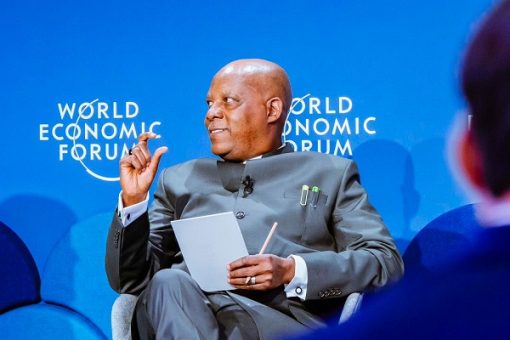
• says ‘Back to the Farm’ initiative will tame inflation, cut FX on imports
Nigeria has unveiled a sweeping macro-strategy that places food security at the heart of national stability, inflation control, and regional cohesion, with Vice President Kashim Shettima declaring that the country no longer views the issue through a narrow agricultural lens.
Speaking at a high-level panel, “When Food Becomes Security,” at the Congress Centre during the 56th Annual Meeting of the World Economic Forum in Davos, Vice President Shettima said the Federal Government has begun a multi-dimensional agricultural drive, designed to insulate Nigeria from global shocks while restoring productivity across its food-basket regions.
According to a statement issued by Senior Special Assistant to the President on Media and Communications Office of the Vice President Stanley Nkwocha, Shettima said, “In Nigeria, we don’t look at food security purely as an agricultural issue. It is a macroeconomic, security, and governance issue. Our focus is to use food security as a pillar for national security, regional cohesion, and stability.”
He explained that Nigeria’s food security strategy rests on three pillars: increased food production, environmental sustainability, and deeper regional integration within West Africa.
According to him, changing global trends and supply-chain disruptions have compelled the country to rebuild resilient food systems tailored to diverse ecological zones.
“Nigeria is a very large country, and there is an incestuous relationship between economy and ecology. In the Sahelian North, we are dealing with desertification, deforestation, and drought. In the riverine South and parts of the North Central, flooding is our major challenge,” he noted.
To confront these realities, the Vice President said the government is promoting drought-resistant, flood-tolerant and early-maturing varieties of staples such as rice, sorghum and millet, while redesigning food systems in flood-prone southern regions to withstand climate shocks.
Security, he added, remains a binding constraint because many conflict-affected areas double as major food-producing zones.
“Most of the food baskets of our nation are security-challenged. That is why we are creating food security corridors and strengthening community-based security engagements so farmers can return safely to their land,” he said.
Shettima disclosed the launch of the Back to the Farm Initiative, aimed at resettling displaced farmers with inputs, insurance, and access to capital to restart production.
On macroeconomic vulnerabilities, he identified import dependence and foreign-exchange volatility as key drivers of food inflation.
“We largely import wheat, sugar, and dairy products, and this has a direct impact on inflation. Our strategy is to accelerate local production and promote substitutes such as sorghum, millet, and cassava flour to correct these structural imbalances,” he said.
Positioning agriculture as a frontline response to economic and security threats, the Vice President said Nigeria’s approach aligns food security with national stability, inflation control, and regional cooperation.
He further stated that the country, dubbed “the African giant”, has “woken up from its slumber” under President Bola Ahmed Tinubu, and that within 12 months the government would make “it possible for smallholders and fishers to become investable at scale.”
Highlighting continental dynamics, Shettima said intra-African trade has “almost become a necessity,” adding that “there have been some alignments.”
He urged African leaders to intensify cooperation under the African Continental Free Trade Area, expressing optimism that ongoing Renewed Hope Agenda reforms would soon translate into climate adaptation moving from pilot to reality, and a boom in intra-African trade far beyond 10.7 per cent.

- Calls for strategic implementation
The Centre for the Promotion of Private Enterprise (CPPE), yesterday said tax reform is essential for Nigeria’s fiscal sustainability, but implementation strategy will ultimately determine the success or failure. The economic think-tank group noted that a phased, pragmatic, and socially sensitive approach anchored on trust, economic realities and political timing offers the most credible pathway to sustainable revenue growth, expanded compliance and long-term legitimacy.
Besides, the CPPE advocates that a strategic implementation framework anchored on revenue efficiency rather than blanket enforcement should drive the process as empirical evidence consistently show that a small proportion of taxpayers account for the bulk of tax revenue.
The body noted that about 20 per cent of businesses generate close to 90 per cent of tax receipts, while about 20 per cent of taxpayers contribute over 80 per cent of personal income tax. It therefore submitted that concentrating enforcement on large corporations, established SMEs, and high-net-worth individuals will deliver substantial revenue gains without destabilising livelihoods or deepening social resistance.
The Chief Executive Officer, CPPE, Dr. Muda Yusuf, in a statement made available to The Trust News, noted that tax reform is not a one-off exercise; but rather a dynamic process that must evolve with implementation feedback, economic conditions and social realities.
The CPPE boss advised that in the short to medium term, tax authorities should prioritise the formal sector, where compliance capacity already exists, adding that the informal sector should be integrated gradually through incentives, sustained tax education, simplified compliance tools, and digital onboarding support.
“Shifting the emphasis from penalties to compliance-building will produce more durable outcomes. The objective should be to grow the tax net organically, not force it prematurely. With 2026 shaping up as a pre-election year, political and social caution is imperative. Aggressive, broad-based enforcement risks social discontent, political backlash, and potential reform reversal. Stability, trust-building, and reform credibility must take precedence over short-term enforcement optics,” Dr. Yusuf cautioned.
According to him, Nigeria’s ongoing tax reform ranks among the most ambitious fiscal restructuring efforts in recent decades. Conceptually, he argued, it is a sound and progressive framework aimed at strengthening revenue mobilisation, improving equity, simplifying the tax system and aligning fiscal policy with economic diversification and growth objectives.
He however expressed concerns that good policy design does not guarantee good outcomes. He stressed that the ultimate success or failure of the country’s tax reform will depend far less on its legislative provisions and far more on how it is implemented because without careful sequencing, political sensitivity, and economic realism, even well-intentioned reforms can trigger resistance, disrupt livelihoods, and further erode public trust.
“Nigeria’s current reform is unfolding under unusually delicate circumstances. The economy is still absorbing the aftershocks of elevated inflation, weakened purchasing power, and the adjustment costs of fuel subsidy removal and foreign exchange reforms. Many households and businesses are experiencing reform fatigue. Compounding this is the approach of a politically sensitive pre-election period.
“In this context, expecting full and simultaneous compliance across all sectors of the economy is unrealistic. A rigid, enforcement-heavy approach risks undermining reform credibility before its benefits have time to materialise,” Dr. Yusuf said.
According to the CPPE boss, despite public controversy, the tax reform framework contains several commendable and pro-welfare provisions. He listed these to include but not limited: Low-income earners are exempted from personal income tax, while VAT relief on basic goods and essential services—including education, healthcare, agriculture, and cultural activities—provides important social protection. Small businesses benefit from relief from company income tax and VAT obligations, easing compliance pressures on vulnerable enterprises.
On the growth side, Dr. Yusuf said the targeted incentives for priority and job-creating sectors strengthen alignment between tax policy and Nigeria’s diversification agenda.
“The rationalisation of multiple taxes, repeal of obsolete laws, and improved coherence of the tax system also respond to long-standing private-sector demands and could enhance predictability and investor confidence if properly implemented,” he said.
The CPPE argued that any serious discussion of tax reform in Nigeria must confront the scale of the informal economy. The group argued that with an estimated 40 million micro, small, and nano enterprises—over 80 per cent operating informally, the informal sector is not peripheral; it is central to employment, income generation, and economic resilience.
“Most informal operators lack structured record-keeping systems and have limited understanding of tax concepts such as Tax Filing obligations, Company Income Tax [CIT], Value Added Tax [VAT], Personal Income Tax [PIT], Withholding Tax etc.. Businesses are largely cash-based, operate on thin margins, and often lack the literacy and digital capacity required for compliance. They also lack the capacity to digest the technical and somewhat complex issues around taxation.
“Yet the new tax framework introduces mandatory filing requirements, defined record-keeping standards, penalties for non-compliance, and presumptive taxation where records are inadequate. Without careful sequencing, these provisions risk criminalising informality rather than encouraging gradual and voluntary formalisation,” the CPPE said.
He however regretted that public resistance to the reform is not merely a communication failure but it is rooted in lived experience. This, he explained is because for many Nigerians, past reforms have translated into higher living costs and declining welfare, with little evidence that sacrifices result in improved public services.
Besides, Dr. Yusuf noted that several specific provisions and regulations have intensified concerns among small businesses and households. For instance, he said the mandatory reporting of quarterly bank transactions of ₦25 million and above to the tax authority has raised anxiety among SMEs that handle pass-through or custodial funds that do not constitute income. High-turnover, low-margin businesses risk undue scrutiny and costly compliance disputes.
Also is the the proposed increase in capital gains tax from 10 percent to 30 percent-despite assurances around thresholds- has unsettled investors in the stock market and real estate at a time when confidence remains fragile. Similarly, the ₦500,000 annual rent relief cap is misaligned with prevailing urban housing costs and risks further squeezing middle-class disposable income. Concerns are further heightened by the wide enforcement powers granted to tax authorities and the severity of penalties and sanctions embedded in the tax laws.
“A weak social contract continues to undermine confidence that additional tax revenues will be transparently and efficiently deployed. With businesses and households still recovering from recent macroeconomic shocks, tolerance for new compliance demands is understandably low. In this environment, trust is as critical as technical design,” he said.



-

 Art & Life9 years ago
These ’90s fashion trends are making a comeback in 2017
-
Entertainment9 years ago
The final 6 ‘Game of Thrones’ episodes might feel like a full season
-
Business9 years ago
The 9 worst mistakes you can ever make at work
-
Art & Life9 years ago
According to Dior Couture, this taboo fashion accessory is back
-
Entertainment9 years ago
The old and New Edition cast comes together to perform
-
Entertainment9 years ago
Mod turns ‘Counter-Strike’ into a ‘Tekken’ clone with fighting chickens
-
Sports9 years ago
Phillies’ Aaron Altherr makes mind-boggling barehanded play
-
Entertainment9 years ago
Disney’s live-action Aladdin finally finds its stars