

Education
Egbin Power Marks 10th Scholarship Awards


…Restates Commitment to Education, Community Development
Egbin Power Plc, Nigeria’s largest power generation company, has reaffirmed its unwavering commitment to education and sustainable community development as it celebrated the 10th edition of the Egbin Power Scholarship Awards.
The milestone ceremony, held at the Egbin Power Clubhouse, brought together community leaders, parents, teachers, the management team of Egbin Power and beneficiaries to recognise and reward academic excellence across its host communities.
Speaking at the event, the Chief Executive Officer of Egbin Power Plc, Mokhtar Bounour, noted that the scholarship scheme, which began a decade ago, has transformed the lives of children in host communities by easing the financial burden on parents while providing opportunities for students to pursue quality education.
“This 10th edition of the Egbin Power Scholarship reaffirms our decade-long commitment to education and community development. By investing in these young scholars, we are not only empowering their future but also strengthening the foundation for sustainable growth in our host communities and Nigeria at large,” he said.
According to Bounour, the Scholarship has grown beyond just being a CSR initiative, into a true symbol of Egbin Power’s deep bond with its host communities. Marking the 10th edition reinforces the shared belief that empowering children through education is the strongest investment in their future and in the collective progress of the community.
“For ten years, the Egbin Power Scholarship has stood as a pillar of our CSR commitment to education and empowerment. We are proud of the impact it has made, and this 10th edition renews our pledge to continue driving initiatives that uplift lives and create lasting value for society”, he noted.
The Egbin Power Scholarship Programme, introduced in 2015, has consistently rewarded pupils and students who demonstrate exceptional academic performance. Beyond financial support, the program includes mentorship and a scholarship bootcamp designed to equip beneficiaries with life skills, discipline, and confidence to excel in their educational journey.
A parent of one of the beneficiaries, Mrs. Ebuzome Ekene, expressed gratitude to the GenCo for sustaining the initiative over the years. “This scholarship has lifted a huge burden off many families. Beyond the financial relief, it gives our children the confidence to aim higher, knowing that their community and Egbin stand solidly behind them,” she said.
Similarly, Kareem Opeyemi, a student beneficiary, expressed appreciation to Egbin Power Plc for providing the scholarship to students. According to him, the scholarship was a dream come true.
He said: “This award motivates me to study harder, focus on improving myself and sustaining the scholarship so as to become a future leader who will make my community proud.”
This year, the bootcamp concluded with the final selection of beneficiaries for the 10th edition, reflecting Egbin Power’s sustained efforts to inspire and nurture the next generation of leaders. The programme continues to enjoy strong participation and support from parents, teachers, and community leaders who serve as custodians of the children’s progress.
Egbin Power has remained at the forefront of corporate social responsibility initiatives in education, healthcare, youth empowerment, and community infrastructure. Through these initiatives, the company has demonstrated that its role goes beyond power generation to include empowering people and uplifting communities.
The scholarship award ceremony was not only a celebration of academic achievement but also a reaffirmation of Egbin Power’s enduring partnership with its host communities. The company pledged to continue investing in impactful programmes that align with its vision of building a brighter and more sustainable future.


• This article is culled from The Nation Newspaper
As fees continue to rise, daily life on campus raises uncomfortable questions about what students are truly paying for. Nevertheless, students at Federal University Oye-Ekiti (FUOYE) are desirous of improved infrastructure on campus.
This, they said, would make the entire academic exercise worthwhile, FATHIA OMILEYE (FUOYE) reports.
Every academic session begins the same way for many students. They queue to pay fees, calculate balances, borrow where necessary, and make sacrifices with the belief that education is an investment worth the cost. For students at Federal University Oye-Ekiti (FUOYE), Ekiti State, that belief is becoming increasingly difficult to hold on to. As fees continue to rise, daily life on campus raises difficult posers about what students are truly paying for.
The issue is no longer just about money; it is about trust. Students are required to pay tuition fees, development levies, and other compulsory charges every session, yet many struggle to see how these payments translate into improved facilities or better learning conditions. Instead of progress, students are confronted daily with overcrowded spaces, neglected infrastructure, and basic needs that remain unmet.
Slowly, frustration replaces optimism.
“We pay development levy every session, but honestly, we don’t see the development,” said Elizabeth Tijani, a 200-Level Sociology student.
“Every year, fees increase, but nothing really changes. We are taught accountability in class, but in reality, it feels like nobody is accountable to us. At least, they should show us what our money is being used for.”
For many students, the reality of campus life becomes most visible during examinations, particularly the recently concluded Computer-Based Test (CBT) examinations. The journey to the CBT centre itself is a challenge. There is no asphalted road leading to the facility, forcing students to walk on bare ground. During harmattan, dust fills the air, clinging to clothes and affecting breathing. In the rainy season, the same path becomes muddy and slippery, turning what should be a short walk into a risky and uncomfortable experience. Students often arrive at examinations already stressed, not only from academic pressure but from the physical strain of the environment.
“Before you even sit for the exam, you are already exhausted,” Elizabeth added. “You trek through dust or mud, then enter a hall that is overcrowded. How are we supposed to concentrate like that?”
Inside the CBT centre, the strain deepens
The building is not large enough for the number of students who rely on it. During examinations, students are packed closely together with limited ventilation and little personal space. Heat builds up quickly, anxiety rises, and concentration becomes difficult. There have been reports of students feeling physically unwell, with some fainting due to overcrowding and exhaustion. These incidents are not isolated; they point to a system stretched beyond its limits.
“The CBT hall is not fit for the number of students using it,” said Awwalliyyah Abayomi, a 200-Level Mathematics Education student. “Sometimes it feels like an endurance test, not an examination. The heat, the crowd, and the lack of enough computers add pressure. We understand that running a university is hard, but at least let the facilities work. We are not asking for luxury, just functionality.”
The shortage of computer systems adds another layer of stress. With thousands of students depending on a limited number of computers, delays and rescheduling have become common. Students wait for hours, sometimes unsure when their turn will come. What should be an organised and efficient process often feels chaotic, leaving many exhausted before they even begin their examinations.
“You can wait for hours and still not know when you will write,” Awwalliyyah said. “By the time you finally sit down, your energy is completely drained.”
The pressure students face is not limited to the CBT centre. Across campus, the effects of a rising student population without corresponding expansion are visible. Lecture halls are overcrowded, with students standing throughout lectures, sitting on windowsills, or squeezing into corners. Learning under such conditions becomes a struggle. Students miss important points, lose focus, and feel disconnected from the academic experience they are paying for.
“Sometimes you stand for the whole lecture,” said Farian Sanusi, a 300-Level English student. “You can’t hear properly, you can’t even see the board well. University should be about learning, not just managing to survive.”
Electricity supply remains another persistent challenge, particularly in hostels and student living areas. Power outages disrupt reading, completing assignments, charging devices, and other essential daily activities. In an academic environment that increasingly depends on technology, unstable power in hostels adds to student stress and frustration.
Internet access, now essential to modern education, is also unreliable across campus. Many students are forced to spend extra money on mobile data to submit assignments, access research materials, or attend online academic activities. This additional expense increases the financial burden already created by rising fees.
Transportation within and around campus poses its own difficulties. Long distances between hostels, lecture halls, and examination centres force students to rely on paid transport services. With transport fares rising, daily movement becomes another financial strain. Students who cannot afford transport are left to trek long distances under harsh weather conditions.
Beyond academics, student welfare continues to raise concern. At many lecture areas, bathrooms are locked or unusable. During long lectures or examinations, students are left with no option but to relieve themselves in nearby bushes. This is not merely inconvenient; it strips students of dignity and raises serious hygiene and health concerns, particularly for female students.
“It is embarrassing,” Elizabeth said. “We are adults in a university, yet sometimes we have no access to toilets. That is not how students should be treated.”
Safety is another pressing issue. Despite the collection of development levies, functional security cameras are absent in many lecture halls. Students worry that incidents such as theft or harassment may go unresolved due to lack of evidence. Evening lectures and late examinations have become sources of anxiety, especially for students who already feel vulnerable.
“If something happens, there is no evidence,” Farian said. “It makes students feel unsafe, especially at night.”
Accommodation challenges further deepen students’ frustrations. On-campus hostels are insufficient, forcing many students into off-campus housing where rent continues to rise. In existing hostels, overcrowding, water shortages, broken facilities, and poor sanitation remain common complaints.
Water supply itself is inconsistent in several parts of campus. Some students report going days without running water, forcing them to fetch water from distant locations or buy water at additional costs. This affects hygiene, health, and overall quality of life.
The main issue is not only the facilities, but the lack of transparency,” said Felix Madu, a 200-Level Public Relations student. “When students don’t know how their fees are being used, they start losing trust. We only ask for accountability. As a PR student, I believe the school should respond by communicating better, being more open about finances, and engaging students more. Good public relations is about listening and building trust, not keeping silent.”
Students living with disabilities face even greater challenges. Poor road networks, lack of ramps, and inaccessible lecture halls make movement difficult and sometimes unsafe. Many argue that development levies should prioritise inclusive infrastructure that allows all students to participate fully in academic life.
As these challenges accumulate, frustration is worsened by limited communication from the university. Fee increases are announced, but detailed explanations rarely follow. Students seldom receive breakdowns of how development levies are spent, what projects are ongoing, or why long-standing problems persist.
“They will just announce a new fee and that’s all,” Farian said. “No proper explanation, no breakdown. It feels like we are just told to pay and keep quiet. These are not luxury needs, just basic things.”
On accountability and transparency, the students called for better communication from school authorities.
Happy Ojo, a 100-Level Law student said: “We pay high fees, but sometimes it feels like we are left in the dark. The school should make sure the money we pay goes into improving facilities and safety. We need transparency, especially for things that directly affect students.”
Ephraim Ojolo, a 200-Level Mass Communication student said: “The school must communicate better with us. Students should be informed regularly about where our fees are being spent. That will help reduce frustration and build trust between management and students.”
Morenikeji Giwa, a 200-Level Guidance and Counselling Education student added: “We are aware that running a university is expensive, but we deserve updates. Even small improvements should be shown to the students so we know our contributions matter. Transparency will make everyone feel valued.”
As a result, calls for accountability are growing louder across campus. Students are not demanding luxury buildings or unrealistic standards. They are asking for functional facilities, safer spaces, transparent financial reporting, and visible improvements that reflect the money they contribute each session. Attempt to speak with the Dean of Students Affairs proved fruitless as his mobile was not reachable.
Every dusty walk to the CBT centre, every overcrowded lecture, every locked bathroom, and every insecure hall reinforces the same unresolved question: where do university fees really go?
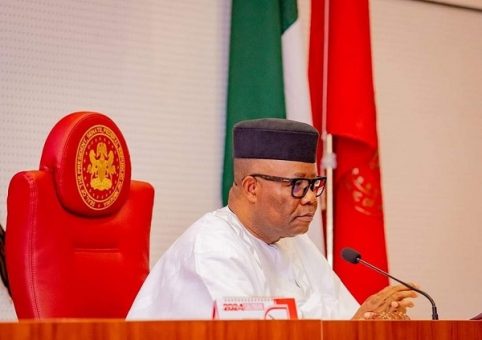
The Senate President, Senator Godswill Akpabio, has advocated for enhanced remuneration and improved work environment for teachers if the nation wishes to achieve a functional education system.
Senator Akpabio also called for a return to the good old days when school teachers were adored, well-catered for, and highly regarded and respected in society.
He spoke in Abuja on Wednesday, which is the second day of the two-day maiden edition of the Nigeria Education Forum (NEF, 2025), organised by the Nigeria Governors’ Forum (NGF), the Federal Ministry of Education (FME), the Committee of States’ Commissioners of Education in Nigeria (COSCEN), and partners.
Represented by the Senate’s Chief Whip, Senator Mohammed Tahir Monguno, Akpabio said: “Provide the conducive environment for them (teachers) to operate and inculcate knowledge into our children. That is the only way we can guarantee the future of our children and the future of our education.
“So, for education to succeed and for Nigeria to succeed, the interests of teachers must be addressed. Adequate remuneration is a sine qua non for the success of our education venture,” he said.
Senator Akpabio disclosed that the Senate was working to step up funding, improve accountability, and expand access to digital learning with a view to aligning the educational system with the needs of the country’s modern economy.
He added, “We know that the government alone cannot do it. Education is a national project. A national project succeeds when everyone – Federal, states, and local governments, including the private and public sectors – works towards the same goal.”
Senator Akpabio noted that the realisation informed the call for Local Government’s autonomy to enable the third tier of government to contribute its own quota, including supporting the education sector.
He said the responsibility of the nation’s leaders, teachers, and policy makers is to ensure that the dreams of today’s children do not die prematurely because of the absence of a functional educational system that guarantees the realisation of their future aspirations.
The Senate President added: “So, let us build a new partnership where research speaks to national challenges, where innovations grow out of our universities into our industries, where every child seeks a pathway to success, a pathway that is wide enough, strong enough, and welcoming enough to carry them.
“Let us choose to invest, not only in infrastructure, in imagination, not only in textbooks, but in talents; not only in structures, but in the spirit of our young people.
“If we choose to rise above politics, above doubts, above all hurdles that no longer serve us, then we will open the door to a future where Nigeria will become a beacon of learning and a powerhouse of ideas,” he said.
The Senate President said efforts should be directed at creating an egalitarian society where every member has an equal stake and has access to all available opportunities.
“We should provide a level playing field for all our children to realise their potential,” he said.

By Grace Edet
Northern states have dominated Nigeria’s male illiteracy chart, according to the 2024 Nigeria Demographic and Health Survey (NDHS). The survey showed that a majority of men without formal education are concentrated in the Northwest and Northeast zones.
The report as shared on Statisense official X handle, revealed that Sokoto (66.8%), Kebbi (64.4%), and Yobe (61.9%) recorded the highest percentages of men with no formal education, followed closely by Jigawa (52.6%), Zamfara (51.2%) and Borno (48.1%).
The findings, experts say, underscore persistent educational inequalities across the country and highlight the developmental challenges facing the northern region.
Other states in the top 10 include Bauchi (47.7%), Niger (47.2%), and Gombe (46.5%), while Taraba (21.6%), Nasarawa (25.5%), and Adamawa (24.8%) ranked lower but still reflect significant learning deficits.
According to the NDHS, the data represents men aged 15 years and above who have never attended any formal school. The report attributes the disparities largely to longstanding socioeconomic barriers, insecurity, and cultural practices that have slowed educational progress in many northern communities.
“The data exposes the enduring inequality in Nigeria’s educational landscape. Without targeted literacy programs and sustained investment in school infrastructure, the divide between regions will continue to widen,” an Education Analyst, Ojuolape James stated.
Experts say the high rate of male illiteracy has far-reaching implications for economic productivity, civic participation, and national development, as it limits opportunities for employment, innovation, and community advancement.
They also emphasise that male education is critical to boosting family income levels, driving rural enterprise, and strengthening Nigeria’s overall human capital base.
Education stakeholders are urging federal and state governments to scale up adult literacy and non-formal education programmes, particularly in rural and conflict-affected areas, to bridge the widening learning gap.
Analysts further advise that state-level budgetary commitments to basic education should be closely monitored to ensure resources are directed towards teacher training, infrastructure upgrades, and community sensitisation campaigns.
Illiteracy Hotspots Across Nigeria
Below is the percentage of men with no formal education, according to NDHS 2024
| RANK | STATE | % of Males without Education |
| 1 | Sokoto | 66.8 |
| 2 | Kebbi | 66.4 |
| 3 | Yobe | 61.9 |
| 4 | Jigawa | 52.6 |
| 5 | Zamfara | 51.2 |
| 6 | Borno | 48.1 |
| 7 | Bauchi | 47.7 |
| 8 | Niger | 47.2 |
| 9 | Gombe | 46.5 |
| 10 | Nasarawa | 25.5 |
| 11 | Adamawa | 24.8 |
| 12 | Taraba | 21.6 |
Table compilation: Thetrustnews.com
Bridging the Learning Divide
The NDHS findings have renewed calls for inclusive education reforms that address regional disparities and strengthen access to learning for all age groups.
Stakeholders argue that achieving a balanced literacy rate across Nigeria is vital for sustainable growth and national cohesion. They note that while government efforts toward universal basic education are ongoing, effective implementation and local engagement remain critical to success.
As the report warns, without urgent and coordinated interventions, the gap between Nigeria’s educated and uneducated male populations could continue to expand—further entrenching inequality and limiting the nation’s development potential.



-

 Art & Life9 years ago
These ’90s fashion trends are making a comeback in 2017
-
Business9 years ago
The 9 worst mistakes you can ever make at work
-
Entertainment9 years ago
The final 6 ‘Game of Thrones’ episodes might feel like a full season
-
Art & Life9 years ago
According to Dior Couture, this taboo fashion accessory is back
-
Entertainment9 years ago
The old and New Edition cast comes together to perform
-
Entertainment9 years ago
Mod turns ‘Counter-Strike’ into a ‘Tekken’ clone with fighting chickens
-
 Law & Crime10 months ago
EFCC vs Yahaya Bello: Court adjourns ₦80.2b alleged fraud trial to Nov 11
-
Sports9 years ago
Phillies’ Aaron Altherr makes mind-boggling barehanded play