
Aviation
Air Peace unveils fourth Boeing 777, opens new intercontinental routes

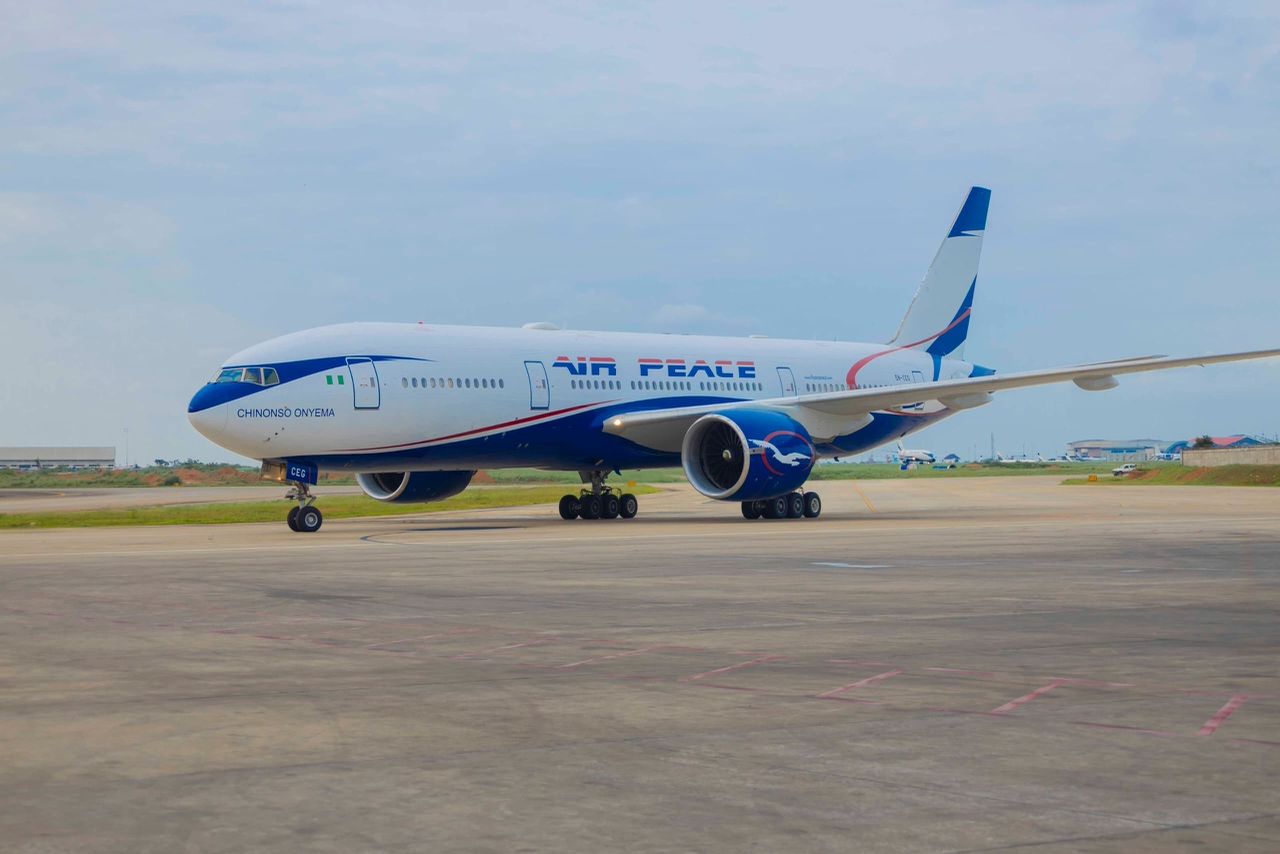
Air Peace has welcomed its fourth Boeing 777 aircraft, reinforcing its global expansion strategy and solidifying its status as Nigeria’s largest carrier, with the new wide-body jet set to drive the opening of fresh routes into Europe, South America, and the Caribbean.
According to a statement issued on Saturday, the airline said, “The wide-body Boeing 777-200 ER, bearing registration 5N-CEG, touched down at the Murtala Muhammed International Airport, Lagos, on Friday, August 22, 2025, at 3:32 p.m. from Teruel, Spain.
“The aircraft was greeted with a traditional water-cannon salute and a rousing reception led by the airline’s chairman, Allen Onyema; Executive Director, Obinna Onyema; Chief Operating Officer, Oluwatoyin Olajide; alongside members of Air Peace’s management team.”
The airline’s spokesperson, Efe Osifo-Whiskey, in the statement noted that “the arrival of the state-of-the-art aircraft aligns with Air Peace’s vision of global connectivity.”
Configured with 312 seats, including 26 in business class and 286 in economy, the new aircraft boasts modern inflight comfort.
The Business Class cabin features private ambient seating, while Economy passengers will enjoy generous legroom and refined service.
Onyema described the acquisition as “a pivotal milestone in the airline’s growth trajectory,” stressing that “it represents a decisive step in Air Peace’s expansion strategy.”
He revealed that the aircraft will be deployed in the next two months for the inaugural long-haul flights from Abuja to London’s Heathrow and Gatwick airports.
He added that “further plans include opening new routes into key European cities, South America, particularly direct flights to Sao Paulo, Brazil, and the Caribbean, building on Air Peace’s groundbreaking operations into Antigua and Barbuda as well as St. Kitts and Nevis.”
Onyema reaffirmed the airline’s mission to make international travel more affordable and accessible for Nigerians, saying that Air Peace is “committed to offering Nigerians fair and affordable access to international travel while curbing the high fares long endured by passengers on foreign carriers.”
He also emphasized the need for improved national aviation infrastructure, warning that “there is an urgent need for an efficient hub system in Nigeria to enhance both regional and international connectivity.”
Expressing gratitude for government backing, Onyema said, “We are grateful to President Bola Ahmed Tinubu for his continued support of indigenous airlines through policies that create an enabling environment for growth.”
He further commended the Minister of Aviation and Aerospace Development, Senator Festus Keyamo, for “implementing inclusive measures that position Nigerian carriers to compete effectively on the global stage.”

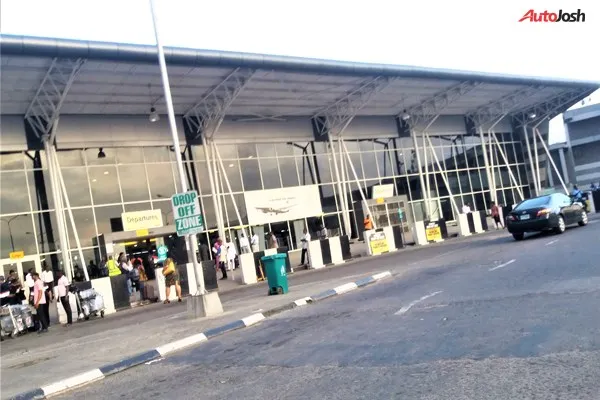
Airport Taxi Operators operating at Nigerian airports have pleaded with the management of Federal Airports Authority of Nigeria (FAAN) for extension of time on the compliance to the use of 2012 car models for their operations within the airports.
The operators who have their parks at all airport terminals across the nation pleaded for the extension of the time because of the present situation of the nation’s economy which puts a high number of Nigerians under financial constraints, making sustainable living an herculean task.
Speaking on behalf of other airport cab operators, the Chairman of International Terminal Zone (ITZ), Mr. Charles Odofin gave the appeal over the weekend while speaking with journalists on the challenges of their operations within the airport.
He said they have sent a letter to the Managing Director of FAAN asking for her Gracious Approval of their requests.
The Airport Cab Operators said they are delighted and in support with the introduction of an e-booking app by the Management of FAAN, noting that since this is what is obtained in most modern gateway airports around the world, Nigeria should not be an exception.
“We support FAAN on the introduction of the e-booking app. It will be beneficial all. Since this is what is in place in other parts of the world, our cannot be an exception. We are ready to key into it,” Odofin affirmed.
They, however, pleaded that all their vehicles were cleared to operate till December 2026 after FAAN inspections that was done in May 2026, be given twelve calendar months of grace to operate until the end of June 2027 before enforcement for 2012 models. The operators claimed that though few of their members, less than 5 per cent of total operators nationwide, have acquired the 2012 models but majority is yet to do so because, the high cost of acquiring the new model because of the huge cost on them.
They also said that they have approached some banks for auto loans.
Recalling similar experience in 2007, when FAAN demanded the change from the use of Mercedes – Benz V-boot to Camry 2004 models, they claimed that the then management of FAAN gave them 24 months for implementation of the Camry cars leading to the coming of First Bank of Nigeria (FBN) to partner with them on equity funding for the Camry cars in 2007, which they paid back between 24 and 36 months.
“This is not the first time FAAN is coming with this type of directive, which we complied with. The only issue now is that they want it done immediately.
When we had similar experience in 2007 we asked for time and they gave us. We went to look for a bank, First Bank of Nigeria, and we went into partnership. The bank finances the purchase of the cars and gave us between 24 and 36 months for repayment, which we did without anyone of us defaulting.
But when you look at the interest rate today, it is very high. We are negotiating with some financiers who are willing to work with us. This is why we are asking for a grace of the 12 month period before the total implementation,” Odofin explained.
He therefore called on the Managing Director to heed their pleaa with compassion.
“Now, we shall be very grateful for your listening ears to our pleas and support with co-operation and consideration for seamless implementation that will be mutually beneficial to all the parties,” he pleaded.
On the use of electric cars, the operators said they have consulted with at least two companies who are ready to partner with them. But the companies have requested more time to be able to meet the demand.

The International Air Transport Association (IATA) presented its outlook for Africa as part of the 2026 global industry forecast during today’s Africa media roundtable. While Africa is expected to outpace global traffic growth next year, the region continues to face some of the world’s toughest operating conditions—resulting in the smallest share of global industry profit and extremely thin margins.
Growth Ahead of Global Trends, but Profitability Remains Weak
IATA forecasts global air travel growth of 4.9% in 2026, slightly below the 5.2% expected in 2025. Africa is projected to exceed the global average with 6.0% growth in 2026. Cargo demand will grow 2.6% globally in 2026, while Africa’s growth will be slightly lower at 2%.
Despite above-average demand, the financial outlook remains challenging. Of the $41 billion in global net profit forecast for 2026 (3.9% margin), African carriers are expected to generate just $200 million in combined profits, representing a 1.3% margin—the lowest of all regions. This equates to $1.3 in profit per passenger, compared to a global average of $7.9.
“Demand for air travel in Africa is rising faster than in many other parts of the world, but profitability is not keeping pace. With margins of just 1.3%, African airlines are capturing only a fraction of aviation’s economic value. Addressing the barriers that constrain growth is essential to ensure the region’s traffic expansion also delivers financial strength,” said Kamil Al-Awadhi, IATA Regional Vice President, Africa and Middle East.
High Costs and Structural Barriers Constrain African Aviation
IATA emphasized that African airlines continue to operate in one of the world’s most difficult environments. Key constraints include:
Low GDP per capita: limiting demand and raising price sensitivity.
High operating costs compared to global average: Fuel prices: +17% higher, Taxes and charges: +12–15% higher, Air navigation charges: +10%, Maintenance, insurance, and capital costs: +6–10%.
Limited connectivity: Only 19% of intra-African routes have direct flights.
Blocked Funds: Africa Remains the Largest Contributor. Of the $1.2 billion in airline funds blocked globally as of October, Africa accounts for 79% ($954 million). Algeria is now the largest blocked-funds market.
Long-Term Potential Remains Strong
Despite current challenges, Africa’s aviation sector has substantial long-term opportunity. Over the next 20 years, Africa’s market is forecast to grow 4.1% annually, reaching 411 million passengers—the world’s third-fastest growth rate. Realizing this potential will require focused reforms to reduce barriers, improve affordability, and expand connectivity.
Recent progress on visa openness is an encouraging example:
Five countries now offer visa-free entry to all African nationals (Benin, The Gambia, Rwanda, Seychelles, Ghana).
28% of intra-African travel scenarios are now visa-free—up from 20% in 2016.
26 countries now offer e-visas, up from 17% in 2016.
These improvements demonstrate momentum toward greater mobility, trade, and regional integration.
Government Action Critical to Unlock Africa’s Aviation Potential
IATA called on African governments to work in collaboration with industry and pursue four priority actions:
Recognize aviation as a strategic economic enabler—not a revenue source—and avoid excessive taxes and charges.
Invest in efficient, scalable infrastructure without passing unsustainable costs to airlines and travelers.
Facilitate market access and competition by advancing the implementation of the Yamoussoukro Decision and SAATM.
Improve affordability and strengthen connectivity to unlock wider economic and social benefits.
“Africa’s aviation potential is immense. With the third-fastest growth rate in the world over the next two decades, the continent could serve more than 400 million passengers annually by 2044. We’re already seeing encouraging steps—like improved visa openness and e-visa adoption—that support greater mobility and integration. But turning potential into performance requires action. Governments must treat aviation as a catalyst for development, not a source of revenue. That means reducing costs, improving infrastructure, and advancing market liberalization through the Yamoussoukro Decision and SAATM. With the right policy support, aviation can be a powerful driver of economic transformation across Africa,” said Al-Awadhi.
Credit: IATA

• Africa, Middle East accounts for 93%
The International Air Transport Association (IATA) reported that USD 1.2 billion in airline funds are blocked from repatriation by governments as of the end of October 2025. A marginal improvement of USD 100 million has been made since last reported in April 2025. Out of total blocked funds reported, 93% are trapped in Africa and Middle East (AME).
IATA called on governments to lift all restrictions on currency repatriation and allow airlines to access their revenues in U.S. dollars from ticket sales, cargo sales and other activities, as guaranteed in bilateral air service agreements and treaty obligations. Restrictions include burdensome or inconsistent procedures to obtain repatriation approval, delays in obtaining approval, shortage or lack of foreign exchange or other limitations imposed by governments or central banks.
“Airlines need reliable access to their revenues in U.S. dollars to keep operations running, pay their bills, and maintain vital air connectivity. Governments have committed to unfettered repatriation of funds in bilateral agreements. With low margins and significant dollar denominated costs, airlines depend on governments fulfilling that commitment. It is also in the interest of governments to foster the economic catalyst that airlines provide by connecting their economies globally. That’s why we urge governments to facilitate the efficient repatriation of airline funds and prioritize this in foreign exchange allocations, even when currency is in short supply,” said Willie Walsh, IATA’s Director General.
Ten countries are responsible for 89% of blocked funds
Ten countries across Africa, the Middle East, and South Asia account for 89% of the total blocked funds, amounting to USD 1.08 billion.
Country Amount USD Million
Algeria ———————————————307
XAF Zone* —————————————-179
Lebanon ——————————————-138
Mozambique ————————————–91
Angola ———————————————81
Eritrea ———————————————78
Zimbabwe —————————————–67
Ethiopia ——————————————-54
Pakistan ——————————————-54
Bangladesh —————————————-32
*XAF Zone (Cameroon, Central African Republic, Chad, Republic of the Congo, Equatorial Guinea, Gabon)
Country Highlights
For the first time, Algeria sits at the top of the list of blocked funds countries. Significant increases have been reported due to a new approval requirement by the Ministry of Trade, adding to the already burdensome documentation requirements. IATA urges the government of Algeria to remove unnecessary processes and requirements for airlines.
While blocked funds in XAF Zone have slightly decreased since last reported in April 2025 from USD 191 million, airlines continue to face repatriation challenges despite submission of required documentation. We call on the BEAC to streamline the internal three-step validation process and improve processing times to continue clearing the backlog.
AME region accounts for 93% of total blocked funds across 26 countries, at USD 1.12 billion as of end October 2025.
“Political and economic instability are key drivers of currency restrictions across Africa and the Middle East, resulting in large sums of blocked funds. We recognize that allocation of foreign exchange is a difficult policy decision, but the long-term benefits for the economy and jobs outweigh short-term financial relief,” added Walsh.
Transparency
To provide greater transparency on the issue of blocked funds, IATA launched a web page to track progress quarterly, provide background information, and highlight developments.
Credit: IATA



-

 Art & Life9 years ago
These ’90s fashion trends are making a comeback in 2017
-
Business9 years ago
The 9 worst mistakes you can ever make at work
-
Entertainment9 years ago
The final 6 ‘Game of Thrones’ episodes might feel like a full season
-
Art & Life9 years ago
According to Dior Couture, this taboo fashion accessory is back
-
Entertainment9 years ago
The old and New Edition cast comes together to perform
-
Entertainment9 years ago
Mod turns ‘Counter-Strike’ into a ‘Tekken’ clone with fighting chickens
-
Sports9 years ago
Phillies’ Aaron Altherr makes mind-boggling barehanded play
-
Entertainment9 years ago
Disney’s live-action Aladdin finally finds its stars