Power
Electricity subsidy dips to N514.35b in Q2 2025

• DisCos collect ₦564.71 billion revenue; International customers pay $9.01m
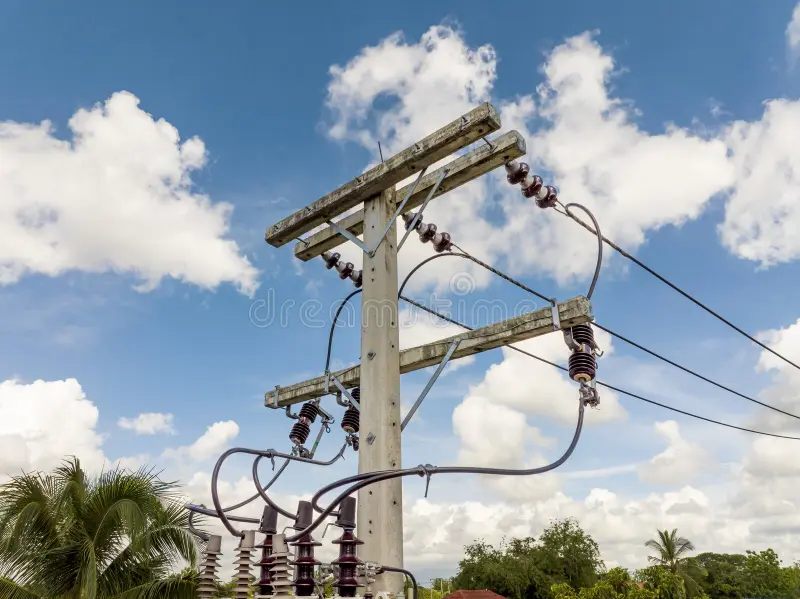
The Nigerian Electricity Regulatory Commission (NERC) has said the cost of Federal Government electricity subsidy reduced to N514.35 billion in the second quarter of 2025 (Q2 2025) from the N536.40 paid in the Q1 2025. The decline was by 4.11 per cent, according to the commission’s Q3 Report.
The payment of subsidy, the report noted, was incurred due to lack of a cost-reflective tariff.
NERC said, “The total amount invoiced by the GenCos for energy delivered to each DisCo and the DRO- adjusted NBET invoice to the respective DisCos during 2025/Q2.
“It is important to note that due to the absence of cost-reflective tariffs across all DisCos, the Government incurred a subsidy obligation of ₦514.35 billion 21; this represents a ₦22.04 billion (-4.11 per cent) reduction in FGN subsidy compared to 2025/Q1 (₦536.40 billion).”
The report also noted that although the subsidy obligation of the government decreased in naira terms (-₦22.04 billion), it accounted for 59.60 per cent of the total GenCo invoice, which is a
0.44pp increase compared to 2025/Q1 when subsidy accounted for 59.16 per cent of the total GenCo invoice.
NERC said this is because the actual generation cost (₦/kWh) increased by 0.59 per cent, while the allowed end-user tariffs remained unchanged across the quarters.
According to the report, the total revenue collected by all DisCos in 2025/Q2 was ₦564.71 billion out of the ₦742.34 billion that was billed to customers.
This, said NERC, translates to a collection efficiency of 76.07 per cent.
In comparison, the report said, the total revenue collected by all DisCos in 2025/Q1 was ₦553.63 billion out of the ₦744.26 billion billed to customers, which translated to a 74.39 per cent collection efficiency.
This means that at an aggregate level, DisCos recorded a 1.68pp increase in collection efficiency between 2025/Q1 and 2025/Q2, according to the report.
NERC revealed that in 2025/Q2, three DisCos recorded collection efficiencies greater than 80 per cent with Eko (87.80 per cent) recording the highest collection efficiency.
Conversely, it said Jos DisCo recorded the lowest collection efficiency at 43.82 per cent .
It added that on there other hand, the remaining five DisCos recorded declines in collection efficiency, with Abuja (-3.93pp) and Jos (-3.37pp) DisCos having the most significant declines
across the quarters.
NERC explained that the Market Operator issues invoices to DisCos for energy transmission and administrative services.
The report said the period under review, DisCos made a total remittance of ₦65.30 billion against the cumulative invoice of ₦68.68 billion issued by the MO.
This payment, according to the report, translates to 95.07 per cent remittance performance and is a 1.25pp decrease
when compared to 96.32 per cent remittance performance recorded in 2025/Q1 when DisCos remitted ₦59.49 billion out of ₦61.76 billion invoice issued by the MO.
On the remittances made by bilateral customers (domestic and international) and special customers for invoices issued in 2025/Q2 by the MO, NERC noted they are the six international bilateral customers being supplied by GenCos in the NESI made a payment of $9.01 million against the cumulative invoice of $17.54 million issued by the MO for services rendered in 2025/Q2, translating to a remittance performance of 51.33 per cent .
It also said the domestic bilateral customers made a cumulative payment of ₦1.401.00 billion against the invoice of ₦2.796.29 billion issued to them by the MO for services rendered in 2025/Q2, translating to 50.10 per cent remittance performance.
The report explained that one domestic bilateral customer made payments during 2025/Q2 for outstanding MO invoices from previous quarters.
NERC said the MO received ₦10.53 million from Trans-Amadi (OAU/FMPI) towards outstanding invoices from previous quarters.
Meanwhile, it said the special customer (Ajaokuta Steel Co. Ltd and the host community) did not make any payment towards the ₦1.27 billion (NBET) and ₦0.12 billion (MO) invoices received in 2025/Q2.
It explained that this continues a longstanding trend of non-payment by this customer, and the Commission has communicated the need for intervention on this issue to the relevant FGN authorities.

· 4,704,223 customers unmetered
The Nigerian Electricity Regulatory Commission (NERC) has revealed that national metering rate rose to 63.10 per cent in August 2026 from the 62.37 per cent in July 2026.
This was contained in the latest Metering Factsheet the commission released yesterday.
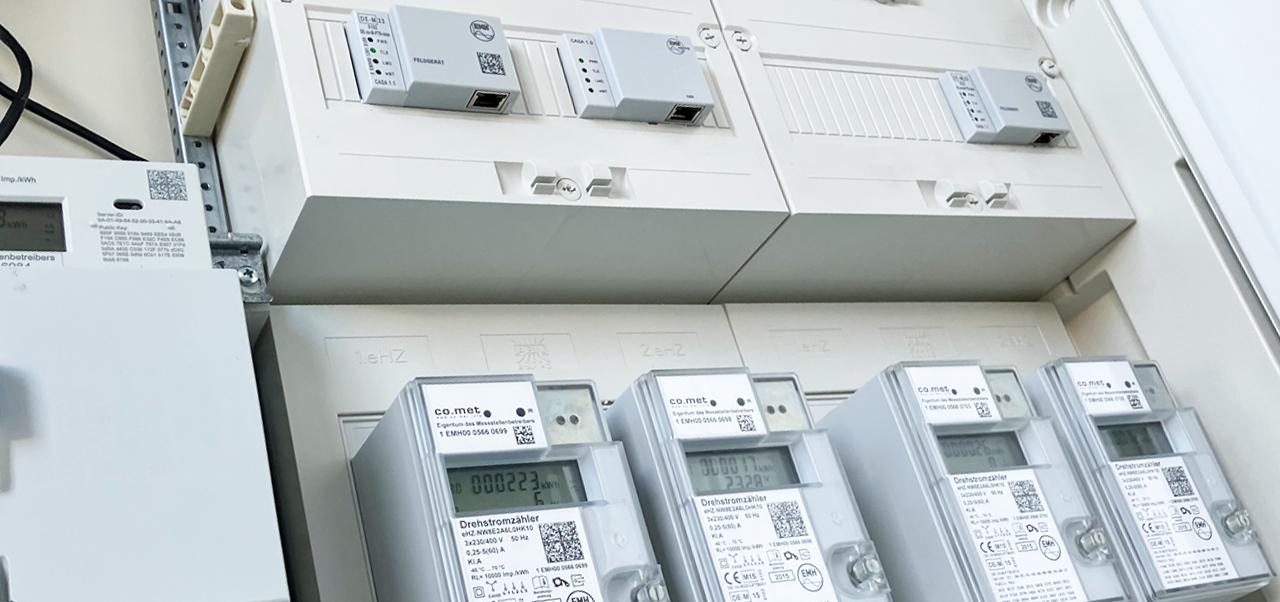
“The national metering rate increased to 63.10 per cent by the end of August, up from 62.37 per cent in July,” the report said. Of the 12,749,789 active customers in the Nigerian Electricity Supply Industry (NESI), NERC disclosed that 4,704,223 customers, representing 37 per cent were unmetered in August, while 8,045,565 were metered.
On the deployment of meters, the factsheet revealed that the electricity distribution companies (DisCos) metered additional 141,746 customers in the period under review, compared with 159,980 in July.
With 89.64 per cent, Eko DisCo topped the chart of deployment while Ikeja hit 87.74 per cent and Abuja recorded 82.62 per cent.
In terms of coverage, the total number of metered customers across all DisCos reached 8,045,565 out of 12,749,789 active customers in August.
The July & August 2026 Metering Status of Distribution Companies (DisCos) factsheet highlights continued progress in customer metering across the country.
It reads in part: “National Progress: The national metering rate increased to 63.10 per cent by the end of August, up from 62.37 per cent in July.
“Meter Deployment: DisCos metered 141,746 additional customers in August, compared with 159,980 in July.
Leading DisCos: Eko (89.64 per cent), Ikeja (87.74 per cent) and Abuja (82.62 per cent) recorded the highest metering rates in August.
“Total Coverage: As of August 2026, the total number of metered customers across all DisCos reached 8,045,565 out of 12,749,789 active customers.
“Leading DisCos: Eko (89.64 per cent), Ikeja (87.74 per cent) and Abuja (82.62 per cent) recorded the highest metering rates in August.
“Total Coverage: As of August 2026, the total number of metered customers across all DisCos reached 8,045,565 out of 12,749,789 active customers.”
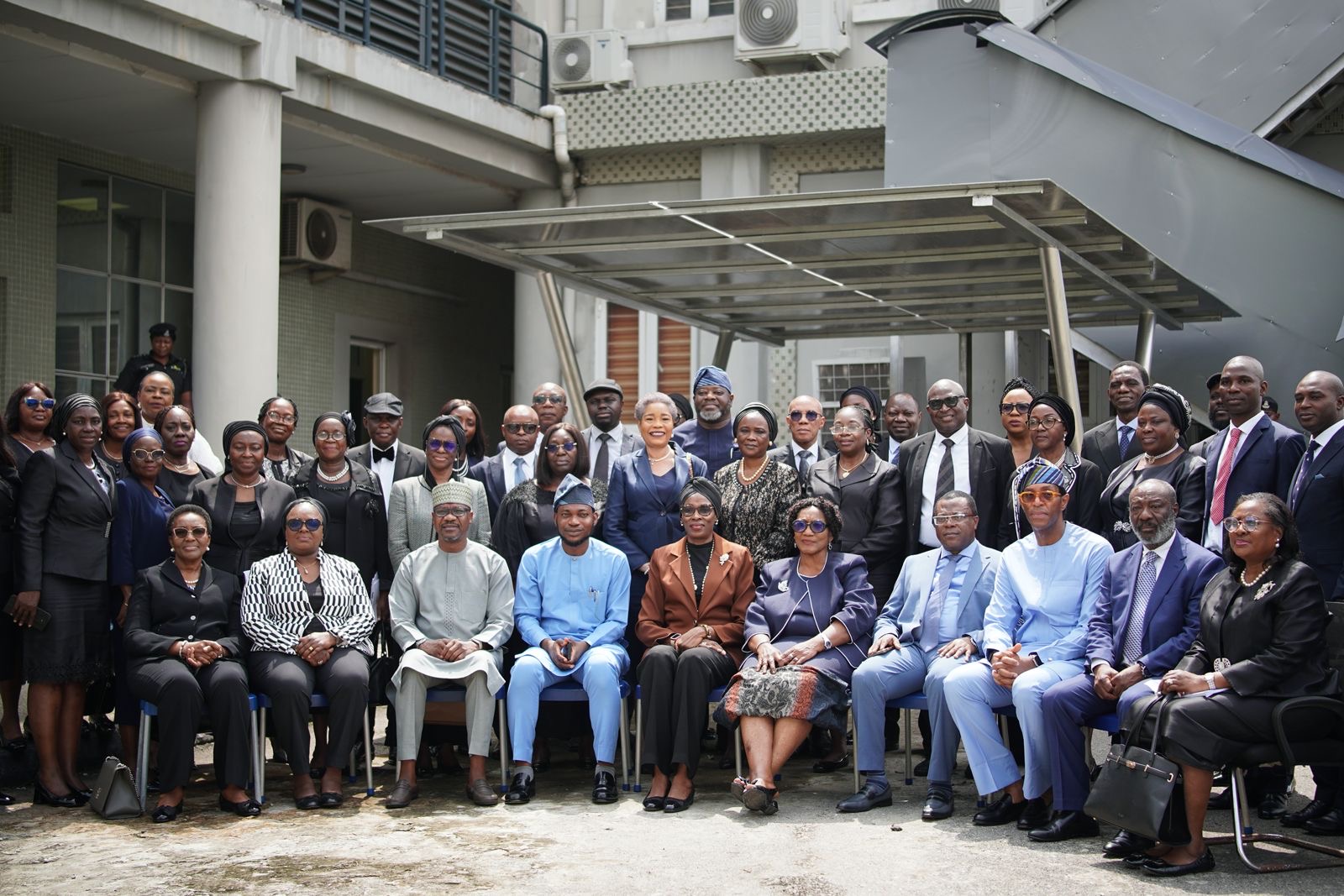
Judges and critical stakeholders in the Lagos State Judiciary service today began a three-day workshop aimed at deepening the judiciary’s understanding of the evolving legal and regulatory framework governing Nigeria’s electricity market.
The workshop, organised by the Nigerian Electricity Regulatory Commission (NERC), under the aegies of its Regional Seminar for Judges of State High Courts programme, is holding at the Lagos State High Court Annex, Osborne , Ikoyi, Lagos. It has as its theme: “Nigeria’s Electricity Market in Transition: Law, Regulation and the Courts.”
Speaking at the opening session yesterday, the NERC Chairman, Dr. Musiliu Oseni, stressed the need for stronger collaboration with the judiciary to ensure the success of Nigeria’s ongoing electricity market reforms, saying well-informed judicial decisions are critical to sustaining investor confidence, protecting consumers and advancing the country’s power sector.
Dr. Oseni described electricity as one of the country’s most strategic national priorities after security, noting that virtually every sector of the economy depends on reliable electricity. He explained that the seminar was designed to provide judicial officers with a deeper understanding of the technical, commercial and legal issues shaping the electricity sector as Nigeria implements far-reaching reforms introduced under the Electricity Act 2023.
Oseni noted that following the constitutional amendment of March 2023 and the enactment of the Electricity Act, Nigeria’s electricity industry has entered a new phase of decentralisation, allowing states to establish and regulate their own electricity markets.
He emphasised that the objective of the seminar was not to influence judicial independence but to familiarise judges with the technical nature of the electricity industry so they can better appreciate the complexities involved when adjudicating electricity-related disputes.
“The intention is not to interfere with the course of justice but to expose My Lords to the intricacies of the electricity sector. Better understanding of the industry will ultimately support sound judicial decisions that strengthen the sector,” he stated.
He disclosed that NERC has already transferred regulatory oversight to 16 states, describing the development as a major milestone in Nigeria’s electricity reform agenda.
According to him, the decentralisation of electricity regulation will improve consumer protection, bring regulatory institutions closer to electricity users, enable quicker resolution of customer complaints and allow tariff decisions to reflect local economic realities.
While acknowledging the benefits of the reforms, the NERC Chairman said they have also introduced fresh legal and regulatory challenges that require the judiciary’s understanding.
Dr. Oseni cautioned that the transition introduces new legal complexities, explaining that disputes in the electricity sector would no longer be limited to consumers, operators and the national regulator but could also involve state electricity regulators, multiple regulatory agencies and electricity market participants operating across different jurisdictions.
“As we speak today, the Commission has already issued transfer orders to 16 states, enabling them to assume regulatory oversight of their respective electricity markets,” he disclosed.
Oseni cited a 2016 court judgment which, according to him, prevented the Commission from fully exercising its regulatory powers and contributed to electricity subsidy liabilities estimated at ₦520 billion in 2019, equivalent to nearly ₦2 trillion at current exchange rates.
The NERC boss further disclosed that the seminar would feature presentations by Nigerian and international electricity experts who would share practical experiences, analyse previous judicial decisions affecting the sector and engage participants in discussions on emerging legal issues arising from Nigeria’s electricity market reforms.
He encouraged judges to actively participate in the sessions by asking questions and sharing perspectives, expressing confidence that the interaction would foster stronger collaboration between regulators and the judiciary.
Delivering a goodwill message on behalf of the Chief Judge of Lagos State, Honourable Justice Kazeem Aloba, the Administrative Judge of Lagos Division, Honourable Justice Atinuke Ipaye welcomed the Commission’s initiative, describing it as timely and necessary.
Justice Ipaye observed that electricity remains one of Nigeria’s most critical development issues, affecting homes, businesses and public institutions alike.
“There is hardly any Nigerian who is not affected by electricity, whether through generation, transmission, distribution, metering or payment. The sector touches every aspect of our daily lives,” she remarked.
She noted that the liberalisation of the electricity industry has introduced new market participants, including generation companies (GenCos) and distribution companies (DisCos), making continuous judicial education necessary to keep pace with the sector’s evolution.
She urged judges to take advantage of the three-day seminar to deepen their understanding of the industry’s legal and commercial realities, saying such knowledge would improve the quality of judicial decisions in electricity-related disputes.
The Regional Seminar for Judges of State High Courts will feature technical presentations, panel discussions and case studies led by Nigerian and international experts as part of NERC’s efforts to strengthen judicial capacity and enhance collaboration between the judiciary and electricity regulators in support of Nigeria’s ongoing electricity market reforms.
The programme forms part of NERC’s broader efforts to deepen institutional collaboration with the judiciary as Nigeria continues its transition towards a decentralised and more competitive electricity market.
- Fed Govt incurs ₦358.32b subsidy obligation
The Nigerian Electricity Regulatory Commission (NERC) has said Togo, Republic of Benin and Niger Republic failed to pay $12.66 million electricity bill in the First Quarter of 2026 Q1 2026.
Of the $17.48million bill that was issued to them, the three international customers, remitted $4.84 million, being 27.57 per cent for the energy the electricity Generation Companies (GenCos) supplied them in the period under review.
This was made known in the 2026 Q1 Report the commission issued yesterday.
NERC said the “remittances made by bilateral customers (domestic and international) and special customers for invoices issued in 2026/Q1 by the MO: The three international bilateral customers being supplied by GenCos in the NESI made a payment of $4.82 million against the cumulative invoice of $17.48 million issued by the MO for services rendered in 2026/Q1, translating to a remittance performance of 27.57 per cent.”
According to the report, the domestic bilateral customers made a cumulative payment of ₦5,816.28 million against the invoice of ₦6,122.35 million issued to them the MO for services rendered in 2026/Q1, translating to 95.00 per cent remittance performance.
NERC added that during Q1 2026, three international and nine domestic bilateral customers made payments of $6.64 million and ₦2,589.07 million, respectively, towards outstanding MO invoices from previous quarters.
In the breakdown, the report said specifically, the MO received a total of $4.05 million from Société Béninoise d’Energie Electrique (SBEE), comprising payments for Ughelli ($3.28 million) and Paras ($0.77 million).
NERC also said $1.87 million was received from Mainstream – Société Nigérienne d’Electricité (NIGELEC), and $0.72 million from Paras – Compagnie Energie Electrique du Togo (CEET).
According to the report, the special customer (Ajaokuta Steel Co. Ltd and the host community) did not make any payment towards the ₦676.88 million (NBET) and ₦189.38 million (MO) invoices received in 2026/Q1.
NERC stressed that this continues a longstanding trend of non-payment by this customer, and the Commission has communicated the need for intervention on this issue to the relevant Federal Government authorities.
In the period under review, the total revenue collected by all DisCos in 2026/Q1 was ₦597.56 billion out of the ₦756.93 billion that was billed to customers.
This, said the report, translates to a collection efficiency of 78.95 per cent.
In comparison, NERC stressed that the total revenue collected by all DisCos in 2025/Q4 was ₦630.93 billion out of the ₦795.06 billion billed to customers, which translated to a 79.36 per cent collection efficiency. This means that at an aggregate level, DisCos recorded a 0.41pp decrease in collection efficiency between 2025/Q4 and 2026/Q1.
On subsidy, the report revealed that due to the absence of cost-reflective tariffs across all DisCos, the government incurred a subsidy obligation of ₦358.32 billion, this represents a ₦60.46 billion (-14.44 per cent) reduction in FGN subsidy compared to 2025/Q4 (₦418.79 billion).
The government subsidy, according to NERC, accounted for 51.95 per cent of the total GenCo invoice, which is a 0.08pp decrease compared to 2025/Q4, when the subsidy accounted for 52.03 per cent of the total GenCo invoice.
The report explained that “The key driver of this reduction in FGN subsidy obligation is the decrease in energy offtake of the DisCos by -8.56 per cent between 2025/Q4 and 2026/Q1.”



-

 Energy11 months ago
Diesel falls to ₦979/L in Lagos
-

 Law & Crime12 months ago
EFCC vs Yahaya Bello: Court adjourns ₦80.2b alleged fraud trial to Nov 11
-

 Art & Life9 years ago
These ’90s fashion trends are making a comeback in 2017
-
Business9 years ago
The 9 worst mistakes you can ever make at work
-
Entertainment9 years ago
The final 6 ‘Game of Thrones’ episodes might feel like a full season
-
Art & Life9 years ago
According to Dior Couture, this taboo fashion accessory is back
-
Entertainment9 years ago
The old and New Edition cast comes together to perform
-
Entertainment9 years ago
Mod turns ‘Counter-Strike’ into a ‘Tekken’ clone with fighting chickens