
Energy
Fed Govt takes delivery of 500, 000 smart meters

· Don’t pay for installation, Minister tells Nigerians
The federal government yesterday took delivery of about 500,000 smart meters as a further decisive step towards ending the metering gap across the country. The meters, coming under the World Bank funded Distribution Sector Recovery Programme (DISREP), is supporting the government to import a total of about 3.4 million meters in two batches.
The first batch consists of 1.43 million meters, out of which about a million meters has been received. Currently, almost 150,000 meters have already been installed across customers, across all distribution companies in the four corners of the country.
The delivery yesterday is also an initiative to further compliment the Presidential Metering Initiative (PMI), which has a target of procuring about 10 million meters over the next five years, at an average of two million meters in a year.
Expectedly, with the synergy between the DISREP, the PMI, the Meter Acquisition Fund (MAF) and the MAP will translate into the desired result of completely eliminating the seven million current metering gap in the country.
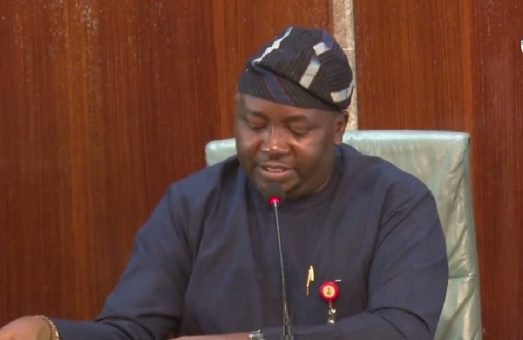
The Minister of Power, Adebayo Adelabu, while inspecting and taking delivery of the imported meters at the APM Terminal, Apapa, was emphatic that the meters are to be installed free of charge.
“I also want to mention that it is also unprecedented that these meters are to be installed and distributed to consumers free of charge, free of charge! Nobody should collect money from any consumer. It is an illegality. Is an offence for the officials of Distribution Companies (DisCos) across Nigeria to request for a dime before installation, even the indirect installers cannot ask the consumers for a dime. It has to be installed free of charge, so that Billings and collections will improve for the sector,” Adelabu warned.
According to the Minister, with the delivery, the journey of completely eliminating the meter gap in the Nigerian power sector has just begun. He expressed optimism that in a couple of years from now, every household, business, institution, industry, will be fully metered, to ensure that billing and revenue collections in the power sector will become more transparent, very fair and will be very just, including improving the readiness of electricity consumers to pay their bills.
Highlighting the benefits of adequate metering of consumers, Adelabu contended that it will lead to improved liquidity in the sector.
“When you have improved liquidity in the sector, the sectoral revenue will be able to pay a higher percentage of the energy cost in the industry, which will eventually lead to improvement in efficiency, improvement in effectiveness of operations, and we will be able to achieve the much awaited stability, reliability and functionality of electric supply to our household, our businesses, our institutions and to our industries.
“This will aid and accelerate our economic growth and industrial development, it will also improve the prosperity of our people, create more jobs, more productivity and revenues will be on the increase and ultimately, improve the standard of living of our people, while unemployment rates will be on the increase,” the Minister explained.
He further revealed that yesterday’s milestone represented the first time in the country will be simultaneously importing and buying locally this volume of meters- all to ensure that the power sector is completely transformed.
The Director General of the Bureau of Public Enterprises (BPE), Ayo Gbeleyi, assured that a new order prescribing the protocol and the processes that DisCos must follow in order to ensure that consumers have an unhindered access to meter installations and also that will address the concern that DisCos are delaying meter installations will soon be released by the Nigerian electricity Regulatory Commission (NERC).
“We have our dashboard, we have our trackers and all stakeholders’ hands on deck to ensure seamless and rapid deployment of these meters. The meters you are seeing here are actually manufactured to the specific requirement of each DisCo. They are also inscribed on the meter; there’s also an anti-theft protocol embedded in it. The configuration is to a particular DisCo, so you can’t take a meter configured for Eko DisCo and go and install it in Ibadan,” Gbeleyi said.
In similar vein, the Chairman, Mojec, Mojisola Abdul, explained that the meters supplied by the Federal government is to genuinely generate more revenue for the country to be able to supply more power.
“Physically, we have installed almost close to 150,000 meters and they are free. Don’t give anybody money. You are not allowed. We had meeting Wednesday with the minister, and as well as the DG BPE about the further progress of how to make it easy for every Nigerians. And we are going to call it mobile registration of meter free. That means you register today, under three days, your meter is installed,” She said.
Clarifying the delay in meter installations after months of application and payments made, the minister said: “In the past, we have never seen this volume of meter availability. So it was possible then that there was a rationalisation of the few that you have on the ground, and at that time you are also required to pay for it. But this one is from two perspectives. Number one, the volume is there. We have received over almost one million and more are still coming in the first phase.
“In the second phase, another 1.55 million meters are coming. And again, it has to be installed free of charge for the consumers, so the issue of the complications you have expressed in the past would be completely eliminated. What you are seeing today is not the first set of deliveries; we’ve been receiving this in the past couple of months and they have been taken to their various destination in the discord territories, and we have installed almost 150, 000 meters,” Adelabu concluded.

….Culled from Reuters
Oil prices could extend gains today as the U.S.-Israeli war against Iran entered a third week, putting oil infrastructure at risk and keeping the Strait of Hormuz shut in the world’s largest supply disruption. U.S. President Donald Trump threatened further strikes on Iran’s Kharg Island oil export hub, drawing a defiant response of further retaliation from Tehran.
Brent and U.S. West Texas Intermediate crude futures have already spiked sharply and rattled global financial markets. Both contracts have surged more than 40 per cent so far this month to their highest levels since 2022 after the U.S.-Israeli attacks on Iran prompted Tehran to halt shipping through the Strait of Hormuz – a key chokepoint for a fifth of global oil supply.
Trump has urged China, France, Japan, South Korea, Britain and others to deploy warships to secure the strategic gateway.
The United States struck military targets on Kharg Island on Saturday, which was swiftly followed by Iranian drone attacks on a key oil terminal in the United Arab Emirates.
“This marks an escalation in the conflict,” JP Morgan analysts led by Natasha Kaneva said.
“Until now, the region’s oil infrastructure has largely been spared.”
Besides UAE’s Fujairah, Saudi Arabia’s Ras Tanura export terminal and Abqaiq oil processing facilities have been listed as critical and highly vulnerable energy nodes in the Gulf, the analysts said.
However, oil loading operations at Fujairah have resumed, a Fujairah-based industry source told Reuters yesterday.
Fujairah, outside the Strait of Hormuz, is the outlet for about one million barrels per day of the UAE’s flagship Murban crude oil – a volume equal to about one per cent of world demand.
Global oil supply is expected to fall by eight million bpd in March due to disruptions to shipping while Middle Eastern producers have cut output by at least 10 million bpd, according to the International Energy Agency (IEA).
Last week, the IEA agreed to release a record 400 million barrels of oil from strategic stockpiles held by member nations to combat price spikes. Japan plans to start releasing its oil today.
Meanwhile, the Trump administration has rebuffed efforts by Middle Eastern allies to start diplomatic negotiations, according to three sources familiar with the efforts, while Iran has rejected the possibility of any ceasefire until U.S. and Israeli strikes end, dimming hopes of a quick end to the conflict.
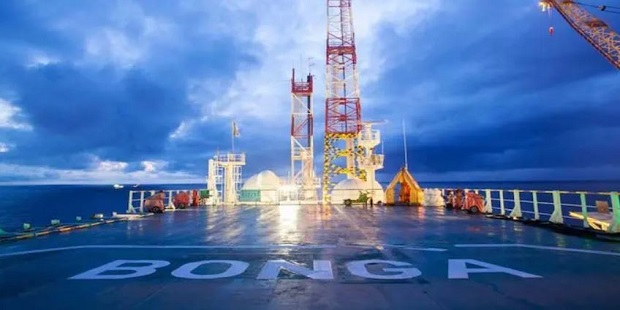
Shell Nigeria Exploration and Production Company Limited (SNEPCo) has completed the turnaround maintenance on the Bonga Floating Production, Storage and Offloading (FPSO) vessel, leading to resumption of production at Nigeria’s premier deepwater field on March 6, 2026. The project was delivered 11 days ahead of schedule and without any safety incident, reinforcing SNEPCo’s longstanding commitment to operational excellence and asset integrity.
SNEPCo Managing Director, Ronald Adams, noted that completing the turnaround safely and ahead of schedule is a testament to the dedication and professionalism of her Nigerian workforce and the helpful support of our partners.
“The achievement not only secures the long‑term integrity of the Bonga FPSO but also positions us strongly for the successful delivery of the Bonga North project, which will leverage the improved reliability of the FPSO,” Adams said.
The exercise which began on February 1, 2026, highlights SNEPCo’s leading role in advancing deep‑water expertise in Nigeria. Of the 55 companies involved in the execution, 43 were wholly Nigerian. Additionally, eight of the 12 international service providers maintain operational bases in Nigeria, contributing to knowledge transfer and increased local investments.
More than 1,000 personnel worked offshore during the turnaround, with over 95 per cent being Nigerians involved in maintenance, engineering, operations, inspection and construction. Thousands more supported activities from onshore locations, reflecting the depth of Nigerian capability in offshore oil and gas operations.
Adams added: “We acknowledge the support of several stakeholders towards the successful execution of the exercise, including the NNPC Upstream Investment Management Services (NUIMS), the Nigerian Upstream Petroleum Regulatory Commission (NUPRC), the Nigerian Content Development and Monitoring Board (NCDMB) and our partners.”
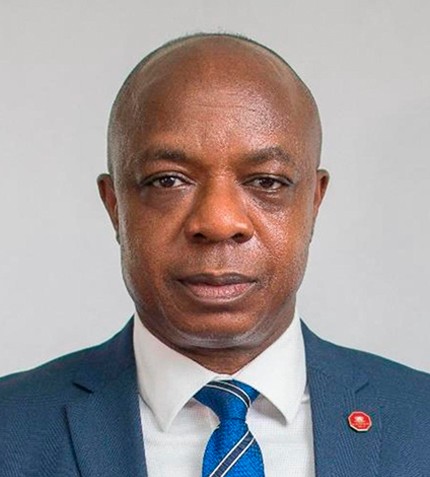
The Chairman, Petroleum Technology Association of Nigeria (PETAN), Wole Ogunsanya, has blamed petroleum industry regulators for persistent delays in oil and gas contracting processes, despite a presidential directive requiring tenders to be concluded within six months. Ogunsanya disclosed this during his presentation at the opening ceremony of the Nigeria International Energy Summit (NIES) 2026 in Abuja, yesterday. The Presidential directive is aimed at accelerating project execution across the energy sector.
Recall that President Tinubu in March 2024, issued Executive Order (OE) 42 mandating reduction of petroleum sector contracting costs and timelines, being part of a wider set of oil and gas reforms signed by the administration.
“We are not concluding contract processes in six months as directed and reports sent to the Presidency often fail to reflect the realities faced by industry players,” the PETAN boss said.
Ogunsanya disclosed that his Association is currently monitoring ongoing tenders, emphasising that several projects scheduled to commence in 2026 and 2027 remain stalled due to prolonged contracting cycles.
He noted that execution gaps persist despite a significant increase in contracting activities involving expressions of interest, tenders, pre-qualifications, and technical and commercial evaluations since the fourth quarter of 2024. He also identified prolonged internal approvals, delayed Final Investment Decisions (FIDs), slow commercial negotiations, extended regulatory and compliance procedures, and funding and financial close challenges as major bottlenecks undermining project delivery.
According to him, a study conducted by PETAN revealed that the current rate of contract awards falls significantly short of the Presidential benchmark of completing tenders within six months, with most contracts structured for five years and a possible two-year renewal.
Ogunsanya therefore called on the Presidency to give closer monitoring of the contracting process to ensure that awards and project execution align with presidential timelines, warning that continued delays could weaken investor confidence and slow sector growth.



-

 Art & Life9 years ago
These ’90s fashion trends are making a comeback in 2017
-
Entertainment9 years ago
The final 6 ‘Game of Thrones’ episodes might feel like a full season
-
Business9 years ago
The 9 worst mistakes you can ever make at work
-
Art & Life9 years ago
According to Dior Couture, this taboo fashion accessory is back
-
Entertainment9 years ago
The old and New Edition cast comes together to perform
-
Entertainment9 years ago
Mod turns ‘Counter-Strike’ into a ‘Tekken’ clone with fighting chickens
-
Sports9 years ago
Phillies’ Aaron Altherr makes mind-boggling barehanded play
-
Entertainment9 years ago
Disney’s live-action Aladdin finally finds its stars