
Economy
Fiscal, tax reforms have expanded revenue, improved economy

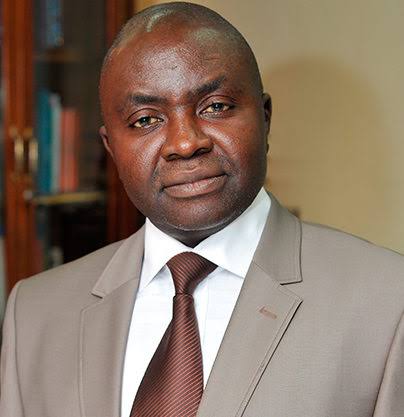
• CPPE calls for fiscal discipline from subnationals
Nigeria’s fiscal and tax reforms have delivered important progress in expanding revenue and improving fiscal sustainability. This was the submission of the Centre for the Promotion for Private Enterprise Chief Executive, Dr. Muda Yusuf, yesterday.
Dr. Yusuf, an economist, in a position paper on the country’s fiscal and tax reforms in the last two years, a copy of which was made available to The Nation, charged that arising from what has been achieved thus far, the next phase must focus on deepening revenue diversification, enhancing spending efficiency and aligning fiscal outcomes with real economic performance. This, he said, can be achieved with prudent management, stakeholder collaboration, and social sensitivity. He added that these reforms can lay a solid foundation for a more resilient, productive and inclusive Nigerian economy.
According to the CPPE boss, two landmark policy measures, notably the removal of fuel subsidy and the unification of exchange rates, have significantly boosted government revenues, expanded fiscal space and improved the capacity for public investment.
The CPPE though contended that the country is undergoing a major fiscal transition aimed at strengthening revenue mobilisation, fiscal sustainability and economic resilience, the dividend are already visible. It noted that collections from Value Added Tax (VAT) and Company Income Tax (CIT) have increased, reflecting stronger compliance and a gradual recovery in economic activities. Notably, the subnational governments are reporting higher revenues and increased allocations to agriculture, infrastructure, and social development.
Although the economist agreed that rising inflation and currency depreciation have moderated the real value of these gains, underscoring the need for prudent fiscal management and realistic expectations, it nonetheless insisted that the recent reforms have driven strong nominal revenue growth.
“Fuel subsidy removal freed trillions of naira in fiscal resources; exchange rate unification boosted naira-denominated oil revenues; VAT and CIT collections improved through enhanced compliance and enforcement. Despite these advances, the real fiscal impact is tempered by high inflation and exchange rate pressures. It is therefore important to assess fiscal outcomes in both nominal and real terms to maintain credible expectations and policy balance,” Dr. Yusuf said.
Dr. Yusuf noted that noted that recent tax measures have introduced several positive features into the economy including reliefs for producers and priority sectors; higher exemption thresholds for low-income earners and small businesses; zero-rated VAT on essential goods such as food, pharmaceuticals, and educational materials.
He however said that private sector concerns remain over compliance costs, the increase in capital gains tax from 10 per cent to 30 per cent and possible welfare implications of personal income tax changes. He therefore appealed that effective implementation should be guided by stakeholder consultation, flexibility and evidence-based adjustments.
The CPPE boss regretted that despite Nigeria’s large economy and population, the country’s budget remains relatively small when compared to other economies with less population.
A 2025 comparison of national budgets in U.S. dollar terms highlights Nigeria’s fiscal limitations. In the current fiscal year, Nigeria’s $36.7 billion budget is dwarfed by South Africa’s $141 billion; Algeria’s $126 billion; Egypt’s $91 billion and that of Morocco which is $73 billion.
“This limits fiscal capacity for transformative investments in infrastructure, human capital and social welfare. The situation underscores the urgency of revenue diversification, public-private partnerships, and enhanced non-tax revenue mobilization,” he explained.
The CPPE submitted that with limited fiscal space, spending efficiency is paramount. Priority areas it noted should include infrastructure comprising roads, power, ports and digital infrastructure, with the aim to reduce business costs and improve competitiveness; productivity, to be targeted at supporting manufacturing, MSMEs, and technology-driven enterprises; food security, that is investment in agriculture, storage, irrigation and logistics to stabilise prices and supply; security, strengthening of law enforcement, intelligence, and military capability and human capital through increased investment in health and education to build a skilled and productive workforce.
“Governments at all levels should minimie waste, link spending to measurable outcomes, and comply strictly with fiscal responsibility benchmarks,” the CPPE admonished.
The CPPE agreed that state governments play a pivotal role in national fiscal sustainability and given that many of these subnationals have benefited from higher federal allocations, improved internally generated revenue (IGR) and expanded investments in key sectors there is a need for them to align fiscal priorities with local economic needs — supported by transparency and accountability , to promote balanced national development and reduce dependence on federal transfers.
“The long-standing five per cent fuel levy for road maintenance, legislated since 2007, has never been implemented due to affordability and social concerns. While its fiscal rationale is clear, activation should consider economic conditions, timing, and social welfare implications to ensure broad acceptance and minimal disruption,” Dr. Yusuf said.
He therefore recommended that there is a need to adjust fiscal assessments for inflation and exchange rate effects and communicate outcomes transparently.
“There is also the need to broaden and diversify the revenue base by improving tax efficiency, expand the tax net and optimise non-tax revenues and national assets. Also important is the need to prioritise high-impact spending by focusing on infrastructure, food systems, productivity, and security. Strengthening subnational fiscal capacity by supporting fiscal autonomy, accountability and efficient resource use in states; implementation of tax reforms with flexibility by maintaining continuous dialogue with stakeholders and refine policies as needed and also by reinforcing fiscal discipline by ensuring strict adherence to fiscal responsibility frameworks across all levels of government,” Dr. Yusuf submitted.







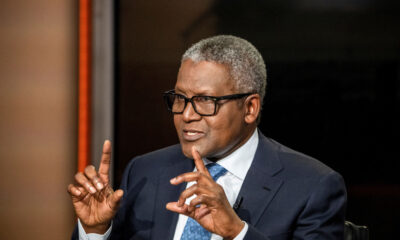






The Lagos State Government has unveiled plans for the Third Edition of the Invest in Lagos Summit, positioning the gathering as a major platform to attract international investors.
The summit, the State Government said, will deepen economic partnerships and reinforce its status as Africa’s leading commercial hub.
The summit, with the theme: “Lagos Business Gateway to Africa: Where Innovation Meets Capital,” will take hold from June 8 to 9, 2026, with an additional industrial and infrastructure tour planned for June 10, 2026.
Unveiling the summit at a media briefing yesterday in Lagos, the organisers described “Invest in Lagos 3.” as a strategic economic intervention designed to unlock new investment opportunities, accelerate industrialisation and strengthen Lagos’ place in the global economic landscape.
The summit is put together by the State Government in collaboration with the Commonwealth Enterprise and Investment Council as well as several institutional and private sector partners.
Officials said the event would serve as a global meeting point for policymakers, multinational corporations, sovereign wealth funds, development finance institutions, innovators, entrepreneurs and investors seeking opportunities across key sectors of the Lagos economy.
They noted that the summit has evolved beyond a conventional conference into a strategic platform for policy dialogue, capital mobilisation, investment matchmaking and economic collaboration.
According to the organisers, the maiden edition, known as the Lagos Investment Roundtable, helped establish Lagos as a globally competitive economy with a clear reform agenda and investor-focused policies, while the second edition attracted international delegations and investment promotion agencies from Africa, Europe, Asia and the Middle East.
Co-chair of the summit’s Technical and Programmes Committee, Dr. Toyosi Akinyemi-Oshige, described the event as potentially “the defining investment convening for Africa in this decade.”
He disclosed that participants expected at the event will include at least 28,000 delegates from more than 50 Commonwealth countries, making it one of the largest investment gatherings on the continent.
Akinyemi-Oshige stated that unlike traditional conferences often limited to speeches and networking, Invest in Lagos 3.0 would prioritise measurable outcomes through technology-driven coordination and real-time engagement systems.
According to him, the summit will leverage digital dashboards, live intelligence systems and virtual engagement tools to improve participation and investment tracking throughout the event.
He added that youth entrepreneurship and innovation would form a central pillar of the summit, stressing that Lagos remains Africa’s leading startup ecosystem and a major hub for technology-driven businesses.
Officials disclosed that Invest in Lagos 2.0 generated curated investment portfolios valued at more than N800 billion across eight priority sectors and was projected to create approximately 80,000 jobs over a three-to-five-year period.
The previous edition also facilitated strategic memoranda of understanding, public-private partnerships and high-level deal room discussions on industrialisation, infrastructure financing, manufacturing, transportation, digital economy, logistics, sustainable urban development and the creative industry.
Speaking on the objectives of this year’s summit, organisers said Invest in Lagos 3.0 would build on those achievements with stronger implementation frameworks, deeper global engagement and more practical investment outcomes.
They described Lagos as the centre of Africa’s economic story, citing its population of over 23 million people, expanding transportation network, rapidly growing innovation ecosystem, industrial capacity and strategic maritime infrastructure as major attractions for investors.
According to them, Lagos remains uniquely positioned as the preferred destination for manufacturing, technology, finance, trade and enterprise development on the continent.
The summit will include executive roundtables, sector-focused investment dialogues, exhibitions, networking engagements and business-to-business meetings aimed at connecting investors directly with government institutions and private sector players.
One of the major highlights expected at the summit is the Governor’s Investment Showcase Panel, where state governors from across Nigeria will present targeted investment opportunities directly to international investors, development agencies and business leaders.
The session is expected to facilitate direct engagement between public officials and global capital providers on strategic projects capable of driving economic growth across the country.
The organisers confirmed that several high-profile international and local figures would participate in the summit, including the Chair of the Commonwealth Enterprise and Investment Council, Lord Marland, Governor Babajide Sanwo-Olu, Commonwealth Secretary-General Shirley Botchwey, Minister of Industry, Trade and Investment Jumoke Oduwole and the Secretary-General of the African Continental Free Trade Area.
Several leading corporations and investment institutions are also expected to participate, including Dangote Group, Julius Berger Nigeria, Olam Group, Alaro City and the Lekki Free Zone.
Organisers revealed that thematic discussions at the summit would focus on critical sectors considered essential to Lagos’ long-term economic growth. These include infrastructure and urban development, manufacturing and industrialisation, agriculture and food systems, technology and digital economy, blue economy, tourism, energy, logistics, financial services, real estate and SME development.
Special investment sessions will also spotlight emerging opportunities within Lagos’ economic zone agenda, including industrial parks, export-oriented manufacturing hubs, innovation districts and climate-focused infrastructure projects.
As part of efforts to integrate young people into the investment ecosystem, students from major tertiary institutions, including Lagos State University, will participate in managing digital command centres that will provide remote access to plenary sessions, keynote speeches and panel discussions for global audiences.
In another major innovation, organisers announced plans to introduce podcast studios and media engagement sections at the summit to amplify conversations around investment, tourism, culture and entrepreneurship in Lagos.
Beyond the conference sessions, foreign delegates are expected to embark on guided tours of major industrial and infrastructure projects across Lagos on June 10.
The tours will include visits to the Dangote Refinery, the Lekki Deep Sea Port, Lekki Free Trade Zone, the Blue and Red Rail Lines and the RussellSmith 3D Printing and Manufacturing Centre.
Organisers said the tours are intended to give international investors firsthand experience of Lagos’ ongoing transformation and infrastructural development.
Stakeholders at the briefing also emphasised the significance of the partnership between Lagos and the Commonwealth Enterprise and Investment Council, noting that it reflects growing international confidence in Nigeria and Africa as emerging investment frontiers.
They argued that the collaboration sends a strong signal to global investors that Lagos is increasingly becoming a strategic gateway into African markets.
The summit will also feature investment pavilions and sector-specific deal rooms where startups, businesses, state governments and investors can negotiate partnerships, showcase projects and secure financing opportunities.
According to the organisers, the pavilions will provide opportunities for companies, associations and institutions to host side events, display investment opportunities and interact directly with potential investors.
Special participation categories have also been created for startups, media organisations, strategic partners and sponsors.
Officials used the opportunity to call on residents, businesses, investors, diplomatic missions and members of the international community to participate actively in the summit, describing it as a collective effort to showcase Lagos as a modern, inclusive and future-ready smart city.
They expressed optimism that the summit would strengthen investor confidence, attract fresh domestic and foreign direct investments, facilitate strategic partnerships and generate employment opportunities capable of driving long-term prosperity in Lagos and across Nigeria.
“As a government, we remain fully committed to creating an enabling environment for businesses to thrive through reforms, infrastructure development, digital transformation and improved ease of doing business,” the organisers stated.
They added that under the leadership of Governor Sanwo-Olu, Lagos continues to pursue an ambitious economic agenda focused on resilience, innovation, industrial growth and global competitiveness.
Interested participants, investors and media organisations were advised to direct accreditation, enquiries and correspondence to the summit.
With expectations already building ahead of the summit, stakeholders believe Invest in Lagos 3.0 could become one of the most significant economic and investment gatherings ever hosted on the African continent, while further cementing Lagos’ reputation as the business gateway to Africa.
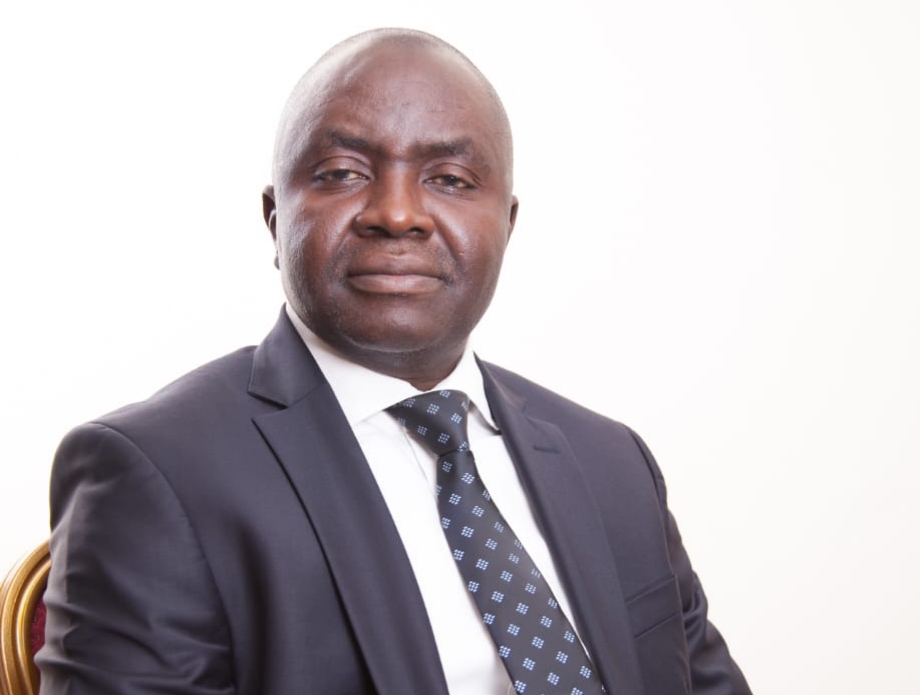
• Food, transportation spike inflation in March
The Centre for the Promotion of Private Enterprise (CPPE), yesterday warned against the current inflationary pressures are predominantly cost-push in nature, driven by energy, logistics and structural inefficiencies and not excess demand.
The Group, a policy and economic think-tank body, therefore cautioned against using the recent uptick in inflation as a basis for additional monetary tightening. It noted that further monetary tightening would be ineffective in addressing the root causes of inflation, high interest rates would hurt economic growth, investment and productivity; while the real sector would face increased financing constraints, undermining recovery efforts.
Reacting to the March Consumer Price Index (CPI) report released by the National Bureau of Statistics (NBS), the CPPE boss, Dr. Muda Yusuf, described as worrisome the latest inflation data, describing it as a signaling a worrying resurgence of inflationary pressures, particularly on a month-on-month basis.
He said that while recent months have reflected a gradual moderation in year-on-year inflation, the release of the March CPI report gives a cause for concern given that headline inflation edged up to 15.38 per cent in March, while month-on-month inflation accelerated sharply to 4.18 per cent, nearly double the level recorded in February.
This development, Yusuf argued, underscores the fragility of the disinflation process and raises concerns about renewed cost pressures in the economy.
“The March 2026 CPI report highlights a critical development in Nigeria’s inflation trajectory, where the earlier gains in disinflation are now being threatened by a resurgence of cost-driven pressures, particularly from energy, food and transportation.
“This emerging trend suggests that while inflation had been moderating on a year-on-year basis, underlying structural vulnerabilities remain largely unresolved, with recent month-on-month increases pointing to renewed price momentum.
“The situation calls for urgent and targeted policy responses, as failure to address these supply-side drivers could reverse the fragile stability achieved and deepen the cost-of-living challenges facing households and businesses.
“While disinflation trends remain evident on a year-on-year basis, the resurgence of monthly inflation pressures signals that macroeconomic stability is still fragile. The policy response must therefore shift from a narrow focus on monetary tools to a broader strategy that addresses the structural drivers of inflation, particularly in energy, food and transportation.
“Without decisive action in these areas, the gains recorded in inflation moderation may prove temporary, while households and businesses continue to grapple with significant cost pressures,” Yusuf said.
Yusuf, who also doubles as the Chief Executive Officer, Centre for the Promotion of Private Enterprise (CPPE), noted that the recent uptick in inflation is largely reflective of renewed energy price pressures, which continue to permeate production, transportation and distribution costs across the economy.
Insisting that energy remains a critical cost driver in the country, given the persistent reliance on gas, diesel and petrol for power generation, logistics and industrial operations, Yusuf noted the implications of the development as “far-reaching.” Specifically, he pointed out that rising energy costs are quickly transmitted into higher transportation costs; increased food prices and escalating production and distribution expenses.
“This cost-push dynamic explains the sharp increase in month-on-month inflation and signals that the underlying inflationary pressures are far from subdued,” Dr. Yusuf explained.
Analysing the CPI data, the CPPE boss noted that it clearly shows that food and transportation-related costs remain the most significant contributors to inflation, accounting for a substantial proportion which is estimated at about 70 per cent of inflationary pressures when direct and indirect effects are considered.
From the data, food inflation stood at 14.31 per cent year-on-year, while core inflation—which captures broader price pressures—rose to 16.21 per cent. On the other hand, transportation costs, which are heavily influenced by fuel prices and logistics inefficiencies, exerted strong upward pressure on prices across sectors as higher transport costs raise the cost of moving food, goods and services nationwide, thereby amplifying inflation.
“These figures are particularly troubling given their direct impact on household welfare. The dominance of food and transport in the inflation basket has profound welfare consequences. These are non-discretionary expenditures, meaning households cannot easily adjust consumption in response to rising prices,” Dr. Yusuf said, adding that the situation is even more concerning given that rural inflation remains elevated, reflecting structural challenges in agricultural productivity and distribution systems.
The implications of these is the erosion of real incomes and purchasing power; rising cost of living pressures on households; increased poverty and vulnerability, particularly in rural areas and heightened inequality across regions and income groups.
The CPPE admonished that given the centrality of food and transportation to inflation and welfare, governments at both federal and subnational levels should prioritise interventions in these sectors.
For instance, in agricultural productivity, there is an urgent need to improve security in farming communities, strengthen rural infrastructure and logistics, enhance access to inputs and financing and promote mechanisation and modern farming techniques.
“Boosting agricultural productivity is the most sustainable pathway to moderating food inflation, not importation. Besides, governments at all levels should invest significantly in mass transit systems, bus and rail, reduce reliance on fragmented private transport systems, introduce regulatory frameworks to curb exploitative pricing and improve urban mobility infrastructure. A more structured and efficient public transport system will significantly reduce inflationary pressures and improve welfare outcomes,” Dr. Yusuf noted.
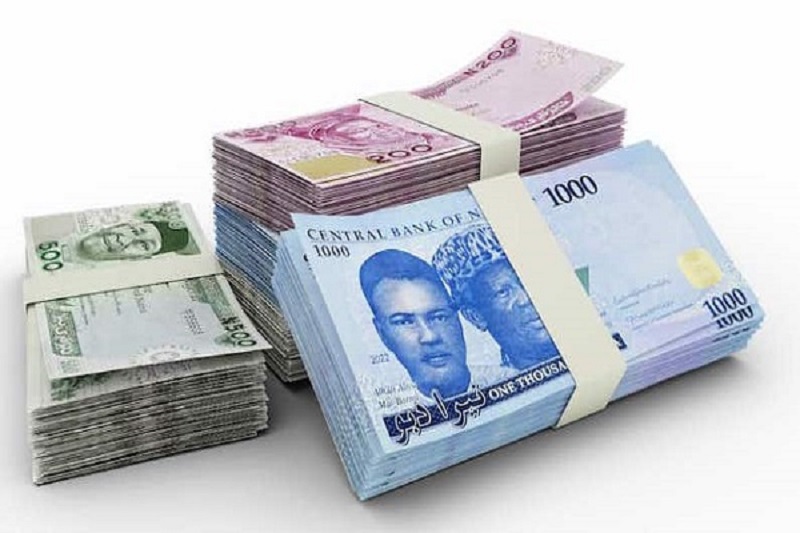
Nigeria’s economy is resilient and set to grow in the first half of 2026 despite the Iran war, the World Bank has said.
It however said that rising fuel costs and persistently high inflation risk squeezing incomes and slowing poverty reduction.
The bank also advised Nigeria to remove controls on fuel imports to ease inflation and support growth.
Business activity remains in expansion territory with the U.S./Israel-Iran conflict so far lifting prices but leaving output largely intact, World Bank Nigeria lead economist FisehaHaile said during a presentation in the capital Abuja.
“Overall business activity has been expanding over the past fewmonths, suggesting the impact on growth has been relatively contained. But the shock is still being felt through higher inflation,” Haile said.
President Bola Tinubu, now in his third year in office, has rolled outNigeria’s most ambitious economic overhaul in decades by ending costly fuel and energy subsidies, devaluing the currency and changing the tax system to stabilise an economy battered by high inflation, currency weakness and external shocks.
Inflation eased sharply to 15.06 per cent in February from around 33 per cent in December 2024, but remains high compared with regional peers and has come under renewed pressure since the Middle East conflict began, Haile said.
Fuel prices have risen more than 50 per cent during the Iran war, feeding into transport, food and production costs. Nigeria should consider lifting curbs on fuel imports to help ease inflation, he said.
“Inflation is still elevated and under increasing pressure, and that poses risks to incomes and poverty reduction,” Haile said.
Nigeria’s external buffers have improved as foreign exchange reserves rise and volatility eases, but tighter global financing conditions still threaten inflows, borrowing costs, and remittances.
Nigeria’s fiscal deficit widened slightly to 3.1 per cent of Gross Domestic Product (GDP) in 2025, but remains lower than in pre-reform years, Haile said, adding that the debt‑to‑GDP ratio fell for the first time in a decade, helped by stronger fiscal performance and exchange rate valuation gains.
The World Bank forecasts economic growth of about 4.2 per cent for 2026 and urged authorities to save windfalls from higher oil prices, keep monetary policy tight, and avoid blanket subsidies to rein in inflation.

-

 Art & Life9 years ago
These ’90s fashion trends are making a comeback in 2017
-
Entertainment9 years ago
The final 6 ‘Game of Thrones’ episodes might feel like a full season
-
Business9 years ago
The 9 worst mistakes you can ever make at work
-
Art & Life9 years ago
According to Dior Couture, this taboo fashion accessory is back
-
Entertainment9 years ago
The old and New Edition cast comes together to perform
-
Entertainment9 years ago
Mod turns ‘Counter-Strike’ into a ‘Tekken’ clone with fighting chickens
-
Sports9 years ago
Phillies’ Aaron Altherr makes mind-boggling barehanded play
-
Entertainment9 years ago
Disney’s live-action Aladdin finally finds its stars