
Economy
Economy on brighter rebound under Tinubu government

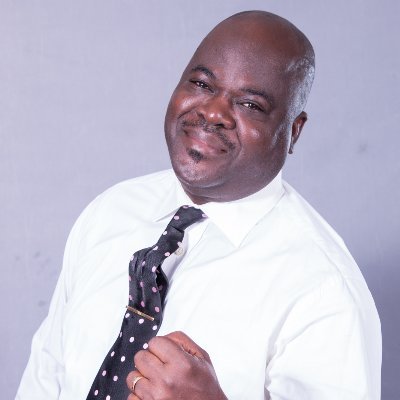
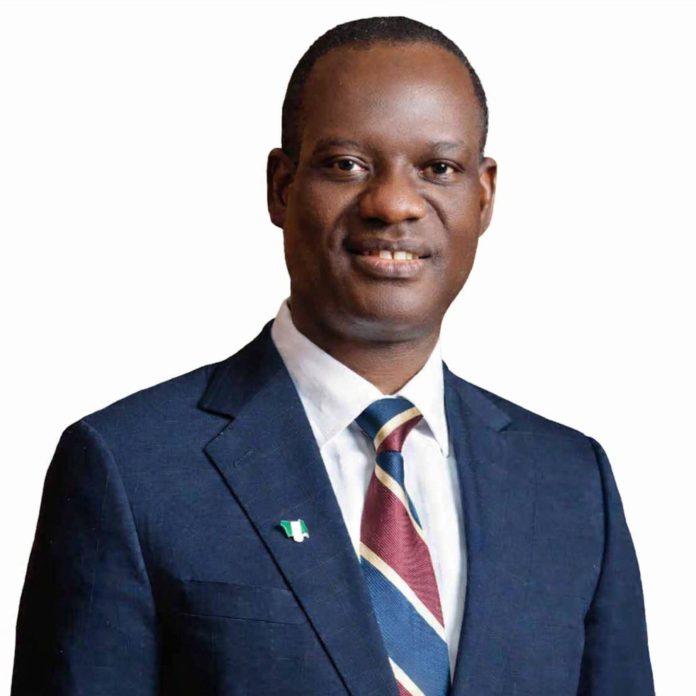
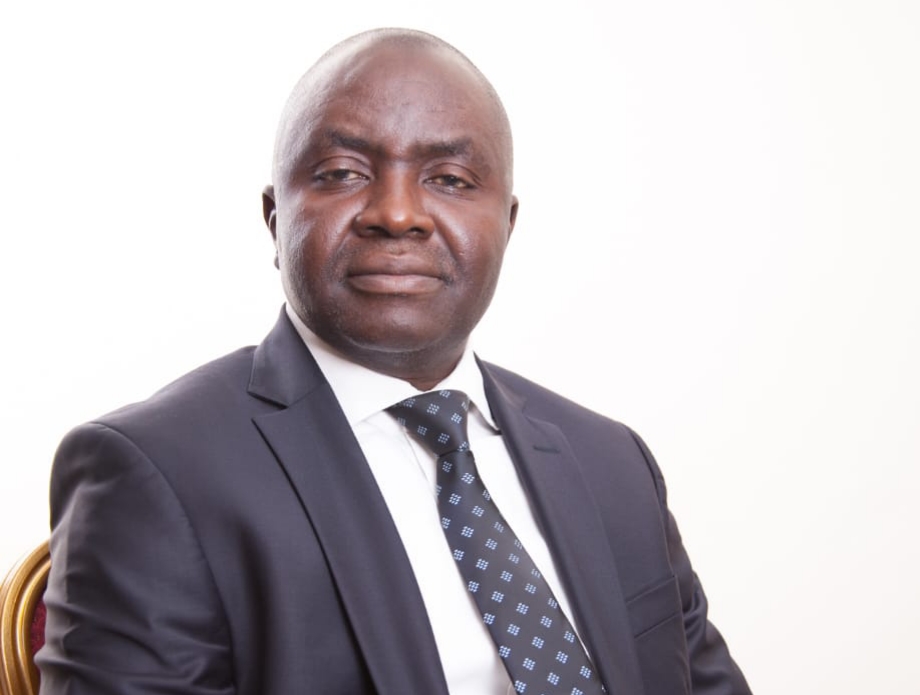
The economic reforms of President Bola Tinubu have received accolades across several strata. Now two years after the reforms, stakeholders are calling for its sustenance and remodification, where necessary. Wealth creation coach, entrepreneur and public analyst, Dr. Olumide Emmanuel, is satisfied that the present administration’s removal of subsidy, floating of the dollars and regularization; impressive stock market performance as well as increasing inflow of foreign direct investment and falling interest rates cum inflation, are glaring evidences that the economy is doing well. Dr. Emmanuel, who is also the Chief Executive , CommonSense Group, bared his mind in this no hold bar interview with select journalists. The Trust News was there. Excerpts:
How will you say Nigeria has fared at 65?
For many people, what they say is that if we have not received independence, if we had been under the British rule, would we have fared better? Did we get independence too early because they are now using some countries that got independence later on but seem to fare better off as measuring stick? It is as if you leave a child who is not matured to now begin to take care of himself. It’s like a father that was a rich man by the time he dies, the children were just teenagers, they were not matured enough to understand a lot of things. Unlike a man who is a billionaire and died when the children were already adults. So, there is an argument in that direction, maybe that we got independence too early. But we also have people who got independence the same time as we but have done amazingly well. That brings the aspect of the leadership question. We can give excuses up and down, but for me as an individual, I will say that in the last 65 years, we may not be where we were supposed to be but there are a lot of things to be thankful for.
Number one, we are thankful for life, and two, we are thankful that Nigeria still exists. You know a lot of people were young and do not understand the civil war, but for us, even now the trauma of the civil war is still around. A lot of countries did not go through the kind of things that Nigeria went through- all the coups and all kinds of things that have happened, the communal clashes and killings in the last 20 years of insurgency and we are still here. We should be thankful for the level of development we have had, even though it could have been better but we still should be thankful. We are in democracy; many people seem to have forgotten the military era. Those of us that grew up during the military era, we know the effect and up till now, part of the reason why the country is the way it is, is because the people that are adults that are actually supposed to right things are still affected by the military mindset. The young people don’t care, they can talk because they have never been controlled. For many people in our generation, when you want to talk, you remember the software that puts you in the bondage of military thinking. All in all, we could have done better but we are grateful for where we are.
So, how will you assess the economy in the last 65 years?
Economically, we have gone high, we have gone low, we have gone to the lowest low and I think, we are beginning to now climb out of the lowest low. So we are still low but we are coming out of the lowest low to come to low. Why? Because we look at 65/50 years ago before we discovered oil, we had our cash crops. We had the pyramids, cocoa and palm oil which were doing amazingly well. Our economy was topnotch because we were a productive economy. Then we discovered oil which brought in the curse of laziness, visionless-ness and planless-ness. And all the different things that we were doing that were producing for us were killed because we became a monolithic economy, focusing on oil, became lazy and complacent and today, we are seeing the result of that. Now we have realised by going to the lowest low that we need to be a productive country. And that’s why there is a lot going on now with reference to decentralising the issue of oil, going back to full scale agriculture. In the last few years and going forward, we are going to see a lot in the area of cash crops; people beginning to go into real full scale farming that would help us become productive so that we can have something to export. Then if you look at the economy, you will realise that in the last few years, the policy of the government has started producing results.
Now when you talk of policy producing results, until there is something that sets a man in the market place, he does not know that there is a change. Somebody said to me years ago, that all this one they are saying that inflation is going down, that he’s not seeing it. I said to him, let’s say a crate of egg has gone from N400 to almost N6,000, cement from N3,600 to almost N10,000. Now, when we say that inflation is going down, what we are saying is that the pace of increase has reduced. It is not that it will not increase. If every year, bread was increasing at the rate of N100 per year, if inflation reduces, it means that it will now go down from N100 to N50 or any amount lower than N100 per year; it doesn’t mean that you will not buy things expensively, but that the rate at which it is increasing will reduce. Little by little, it will now get to a better dimension. And that is what is happening. A lot of goods in the market have reduced, our stock market is big, doing well, and investor confidence is very high, foreign direct investment is very high, removal of subsidy has made money available to all the governors , now so many states have more money. People should start facing their governors now and find out what they are doing with the money. Even the macroeconomic policy is yielding positive results, the interest rate, and other things are beginning to go down. Our dollar to naira is now stable. All in all, we are beginning to look forward to things getting better.
You have always advocated a two year gestation period before assessing this government. Now, after two years, how would you assess the President Bola Tinubu’s government?
President Bola Tinubu is an individual, he is the president of the country and then as the president of the country, he is working with some group of people to steer the affairs of the country. They have set policies in place and some of the policies they have put in place have started producing results. Irrespective of who is in government, there are other issues that we now have to look into. We look at corruption, security and infrastructure. For me as an individually, I will say to you clearly, that the policy of President Tinubu administration based on removal of subsidy, floating of the dollars and regularization of other things have started producing results. That is very glaring for everyone to see except you don’t want to be truthful to yourself. That’s why I say, our stock market is doing amazingly well, foreign direct investment is doing amazingly well; there is now more money for governors to do projects; our currency is now stable, also remember the tax reform that will come in from January. The interest rate and inflation are going down. These are realities. So we can now plan. Those are the positive aspects.
The negative aspect is number one, waste, two corruption, three insecurity, four infrastructure deficit. In these areas, they have still not done well. For most people on the streets; as far as I am concerned, everything we are seeing out there indicate that some people are above the law. We have a lot of people still walking around that should be sent to jail. We have a lot of money stolen in billions. Two is the issue of security. Every week, you hear of people dying in different villages; that we are still not having light till now is unimaginable; the roads are bad, a lot is not happening in the area of infrastructure. And then waste, we are seeing a lot of it in many aspects. A lot of things we call waste in this country are constitutional because the law supports them. For a governor to collect money that he does not give account for is legal corruption. So we have seen where they have done well and where they have not done well.
The Monetary Policy Committee of the CBN has steadily cut down interest rate; how will this stimulate the economy?
Most of the time in an economy like Nigeria, where 75 per cent of the population are poor, many of these good news are indices. It is not any news to the poor man because he will not feel it. In any economy, when you are coming up with a policy, you must think of the effect of the policy and come up with palliatives and systems to cushion the effects of the policy on the vulnerable. We are talking about balancing life and livelihood. Most of the times, our policies are not thought through. The major thing that people kicked against was the way the President announced the subsidy removal. However, everybody from Atiku to Obi to Kwankwanso said they will remove subsidy. So the president did what was in the mind of everybody but the way he did it created the problem that now became too difficult to handle because if he had done it in a very strategic way, like maybe you came in May 29, between then and October 1st, you study and begin to tell everyone to prepare their minds. Then on October 1st you declare it. You would have blocked every block-able to know what to do.
A major crisis between Dangote Refinery and the unions reared its head recently. Thankfully, government was able to nip it in the bud before it became a major crisis. Do you think that giving Dangote Refinery a free hand will lead to monopoly as is being speculated in some quarters?
It is a disgrace that we are talking about Dangote having a monopoly when we have three or four refineries that were there before he came. So where is the monopoly? It is a useless discussion. If Port Harcourt, Kaduna and Warri refineries were working, will you say it’s a monopoly. It is because we are a bunch of unserious people that cannot manage our own that you now say that somebody that came to do his own is stopping you. Anybody making that kind of statement should feel stupid. If those three were working, Dangote would have been one among others.
Dangote is not the only one building refinery. There are three others by other people that will soon come up. When those three come up, will that argument come up? Do you know that there are modular refineries that can be done in one year? Do you know that there are boys in the creeks refining oil every day? Why are we deceiving ourselves with all these stories? If you say Dangote is a monopolist, how? Did he stop other ones from working? So it’s just an argument of lazy people. PENGASSAN, NUPENG should have a rethink. When in the next 15 and 20 years there is a change, who will they now go and fight? That is when they will realise they have been fighting the wrong battle. Fighting Dangote Refinery is not the right thing to do because you have refineries that would have been working. What even stops all of them (the Unions) from putting money together and building their own refinery in the country? Unionism is a global discussion and we don’t respect entrepreneurs in this country. We like talking because the emotion of poverty and the hatred for rich people is the software running many of these discussions. The reason why they are fighting Dangote is because they have somebody to fight. The day machine replaces them (workers), they would have to go and fight the machine. Is NITEL fighting, didn’t they go down? NITEL could not fight because technology came. We should be thinking of the future. All these things we are fighting are poverty fights. Technology and development is coming and you are fighting them all in the name of monopoly.
As a wealth creation coach, what is wealth and how can it be created?
For years, I have told people that if we look at wealth only from one angle, we will be making a major mistake. Wealth is holistic. Looking at it from a generic financial point which is cash based, wealth is assets-based. Any fool can be rich. Having money does not make you a wealthy man. You need to have assets that will continue to produce cash flow. Looking at wealth from the money aspect, that is, just one over eight from the equation of things because there are eight components to true wealth. They include: Health, when we say health is wealth, if you gather the whole money in the world, you need to be alive to enjoy it. Experience is wealth; character is wealth; character, goodwill, family are all wealth. So, I define wealth as having all that is required to live a holistic life and make impact by fulfilling your purpose.
How do we now become wealthy? The formula and principle have not changed. Everything begins with knowledge. Financial intelligence is a foundation, next is financial planning, discipline yourself and you then begin to grow organically. Part of that discipline is to delay gratification. Things are currently challenging, you know what you want to do and you do them with time.
How can you measure your financial base?
You look at your assets and liability as well as your income and expenditure. When I have more asset than liability, then I am growing. And once my expenditure is greater than my income, I am in trouble. But if my income is greater than my expenditure, I am okay.
What will you be saying to President Tinubu’s governemt should you have the opportunity?
They should continue with what they are doing, they should not start doing what they will not do well; blocking the corruption doorway, improve the infrastructure, taking care of the security and opening up other productive aspects of the economy. There are other areas that should be unlocked such as sports, entertainment, solid mineral resources, agriculture, etc. These are all areas that we can unlock and you will see Nigeria grow in the next five to 10 years. All these oil rants is olden days story, a discussion of poverty stricken and visionless people that are not thinking of the future. Oil will soon expire and then people will now wake up and discover that they could have done better. So, we should be thinking of other things.
How can a Nigerian business become trans-generational?
One of the reasons why we don’t have trans-generational businesses is because the first generation is always a pioneering and generating generation; the second generation is a maintenance generation; the third generation becomes an entitled generation and that becomes a problem. A speaker recently said that strong men create good times. And that good times create weak men. And those weak men will bring back hard time. So you find out that every generation is actually supposed to be a generating generation. We actually have a lot of trans-generational businesses in Nigeria but people are not telling their stories. And because people are not telling their stories, we don’t know. We have Alabukun pain reliever. It is still existing and trans-generational but nobody is talking about it because there is no structure or story around it. We also have some interstate transportation businesses that are trans-generational and still existing. We don’t talk about our stories because some people give us wrong narratives of ourselves.
When do you think the gains of some of these policies will to trickle down to the common man?
It will take a while for it to trickle down. We should just keep hope alive and continue to be doing what needs to be done. We should also be trusting that the government will be thinking of what needs to be done. During COVID 19 many people went through crisis. But they are not supposed to go through crisis if we had unlocked their pensions. Do you know there are trillions in pension that are going to become useless as Nigeria goes forward? If they collect the money now, they know what they can do with it. But by the time the money is made available to them, it would have become useless because inflation would have eaten it up. There are a lot of things we can do to unlock a lot of things.








The Federal Government’s revenue rose by 72 per cent to N6.2 trillion in the first half of 2026 from N3.6 trillion in the corresponding period of 2025, while interest payments increased by 38 per cent to N7.7 trillion from N5.6 trillion.
The Federal Ministry of Finance disclosed this on Sunday while responding to public commentary on the World Bank’s October 2026 Nigeria Development Update, which put federal interest payments at 124 per cent of revenue in the first half of this year.
The ministry said the growth in revenue had outpaced the increase in interest payments, reducing the interest-to-revenue ratio from 156 per cent in the first half of 2025 to 124 per cent in the corresponding period of 2026.
It added that the difference between interest payments and revenue narrowed from N2 trillion to N1.5 trillion within the period.
In a statement issued in Abuja, the ministry said the 124 per cent ratio did not present a complete picture of the government’s revenue position because some earnings were excluded from the calculation, while the interest figure covered obligations beyond the Federal Government alone.
According to the ministry, the interest payments include external loans obtained by state governments but serviced by the Federal Government.
It said comparing these obligations with federal revenue alone could overstate the ratio because the debt and revenue figures did not cover the same levels of government.
The ministry also said the revenue figure excluded independent income earned by government agencies and enterprises but not yet remitted to the Treasury.
It added that the timing of statutory tax payments affected the half-year figures, as some payments typically generate more revenue in the second half of the year.
The ministry cited the 2025 figures, saying the interest-to-revenue ratio stood at 156 per cent in the first half of that year but fell below 60 per cent for the full year. It also put the ratio at 97 per cent before the current administration’s reforms.
On the 2026 outlook, the ministry referred to the World Bank’s projection that Nigeria’s full-year debt service, covering both interest and principal repayments, would amount to 46 per cent of revenue.
The ministry said the full-year figure was a more appropriate measure for assessing the country’s debt-service position than a six-month comparison.
It maintained that all Federal Government borrowing was within the limits approved by the National Assembly under the 2026 Appropriation Act and the approved borrowing plan.
The statement added that the government’s borrowing complied with the Fiscal Responsibility Act 2007 and the Debt Management Office (Establishment) Act 2003.
It said the Debt Management Office regularly published information on government borrowing.
The ministry welcomed public scrutiny of government finances and urged analysts to compare revenue and debt figures covering the same levels of government and to consider the periods covered by the data.
It said the government remained open to requests for clarification on public finance figures.
The three tiers of government have shared N2.428 trillion revenue generated by the Federation in September 2026, according to the Federation Account Allocation Committee (FAAC).
The amount was shared at the committee’s October meeting in Abuja, with the Federal Government receiving N832.242 billion, state governments getting N799.872 billion and local government councils receiving N560.660 billion. The beneficiary states of the 13 percent derivative also received N236.049 billion as derivation revenue from mineral resources.
The Director of Press and Public Relations in the Office of the Accountant-General of the Federation (OAGF), Bawa Mokwa, disclosed this in a statement on the outcome of the meeting yesterday in Abuja.
The total distributable revenue comprised N1.672 trillion from statutory revenue and N756.587 billion from Value Added Tax (VAT).
According to the communiqué issued by FAAC, the Federation generated gross revenue of N3.913 trillion in September. However, N131.758 billion was deducted as the cost of collecting the revenue, while N1.352 trillion went into transfers, refunds and savings.
The figures show that the amount shared among the three tiers of government was lower than the gross revenue available for the month after the various deductions and other obligations were taken into account.
A breakdown of the statutory revenue showed that the Federal Government received N756.583 billion, while the state governments got N383.749 billion. The local government councils received N295.855 billion, while N236.049 billion was paid to the benefiting states as their 13 per cent derivation share of mineral revenue.
From the N756.587 billion distributable VAT revenue, the Federal Government received N75.659 billion, state governments got N416.123 billion and local government councils received N264.805 billion.
The allocation figures show that state governments and local government councils received the larger shares of the distributable VAT revenue, while the Federal Government received a smaller portion.
The communiqué also showed that gross statutory revenue rose in September, while VAT revenue declined during the period.
Gross statutory revenue stood at N3.096 trillion in September, compared with N2.850 trillion recorded in August. The increase of N246.384 billion represented a rise in revenue available from statutory sources.
In contrast, gross VAT revenue fell to N816.872 billion in September from N834.843 billion in August, representing a decline of N17.972 billion.
The difference in the performance of the two revenue sources means that the increase in statutory revenue was accompanied by a reduction in VAT receipts during the month.
FAAC attributed the changes in revenue performance to increases in some tax and petroleum-related revenue sources, alongside declines in others.
Petroleum Profit Tax, Hydrocarbon Tax, petroleum royalties, import duty, Common External Tariff (CET) levies and excise duty recorded significant increases in September.
However, Companies Income Tax (CIT), Capital Gains Tax (CGT), Stamp Duties Tax (SDT), VAT, mineral royalties, gas-flaring penalties, rental gas-flaring fees and miscellaneous oil revenue declined during the period.
By Oluwayanmife Lucas
Economic policy group and economist yesterday lent their support to the federal government’s decision to implement a temporary fuel price relief. They warned that this relief should not be misconstrued as return of subsidy on petroleum products, but be seen as a priority by government to protect vulnerable citizens, preserve the sustainability of public finances and maintain the integrity of ongoing economic reforms.
Besides, they warned that the commercial status of the Nigerian National Petroleum Company Limited (NNPC) Limited does not eliminate the government’s responsibility to respond to exceptional public-interest considerations.
NNPC Ltd., the group maintained, remains a government-owned commercial enterprise with a diversified portfolio of petroleum-related businesses, whose commercial mandate should ordinarily guide its operations. However, the policy group argued, temporary and clearly defined public-interest interventions can be accommodated within an appropriate governance framework.
The Group, Center for the promotion of Private Enterprise (CPPE), a policy and economic think-tank group, in a chat with The Nation yesterday, argued that the critical consideration is that such interventions must be transparent, proportionate, time-bound and financially sustainable.
The CPPE further noted that the current global energy crisis demands pragmatic policy responses, not ideological rigidity. It further argued that although economic reforms must remain sustainable, but they must also be responsive to the welfare of the people.
Therefore, it explained, Nigeria does not need a return to the “fiscally destructive” subsidy regime, but a credible framework for temporary, targeted and transparent social protection during exceptional economic shocks.
Speaking with exclusively The Trust News, the Chief Executive Officer, CPPE, Dr. Muda Yusuf, explained that economic policies are instruments for promoting citizens’ welfare; hence, they should not become rigid doctrines that prevent governments from responding to exceptional social and economic difficulties.
He noted that the current escalation in petroleum product prices is driven principally by developments in the global energy market, particularly geopolitical tensions that have pushed crude oil prices above $100 per barrel. He described this as an “external shock affecting both oil-producing and oil-importing economies; it is neither a consequence of Nigeria’s subsidy removal policy nor peculiar to the Nigerian economy.”
Dr. Yusuf warned against the misconception that the Federal Government’s recent fuel price relief initiative through the NNPC is a reversal of the petroleum subsidy removal policy. Such an interpretation, he argued, is misleading and fails to distinguish between a fundamental policy reversal and a temporary intervention in response to an extraordinary economic shock.
“Extraordinary economic circumstances sometimes require exceptional policy responses. Governments across the world have historically intervened to cushion households and businesses against severe external shocks without abandoning their underlying economic policy frameworks. The COVID-19 pandemic provided compelling evidence of this approach, even in advanced market economies.
“The intervention is substantially different in scale, design and potential fiscal implications from the previous subsidy regime. Its temporary character and limited market coverage are important distinctions,” Dr. Yusuf said.
According to him, the removal of the previous petroleum subsidy was a necessary structural reform, therefore, reinstating a broad-based consumption subsidy would recreate serious fiscal vulnerabilities and undermine the gains from economic reforms.
He explained further: “For illustration, a subsidy of ₦1,000 per litre on national consumption of 50 million litres daily would create a fiscal exposure of approximately ₦50 billion daily; ₦1.5 trillion monthly and ₦18.25 trillion annually. Such an obligation would be fiscally unsustainable, especially in an economy facing substantial infrastructure deficits, debt-service commitments and competing development priorities. However, a limited and temporary intervention should not automatically be interpreted as a deterioration in policy credibility.”
Dr. Yusuf, an economist, explained that investors are principally concerned about policy predictability, market access, commercial viability, fiscal sustainability and the protection of legitimate investments. These fundamentals, he said, need not be compromised by a narrowly targeted emergency relief measure.
In this regard, the CPPE argued that there is a need to have a critical distinction between the previous subsidy regime and the current intervention. Under the former subsidy arrangement, Dr. Yusuf said, government effectively carried a substantial fiscal burden on nationwide petrol consumption, estimated at various times at between 50 million and 80 million litres daily. This arrangement created enormous fiscal pressures, weakened public finances, crowded out development spending and contributed to macroeconomic instability.
Citing an illustrative calculation based on the volumes contained in the ministerial commentary; by contrast, he said, the current intervention covers approximately 70 million litres of NNPC fuel supply monthly, compared with estimated national petrol consumption of 50 million litres daily and an estimated national monthly consumption of 1.5 billion litres; while NNPC monthly volume under the intervention will be 70 million litres, translating to an estimated national consumption of 4.7 per cent
“Arising from these figures, an intervention covering less than five per cent of estimated national consumption cannot reasonably be equated with a nationwide subsidy regime. More importantly, the intervention does not reinstate an administered national petrol price, impose a general subsidy obligation on private operators or dismantle the market-oriented framework for petroleum product pricing.
“The appropriate questions should therefore concern the fiscal cost, transparency, duration, beneficiaries and effectiveness of the intervention, rather than an inaccurate characterisation of it as a wholesale policy reversal,” Dr. Yusuf argued.
But beyond fuel discounts, the CPPE said there is a need to addressing the wider social costs. It said that while the proposed fuel price relief is a welcome development, its limited coverage means that its aggregate impact on household welfare will also be limited.
Government, the group further highlighted, should pursue broader interventions that address the principal channels through which the energy price shock affects citizens.
In a four-point agenda, the CPPE said the government should scale up affordable mass transit, because transportation is one of the most immediate transmission channels of higher energy prices to household expenditure and business operating costs. To this end, the group said the federal and state governments should prioritise high-capacity buses, including CNG, electric and other economically viable alternatives.
Support for agricultural productivity and food supply, strengthening state and local government interventions by way of states designating discounted fuel outlets, limited emergency fuel allocations for essential services, like subsidised public transport and targeted support for vulnerable households, should be considered, as well as protecting the integrity of petroleum market reforms.
“Government should sustain market-based pricing, fair competition, transparent regulation and a trade policy framework that supports domestic refining investment. Emergency interventions should not become a pretext for arbitrary price controls or the reintroduction of opaque fiscal obligations,” Dr. Yusuf submitted.

-
 Energy11 months ago
Diesel falls to ₦979/L in Lagos
-
 Law & Crime12 months ago
EFCC vs Yahaya Bello: Court adjourns ₦80.2b alleged fraud trial to Nov 11
-

 Art & Life9 years ago
These ’90s fashion trends are making a comeback in 2017
-
Business9 years ago
The 9 worst mistakes you can ever make at work
-
Entertainment9 years ago
The final 6 ‘Game of Thrones’ episodes might feel like a full season
-
Art & Life9 years ago
According to Dior Couture, this taboo fashion accessory is back
-
Entertainment9 years ago
The old and New Edition cast comes together to perform
-
Entertainment9 years ago
Mod turns ‘Counter-Strike’ into a ‘Tekken’ clone with fighting chickens