
Energy
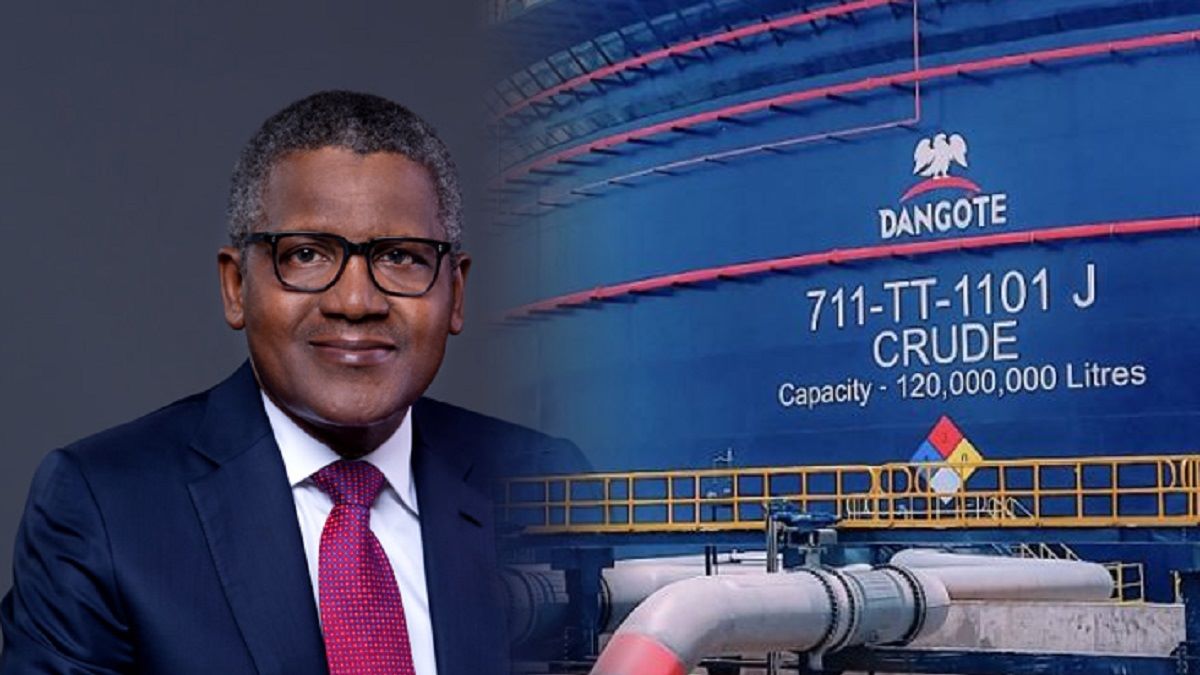
Fuel scarcity, price hike looms as Dangote Refinery, PENGASSAN face-off deepens

• PENGASSAN directs member to cut off crude, gas supply
• Directive is economic sabotage, says Dr. Yusuf of CPPE
• You lack legal right to intervene in supply contracts, says Refinery
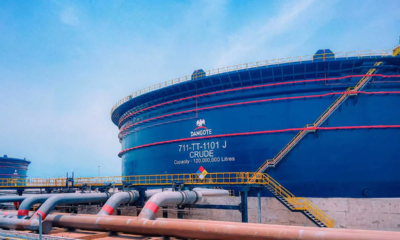
After a celebrated feat of eradication of fuel scarcity in the country in the last two years, the queues may be back anytime soon except the federal government makes a quick intervention. Yesterday, the Petroleum and Natural Gas Senior Staff Association of Nigeria (PENGASSAN) ordered its seven branches to cut off crude oil and gas supplies to the $20 billion, 650,000 barrels per day Dangote Refinery and Petrochemical facility located in Ibeju-Lekki, Lagos.
PENGASSAN’s directive was in response to the Dangote Refinery’s sacking of about 800 Nigerian workers. While the Refinery’s management explained the sack exercise as “part of an ongoing reorganisation to protect the facility from repeated acts of sabotage that had raised safety concerns and hampered operations,” the organized labour said it is an “act of anti-labour practices.”
In a letter dated September 26 and signed by its General Secretary, Lumumba Okugbawa, the union accused the refinery’s management of sacking its members in retaliation for exercising their constitutional right to join the union.
In a memo signed by the General Secretary of PENGASSAN, Comrade Lumumba Okugbawa, and issued to Branch chairmen in TotalEnergies, Renaissances, Chevron, Shell Nigeria Gas, Oando and Seplat Producing Nigeria Unlimited, the union directed the immediate shutdown of all valves and suspension of all crude loading operations to the Dangote Refinery facility.
“As you are aware, the Management of Dangote Petroleum Refinery has disengaged our members in reaction to the exercise of their constitutional right to be unionised.
“They have gone further on a mission of misinformation and propaganda to justify this illegitimacy rather than engaging meaningfully with us to right the wrong.
“Consequent to these, you are hereby directed to cut off gas supply to NGIC effective immediately. All crude oil supply valves to the Refinery should be shut. The loading operation for the vessel headed there should be halted immediately,” the directive read.
The union further mandated the NGIC Chairman to ensure strict compliance with the order and told all branch chairmen to give regular updates on the action taken.
“NGIC Chairman, ensure that gas supply to the Refinery is cut off effective immediately. All chairmen on this summons are to report promptly the progress of the directive. Kindly accept the assurances of our highest esteem. Thank you,” the statement read. The union also threatened to picket the refinery if the situation was not addressed.
Dangote Refinery however warned that the directive by PENGASSAN to cut crude oil and gas supplies to the refinery could plunge Nigerians into fresh rounds of fuel scarcity while inflicting huge revenue losses on the government.
In a statement released by the firm yesterday, the refinery described the directive as “criminal, reckless and an act of economic sabotage” that, if enforced, would disrupt the production and nationwide supply of critical petroleum products, including petrol, diesel, aviation fuel, kerosene, and cooking gas.
The company stressed that these products are indispensable to daily life and the economy, warning that Nigerians at every level, from households to businesses and industries would bear the brunt of shortages. It noted that a sudden disruption in supply will translate into insufferable hardship for millions of Nigerians.
“The products that would be disrupted and stopped include but are not limited to aviation fuel, petrol, kerosene, diesel and cooking gas – all products that are used and required by all stripes of Nigerians and persons living in Nigeria, whether high and mighty or lowly and ordinary. In what circumstance would it be justified for PENGASSAN to so disrupt and introduce insufferable hardship into the living conditions of Nigerians? None that we can see.
“The follow up question is, in whose interest and on whose behalf is PENGASSAN directing and intending to inflict such anarchic and criminal disruption upon the Nigerian society and persons living in Nigeria? Most certainly, not in the interest of the Nigerian State and/or the Nigerian public and citizens,” the company said.
Beyond the immediate hardship on citizens, Dangote Refinery warned that the government’s revenue would also be dented, given the refinery’s status as one of the country’s largest taxpayers and contributors to both federal and state coffers. The company said any pause in operations would stall contributions to the national purse and undermine investor confidence in Nigeria’s oil and gas sector.
The statement noted, “This is also economic sabotage against the Nigerian State at multiple levels. Dangote Refinery is the only refinery of its type in Africa and ordinarily should be the pride of all Nigerians as well as the governments of Nigeria. It should ordinarily have special protection and status and indeed qualifies as a strategic national asset”.
It added that an irreparable injury to the Dangote Refinery such as PENGASSAN has directed constitutes a national embarrassment to the country and a disincentive to external investors who ordinarily would have been encouraged by the success of Dangote Refinery to contemplate investing in Nigeria’s oil and gas sector or generally.
“PENGASSAN may also not be aware that Dangote Refinery is one of the largest contributors to the revenue purse of the Nigerian governments – both Federal and sub-nationals. That contribution is currently threatened by PENGASSAN and would of course be paused if and as soon as and for as long as the PENGASSAN directive is implemented by its branches,” it noted.
The statement also noted that PENGASSAN had no legal authority to interfere in supply contracts between the refinery and its vendors, insisting that the action undermined the rule of law.
“Absolutely no law gives PENGASSAN the right to direct its branches to “cut off” gas and crude oil supplies to Dangote Refinery at all. There is also no law in our statute books that would support or enable the PENGASSAN branches having to “cut off” gas and crude oil supplies to Dangote Refinery at all. Besides, it constitutes a criminal conduct for PENGASSAN or its members to disrupt and/or interfere howsoever in the contract between Dangote Refinery and its various vendors for the supply of gas and crude oil to the Refinery. Those supply contracts were not entered into with PENGASSAN; they were entered into by Dangote Refinery with third party vendors and suppliers and PENGASSAN has no right whatsoever to disrupt and/or interfere with the performance of those contracts.”
Calling on the Federal Government and security agencies to act swiftly, the refinery urged Nigerians to take note of the “unquantifiable and irredeemable hardship which PENGASSAN wishes to inflict on all of us” if not checked, warning that fuel queues, energy shortages and price hikes could quickly resurface.
It urged PENGASSAN to submit to amicable and legal resolution and not resort to economic sabotage and mob action that could introduce mayhem and chaos and easily translate into anarchy.
Stakeholders are worried over the development, warning of its dire consequences on the country’s economy. For instance, Dangote Refinery, it is believed, has been the stabilizing factor in premium motor spirit (PMS) or petrol supply and steady availability in the country.
Presently, on daily basis, the refinery produces lighter products of 104 million litres- 57 million litres of petrol; 20 million litres of jet fuel and 27 million litres of diesel. 44 per cent of these volume can meet the entire requirements of Nigeria while 56 per cent of the production are exported. This production capacity is sufficient to meet 100 per cent of Nigeria’s local demand for refined petroleum products. The facility, according to Aliko Dangote, had exported 1.1 litres of petrol in the last three months. Nigeria’s daily petrol consumption is put at between 46 million litres and 50 million litres.
But notwithstanding the refinery’s capacity to meet local demands, Nigeria’s fuel import reliance rose to 71 per cent of total petrol consumed domestically in the month of May and June, 2025. The remaining 28.62 per cent was sourced from the Dangote Petroleum Refinery. By implication, marketers, who should access products locally are instead spending foreign exchange to import refined petroleum products.
This was contained in data released by the Nigerian Midstream and Downstream Petroleum Regulatory Authority (NMDPRA) in its July report presented to Federation Account Allocation Committee (FAAC). NMDPRA is the downstream regulator of the oil sector.
The report further gave a breakdown which indicated that in the period, the petrol consumed amounted to total of 1.478billion litres. Of this total, only 455,188,512 litres was sourced from local refineries, leaving 1.023,128,233 to importation. The 1.478 billion litres of petrol consumed in June was a 16.42 per cent decrease from 1.768 billion litres supplied in May.
The report also indicated that the average daily petrol supply for the month was 49.277 million litres, of which 34.104 million litres was imported and 15.172 million sourced from local refineries.
The total Automotive Gas Oil (diesel) consumed for the month was 432,180, 605 litres. This is 1.73 percent higher than 424,829, 199 consumed in the month of May. Of the total 432,180, 605 litres consumed in June, 378,130,852 was imported while 58,049,753 was from local refineries. Similarly, the average daily supply was 14,406,020 litres, of which 12,604,372 was imported and 1,801, 658 was locally sourced.
But stakeholders still maintained that notwithstanding these figures, PENGASSAN’s directive to shut gas and crude supply to Dangote refinery would still have a telling effect on the economy and by extension motorists. Besides, they cautioned that the unions may be over reaching with their actions.
The Chief Executive Officer, Center for the Promotion of Private Enterprise (CPPE), Dr. Muda Yusuf, said the idea of going to cut off gas supply, coal supply to Dangote is a disproportionate response to this particular development.
“We are talking here about issues of energy security. We are also talking about what exactly is in consonance with labour laws. If there are issues with an employer, I think there are processes to go about it. There are processes of resolving disputes. You have industrial courts, you have other processes. This particular step, for me, is going to the extreme.
“I don’t think that is the way to go. In all of these issues, you never can tell what the motive is because most of these people, including the unions, these are people who have been major beneficiaries of the importation regime. The coming into the industry of Dangote Refinery normally has created a lot of disruption and those who are benefiting from the status quo, including even some of these unions, are not likely to be happy with it.
“But what is more important in all of this is to ensure that due process is followed even by the unions. I don’t think the next thing to do is to go and be shutting gas pipeline or crude supply. This will also impact on contractual obligations between Dangote and the suppliers of these inputs. I don’t think they (PENGASSAN) need to go as far as that. I think there are better ways of resolving these disputes without creating a energy crisis for the country,” Dr. Yusuf said.
Although he agreed the suppliers can claim force majeure in the event that Dangote decides to take action against them for not supplying him the raw materials as agreed, Yusuf however said the Unions may have even committed an act of illegality.
“They may have committed an act of illegality by going as far as that. It is a disproportionate response from the union to Dangote. I’m not saying they cannot engage in a dispute but to go as far as that is disproportionate. It’s going to the extreme. Because if the company gets force majeure, losses must have been suffered on both sides. This is clearly a disruption inflicted by the union deliberately. So I’m not even sure whether that can qualify as force majeure. It can qualify as sabotage. That is what it’s going to look like,” Yusuf warned, adding that “there is need to interrogate the legality of even what they are doing because there are rules guiding labour actions. There are rules guiding the way you can also express your grievances, even as a union. I’m not sure that this particular step is covered in terms of what is legally permissible. You know, on that, you know, I doubt it and if it is found to be illegal, then there have to be consequences. We need to send a signal that nobody is above the law. I mean, you have the Ministry of Labour, you have the industrial courts. That is why they are there to resolve labour disputes. Of course, there is a major risk of disruption to petrol and fuel supply to the country because Dangote refinery is a major supplier of petrol and fuel. It’s a major supplier; it will disrupt the flow of supply of petrol and fuel and that will not be good for the country,” Dr. Yusuf, an economist, concluded.
Meanwhile, Dangote Refinery late yesterday has resumed which it announced its suspension on Friday.
The Chief Branding and Communications Officer, Dangote Group, Tony Chiejina, in a message to The Trust News.com, said the resumption followed the intervention of the Naira for Crude Technical Committee chairman.
The resumption of the sales in naira was contained in an email to its customers sighted by The Trust News.com yesterday night. The notice, signed by the Group Commercial Operations of Dangote Petroleum Refinery and Petrochemicals, was titled ‘Resumption of DPRP PMS Naira Sales”, read: “Following the intervention of the Naira for Crude Technical Committee chairman, we are pleased to inform you of the resumption of the supply of PMS sales in naira commencing immediately. You may kindly proceed to place your orders in naira for both self collection and free delivery of PMS to the earlier advised locations across the country.”








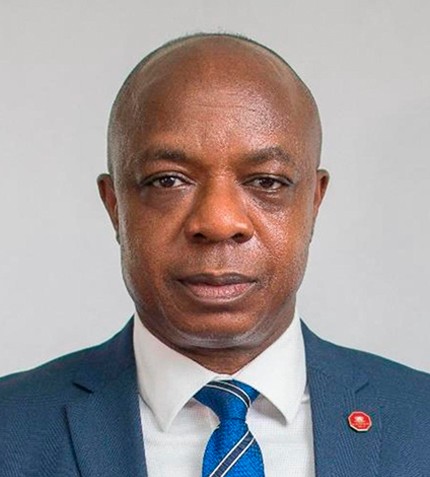
The Chairman, Petroleum Technology Association of Nigeria (PETAN), Wole Ogunsanya, has blamed petroleum industry regulators for persistent delays in oil and gas contracting processes, despite a presidential directive requiring tenders to be concluded within six months. Ogunsanya disclosed this during his presentation at the opening ceremony of the Nigeria International Energy Summit (NIES) 2026 in Abuja, yesterday. The Presidential directive is aimed at accelerating project execution across the energy sector.
Recall that President Tinubu in March 2024, issued Executive Order (OE) 42 mandating reduction of petroleum sector contracting costs and timelines, being part of a wider set of oil and gas reforms signed by the administration.
“We are not concluding contract processes in six months as directed and reports sent to the Presidency often fail to reflect the realities faced by industry players,” the PETAN boss said.
Ogunsanya disclosed that his Association is currently monitoring ongoing tenders, emphasising that several projects scheduled to commence in 2026 and 2027 remain stalled due to prolonged contracting cycles.
He noted that execution gaps persist despite a significant increase in contracting activities involving expressions of interest, tenders, pre-qualifications, and technical and commercial evaluations since the fourth quarter of 2024. He also identified prolonged internal approvals, delayed Final Investment Decisions (FIDs), slow commercial negotiations, extended regulatory and compliance procedures, and funding and financial close challenges as major bottlenecks undermining project delivery.
According to him, a study conducted by PETAN revealed that the current rate of contract awards falls significantly short of the Presidential benchmark of completing tenders within six months, with most contracts structured for five years and a possible two-year renewal.
Ogunsanya therefore called on the Presidency to give closer monitoring of the contracting process to ensure that awards and project execution align with presidential timelines, warning that continued delays could weaken investor confidence and slow sector growth.
• Domestic gas supply exceeded 2 billion cubic feet daily
• NNPC to expand Escravos Lagos Pipeline Line
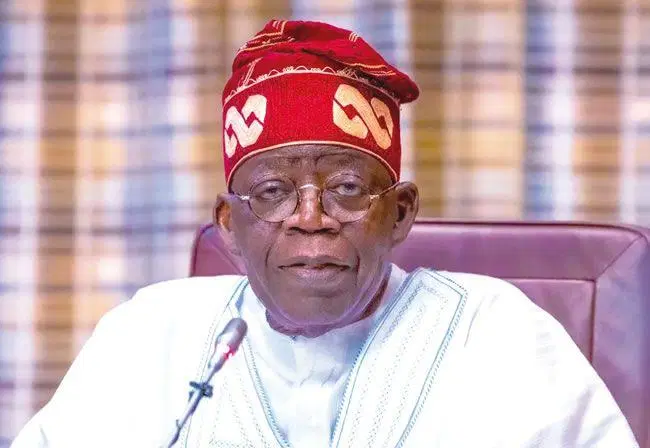
President Bola Tinubu has said his administration has strengthened the oil and gas sector to secure a Final Investment Decisions (FIDs) surpassing $8 billion in offshore gas developments from global energy firms.
He said the torrent of direct investments into the sector revived strongly because of regulatory certainty and fiscal reforms.
President Tinubu disclosed this yesterday while officially declaring open the 9th edition of the Nigeria International Energy Summit (NIES) at the Banquet Hall, State House, in Abuja. He was represented by Vice President, Kashim Shettima.
President Tinubu said: “The sector secured final investment decisions exceeding $8 billion, including major offshore gas developments involving global energy companies. The outpouring of direct investment into the oil and gas sector rebounded strongly, driven by regulatory certainty, fiscal reforms and improved operational guidelines and conditions.”
He said domestic gas supply exceeded two billion cubic feet per day for the first time, strengthening power generation, industrial utilisation and energy access. Export volumes, according to him, increased alongside sustained expansion of gas processing and transportation infrastructure, reinforcing Nigeria’s role in regional and global gas markets.
The President reminded the stakeholders that on his assumption of office in 2023, the sector was only rich in potential, but weighed down by inefficiencies, uncertainty and underinvestment.
His words: “When this administration assumed the mantle of leadership in May 2023, we inherited an energy sector rich in potential, yet constrained by inefficiencies, uncertainty, and prolonged underinvestment. We set to work without panicking, guided by the clear understanding that energy cannot be treated simply as an economic commodity if stability is our goal. Energy is a catalyst for national security, industrial growth, social inclusion, and regional cooperation.”
Tinubu said under his administration, Nigeria’s upstream activity recorded a historic rebound, recounts growth from eight weeks in 2021 to 69 weeks by late 2025, reflecting renewed exploration and building momentum
The Federal Government, he said, has also introduced a broad executive order on oil and gas investment enabling to unlock up to $10 billion in capital inflows, streamline project approvals, reduce bureaucratic delays and position Nigeria as a prepared investment destination.
He recalled that in 2025, the administration introduced the Upstream Petroleum Operations Cost Efficiency Incentives Order, providing tax credits of up to 20 per cent to promote cost efficiency, enhanced competitiveness, and deepened Nigerian participation.
Tinubu also noted that as a direct result of the reforms the government has introduced, Nigeria’s average crude oil production improved to approximately 1.6 million barrels per day.
The administration, he said, consolidated its role as a live wire of sector reform and strengthened regulatory institutions to ensure clarity of goals, transparency and investor competitiveness.
He added that the country introduced fully digital, transparent, and competitive licensing rounds to the upstream sector, widely regarded as among the most credible bidding processes in our history.
On the 2025 bid round, he said: “In furtherance of this objective, we approved the commencement of the 2025 licensing round, creating new investment windows and enabling additional crude oil and gas production capacity.”
He said Nigeria’s refining landscape entered a new era with the commencement of local operations and the Dangote Petroleum Refinery, significantly enhancing domestic supply of refined petroleum products.
The President said modular and indigenous refineries advanced under supportive regulatory frameworks, diversifying national refining capacity. On the Nigerian National Petroleum Company Limited NNPCL refineries, he said “Rehabilitation of state-owned refineries also gained renewed momentum, with operational stability and efficiency remaining a primary focus.”
He added that the Nigerian Upstream Petroleum Regulatory Commission (NUPRC) recorded strong and consistent revenue performance, surpassing annual targets and fiscal sustainability.
In similar vein, the Minister of State for Petroleum Resources (Oil), Senator Heineken Lokpobiri said the renewed confidence has culminated in the huge FIDs inflows into the sector.
He said: “International confidence has also returned: Shell’s $5 billion Bonga North project, and TotalEnergies’ $550 million Ubeta project marks Nigeria’s first major FIDs in over a decade. This was followed by Shell’s $2 billion HI project and the $1.8m cumulative spent by Chevron in their Panther project.
“Only recently, the global CEO of Shell announced their commitment to taking a $20 billion FID, with several other FID lined up to be announced in this year and in the coming year.
“In 2025 alone, 28 new field development plans worth $18.2 billion were signed, with potentials of 1.4 billion barrels of oil daily.
Between 2024 and 2025, of the seven major FIDs announced across Africa, four were in Nigeria. This did not happen by accident, it is the result of steady work, policy clarity, and better governance. These are not rhetorics but proof that Nigeria is once again a magnet for serious business.”
In his remarks, the Nigerian National Petroleum Company Limited (NNPCL) Group Chief Executive (Officer) Bashir Ojulari, an engineer, revealed that the firm has planned to expand the Escravos Lagos Pipeline Line (ESPL) this year.
Hear him: “Our recent achievements reflect this momentum. The presentation of the NNPC Gas Master Plan last week and the remarkable progress of our strategic gas infrastructure projects, the OB3 and the AKK pipeline and we are moving forward this year to also expand the ELPS pipeline, and the regional pipelines to their projects signal a new era of mining discipline, infrastructure development, and long-term commitments. These projects are more than a pipeline.”
NNPCL, according to him, is nurturing a new generation of professionals grounded in accountability, performance excellence and national service.
He said the strategic shifts, under the leadership of President Tinubu, is positioning Nigeria in a global competitive investment destination, from fiscal stability to policy liberalisation and security improvement.
• Over 60% of power plants unavailable for transmission in Q3 2025, says report
• Report exposes Discos culpability
• NERC may sanction erring entities
The state of electricity supply in the country has become a source of concern for residents. After enjoying a relative supply for some parts of last year, especially in the second quarter, drawing applause from consumers, the euphoria that greeted this has gradually becoming worrisome.
These concerns were more pronounced during the last yuletide, when several homes were left in the dark. The situation, electricity Distribution Companies (DisCos) often explain, results from national grid collapses, low power generation, gas supply shortages, or maintenance work by the Transmission Company of Nigeria (TCN). These issues, alongside infrastructure decay and vandalism, invariably leads to load shedding and intermittent supply.
Top officials of some Discos spoken to who pleaded for anonymity attributed power failures to a mix of upstream generation deficits, national grid instability and localised infrastructure challenges.
For a long time, there has been several horse-trading associated across the value chain over erratic power supply. For instance, it is common for DisCos often cite “system-wide disturbances” or “grid collapses” from the National Control Centre (NCC) as the reason for total outages across their franchise areas. Besides, many outages are blamed on “gas limitations” at thermal power plants and a general drop in power generation. This is because when generation drops, the energy allocated to DisCos decreases, forcing them to implement load shedding.
In situations like this, most hide under the guise of the feeder banding system. Under this framework, priority is given to “Band A” feeders, which are mandated to receive 20+ hours of supply thereby often leaving lower bands with significant outages when total available power is low.
Yet, is the technical faults and maintenance of equipment, equipment vandalism like destruction of transformers and theft of cables; planned maintenance, like upgrading or repairing transmission lines, are also factor readily given as excuses by service providers.
After enjoying relative stability in national grid in 2025, the facility experienced a first major collapse at the weekend caused by the simultaneous tripping of multiple 330kV transmission lines.
With this incident coming early in the year, stakeholders are worried that it may not be a good omen for the sector notwithstanding the several assurances by government. In 2024, 12 grid collapses were recorded; 12 in 2025 and one already recorded this year.
More worrisome is that the epileptic power supply has remained irrespective of the fiscal appropriation to the sector under the President Bola Tinubu administration.
A cursory look at these allocation indicate that in the last three years, there has been a consistent increase in fiscal allocation to the Ministry of Power aimed at resolving the underlying issues that have consistently impeded growth in the sector, including the consistent grid collapses each year.
A breakdown of the figures the three years showed that the power ministry got a cumulative allocation of N239.5 billion in 2023; N344.097 billion in 2024; N2.1 trillion in the 2025 budget, a clear indication of the priority placed on the sector by the current administration.
A further breakdown of the figures show that the power sector recovery programme received N810 billion from the budget; special intervention project got N269.74 billion, while the presidential power initiative (PPI) transmission project received N150 billion, all in an attempt to tackle the enormous challenges in the nation’s power sector from specific and targeted approach.
The Minister of Power, Adebayo Adelabu, assured that the ministry has set the agenda for Nigeria’s power sector in the year 2026, suggesting that the country has done enough to stabilise its grid in the previous year.
But these challenges appear unresolved despite huge budgetary allocations to the power sector. Giving more insight into what may be the cause of the deep-seated challenges confronting the country’s electricity supply is a recent report by the Nigerian Electricity Regulatory Commission (NERC) for the third quarter of 2025. The report, released recently, indicated that over 60 per cent of power plants installed generation capacity in the country remained unavailable for transmission to the national grid in the third quarter of 2025.
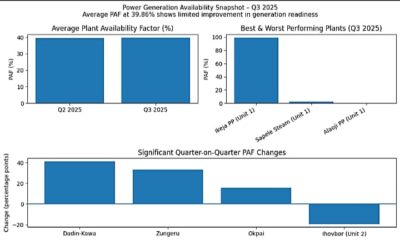
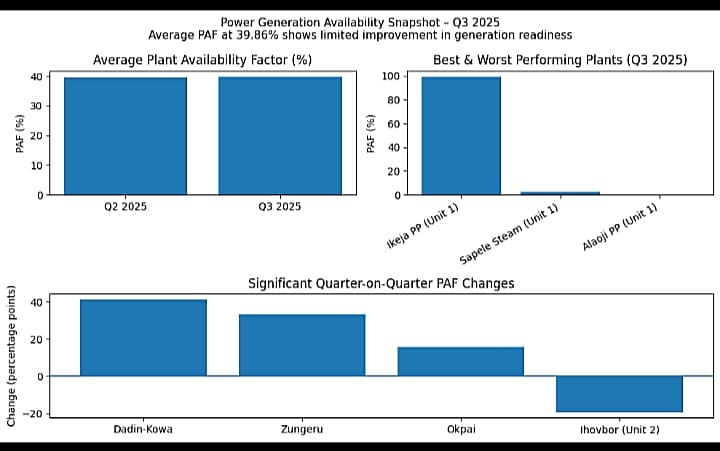
According to the NERC report, the average Plant Availability Factor (PAF) of all 28 grid-connected power plants stood at 39.86 per cent, meaning that 60.14 per cent of installed capacity could not be dispatched to the national grid at any point during the quarter. The figure represents only a 0.26 percentage-point increase from the 39.60 per cent recorded in Q2 2025, highlighting how limited progress has been in improving the operational readiness of generation assets.
“In 2025/Q3, the average plant availability factor for all grid-connected plants was 39.86 per cent, that is, at any point in time during the quarter, 60.14 per cent of the installed capacity across the 28 grid-connected power plants was not available for dispatch onto the grid,” the report read.
The PAF measures the ratio of a power plant’s declared available capacity to its manufacturer-rated installed capacity and is widely regarded by regulators as a key indicator of the health of the upstream segment of the Nigerian Electricity Supply Industry (NESI).
It further noted that while 11 power plants recorded availability above 50 per cent, Ikeja Power Plant (Unit 1) emerged as the best-performing asset, posting a PAF of 99.24 per cent during the quarter. At the lower end, Sapele Steam Plant (Unit 1) recorded a PAF of just 2.66 per cent, while Alaoji Power Plant (Unit 1) failed to dispatch any electricity at all throughout the quarter.
Significantly quarter-on-quarter improvements were recorded at Dadin-Kowa (+41.32pp), Zungeru (+33.29pp) and Okpai (+15.95pp), reflecting gains from improved hydrology and reduced outages.
However, availability declined sharply at Ihovbor (Unit 2), which fell by 19.21 percentage points to 78.16 per cent, down from 97.38 per cent in Q2. Other plants that recorded notable drops included Geregu (Unit 1), Ibom Power, and Geregu (Unit 2).
“Overall, 11 power plants had availability factors above 50 per cent, with Ikeja_1 power plant recording the highest availability factor at 99.24 per cent. On the other end of the spectrum, Sapele Steam_1 recorded a PAF of 2.66 per cent in 2025/Q3. Alaoji_1 power plant was not available to dispatch any energy onto the grid throughout the quarter.
“Significant increases in PAF were recorded in Dadin-Kowa_1 (+41.32pp), Zungeru_1 (+33.29pp), and Okpai_1 (+15.95pp) power plants across the two quarters. Conversely, the PAF of Ihovbor_2 decreased significantly by 19.21pp during the quarter (78.16 per cent in 2025/Q3 compared to 97.38 per cent in 2025/Q2). Reductions in PAF were also recorded in Geregu_1 (- 12.79pp), Ibom power_1 (-10.34pp), and Geregu_2 (-8.41pp) power plants,” the NERC report said.
The commission attributed the fluctuations in plant availability to mechanical outages, feedstock constraints, hydrological conditions and operational limitations, factors that have continued to undermine Nigeria’s generation capacity for over a decade.
Beyond generation challenges, the report also highlighted weak energy offtake by electricity Discos, raising concerns over revenue recovery and market discipline. Under the Partial Activation of Contract regime, which came into force in July 2022, DisCos are required to off-take and pay for their Partially Contracted Capacity on a take-or-pay basis, even if they fail to utilise the power.
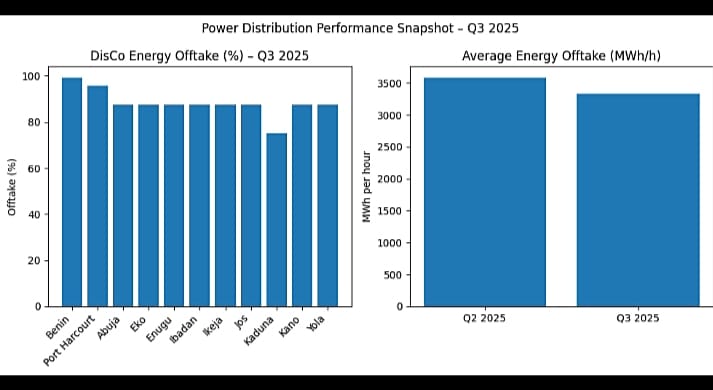
In Q3 2025, average energy offtake by DisCos fell to 3,328.33 megawatt-hours per hour, representing a 7.10 per cent decline from 3,582.62MWh/h recorded in the preceding quarter.
This decline occurred despite the fact that available contracted capacity dropped by only 2.43 per cent, suggesting that generation and transmission availability were sufficient to sustain previous offtake levels.
Overall, cumulative DisCo energy offtake performance during the quarter stood at 87.39 per cent, down from 91.78 per cent in Q2, a 4.39 percentage-point decline.
“All DisCos except Jos recorded a decline in their energy offtake performance during the quarter,” the report noted.
The commission attributed the reduced offtake to a combination of infrastructure weaknesses, seasonal demand changes and commercial considerations.
It noted that frequent network outages during the rainy season, driven by fragile distribution infrastructure, limited the ability of DisCos to evacuate power to customers.
In addition, cooler weather conditions reduced domestic electricity demand, while some DisCos deliberately constrained supply to loss-prone feeders to minimise financial exposure.
Under the Performance Monitoring Framework Orders issued in July 2024, DisCos are required to off-take at least 95 per cent of their available PCC or face regulatory sanctions.
However, in Q3 2025, only Benin and Port Harcourt DisCos met the threshold, with offtake levels of 99.20 per cent and 95.65 per cent, respectively.
The remaining nine DisCos, Abuja, Eko, Enugu, Ibadan, Ikeja, Jos, Kaduna, Kano and Yola, fell short, with Kaduna DisCo recording the lowest performance at 75.23 per cent.
“The Commission has commenced the implementation of appropriate sanctions against defaulting DisCos,” the report stated.
The figures reflect the persistent mismatch between installed capacity, available generation, and effective electricity delivery, a challenge that continues to frustrate households and businesses.
Despite Nigeria’s installed generation capacity exceeding 13,000 megawatts, average operational availability and weak offtake mean that actual electricity delivered to consumers remains far below demand, reinforcing dependence on self-generation and driving up energy costs.

-

 Art & Life9 years ago
These ’90s fashion trends are making a comeback in 2017
-
Entertainment9 years ago
The final 6 ‘Game of Thrones’ episodes might feel like a full season
-
Business9 years ago
The 9 worst mistakes you can ever make at work
-
Art & Life9 years ago
According to Dior Couture, this taboo fashion accessory is back
-
Entertainment9 years ago
The old and New Edition cast comes together to perform
-
Sports9 years ago
Phillies’ Aaron Altherr makes mind-boggling barehanded play
-
Entertainment9 years ago
Mod turns ‘Counter-Strike’ into a ‘Tekken’ clone with fighting chickens
-
Entertainment9 years ago
Disney’s live-action Aladdin finally finds its stars