

Energy
Sahara Upstream boost OML 18 capacity with 380,000-barrel MT D Adesanya

By MonireOluwa Lucas
Sahara Upstream has deployed MT D Adesanya, a 380,000-barrel Medium Range (MR) tanker, to enhance crude oil evacuation capacity at OML 18, strengthen operational efficiency and advance sustainability across its marine logistics operations.
The vessel, which has a capacity of more than 62,000 cubic metres of crude oil, will serve as an additional mother vessel for OML 18 crude evacuation operations, complementing MT D Bayero and expanding the infrastructure supporting one of Nigeria’s key upstream assets.
Stationed at Bonny Anchorage, MT D Adesanya will receive crude from shuttle vessels operating within the field before onward transfer to the Floating Storage and Offloading (FSO) Cawthorne facility. It is expected to improve turnaround times by enabling shuttle vessels to discharge more quickly and return to loading operations, enhancing evacuation efficiency, increasing throughput and reducing potential operational bottlenecks.
Speaking on the deployment, Chief Value Officer, Sahara Upstream, Dr. Tosin Etomi, described MT D Adesanya as a significant investment in capacity, resilience and long-term value creation.
“The deployment of MT D Adesanya reinforces our commitment to building the capacity required to support sustainable production growth. By strengthening our evacuation infrastructure, we are enhancing operational reliability, improving efficiency and creating the flexibility needed to support increasing production volumes today and in the future,” he said.
Etomi noted that investments in critical energy infrastructure play an important role in supporting economic growth across Nigeria and the African continent.
“Efficient evacuation systems are essential to maximizing the value of our energy resources. By strengthening capacity and improving reliability, we are contributing to greater export efficiency, supporting economic activity and helping to position Nigeria and Africa to unlock even greater opportunities from their energy resources,” he noted.
Beyond its operational benefits, the vessel also supports Sahara Upstream’s commitment to sustainability by improving the efficiency of marine logistics operations.
“Improved vessel utilisation, reduced waiting times and shorter idle periods translate into a more efficient evacuation system. These gains not only enhance operational performance but also support our sustainability objectives by reducing unnecessary fuel consumption and emissions associated with prolonged vessel downtime,” he explained.
Etomi added that the deployment aligns with Sahara’s Beyond XXX vision, which focuses on making bold, future-facing investments that deliver lasting impact.
“Beyond XXX is about investing today for the opportunities of tomorrow. MT D Adesanya reflects that mindset. It strengthens our current operations while building the resilience, capacity and sustainability required to support the future of energy in Africa.”
For Sahara, the arrival of MT D Adesanya, following the deployment of FSO Cawthorne and the expansion of innovative oilfield services through Arahas Global Oilfield Services, marks another milestone in the organisation’s commitment to operational excellence, responsible growth and strategic investments that create long-term value.
Named in honour of the late Debola Adesanya, who led Sahara’s Kenya operations and contributed significantly to the organization’s growth across East Africa prior to his passing on May 1, 2026, the vessel represents both a strategic investment in the future of energy and a lasting tribute to a respected colleague whose leadership left an enduring impact across the Sahara ecosystem.
Executive Directors, Tope Shonubi and Wale Ajibade, said the vessel also serves as a fitting tribute to the late Adesanya, whose resilience, leadership and friendship left an indelible mark on the Sahara ecosystem.
“Debola was one of the most resilient colleagues and friends we have ever known. This vessel ensures that his legacy continues to inspire future generations. As we reflected during his funeral, the day you are born, you begin to die, but it is how you live between birth and death that defines how you are remembered. Through this strategic asset, Debola’s memory will continue to power progress across Nigeria, Africa and beyond,” Shonubi said.

• Sustains Naira for crude supply to Dangote
• Remittance to government hits N22.3tr
• Refineries to operate when profitable
By Oluwayanmife Lucas
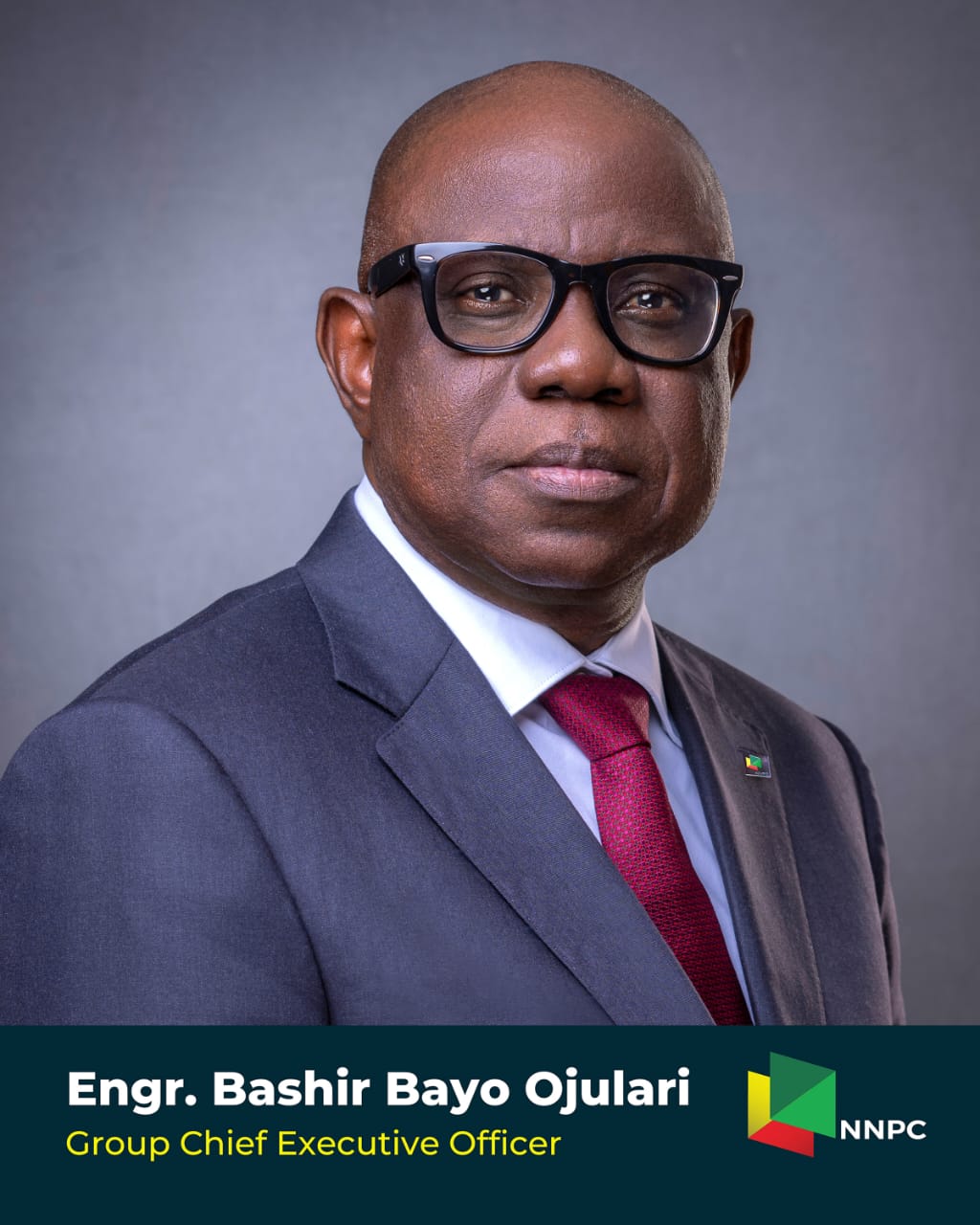
The Nigerian National Petroleum Company Limited (NNPCL) has posted N7.2trillion Profit After Tax (PAT), rising 33 per cent in 2025 from the N5.4 trillion recorded in 2024.
The state-run oil company also said payment of Naira for crude oil supply to Dangote Refinery is still in force.
During the period under review, revenue was N34.5 trillion as earnings per share was N35.9 while royalties and other remittances to the government soared 39 per cent to N22.3 trillion.
Its Group Chief Executive Officer (GCEO) Bashir Bayo Ojulari disclosed this at the 2025 Audited Financial Statement Media Parley in Abuja.
He said: “The central result is clear, profit after tax rose 33 per cent, from N5.4 trillion in 2024 to 7.2 trillion Naira in 2025.
“Revenue was N34.5 trillion. We also recorded earnings per share of 35.9 Naira, while taxes, royalties and other remittances to the government rose 39 per cent to N22.3 trillion.”
The GCEO blamed revenue decline on the crude oil price crash in the period under review.
Ojulari said: “The revenue declined as crude oil price fell, as you recall, in 2025, but we also had some decline that resulted from wide product volume reduction, following the market regulation, as you know, with the removal of subsidy.”
Continuing, the NNPCL boss said the profit grew because the firm improved the way it operated and maintained discipline across its businesses.
Ojulari also attributed the profit to the blockage of revenue leakages and the stoppage of wastages. Operationally, according to him, crude oil and condensate production reached a five-year high of 1.77 million barrels per day (bpd) at its peak.
Nigerian gas supply, said Ojulari, reached a three-year high of 7.2 billion standard cubic feet per day.
He explained that the gains reflect sustained attention to company assets, infrastructure and focus on delivering visible results.
He promised to compel all NNPC debtors to settle their liabilities.
The GCEO said the national refineries will become operational when they are profitable.
He said through NNPCL technical equity partnership model significant progress has been made.
Ojulari said NNPC has undertaken a three-month intrusive onsite due diligence with over 34 of the partners’ top engineers as it now looks forward to completing the report with the same objective of having profitable and sustainable plants.
He said: “And we are now looking at concluding that report. And the objective remains the same.
“What we want going forward is to have a refinery that is self-sustaining, that is profitable and is sustainable. And that’s what we’re looking for. We believe that in the not too distant future, we will be able to define that pathway forward.
“We learned a lot through those onsite visits. And I think we are more confident that we will have a pathway very soon in terms of how to bring those refineries back to sustainable and profitable operation. Our ambitions are specific and measurable.”
He said the partners, who are Chinese, are reviewing the refineries at no cost to Nigeria.
The model is to involve them in the equity of the refineries for them to be committed with the spirit of ownership.
He recalled that he visited China where he toured their petrochemicals plants that operate at 100 per of their design capacity.
The NNPCL boss announced that the Ajaokuta Kaduna Kano (AKK) gas pipeline has been completed with all the weldings.
He revealed that the project is at the stage of fixing the connections at Abuja, Ajaokuta and Kaduna.
He stressed that the main line has been done as NNPCL is now focusing on the impact of the project on the society.
Ojulari added: “The impact starts when gas starts going to power or going into the industry. “And that is why you probably notice we have been a little bit quiet recently because the next milestone is to say gas is flowing and we are seeing gas transmitting into more jobs, more opportunities.”
The GCEO also revealed that the OB3 line, that is the Obiapu, Obiropo and Oben gas pipeline has been grappling with a lot of challenges over several years.
According to him, NNPCL is yet to fix a timeline for its Initial Public Offer (IPO) as the decision is at the instance of the shareholders.
On how to achieve 3million barrels per day in 2030, he recalled that this year, NNPCL signed a new $15 billion to $21 billion Production Sharing Contract (PSC) for Bonga Southwest that is meant to enable final investment in decisions maybe by 2028.
He also cited an example of the Bonga North FID in late 2024 among other projects that would result in the attainment of 3 million barrels per day production.
Speaking on the Naira for crude supply to Dangote, Ojulari said: “Crude supply obligation to Dangote team, yes, still going on. We still deliver the crude in naira and then crude in dollar.”
He added that the arrangement for the supply of crude oil in Naira is for limited cargoes.
Ojulari stressed that NNPCL also supplies extra cargo to the refinery in dollars
“And let me also explain that, very important, because I know a lot of questions have come. We have a commitment to supply crude in naira, for a specific number of cargoes, typically. But also the extra crude that is available, we only supply in dollar,” he said.
Ojulari also explained that crude oil is sold in dollars because all the contracts in the industry are in dollars.
The NNPCL boss said: “The reason for that is that our commitments are in dollar. The rigs that are drilling for us, we pay them in dollars. The projects that we install, we pay in dollars.”
According to him, it does not make sense selling crude oil in Naira to purchase forex to pay in dollars instead of selling it directly in the same currency it is vended internationally.
NNPCL accepts Naira for crude from Dangote because the Federal Government approved it, he said.
Aside from that approval, Ojulari stressed that all other crude oil transactions are in dollars.
He said: “Our cash home to our operators are paid in dollars. So there’s no point receiving naira and then going to send that bank or somewhere to then buy dollar to pay, right?
“So that is the reason that you see that apart from the crude to naira, which was approved by federal government, we maintain that, right?
“For all the other transactions we do are in dollar because our commitments are in dollar as well. So that’s why, otherwise, we would have probably done more, right?
“But what it would mean is that we would do that and then go and buy dollar to pay for our own commitments.”
The GCEO said the cost of crude oil production responds in direct proportion with the rise its price.
Ojulari also confirmed that Nigeria is still servicing the project Gazelle, which is the crude oil backed forward -sale finance facility.
“I think the other quick one is around, you talked about Project Gazelle, and specifically Project Gazelle is still on.”
• Lamu refinery groundbreaking holds today
• Ruto: We have market, capital, expertise, why would we fail?
• Dangote opens businesses to African ownership, targets $100bn revenue
• Kenya regulator reports strong appetite for refinery IPO
By Oluwayanmife Lucas
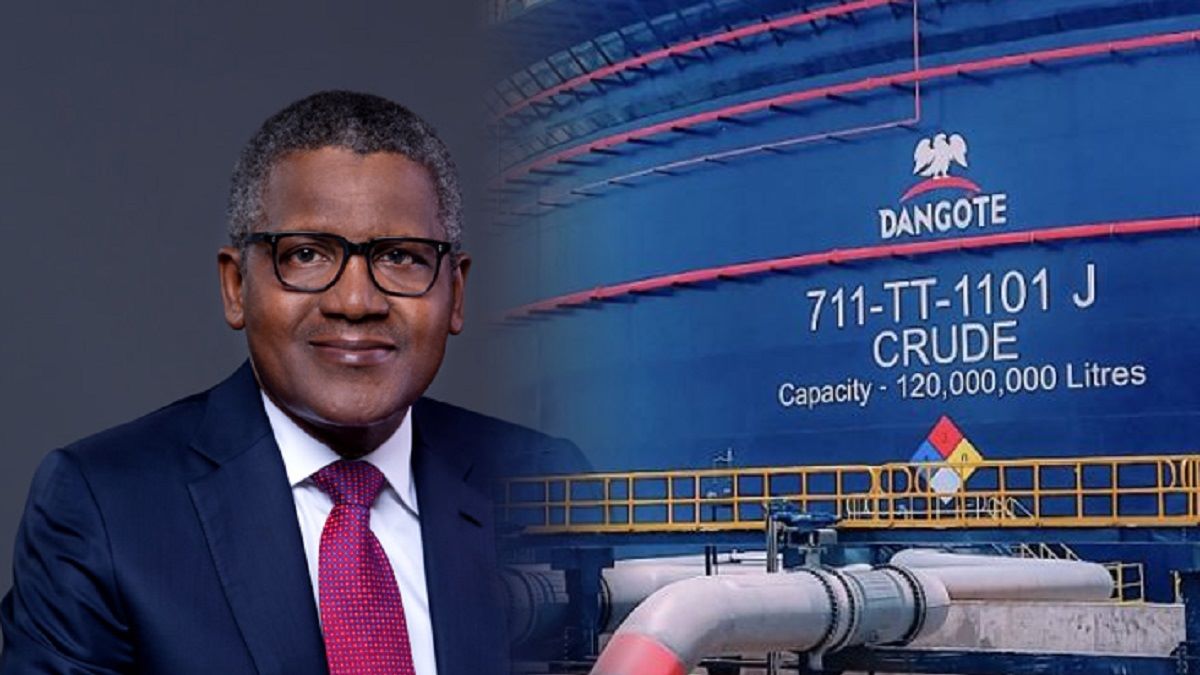
The drive for Africa’s industrialisation received a further boost today as the President of dangote Industries Limited (DIL), Aliko Dangote, takes his continental industrialisation drive deeper into East Africa, declaring that the continent must mobilise its own capital, build at global scale and increasingly own the businesses transforming its economy.
Dangote, who disclosed plans to invest an additional $50 billion across Africa after committing more than $25 billion to existing businesses, said the next phase of the Group’s expansion would combine massive industrial investment with a deliberate opening of its businesses to African ownership through the capital markets.
The declaration came in Nairobi, Kenya, on the eve of the groundbreaking of the Dangote East Africa Petroleum Refinery & Petrochemicals, scheduled for today in Lamu, Kenya, a project Kenyan officials said emerged from high level discussions about ending Africa’s historic role as an exporter of raw materials and importer of finished products.
Speaking during a fireside chat with the Chief Executive Officer of the Nairobi Securities Exchange, Frank Mwiti, at the “Dangote Petroleum Refinery IPO High Level Investor Engagement” organised by the NSE, Dangote said Africa could no longer afford “baby steps” if it intended to compete globally.
“We have already invested more than $25 billion, but right now, we’re going ahead to invest an additional $50 billion,” Dangote said. “We want to create and generate wealth for Africans, to make sure that we defend our markets. And the only way to defend the market is not to do baby steps. It’s better we do big scale,” Dangote said.
He explained that the scale of that ambition will move into sharper focus today when the groundbreaking takes place in Lamu, opening a new chapter in the DIL’s drive to replicate in East Africa the industrial ecosystem created around the 700,000 barrels per day Dangote Petroleum Refinery in Lagos.
The groundbreaking will proceed against the backdrop of a legal challenge over portions of the proposed project land in Lamu. The Malindi Environment and Land Court has ordered that the status quo be maintained on the disputed land until October 14 following a petition by 133 residents asserting rights over the property, although the court did not stop today’s groundbreaking ceremony.
Dangote, who said he learnt of the development from a media report shortly after arriving in Kenya, appeared unfazed by the legal challenge, describing such disputes as part of the realities of executing major projects. Drawing on the Group’s experience in Senegal, where one of its investments also faced litigation that eventually reached the Supreme Court.
President Williams Ruto’s chief economic advisor, David Ndii, disclosed that the Lamu project grew out of discussions among African policymakers, financiers and business leaders on how to deploy the continent’s natural resources for industrialisation rather than extraction.
According to Ndii, those discussions identified petroleum refining as one of the strategic opportunities for East Africa and led to engagement with Dangote, President Ruto, Uganda’s President Yoweri Museveni and other regional leaders.
He said a closed-door meeting in April examined an addressable East African market for finished petroleum products estimated at about 20 million metric tonnes annually, potentially rising to 30 million tonnes. At the conclusion of the discussions, Ndii recalled, Ruto distilled the proposition into three questions: Was there a market for the products?
Was African capital available to finance the investment? And was there an entrepreneur with proven capacity to execute a refinery of that scale? With the answers in the affirmative, the Kenyan President asked: “Why would we fail?” Ndii said the answer in the room was equally emphatic: “We cannot fail.”
He traced the intellectual roots of the project to an earlier Nairobi meeting convened by President and Chief Executive of Africa Finance Corporation, Samaila Zubairu, which challenged African leaders to reconsider an economic model under which infrastructure readily attracts international financing when designed to evacuate raw materials, but struggles to secure capital when intended to process those resources locally.
Quoting a phrase from Zubairu that he said had stayed with him, Ndii declared: “We export our minerals FOB and import inflation CIF.” He said the Lamu project represented an attempt to reverse that equation.
The East African expansion is also being tied to a broader push by Dangote to change who owns Africa’s biggest businesses. Dangote told investors that the ongoing public offer of Dangote Petroleum Refinery was not primarily driven by a need to raise cash but by a desire to democratise wealth and allow ordinary Africans to participate in the prosperity created by the continent’s industrialisation.
“It’s not because we need the money. No. It’s because we want to share this prosperity with everybody,” he said. “The real purpose is for us to democratise wealth making.” He disclosed that the Group was prepared to progressively release more equity in its businesses as investor demand grows.
Dangote went further, declaring that all the Group’s operating businesses would eventually be opened increasingly to public ownership. “I’ve said that all the companies that we operate from today, eventually all of them will be owned by the people,” he said. The industrialist disclosed that a new shipping business being developed by the Group would eventually be taken to the capital market, while its expanding fertiliser operations would also be opened to public participation. “Let people own it,” he said.
Dangote said the Group’s ambition was to create millions of African shareholders who would benefit not only from dividends but also from capital appreciation as the underlying businesses grow. He also declared that when the Lamu refinery matures for public ownership, it should be listed in Kenya rather than automatically taken to the Nigerian market. “If tomorrow we are going to have the refinery here in Lamu to be listed, we don’t have to list it in Nigeria. We shouldn’t list it in Nigeria. We should list it here,” he said.
The proposal reinforced calls at the engagement for deeper integration of African capital markets to enable savings generated in one part of the continent to finance productive assets elsewhere. Chairman of Kenya’s Capital Markets Authority, Ugas Mohammed, disclosed that Kenyan investors had already demonstrated significant appetite for the Dangote Petroleum Refinery IPO, with the regulator receiving enquiries daily since the offer opened on September 14. “One question” had been recurring consistently, Mohammed said: “How can we participate?”
He said the interest demonstrated growing demand among Kenyan and East African investors for opportunities beyond their domestic markets and strengthened the case for mechanisms allowing investors to access securities issued elsewhere on the continent. “A new frontier of Africa’s economic sovereignty is beginning,” the CMA Chairman declared.
Mohammed said African regulators needed to develop deeper, more efficient, transparent and interconnected markets capable of mobilising long term capital for infrastructure, energy, manufacturing and other productive sectors. He disclosed that Kenya’s CMA, Nigeria’s Securities and Exchange Commission and other African regulators had signed a Memorandum of Understanding aimed at creating mechanisms to facilitate greater cross border investment and trading.
NSE Chairman Tom Muluwa described the refinery offer and Dangote’s wider industrial expansion as evidence that Africa could move from the margins of the global economy to competing at scale. “Africa’s time to lead the world has come,” Muluwa declared.
He said the continent had lost too much time and could no longer afford incremental responses to challenges requiring investments of global scale. “We agree with you that we cannot continue taking baby steps. We must go big and help solve the world’s challenges,” he said.
Muluwa said Africa had the resources to play a much larger role in global energy and food security, pointing to Dangote’s refinery and fertiliser investments as examples of the scale required. “We must industrialise Africa,” he said, adding: “We cannot continue exporting jobs and importing poverty.”
Mwiti framed the Nairobi engagement around what he described as a defining question for the continent: “Can Africans finance Africa? And can Africans own the great businesses that are transforming our continent?” He said Africa had for decades exported capital and savings while watching some of its greatest investment opportunities from the sidelines.
The Dangote Petroleum Refinery IPO, he said, offered an opportunity to rewrite that story. “The conversation is changing from what Mr Dangote has built to what Africans can own together,” Mwiti said.
Dangote said the ownership push formed part of a much bigger ambition to build African companies capable of competing with the world’s largest corporations. Under the Group’s Vision 2030, he said, Dangote is targeting more than $100 billion in annual revenue.
“We want to make sure that, for the first time, an African company will actually be out there with over $100 billion of revenue,” he said. “This thing is possible.”
He said the Group was also undertaking a major expansion of its fertiliser operations, with an ambition to reach about 12 million tonnes of capacity and become the world’s biggest fertiliser producers. Dangote argued that Africa’s development would remain constrained unless African capital increasingly financed African enterprise.
“People like us should allow our money to remain in our continent to develop our continent,” he said.
He urged governments to strengthen African financial institutions, citing AFC’s financing of Dangote projects as evidence that institutions with a deep understanding of the continent could move more decisively on transformative investments. The industrialist also challenged Africa’s emerging entrepreneurs to think beyond the limitations historically imposed on the continent.
Recalling that he started in 1978 as a domestic trader selling about four trucks of cement, Dangote told entrepreneurs in the room that his own success should not be regarded as the ceiling of African ambition. “You can become bigger than Dangote,” he said.
Ndii said that shift in mindset could ultimately prove as important as the physical infrastructure now rising across the continent.
He commended Dangote for making Africans “think big” and see the possibility of competing at global scale, the presidential adviser said the industrialist’s place in the continent’s economic history could extend beyond the factories he built.
“When that history is written,” Ndii said, “I think Mr Dangote will occupy a special place in terms of opening up Africa and opening up our minds to see possibilities, not limits.”
By Oluwayanmife Lucas
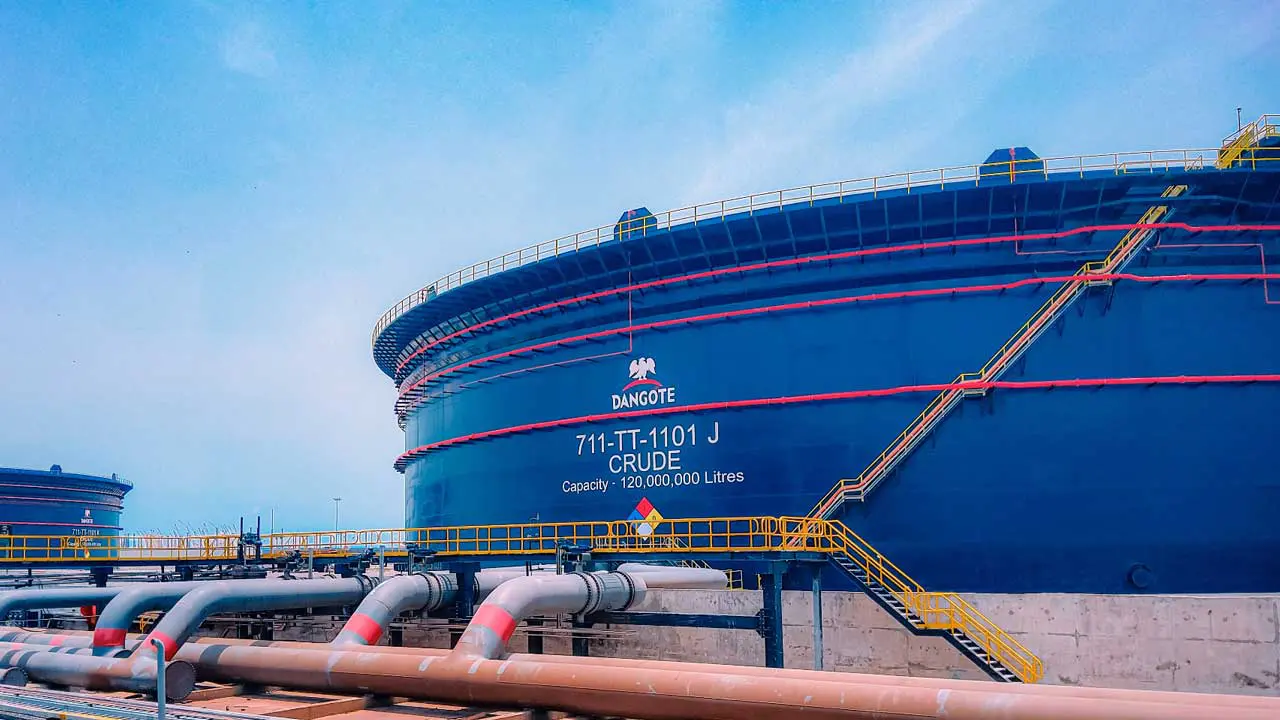
Dangote Petroleum Refinery has achieved a significant operational milestone, recording an average capacity utilisation of 105.21 percent in August 2026, according to data released by the Nigerian Midstream and Downstream Petroleum Regulatory Authority (NMDPRA).
The 700,000 barrels-per-day refinery processed an average of 736,470 barrels of crude oil per day in August, a substantial increase from 497,000 barrels per day in July, when utilisation stood at 71 per cent. The performance was supported by a rebound in domestic crude oil supply, with deliveries rising by 16.75 percent to 683,000 barrels per day during the month.
The refinery’s improved throughput translated into average daily production of 84.43 million litres of refined white products, including Premium Motor Spirit (PMS), Automotive Gas Oil (AGO/diesel), and Aviation Turbine Kerosene (ATK), further reinforcing its role as a major supplier of refined petroleum products across Nigeria and the wider West African region.
Commenting on the development, the Dangote Group said the achievement underscores the refinery’s growing contribution to Nigeria’s energy security, foreign exchange conservation, and industrial growth agenda.
The refinery continued to significantly reduce Nigeria’s dependence on imported petroleum products during the review period. Domestic PMS deliveries from the refinery rose by 39 percent month-on-month to 35.87 million litres per day in August, accounting for approximately 71 percent of total domestic petrol supply.
The increased local supply contributed to a sharp decline in fuel imports, with national PMS imports falling by 26 percent to 14.60 million litres per day, highlighting the refinery’s expanding impact on the domestic fuel market.
Beyond meeting a significant portion of Nigeria’s domestic fuel requirements, the refinery also strengthened the country’s export profile through robust shipments of refined products.
In August, the refinery exported an average of 9.73 million litres of PMS daily, alongside 8.75 million litres of diesel and 21.30 million litres of aviation fuel. These volumes further support Nigeria’s emergence as a net exporter of refined petroleum products and contribute to increased foreign exchange earnings for the country.
The refinery’s growing production capacity was particularly evident in the diesel market, where domestic AGO deliveries averaged 12.37 million litres per day. This level of output substantially reduced the need for imported diesel, with national diesel imports declining from 7.90 million litres per day in July to 1.30 million litres per day in August.
The development reflects the refinery’s increasing ability to support critical sectors of the economy, including transportation, manufacturing, agriculture, telecommunications, and power generation.
The refinery’s ability to operate above its nameplate capacity demonstrates the efficiency, reliability, and resilience of its operations. The performance milestone also reinforces investor confidence as the refinery’s ongoing public offering continues to attract significant market attention.
Dangote Group reiterated its commitment to maximizing local value addition, supporting economic diversification, and ensuring the sustainable supply of high-quality refined petroleum products to Nigeria, Africa, and global markets.



-

 Art & Life9 years ago
These ’90s fashion trends are making a comeback in 2017
-
Business9 years ago
The 9 worst mistakes you can ever make at work
-

 Law & Crime11 months ago
EFCC vs Yahaya Bello: Court adjourns ₦80.2b alleged fraud trial to Nov 11
-
 Energy11 months ago
Diesel falls to ₦979/L in Lagos
-
Entertainment9 years ago
The final 6 ‘Game of Thrones’ episodes might feel like a full season
-
Art & Life9 years ago
According to Dior Couture, this taboo fashion accessory is back
-
Entertainment9 years ago
The old and New Edition cast comes together to perform
-
Entertainment9 years ago
Mod turns ‘Counter-Strike’ into a ‘Tekken’ clone with fighting chickens