
Maritime
Seme Customs, COWA empower over 1,000 border residents

By Grace Edet
The Seme Border Command of the Nigeria Customs Service (NCS), in collaboration with the Customs Officers’ Wives Association (COWA), has launched a large-scale medical outreach and tree-planting initiative.
The dual event, the Green Border Initiative and the Customs Cares Medical Outreach and Empowerment Programme, held on Tuesday, November 11, at the Officers Mess, Seme Area Command, aimed to empower over 1,000 residents and strengthen environmental sustainability at the border area.
The twin programmes, which featured free medical services, tree planting, and distribution of empowerment tools to families, were jointly executed under the leadership of the Comptroller-General of Customs (CGC), Dr. Adewale Adeniyi, and the COWA National President, Mrs. Kikelomo Adeniyi.
Represented by the Assistant Comptroller-General of Customs, Muhammed Babandede, the CGC commended the synergy between Customs, security agencies, and community leaders, describing the initiative as “a legacy of service and compassion.”
He said: “Today, I have seen synergy with my own eyes. I have seen collaboration. Thank you for making this happen.
“We all know that water is life, and air is life. But we have been facing serious environmental degradation and climate change. The issue of insecurity we are facing in this country is as a result of climate change. Herders had to move from the north because the trees were cut off down to the south or to the middle belt where we are having challenges.
“My appeal is that this initiative should not stop at the borders — take it across the nation so that people can understand the importance of tree planting and environmental protection.”
He assured the host communities that the Customs leadership remains committed to their welfare, noting that the programmes in Badagry marked only the beginning of broader engagements to improve the living conditions of border residents.
“The Customs Service under Bashir Adewale Adeniyi has not forgotten our host communities. What we are seeing today is just a starter — the main course and dessert are coming,” he said.
In his welcome address, the Customs Area Controller of Seme Command, Comptroller Adewale Adenuga, highlighted that the initiative was in line with the CGC’s welfare and community outreach mandate.
“We looked at the challenges around us and identified health as a major concern. That’s why we are supporting our CGC’s vision with this medical outreach,” Adenuga said.
He explained that the outreach aimed to reach at least 1,000 beneficiaries, offering laboratory tests, medications, and free eye care services. He added that the empowerment programme provided 10 industrial sewing machines, 10 grinding machines, and 10 gas burners and cylinders, each supported with a N50,000 startup grant for beneficiaries.
Adenuga also commended individuals and partners who contributed to the success of the programme, particularly Remi Adesanya, who donated N2 million to support widows and young entrepreneurs.
“Each widow will receive N200,000, while 10 others will get N2 million in total. We believe that with one empowerment tool, a family is secured,” he said.
“The CGC has been supportive of all officers through improved welfare and salaries. His wife has also given him the peace of mind that reflects in the entire Service.”
The command also unveiled a new facility named “Kikelomo Shakirat Adeniyi Arena,” dedicated to the COWA President, which will serve as a revenue-yielding and maintained space for women-led initiatives in the area.
In her remarks, the President of COWA, Mrs. Kikelomo Adeniyi, expressed appreciation to the Customs leadership and the Seme Command for honouring her and supporting women’s empowerment through the Green Border Initiative.
She said: “People at the border areas have been neglected in many ways — from lack of facilities to pollution. That’s why COWA started this initiative.
“We are not just restoring the ecosystem, we’re also empowering our women and youth to turn waste into wealth. We’re going global and international with this vision because empowerment must go beyond borders.”
She revealed that COWA had already launched the Green Border Initiative at Idiroko and planned to present it at an upcoming international engagement in Brazil to attract global partnerships.
Commander the 653 Nigerian Air Force Station, Badagry, praised the humanitarian focus of the event, describing it as a model worth sustaining.
“It gives us great delight to be part of this empowerment programme. Our wish is for the Nigerian Customs Service to have all it requires to sustain this initiative to its fullest potential,” he said.
Also commending the project, Oba Akran of Badagry described it as a “historic and timely intervention” in the community.
“This is a very big project in the history of the Nigerian Customs. It is long overdue, and it has come at the right time. God bless the initiator and COWA,” the monarch said.
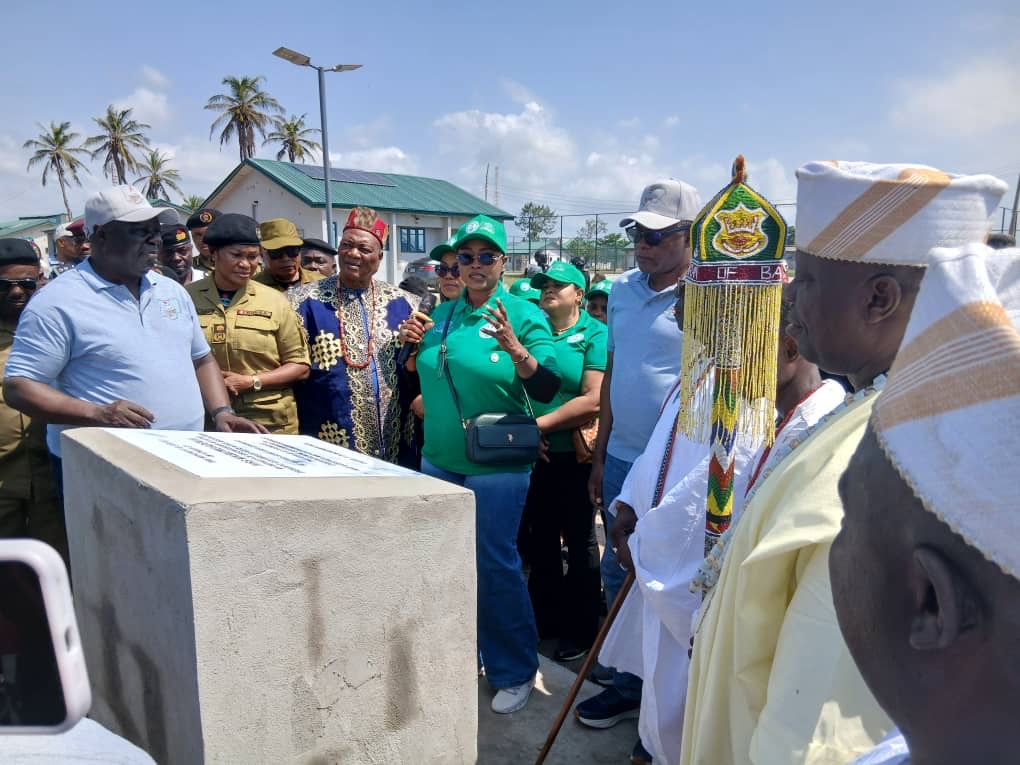
The medical team, led by the Controller of Medical Services, took officials on a guided tour of the outreach facilities, including consultation stands, nursing stations, and pharmacies; where patients were screened for conditions such as hypertension and provided with free medication and follow-up care.
“Some patients didn’t know they were hypertensive until today. They’ll return for further screening, which shows the importance of this outreach,” the controller explained.
A major highlight of the twin-programme saw dignitaries including the CGC’s wife, heads of agencies, and traditional rulers participate in a symbolic tree planting ceremony, planting 30 coconut and palm trees at the newly dedicated arena. Each tree was watered with a mixture of water and sugar, symbolising the sweetness of their future fruits.
The twin initiatives, stakeholders say, reflect the service’s broader vision under the CGC’s leadership to promote community welfare, climate action, and inter-agency collaboration at Nigeria’s borders.


- Fiscal measures take effect
The Federal Government has reduced the import levy on both new and used vehicles as part of its 2026 Fiscal Policy Measures
The move, the government said, is aimed at lowering the cost of vehicle importation, easing the burden on importers and improving access to vehicles for consumers.
The new fiscal measures, which took effect on July 1 2026, form part of a broader review of Nigeria’s import tariff structure and customs regime designed to stimulate economic activity and support trade.
Under the revised policy, the import levy on new vehicles has been reduced from 20% to 10%, while the levy on used vehicles has been cut from 15% to 5% per cent.
According to government, “Beginning 1st July 2026, the Nigeria Customs Service will implement the Green Tax Surcharge as part of the 2026 Fiscal Policy Measures to support environmental sustainability. while also reducing the import levy on new vehicles from 20% to 10% and that of used vehicles from 15% to 5% to ease the cost of vehicle importation?”
Importers and dealers have since welcomed the development, describing it as a positive step forward.
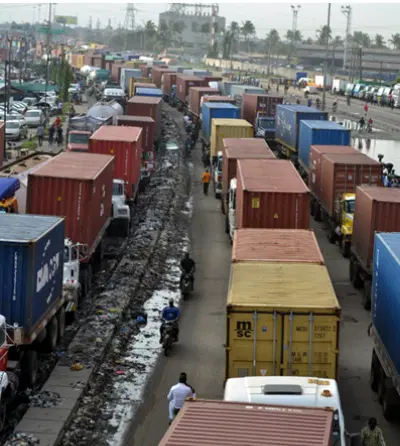
The Nigerian Ports Authority (NPA) has inaugurated a multi-agency task force to address the resurgence of traffic congestion along the Lagos port access roads, as part of renewed efforts to ensure seamless cargo evacuation and sustain improvements in port operations.
The initiative followed a stakeholders’ meeting convened by the Managing Director of the NPA, Dr. Abubakar Dantsoho, last month, where security agencies, freight forwarders, truck operators and representatives of the Lagos State Government agreed on coordinated measures to eliminate bottlenecks affecting cargo movement.
Deliberations at the meeting identified illegal extortion points, overlapping responsibilities among security agencies and other operational inefficiencies as major causes of the renewed gridlock along the port corridor.
Speaking on the outcome of the meeting, the General Manager, Corporate and Strategic Communications of the NPA, Ikechukwu Onyemakara, said the Authority remains committed to ensuring the unhindered movement of cargo to and from the nation’s seaports.
According to Onyemakara, the task force has been mandated to monitor truck movement along the port access roads on a regular basis, identify disruptions capable of causing traffic gridlock and immediately resolve such issues before they escalate.
He explained that members of the team would not establish checkpoints along the corridor but would instead maintain strategic presence at designated locations to ensure compliance while avoiding further obstruction to traffic.
To facilitate swift response to emerging challenges, Onyemakara said the task force has created a dedicated WhatsApp platform through which members can instantly report traffic violations and other incidents requiring immediate intervention.
On the renewal of the Electronic Truck Call-Up (ETO) system contract, which expired recently, the NPA spokesman said the Authority is reviewing the contractual terms to ensure a stronger and more effective framework before awarding a new agreement.
He, however, clarified that the ETO platform remains operational under the management of Truck Transit Parks (TTP) pending the conclusion of the procurement process.
He expressed optimism that the renewal process would be completed soon.
Reaffirming the Authority’s commitment to maintaining free-flowing port access roads, Onyemakara noted that efficient logistics remain central to the NPA’s strategy to enhance Nigeria’s port competitiveness and sustain the country’s improving global reputation.
“We are more interested in the free flow of logistics into our ports than anyone else because it is in our own interest,” he said.
He added that the Authority was determined to consolidate the gains already recorded in port efficiency, citing recent international recognition, including positive assessments by the World Bank, as evidence of ongoing progress.
“We are determined to sustain and even surpass the improvements already recorded in our port system. You can be assured that we remain fully committed to achieving the best possible performance from our ports,” Onyemakara said.
The newly inaugurated task force comprises representatives of the NPA, the Nigeria Police Force, the National Association of Government Approved Freight Forwarders (NAGAFF), the Association of Nigerian Licensed Customs Agents (ANLCA), the Federal Road Safety Corps (FRSC), the Maritime Workers Union of Nigeria (MWUN), the Nigerian Association of Road Transport Owners (NARTO) and the Association of Maritime Truck Owners (AMATO).
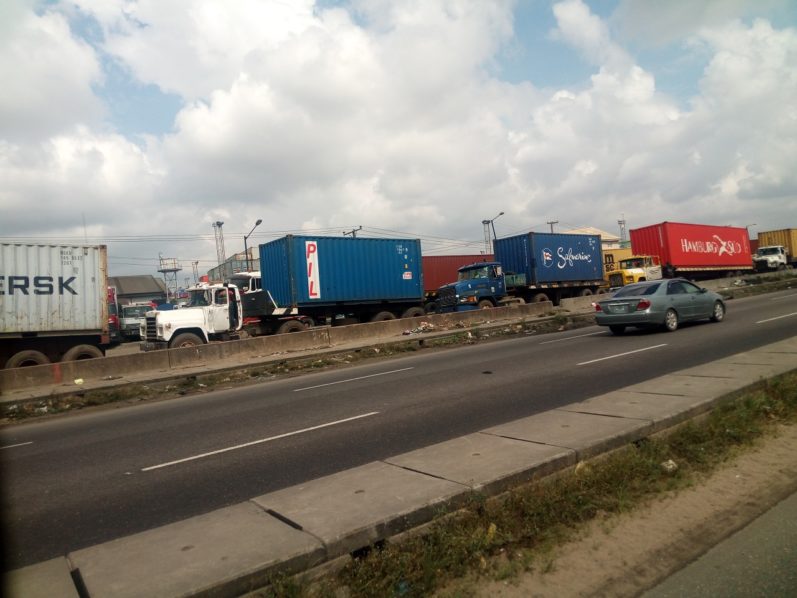
Stakeholders operating within the Lekki Deep Seaport corridor have agreed on a series of measures aimed at eliminating the persistent traffic gridlock that has crippled access roads to the port and adjoining industrial facilities for more than a year.
The resolution was reached at a strategic stakeholders’ meeting convened by the Nigerian Ports Authority (NPA) and chaired by the Lekki Port Manager, Emmanuel Anda.
The meeting was attended by representatives of the Lagos State Government, Lekki Port, Dangote Refinery, truck owners’ associations, the Electronic Truck Call-Up System operator, and other key industry stakeholders.
A major decision taken at the meeting was the prohibition of stationary trucks and tankers along the Lekki port corridor.
Stakeholders agreed that all trucks must remain in designated holding bays and waiting areas until they receive clearance to proceed to the port or industrial facilities.
The agreement followed an inspection tour of the Lekki port access roads by the stakeholders, who witnessed firsthand the severity of the traffic congestion. They subsequently resolved that the situation could no longer be allowed to persist.
Speaking at the meeting, the representative of Mycallup, the electronic truck call-up system operator for the Lekki Port corridor, Timi Koteolu, identified trucks servicing Dangote Refinery outside the electronic scheduling platform as one of the major causes of the gridlock.
According to him, many truck drivers operating with Dangote Refinery’s Authority to Collect (ATC) permits have been found parking indiscriminately along the roads while waiting to gain access to the refinery.
Koteolu disclosed that trucks servicing the refinery are currently not integrated into the port’s electronic call-up system, a development he said has contributed significantly to the traffic bottleneck.
Responding, the representative of Dangote Refinery, Jaiyeola Moshood, explained that the ATC permits serve as the approved access mechanism for tankers entering the refinery.
However, the management of the electronic truck call-up system maintained that trucks without an active call-up should not approach the port corridor and should instead remain in designated waiting areas until they are required at their respective terminals.
The Association of Maritime Truck Owners (AMATO) and the National Association of Road Transport Owners (NARTO) pledged their support for the initiative, promising to sensitise their members while calling for strict enforcement of traffic regulations to restore order along the corridor.
Also speaking, the Coordinator of NUPENG Dangote Refinery, Ademola Adeshina, stressed the need to decongest the port corridor and assured stakeholders that his members would comply with the established Standard Operating Procedures.
Anda commended the stakeholders for their commitment to finding a lasting solution to the traffic challenge and urged all parties to adopt a practical approach to addressing the menace.
He specifically encouraged Dangote Refinery to fully integrate with the electronic truck call-up platform, noting that such collaboration would significantly improve traffic management and reduce the indiscriminate presence of trucks on the access roads.
The Lekki Port Manager also assured participants that discussions would continue with the management of Dangote Refinery to strengthen coordination of truck movements, stressing that vehicles issued with ATC permits should only proceed when duly cleared.
Stakeholders expressed optimism that the collective measures would restore free flow of traffic, improve operational efficiency, and enhance safety along the Lekki port corridor, a critical gateway for Nigeria’s expanding maritime and industrial activities.



-

 Art & Life9 years ago
These ’90s fashion trends are making a comeback in 2017
-
Business9 years ago
The 9 worst mistakes you can ever make at work
-
Entertainment9 years ago
The final 6 ‘Game of Thrones’ episodes might feel like a full season
-
Art & Life9 years ago
According to Dior Couture, this taboo fashion accessory is back
-
Entertainment9 years ago
The old and New Edition cast comes together to perform
-
Entertainment9 years ago
Mod turns ‘Counter-Strike’ into a ‘Tekken’ clone with fighting chickens
-
Sports9 years ago
Phillies’ Aaron Altherr makes mind-boggling barehanded play
-
Entertainment9 years ago
Disney’s live-action Aladdin finally finds its stars