
Banking
UBA hosts Global Leaders at UNGA 2025, moves to unlock Africa’s potential

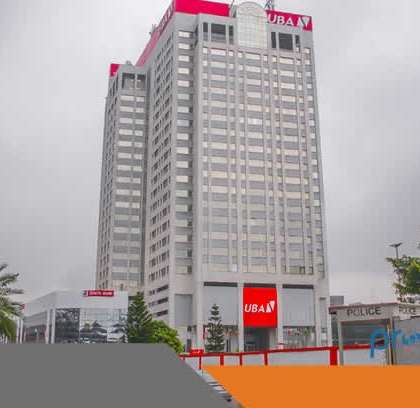
The United Bank for Africa (UBA) Plc will be hosting world leaders, policymakers, and investors and other private sector players at the forthcoming 2025 United Nations General Assembly (UNGA).
This year’s gathering at the UNGA, which is the 80th Edition, will be held between September 15th and September 25th, and as always, UBA Group has mapped out series of engaging activities to spotlight Africa’s opportunities and foster high-level dialogue with global leaders towards boosting the continent’s potential.
A key part of the event, will be the UBA’s unveiling of a ground-breaking whitepaper that presents actionable strategies for unlocking Africa’s vast economic potential, as part of the bank’s mission to drive sustainable growth across the continent.
The whitepaper, a first-of-its-kind initiative by a leading African financial institution at UNGA, titled ‘Banking on Africa’s Future: Unlocking Capital and Partnerships for Sustainable Growth’, will highlight opportunities in trade, infrastructure, digital innovation, climate finance, and inclusive growth.
By providing a roadmap for collaboration between Africa and the global community, UBA aims to position the continent not just as a beneficiary of investment, but as a critical driver of future global prosperity.
Apart from the Whitepaper launch, other activities of the group will include the Business Council for International Understanding (BCIU) Roundtable to be hosted by UBA America, as well as the annual UBA Reception.
The reception will convene world leaders, policymakers, and influential business executives who will be involved in critical dialogues on investment and development across the continent.
UBA’s Group Chairman, Tony Elumelu, emphasized the strategic importance of these dialogues, explained that over the past few years, UBA has become an active leader in conversations and activities that will drive tangible investments to the continent.
“These conversations are fundamentally different from previous discussions because they will be followed by feasible and actionable decisions. UBA will actively work to implement these outcomes for the benefit of the continent, as committed partners in Africa’s development and sustainability,” Elumelu noted.
Continuing, he said, “’The United Nations General Assembly is the largest and most official gathering of world leaders, and we cannot let such an opportunity pass without major African players like UBA taking centre stage to bring these leaders together and showcase Africa’s potential.”
UBA’s Group Managing Director/Chief Executive Officer, Oliver Alawuba, who remarked on the upcoming event, especially the whitepaper’s significance, emphasized the need for more private organizations and players to demonstrate their commitment to the continent’s development through concrete action and proven capabilities.
United Bank for Africa is one of the largest employers in the financial sector on the African continent, with 25,000 employees group wide and serving over 45 million customers globally. Operating in twenty African countries and the United Kingdom, the United States of America, France and the United Arab Emirates, UBA provides retail, commercial and institutional banking services, leading financial inclusion and implementing cutting edge technology.

The Nigerian naira rallied at the forex market after the Central Bank (CBN) topped up FX sales amidst rising external reserves, which continues to boost investors’ and the market’s confidence in the exchange rate outlook.
The official exchange rate saw a sharp daily gain, reflecting a stronger US dollar volume available for closing eligible foreign transactions. Sources said the Apex Bank injected dollars into FX market, though official data has not been made available to know the size.
The CBN sold an additional $150 million on Friday, which was not captured, bringing last week’s total intervention to $400 million. According to updated data from the Central Bank of Nigeria (CBN), the official spot FX rate appreciated by 0.52% per dollar to close at N1,446.32 from N1453.84 per dollar the previous day.
The exchange rate at the official window touched an intraday high of N1455, a significant improvement from N1462.5000 that was quoted for international payment in the previous day.
FX traders in some of the leading investment and commercial banks said the exchange rate briefly touch N1441 on the day, the lowest FX quoted for international payments on Tuesday.
The trading pattern reflected the absence of significant pressures on the local currency, signalling FX liquidity boost as the Central Bank maintained its stance on market intervention.
The naira, however, fell by 1.30% to N1,475 per dollar in the parallel market, highlighting diverging dynamics between the tightly managed official segment and the more demand-driven black market.
Nigeria’s foreign reserves expanded to $44.459 billion on Monday amidst sustained FX inflows across sources, including oil sales and remittances. Month to date, gross external reserves surged by $1,262 billion, from $43.197 billion at the end of October.
By Grace Edet
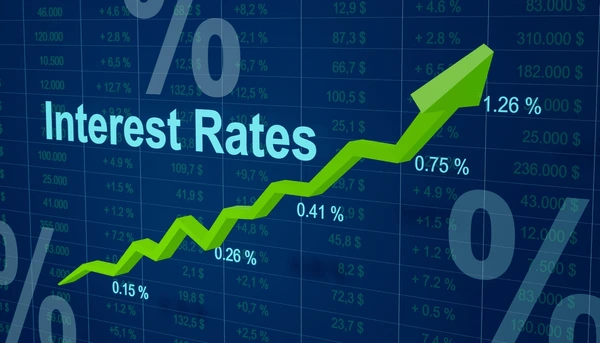
The Central Bank of Nigeria (CBN) has released the latest savings deposit rates for Deposit Money Banks (DMBs) and Merchant Banks, reflecting recent monetary policy adjustments following a reduction in the Monetary Policy Rate (MPR) to 27.5 per cent.
According to the CBN’s data published as of October 31, 2025, the average savings deposit rate across the banking industry rose to 8.25%, up from 7.88% in the previous period — signaling modest improvement in returns to retail depositors amid a cautious monetary easing cycle.
The adjustment follows the decision of the apex bank’s Monetary Policy Committee (MPC) at its September 2025 meeting to cut the MPR, citing improving inflation trends and the need to stimulate economic activity.
“The Committee’s decision to lower the monetary policy rate was predicated on the sustained disinflation recorded in the past five months, projections of declining inflation for the rest of 2025, and the need to support economic recovery effort,” the CBN stated in its communiqué.
Tier-1 banks lead with 8.25% rates
Most Tier-1 lenders including Access Bank, Zenith Bank, First Bank of Nigeria, and United Bank for Africa (UBA) maintained savings rates between 8.10% and 8.25%, keeping them among the highest in the market.
First Bank of Nigeria and Optimus Bank offered the top rate at 8.25%, while Stanbic IBTC Bank posted the lowest at 2.75%, far below the industry average.
Other mid-tier and emerging banks such as Globus Bank (8.18%), Parallex Bank (8.23%), and Nova Bank (8.00%) also remained competitive, reflecting increasing pressure to attract retail deposits amid tightening liquidity in the financial system.
Below is the latest published savings deposit rates (as of October 31, 2025):
Bank Savings Rate (%)
Access Bank 8.10
Alpha Morgan Bank 8.10
Citi Bank 8.10
Ecobank 5.95
FCMB 4.25
Premium Trust Bank 8.10
Fidelity Bank 8.10
First Bank of Nigeria 8.25
Globus Bank 8.18
Guaranty Trust Bank (GTBank) 8.10
Keystone Bank 8.10
Nova Bank 8.00
Optimus Bank 8.25
Parallex Bank 8.23
Polaris Bank 8.10
Providus Bank 8.10
Signature Bank 8.10
Stanbic IBTC Bank 2.75
Standard Chartered Bank 8.10
Sterling Bank 8.10
Suntrust Bank 8.10
UBA 8.10
Union Bank 8.10
Unity Bank 8.10
Wema Bank 8.10
Zenith Bank 8.10
(Merchant Banks including Coronation MB, FBNQuest MB, FSDH MB, Greenwich MB, and Rand Merchant Bank did not publish savings rates as of the reporting date.)
Easing Policy, Tight Liquidity
Analysts say the slight uptick in savings rates may not translate into significant gains for depositors, given the still-high inflation and tight credit conditions. However, the central bank’s decision to reduce the MPR is seen as a signal of confidence in ongoing disinflation trends.
“The CBN appears to be balancing between easing rates to encourage lending and maintaining positive real returns for savers.
“The recent disinflation data gave the MPC enough room to make this downward adjustment,” said Chibuzor Anya, a Lagos-based financial analyst who spoke to The Trust News.
At 27.5%, the MPR remains among the highest in Africa, but the CBN’s stance indicates a gradual move toward supporting private-sector lending and consumption-led recovery, especially after multiple quarters of tight monetary policy aimed at curbing inflation.
Banking sector outlook
With savings rates inching higher, banks are expected to face higher funding costs, particularly as competition for retail deposits intensifies. Nonetheless, the CBN’s move is expected to encourage broader credit expansion in the medium term, aligning with government efforts to boost growth.
Economists note that as inflation moderates and liquidity improves, further adjustments to the policy rate could follow.
“The next few quarters will test how banks balance deposit mobilization with loan growth. The direction of the MPR will remain crucial in shaping margins and credit appetite,” said another analyst.
Conclusion
The new savings deposit rates underscore the CBN’s evolving policy stance toward a more accommodative framework aimed at stimulating growth while maintaining monetary stability. As the financial system adjusts to the 27.5% MPR, the spotlight remains on how banks manage liquidity, lending, and deposit pricing in the months ahead.
Money market rates declined as a result of surplus liquidity in the financial system. The interbank market has been flooded with excess liquidity, and local deposit money banks have been having fun with the above-average treasury bill rate on placement at the Central Bank window.
CBN liquidity action slowed down, lifted the funding profile in the market, and kept the short-term interest rates behind 25%. Banks’ placements at the standing depot facility averaged ₦2.88 trillion, up from ₦2.02 trillion the previous week, TrustBanc Financial Group Limited said in a note.
Hence, the banking system closed the week with a ₦2.47 trillion surplus, a decline from an opening balance of ₦3.78 trillion. In the absence of funding pressures, average daily liquidity for October rose 9% to ₦2.96 trillion from ₦2.71 trillion in September.
Funding profile was also strengthened by FAAC inflows and other system credits that offset early week OMO settlement outflows. According to market report, inflows of ₦261.38 billion from bond coupon payments supported liquidity. A bond auction settlement totalling N313.77 billion midweek exerted mild pressure.
Despite brief contractions from OMO and Treasury bills auction outflows, overall funding conditions remained comfortable, keeping short-term interbank rates lower by an average of 14 bps.
Consequently, the Open Repo Rate (OPR) dipped by 4 bps to 24.50%, while the Overnight Rate (O/N) declined by 24 bps to close at 24.83% week on week.
Supported by expected coupon inflows of about ₦261 billion from the Apr-2029, Apr-2032, and Apr-2049 bonds, funding costs are anticipated to ease further in the coming week in absence of any funding activities Oando Fires Up, Gains 12% as Investors Bet on ‘Possibilities’



-

 Art & Life9 years ago
These ’90s fashion trends are making a comeback in 2017
-
Entertainment9 years ago
The final 6 ‘Game of Thrones’ episodes might feel like a full season
-
Business9 years ago
The 9 worst mistakes you can ever make at work
-
Art & Life9 years ago
According to Dior Couture, this taboo fashion accessory is back
-
Entertainment9 years ago
The old and New Edition cast comes together to perform
-
Sports9 years ago
Phillies’ Aaron Altherr makes mind-boggling barehanded play
-
Entertainment9 years ago
Mod turns ‘Counter-Strike’ into a ‘Tekken’ clone with fighting chickens
-
Entertainment9 years ago
Disney’s live-action Aladdin finally finds its stars