
Maritime
80 cadets get employment, sea-time placement

• MAN graduates 221
• Academy mulls MoU with NSML, Ghana’s Regional Maritime University
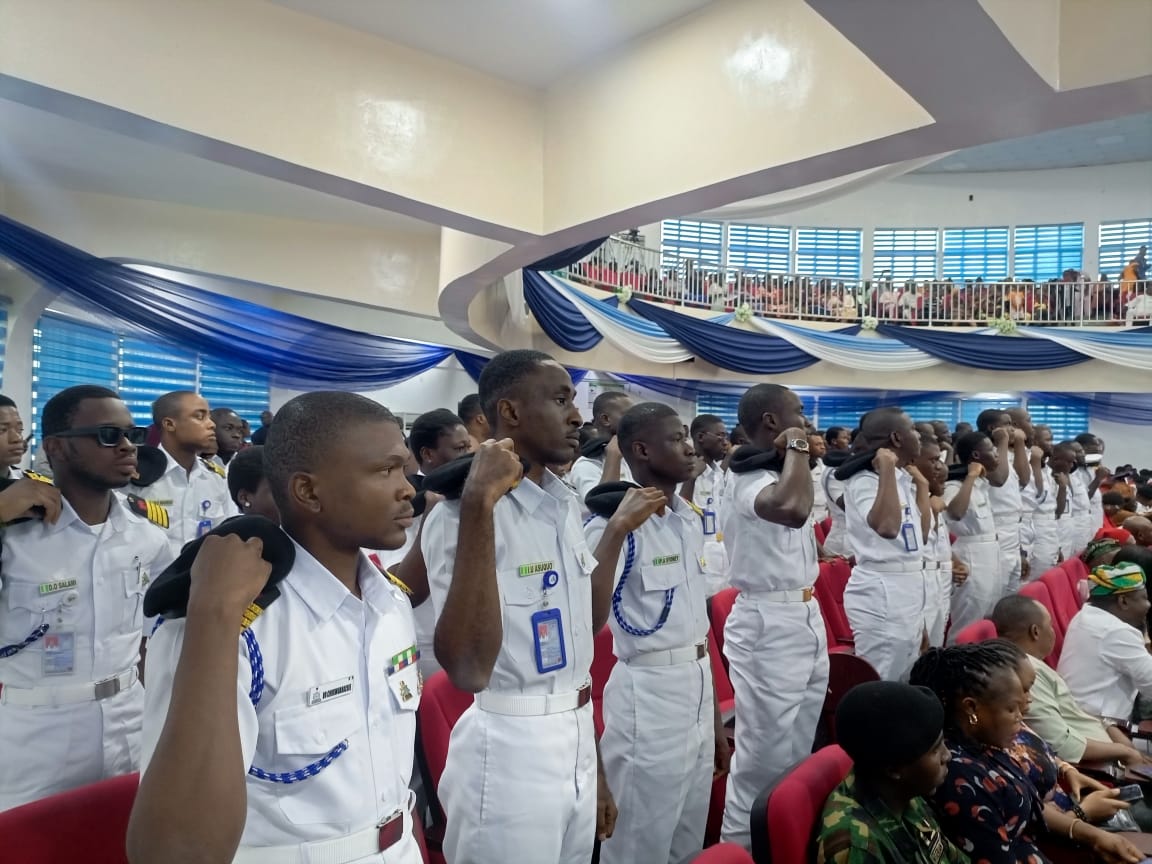
Over 80 graduating cadets who recently bagged Higher National Diploma (HND)and National Diploma (ND) from the Maritime Academy of Nigeria (MAN) Oron in Akwa Ibom State, got instant job offers and sea time training opportunities on Thursday November 13, 2025 at the Academy’s graduation ceremony .
President of the Shipowners Association of Nigeria(SOAN), Mr Sonny Eja, announced a total of 55 sea time training opportunities for the cadets drawn across various disciplines and levels. According to Eja, 50 of the training slots were offered by the SOAN while five others were engaged by Petromarine Nigeria Ltd,
At the ceremony, Greg Ogbeifun, CEO of Starzs Shipyard announced instant employments for four outstanding graduates with cash rewards of ₦1m each while Aminu Umar , CEO of Sea Transport Services Nigeria Limited also offered jobs and cash gifts of ₦250,000 to eight outstanding cadets
Umar who was represented by Musa Ado Ibn-Saidu, the company’s head of Corporate Services reiterated their commitment to promoting maritime manpower development in Nigeria.
Other organisations that supported the graduating cadets were Arion Energy Services Limited, Bricks Ltd and the Alumni Association of Maritime Academy Oron (AMANO).
Acting Rector, Dr Kevin Okonna who commended members of the nation’s maritime community for their usual support also restated his leadership thrust of confidence building through quality training and promotion of staff welfare
Okonna announced that for the first time in the history of the Academy, approval for the Staff Conditions of Service has successfully been completed and obtained from the Office of Head of Civil Service of the Federation (OHCSF), signifying a major milestone towards the Academy’s effort to attract and retain rare and skilled professionals .
Dr. Kevin Okonna, while delivering his welcome address at the 2025 Cadet’ Graduation Ceremony on 13th November, 2025 , disclosed that over the past year the institution has ensured operational steadiness in the face of several activities of detractors, strengthened governance and ensured that core training activities run consistently and professionally so that teaching and learning continues to flourish in line with the provisions of international standards..
According to him, a cornerstone of MAN’s strategy has been an unyielding focus on quality assurance and the provision of world-class training and certification. He said that the Academy has completed Stage One of the Standards Organisation of Nigeria (SON) quality audit and is preparing diligently for Stage Two as it moves toward certification of its standards in line with ISO 9001:2015 (Quality Management System) and ISO 21001:2025 (Educational Organizational Management System (EOMS)).
While highlighting the Command’s achievements in the past one year, he said the Academy has restored reasonably steady public power supply to the Academy and the Oron community after over eight years, all the cadets and students hostel solar power facilities have been rehabilitated and insstalled for 24 hours power supply and all the cadets have been registered with at least one international professional association, including the Nautical Institute, UK, IMarEST, UK and CILT Nigeria.
According to Okonna, the Nautical Institute has established the Nautical Institute Prize for the Best Graduating cadet in HND Nautical Science, including award certificate and money in British Pounds for Nautical Science publications of the winners choice.
In addition , he stated that the Academy has a Memorandum of Agreement with the Chartered Institute of Logistics and Transport (CILT) Nigeria, for student and associate member categories and further capacity building of all our cadets in the School of Maritime Transport Studies (SMTS).
The Academy is working very hard to provide the STCW Convention-required onboard training opportunities for seafaring cadets of the Academy.
The Rector stated that the Academy is working very hard to strengthen its partnership with the NLNG Shipping and Marine Services Limited (NSML) for the provision of onboard ship training for cadets of the Academy as well as many other services that will lead to greater international opportunities for the cadets in the Academy. He expressed his gratitude to the Minister of Marine and Blue Economy, Adegboyega Oyetola for his leadership.
He informed that the Academy is at advanced stage of establishing a robust partnership with the Regional Maritime University (RMU), Ghana for collaboration in a broad area of common interest for the development of MET & extend to Certification in collaboration with it’s Administrations.
The graduation of 221 cadets, according to him, is fit for purpose, and ready for their excellent contributions to the Marine and Blue Economy sector.
“I am equally delighted to inform you that, in line with the statutory mandate of the Academy, between Monday 10th and Tuesday, 11th November, 2025, we hosted the a team of Independent Evaluators from the International Maritime Organization (IMO) in the Academy for Independent Evaluation of Nigeria’s compliance with the Provisions of the International Convention on Standards of Training, Certification, and Watchkeeping for Seafarers, 1978 (as amended).
“Some seatime offers are going to be announced by frontline ship-owning partners ,including Starzs Investment Limited, Sea Transport Services Nigeria Ltd, and Arion Energy Services Ltd. The Academy has signed an MOU with Abuja MoU on Port State Control in West and Central Africa for provision of PSCOs course in the Academy. The Course has been approved by NIMASA and the instructors have been provided further training abroad and the Academy is ready to commence the training.
“The graduating class embodies the Academy’s standards of discipline, technical competence, and professionalism. All the graduands have successfully met the Academy’s academic and practical requirements and are now qualified to progress in their careers to seafarers certification and employment as well as maritime professionals in the global maritime industry. I recommend them to you, stake holders, for employment and mentorship in the interest of the future of our treasured marine and blue economy.”, he said.

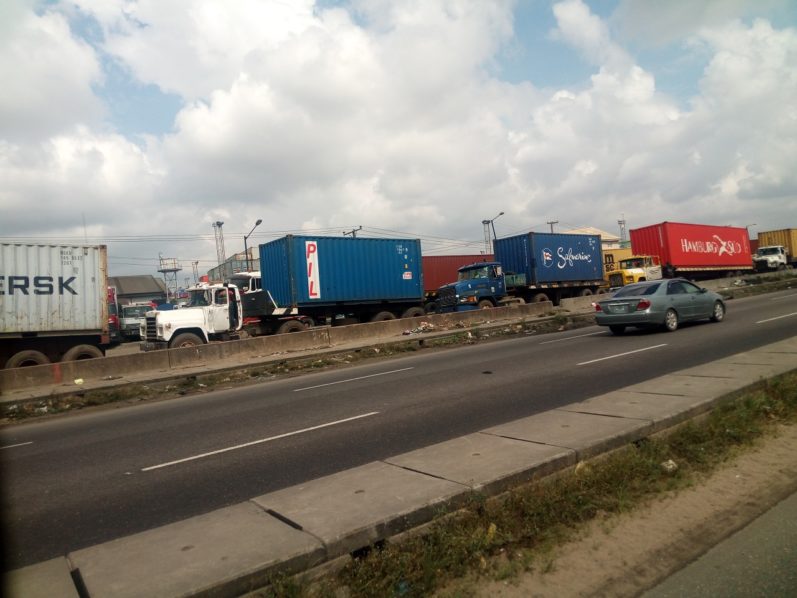
Stakeholders operating within the Lekki Deep Seaport corridor have agreed on a series of measures aimed at eliminating the persistent traffic gridlock that has crippled access roads to the port and adjoining industrial facilities for more than a year.
The resolution was reached at a strategic stakeholders’ meeting convened by the Nigerian Ports Authority (NPA) and chaired by the Lekki Port Manager, Emmanuel Anda.
The meeting was attended by representatives of the Lagos State Government, Lekki Port, Dangote Refinery, truck owners’ associations, the Electronic Truck Call-Up System operator, and other key industry stakeholders.
A major decision taken at the meeting was the prohibition of stationary trucks and tankers along the Lekki port corridor.
Stakeholders agreed that all trucks must remain in designated holding bays and waiting areas until they receive clearance to proceed to the port or industrial facilities.
The agreement followed an inspection tour of the Lekki port access roads by the stakeholders, who witnessed firsthand the severity of the traffic congestion. They subsequently resolved that the situation could no longer be allowed to persist.
Speaking at the meeting, the representative of Mycallup, the electronic truck call-up system operator for the Lekki Port corridor, Timi Koteolu, identified trucks servicing Dangote Refinery outside the electronic scheduling platform as one of the major causes of the gridlock.
According to him, many truck drivers operating with Dangote Refinery’s Authority to Collect (ATC) permits have been found parking indiscriminately along the roads while waiting to gain access to the refinery.
Koteolu disclosed that trucks servicing the refinery are currently not integrated into the port’s electronic call-up system, a development he said has contributed significantly to the traffic bottleneck.
Responding, the representative of Dangote Refinery, Jaiyeola Moshood, explained that the ATC permits serve as the approved access mechanism for tankers entering the refinery.
However, the management of the electronic truck call-up system maintained that trucks without an active call-up should not approach the port corridor and should instead remain in designated waiting areas until they are required at their respective terminals.
The Association of Maritime Truck Owners (AMATO) and the National Association of Road Transport Owners (NARTO) pledged their support for the initiative, promising to sensitise their members while calling for strict enforcement of traffic regulations to restore order along the corridor.
Also speaking, the Coordinator of NUPENG Dangote Refinery, Ademola Adeshina, stressed the need to decongest the port corridor and assured stakeholders that his members would comply with the established Standard Operating Procedures.
Anda commended the stakeholders for their commitment to finding a lasting solution to the traffic challenge and urged all parties to adopt a practical approach to addressing the menace.
He specifically encouraged Dangote Refinery to fully integrate with the electronic truck call-up platform, noting that such collaboration would significantly improve traffic management and reduce the indiscriminate presence of trucks on the access roads.
The Lekki Port Manager also assured participants that discussions would continue with the management of Dangote Refinery to strengthen coordination of truck movements, stressing that vehicles issued with ATC permits should only proceed when duly cleared.
Stakeholders expressed optimism that the collective measures would restore free flow of traffic, improve operational efficiency, and enhance safety along the Lekki port corridor, a critical gateway for Nigeria’s expanding maritime and industrial activities.
Nigeria has expressed readiness to leverage the €59 million West Africa Sustainable Ocean Programme (WASOP) to intensify efforts against illegal, unreported and unregulated (IUU) fishing and strengthen the sustainable management of its marine resources.
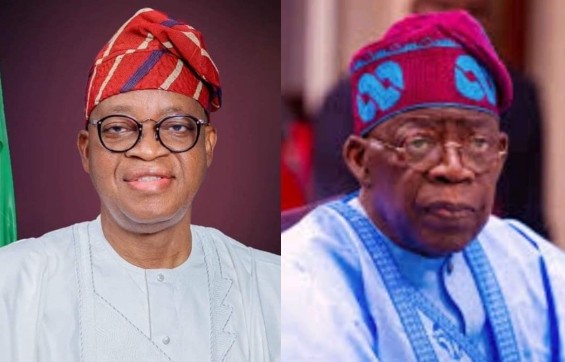
The Minister of Marine and Blue Economy, Adegboyega Oyetola, disclosed this during a meeting with the European Union Ambassador to Nigeria, Gautier Mignot, in Abuja.
The meeting focused on deepening cooperation between Nigeria and the European Union on maritime security, ocean governance and the sustainable development of marine resources.
Oyetola described illegal fishing as a major threat to Nigeria’s marine ecosystem and coastal livelihoods, warning that the practice continues to deplete fish stocks, undermine food security and weaken the economic wellbeing of communities that depend on fishing activities.
According to the minister, IUU fishing poses broader risks beyond environmental degradation, affecting national security and economic stability.
“Illegal, unreported, and unregulated fishing is a direct threat to national security, food sovereignty, and the survival of our coastal communities. We cannot afford to stand by and watch our marine ecosystems depleted and economic livelihoods eroded,” he said.
He stressed the need for stronger international collaboration, backed by enhanced monitoring and enforcement mechanisms, to curb illegal fishing activities and protect the country’s territorial waters.
Welcoming the EU envoy, Oyetola commended the European Union for its sustained partnership with Nigeria, particularly its support for maritime stability in the Gulf of Guinea, which remains a strategic corridor for global shipping and regional trade.
The minister noted that the WASOP initiative presents a significant opportunity for countries in the region to strengthen coordinated action against illegal fishing, improve ocean governance and promote the sustainable utilisation of marine resources.
He said Nigeria was prepared to actively participate in the programme to attract technical and financial support aimed at enhancing enforcement capabilities and advancing the country’s blue economy agenda.
Oyetola also highlighted ongoing reforms under the National Policy on Marine and Blue Economy, which seeks to drive innovation, encourage private sector investment and ensure sustainable exploitation of ocean resources.
He cited improvements in port operations, logistics and maritime security, while noting that efforts were underway to expand maritime infrastructure and boost Nigeria’s competitiveness in international trade.
The minister further called for broader cooperation beyond anti-piracy initiatives, urging development partners to support Nigeria in tackling environmental crimes, human trafficking and illegal fishing through a more integrated approach.
He specifically sought increased technical assistance from the European Union in areas such as surveillance technology, fisheries monitoring and enforcement systems to strengthen Nigeria’s capacity to combat illegal fishing across the Gulf of Guinea.
In his remarks, Mignot reaffirmed the European Union’s commitment to strengthening maritime cooperation with Nigeria and supporting regional efforts aimed at ensuring safer and more sustainable oceans.
He said the WASOP initiative, funded by the EU, was designed to promote integrated ocean governance, sustainable fisheries management and the protection of coastal and marine ecosystems across West Africa.
According to the ambassador, the programme will support improved coordination among coastal states, strengthen enforcement mechanisms, and promote a more inclusive and sustainable blue economy in the region

The Nigeria Customs Service (NCS) is deepening its investment in human capital and institutional development, with Comptroller-General of Customs, Adewale Adeniyi, pledging renewed support for research, ICT infrastructure and student-focused projects at Yakubu Gowon University.
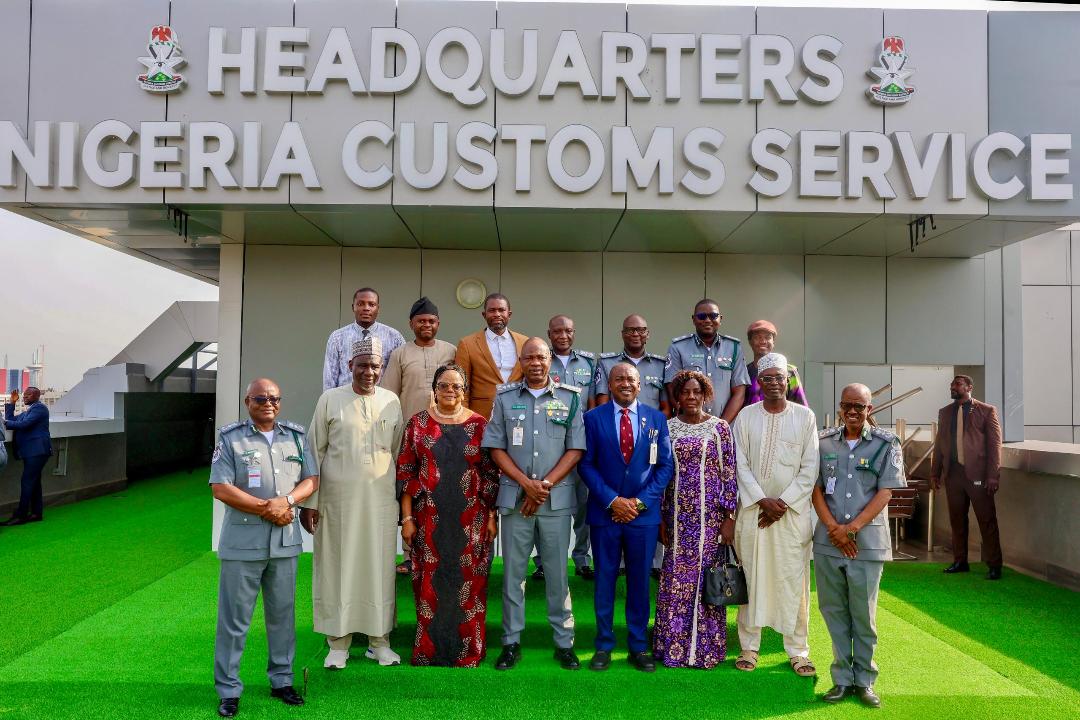
Adeniyi made the commitment on Tuesday at the Customs Headquarters in Maitama, Abuja, while receiving the Vice-Chancellor of the university, Hakeem Fawehinmi, alongside other principal officers during a courtesy visit focused on expanding institutional collaboration.
The Customs boss said the Service was prepared to revive and strengthen a long-standing partnership with the university through targeted interventions capable of delivering measurable impact in education, border management studies and national development.
Speaking during the engagement, Adeniyi recalled that discussions to formalise collaboration between both institutions dated back several years when he served as Commandant of the Nigeria Customs Command and Staff College.
He said: “I have a long institutional history with this university. During my tenure as Commandant of the Nigeria Customs Command and Staff College, we made serious efforts to formalise a partnership through a Memorandum of Understanding. We went very far in the process and were close to signing, but leadership changes on both sides affected the process.”
Despite the delay in formalising the agreement, the CGC noted that the Service had sustained support for the institution through several interventions designed to improve learning conditions and digital access.
“At different times, we supported the university with transportation facilities, including the provision of a 32-seater bus. We also established a fully equipped computer centre with close to one hundred workstations. These were deliberate efforts aimed at building lasting institutional partnerships,” Adeniyi said.
The Customs helmsman stressed that the Service was more interested in projects with direct and sustainable impact on students and the academic environment.
“For us, beyond legacy, what matters most is impact. We understand the realities facing Nigerian universities, from transportation challenges to infrastructure gaps. Our interest is to support initiatives that will create a conducive learning environment and positively impact students,” he said.
Adeniyi further explained that the Service was willing to adopt a phased implementation strategy in executing identified projects where necessary.
“If there are multiple projects and we are unable to execute everything at once, we can adopt a phased approach and focus on priority areas that will make the greatest difference,” he added.
He also underscored the importance of strengthening the profile of the Federal Capital Territory’s premier public university, noting that the institution should reflect Abuja’s national status.
“It is important for us to have a university in Abuja that truly reflects the status of Nigeria’s capital. I am willing to work with you in that regard,” the CGC noted.
Earlier, Fawehinmi commended the leadership of the Nigeria Customs Service under Adeniyi, describing the agency as a critical institution supporting the Federal Government’s economic and governance reforms.
He explained that the university’s growing student population and operational demands had made strategic partnerships increasingly important, especially in areas relating to transportation, ICT infrastructure and research support.
“We have come with the highest level of leadership of the university to congratulate you and appreciate the tremendous work being done by the Nigeria Customs Service under your leadership.
“As the only conventional public university in the Federal Capital Territory, we face enormous responsibilities. Support in areas such as mass transit buses, ICT infrastructure, research facilities, and professional collaboration will significantly strengthen our capacity,” he said.
The Vice Chancellor also identified the university’s Centre for Defence and Migration Studies as a potential platform for collaboration with the Customs Service in border management, migration studies, executive training and national security research.
“We are ready to partner with the Nigeria Customs Service. The real beneficiaries of such collaboration will be young Nigerians who represent the future leadership of this country,” he added.



-

 Art & Life9 years ago
These ’90s fashion trends are making a comeback in 2017
-
Business9 years ago
The 9 worst mistakes you can ever make at work
-
Entertainment9 years ago
The final 6 ‘Game of Thrones’ episodes might feel like a full season
-
Art & Life9 years ago
According to Dior Couture, this taboo fashion accessory is back
-
Entertainment9 years ago
The old and New Edition cast comes together to perform
-
Entertainment9 years ago
Mod turns ‘Counter-Strike’ into a ‘Tekken’ clone with fighting chickens
-
Sports9 years ago
Phillies’ Aaron Altherr makes mind-boggling barehanded play
-
Entertainment9 years ago
Disney’s live-action Aladdin finally finds its stars