
News
Dangote Refinery sacks 800 Nigerian workers

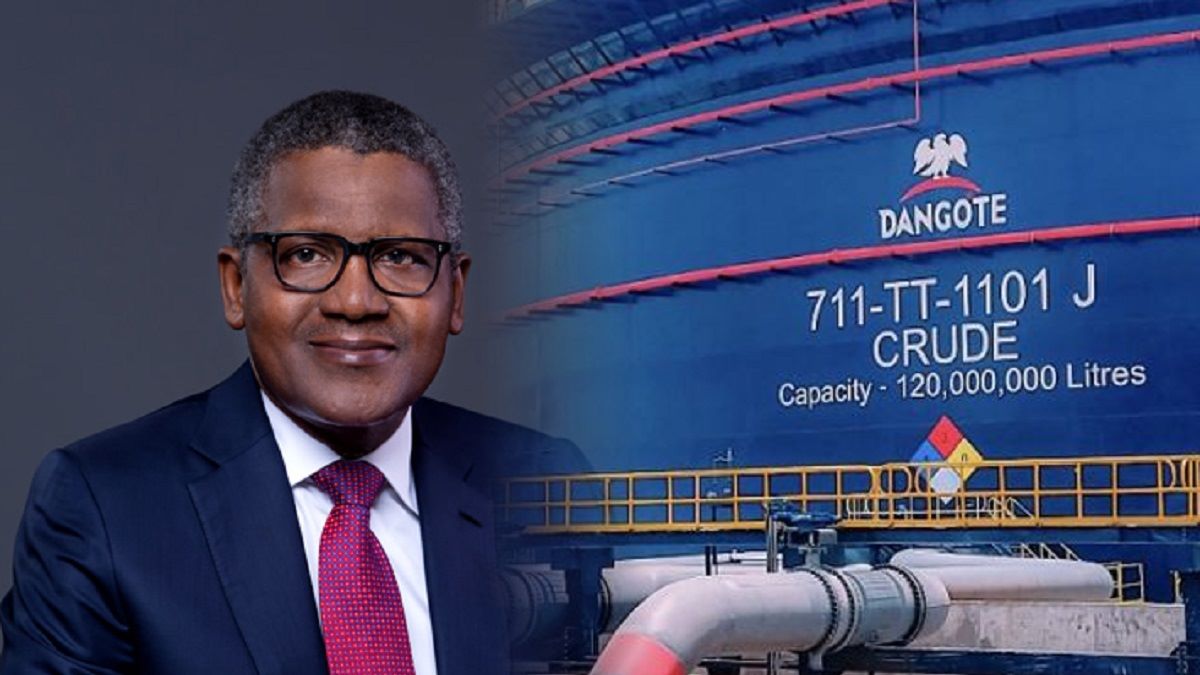
• Says its necessary to safeguard facility
• PENGASSAN warns of consequences
• Reps committee opens investigation into NNPC Ltd / OVH Energy acquisition
The Dangote Refinery and Petrochemicals on Thursday laid off about 800 staff about 800 workers in its employment. The affected staff are all Nigerians.
Although the Refinery’s management explained that the exercise “is part of a major reorganization to safeguard the refinery from repeated acts of sabotage” that have raised safety concerns and affected operational efficiency, the organized labour said the action is the anti-climax of its lingering face-off with the firm over labour related issues bordering on unionisation of workers.
A memo signed by the Chief General Manager of Human Asset Management at Dangote Group, Femi Adekunle, a copy of which was sighted by The Trust News, confirmed the disengagement of the workers yesterday.
The total reorganization of the refinery, Adekunle said, followed multiple cases of reported sabotage across refinery units that posed major safety risks.
According to the contents of the memo, the management was left with no choice but to carry out a total reorganization of the refinery, effective Thursday, September 25, 2025. The employees were told to give all company property to their line managers and obtain an exit clearance, with the specific date for the process to be communicated later.
“The Finance Department, by a copy of this letter, is advised to compute all your benefits and entitlements in line with your terms of employment and conditions of service and pay the amount due to you (less all indebtedness), subject to the condition that you have obtained the exit clearance certificate as mentioned above,” Adekunle stated in the memo.
Late yesterday, following the outrage from labour unions, the Dangote Petroleum Refinery, in response, explained that it is not an arbitrary exercise but one necessary to safeguard the $20 billion facility. It said over 3,000 Nigerians continue to work actively in the Refinery, presently, and only a very small number of staff were affected. The firm also assured that it will continue to recruit Nigerian talent through its various graduate trainee programmes and experienced hire recruitment process.
“This exercise is not arbitrary. It has become necessary to safeguard the refinery from repeated acts of sabotage that have raised safety concerns and affected operational efficiency. The foregoing decision was taken in the best interest of the Refinery as result of intermittent cases of sabotage in the various units of the Refinery with dire consequences on human life and related safety concerns.
“We remain vigilant to our internal systems and vulnerabilities to ensure the long-term stability of this strategic national asset. It is imperative to protect the refinery for the benefit of Nigerians, our partners across Africa and the thousands of people whose livelihoods depend on it.
“We recognise and uphold internationally accepted labour principles, including the right of every worker to freely decide whether or not to join a union. Our commitment to workers’ rights is unwavering.
The Dangote Petroleum Refinery exists to serve Nigerians, to strengthen Africa’s energy independence, and to create decent, sustainable jobs. We will continue to work in partnership with our employees, regulators, and stakeholders to uphold the highest standards of safety, transparency, and accountability,” a statement from Dangote said.
But the organized labour, through the leadership of the Petroleum and Natural Gas Senior Staff Association of Nigeria (PENGASSAN), expressed outrage 0ver the development, calling it “anti-labour practices.”
In a statement signed by its General Secretary, Comrade Lumumba lghotefmu Okugbawa,, the union regretted the development, urging the management of the Dangote Refinery to recall all terminated Nigerian workers. It also warned that the union may be left with no other option than to commence exploring all sections of the Nigerian Constitution and the relevant labour laws for solution.
“We are deeply saddened to report the unjust termination of over 800 Nigerian workers, whose dedication and service have been integral to the operations of this plant. Instead of valuing and retaining this workforce, Management has chosen to replace these qualified Nigerians with over 2,000 Indian workers, many of whom lack valid immigration documentation,” PENGASSAN stated.
It noted that Section 7 of the Labour Act prohibits discrimination and ensures the right to fair treatment in the workplace, a section it said Dangote Refinery are glaringly in violation of the country’s labour laws.
PENGASSAN further noted that the dismissal of such a significant number of Nigerian workers without due consultation or any transparent justification contravenes the legal rights granted to all employees in Nigeria.
“We will not tolerate this blatant disregard for the rights of Nigerian workers, particularly in light of the existing provisions under the Trade Union Act, which enshrines the right of workers to organise and join trade unions.
“The recent organisation of these workers as members of PENGASSAN underscores their collective power and right to protection under the law. We emphasise that such actions illustrate a troubling trend towards the marginalisation of Nigerian workers in favour of foreign labour, which we cannot, and will not, tolerate.
“The sacrifice and talents of our workforce deserve respect and we demand accountability from employers who possess a social responsibility to the communities they operate in. Furthermore, we would be remiss to overlook the broader implications of Dangote Group’s capitalistic pursuits beyond the confines of the refinery sector. Instances of exploitative practices have been reported in various sectors where the company maintains significant business interests. The relentless pursuit of profit at the expense of local talent, ethical employment practices, and community welfare is unacceptable.
“We stand resolute in our commitment to uphold the rights of Nigerian workers and will take all necessary legal actions open to us as an Association to ensure that they are afforded the dignity and respect they deserve. We have scheduled an emergency National Executive Council (NEC) meeting to direct the Association on the way forward. We call on all Nigerians therefore to support this cause and to stand against the exploitation of our workforce by capitalists who seek to undermine our national priorities for their profit. This slave labour of our brothers and sisters must not stand,” PENGASSAN said in its statement.
But the management of Dangote refinery has swiftly debunked the allegation of mass sacking of its staff because of joining the Association. The refinery described the allegation as both unfounded and misleading, noting that the re-organisation within its workforce was aimed at strengthening operations and addressing repeated acts of sabotage.
Reassuring employees and stakeholders, the refinery reaffirmed its commitment to internationally accepted labour principles, including workers’ freedom to decide on union membership without interference.
It emphasised that the exercise was an audit process to safeguard the long-term stability of what it described as a strategic national asset.
The refinery added that it would continue to work in partnership with regulators, employees, and stakeholders to uphold the highest standards of safety, transparency, and accountability.
Meanwhile, sources close to the sector told The Trust News that the development may lead to a paralysis of the sector and by extension the economy except urgent steps is taken by the federal government.
As a measure to avert this, the House of Representatives Committee on Petroleum Resources (Downstream) has pledged to address the ongoing dispute between Dangote Refinery and the Nigeria Union of Petroleum and Natural Gas (NUPENG) workers.
Speaking at a press briefing in Lagos yesterday at the end of a 3-day retreat, the Committee Chairman Ikenga Imo Ugochinyere, noted that if the dispute is not well handled, it will create instability in the downstream sector.
He disclosed that the committee has received many submissions from various interest groups on the matter and it will decide on what is best in the interest of both parties.
“If the issue is not well handled, it will create instability in the downstream sector. We have received a lot of submissions from various interest groups on the matter. We will decide on what is best to address the situation. We must balance labour issues with economic interests,” he said.
Ugochinyere also stated that the committee has officially commenced re-investigation into the NNPC Ltd. acquisition of OVH Energy Marketing’s downstream assets and refinery upgrade, which followed a direct order from the House for the reinvestigation of the matter after the first report was turned down.
He recalled that though the committee submitted its report, the House rejected it on the grounds that some critical facts were not reflected.
He stated that with the commencement of the investigation, the general public are invited to make their input before the lawmakers present their recommendations on the floor of the House. He said those with information and submissions should submit it to the clerk of the downstream committee.
He explained that one of the major causes of delay was the failure of certain stakeholders to submit vital documents, but the committee has resolved to move forward with or without those submissions and complete the assignment as mandated by the House.
The lawmaker assured that any individuals found to have acted improperly—either through direct wrongdoing or failure in oversight—will be identified, and appropriate recommendations will be made in the best interest of the nation.
Ugochinyere said: “The investigation is distinct from the previous inquiry carried out. The House, therefore, mandated the Downstream Committee to undertake a fresh investigation—with a clear directive to uncover what truly transpired in the OVH acquisition process.
“This includes examining the funds paid, details of the acquisition agreement, the assets involved, and the circumstances in which former OVH managers were reported to have formed a new company that later acquired OVH itself. Shockingly, those same individuals are also alleged to have assumed leadership roles within NNPC Retail, raising serious concerns about the integrity and transparency of the entire transaction.
“The committee has now begun this re-investigation in earnest and held a special committee meeting to deliberate on the matter. One of the key resolutions at that meeting was the timely completion of the investigation, which has been long overdue. Pressure from retail staff, industry stakeholders, and members of the public has mounted, questioning the delay and demanding accountability.
“One of the major causes of delay was the failure of certain stakeholders to submit vital documents. However, the committee has now resolved to move forward with or without those submissions and complete the assignment as mandated by the House. As part of the parliamentary process, the investigation must be concluded and a detailed report submitted to the House for action.
“This investigation is critical—not just to address the numerous unanswered questions and alleged irregularities surrounding the OVH acquisition—but also to allow the new leadership at NNPC Retail to focus fully on their ongoing reforms without distraction. Laying these matters to rest is essential for restoring public trust and ensuring that the reforms are not undermined by past controversies.”













By Monire-Oluwa Lucas
Efforts aimed at further enhancing road safety in Ogun State received a boost following fresh collaborative engagement between the Dangote Cement Plc, Ibese Plant and the State Sector Command for safer road use and general safety advocacy.
Dangote Cement Plc, Ibese Plant reaffirmed its commitment to promoting safer roads and strengthening stakeholder collaboration as it received the newly deployed Ogun State Sector Commander of the Federal Road Safety Corps (FRSC), Corps Commander Oludare Ogunjobi, and members of his management team on a courtesy visit to the plant.
Speaking during the engagement, Ogunjobi commended Dangote Cement for its consistent support to the FRSC and its contribution to road safety initiatives over the years pointing out that the company has established itself as one of the Corps’ most reliable corporate partners through its commitment to safety and responsible transportation practices.
He said: “Dangote Cement has remained a dependable partner of the Federal Road Safety Corps over the years, and we deeply appreciate the support we have continued to receive from the company. As an organisation with extensive logistics and transportation operations, Dangote Cement understands the importance of safety on our roads. This shared commitment provides a strong foundation for even greater collaboration between our two institutions.”
The Sector Commander emphasised that promoting a culture of safety requires continuous engagement with stakeholders, particularly organisations that operate large fleets of vehicles and professional drivers.
“Road safety is not the responsibility of FRSC alone. It requires collective action from government agencies, private sector organisations, transport operators, and road users. We believe there is significant potential for us to work more closely with Dangote Cement in driving safety awareness and improving compliance with road traffic regulations,” he stated.
As part of the proposed areas of cooperation, Ogunjobi advocated the establishment of an FRSC Special Marshal Unit within the Ibese Plant, noting that the initiative would strengthen safety consciousness among employees and drivers.
“We would like to see the establishment of an in-plant FRSC Special Marshal Unit that will serve as a platform for promoting road safety advocacy and best practices among staff and transport operators. Such a unit will support specialized driver training programmes, regular sensitisation sessions, and proactive safety campaigns aimed at reducing road crashes,” he said.
He further assured the company of the Corps’ readiness to provide technical support through continuous engagement, capacity building and safety enlightenment initiatives that will ultimately benefit not just the company but all road users across the state.
Responding, the Plant Director, Dangote Cement Plc, Ibese, Ayyagri Subbaraidu, described the FRSC as a critical stakeholder in the company’s operations and commended the Corps for its dedication to preserving lives on Nigerian roads. He assured that safety remains a central pillar of Dangote Cement’s operational philosophy and long-term growth strategy.
“The Federal Road Safety Corps plays a strategic role in our operations because transportation is a vital component of our business. We therefore recognise and appreciate the tremendous work being done by the Corps in ensuring safer roads and protecting lives,” Subbaraidu said.
He explained that the company’s Vision 2030 places strong emphasis on responsible operations, sustainability, and stakeholder collaboration, making road safety an important priority.
“Dangote Vision 2030 clearly highlights the need for stronger partnerships with key stakeholders such as the FRSC. Safety is not merely a regulatory requirement for us; it is a core value that guides how we operate every day,” he stated.
“Our commitment goes beyond the movement of products. We are committed to ensuring that our drivers, contractors, employees and every road user interacting with our operations do so in the safest possible environment.”

The United States government has announced a sweeping review of all Green Cards issued to citizens of 19 countries, following Wednesday’s attack on National Guard troops in Washington, D.C.
The Trump administration disclosed the move on Thursday after authorities identified the detained suspect as a 29-year-old Afghan national who had previously worked with American forces in Afghanistan.
According to AfghanEvac, an organisation involved in the resettlement of Afghans after the 2021 Taliban takeover, the suspect was granted asylum in April 2025, not permanent residency.
In a statement on X, the Director of the US Citizenship and Immigration Services (USCIS), Joseph Edlow, said, “I have directed a full-scale, rigorous re-examination of every Green Card for every alien from every country of concern.”
The order had earlier banned nearly all nationals from 12 of those countries, including Afghanistan, from entering the United States.
Here is a full list of countries under the travel ban:
Countries with Full Travel Ban (12)
1. Afghanistan
2. Myanmar
3. Chad
4. Congo-Brazzaville
5. Equatorial Guinea
6. Eritrea
7. Haiti
8. Iran
9. Libya
10. Somalia
11. Sudan
12. Yemen
Countries with Partial Ban (7)
1. Burundi
2. Cuba
3. Laos
4. Sierra Leone
5. Togo
6. Turkmenistan
7. Venezuela
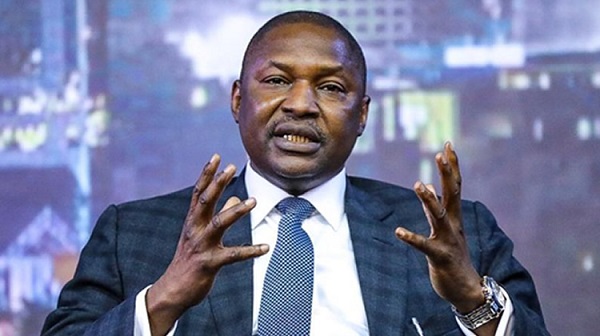
The Economic and Financial Crimes Commission (EFCC) has invited former Attorney-General of the Federation and Minister of Justice, Abubakar Malami, for questioning.
Malami served as Attorney-General and Minister of Justice from 2015 to 2023 under former President Muhammadu Buhari.
Malami announced the development on his Facebook page on Friday, confirming that he had received a formal invitation from the anti-graft agency.
“I would like to inform my family and friends that I have been summoned by the EFCC to provide clarification on certain matters, and as a law-abiding and patriotic citizen, I am determined to honour this invitation without any hesitation,” he wrote.
The former minister reiterated his commitment to the principles of honesty, integrity, and accountability, which he said guided his years in public service.
“I believe in the importance of honesty, integrity, and accountability in governance; these are principles that I have long supported and upheld over the years of my public service,” he added.
Malami also stated that he would keep Nigerians informed of any developments that may arise from the invitation.

-

 Energy11 months ago
Diesel falls to ₦979/L in Lagos
-

 Law & Crime12 months ago
EFCC vs Yahaya Bello: Court adjourns ₦80.2b alleged fraud trial to Nov 11
-

 Art & Life9 years ago
These ’90s fashion trends are making a comeback in 2017
-
Business9 years ago
The 9 worst mistakes you can ever make at work
-
Entertainment9 years ago
The final 6 ‘Game of Thrones’ episodes might feel like a full season
-
Art & Life9 years ago
According to Dior Couture, this taboo fashion accessory is back
-
Entertainment9 years ago
The old and New Edition cast comes together to perform
-
Entertainment9 years ago
Mod turns ‘Counter-Strike’ into a ‘Tekken’ clone with fighting chickens