

ICT
Fed govt.’s $170.6m boost for tech, creative startups

The federal government has launched a new $170.6 million investment fund aimed at expanding access to finance for technology and creative businesses across Nigeria.
To this end, the federal government through the Bank of Industry (BoI) has appointed Kuramo Capital Management as the manager of the DICE Fund of Funds under the Federal Government’s Investment in Digital and Creative Enterprises (iDICE) Programme.
The fund, considered one of the largest government-backed investment vehicles for technology and creative startups in Africa, is expected to combine public and private sector financing to support innovative businesses across all 36 states and the Federal Capital Territory.
Under the arrangement, the Federal Government is providing an initial commitment of $85.3 million through the iDICE Programme, while Kuramo Capital has been given the responsibility of raising an equal amount from private investors, bringing the total fund size to at least $170.6 million.
The agreement was signed in Abuja by the Managing Director of the Bank of Industry and the Chief Executive Officer of Kuramo Capital, this activating the implementation of the iDICE Programme.
The iDICE Programme is a Federal Government initiative jointly financed by the African Development Bank (AfDB), Agence Française de Développement (AFD) and the Islamic Development Bank (IsDB). It is designed to encourage entrepreneurship, promote innovation, create jobs and strengthen Nigeria’s digital economy and creative industries.
The programme has already recorded some progress. In November 2025, it made Nigeria’s first direct government investment in a private venture capital fund through Ventures Platform’s VP Pan-African Fund II, which closed at $64 million with support from international investors.
Beyond venture capital investments, the programme is also implementing projects across the country under its three major areas of focus: skills and enterprise development, access to finance and ecosystem development.
Its Startup Bridge initiative currently has 185 entrepreneurs undergoing training, while applications have opened for a second cohort. The programme is also preparing to launch a Growth Lab expected to provide eligible growth-stage technology startups with equity funding of up to $100,000.
In addition, iDICE is establishing and upgrading digital and creative innovation hubs in 66 higher institutions, comprising 36 universities and 30 polytechnics, in partnership with the National Universities Commission and the National Board for Technical Education.
To improve access to finance, the Bank of Industry has also introduced the BOI/iDICE Debt Fund and the IsDB Murabaha Debt Fund, which together provide $110 million in financing for startups operating in the technology and creative sectors.
According to the organisers, the DICE Fund of Funds will invest through selected venture capital and micro-venture capital funds, making it possible for entrepreneurs from every part of Nigeria to benefit instead of concentrating investments in only a few major cities.
The fund is structured to attract more private investment by allowing the government’s contribution to serve as first-loss capital, reducing investment risks for private investors while encouraging greater participation.
Speaking on the initiative, the Managing Director and Chief Executive Officer of the Bank of Industry, Dr. Olasupo Olusi, said, “By investing in Ventures Platform’s Fund II, and now by establishing the DICE Fund of Funds with Kuramo Capital, we are deepening the Federal Government’s objective of upscaling Nigeria’s technology and creative sectors by catalysing strategic investments in high-growth, technology-enabled enterprises. The Bank of Industry is proud to be the executing agency driving this historic investment into the hands of Nigeria’s innovators.”
The Chief Executive Officer of Kuramo Capital Management, Wale Adeosun, described the initiative as a major development for Africa’s venture capital industry.
He said, “The DICE Fund of Funds represents a landmark moment for Africa’s venture capital ecosystem. Nigeria is demonstrating that a government can be both a serious anchor investor and a credible market-builder. We are honoured to be entrusted with this mandate and committed to deploying every resource at our disposal to raise the matching capital, invest wisely, and deliver returns that justify this historic confidence.”
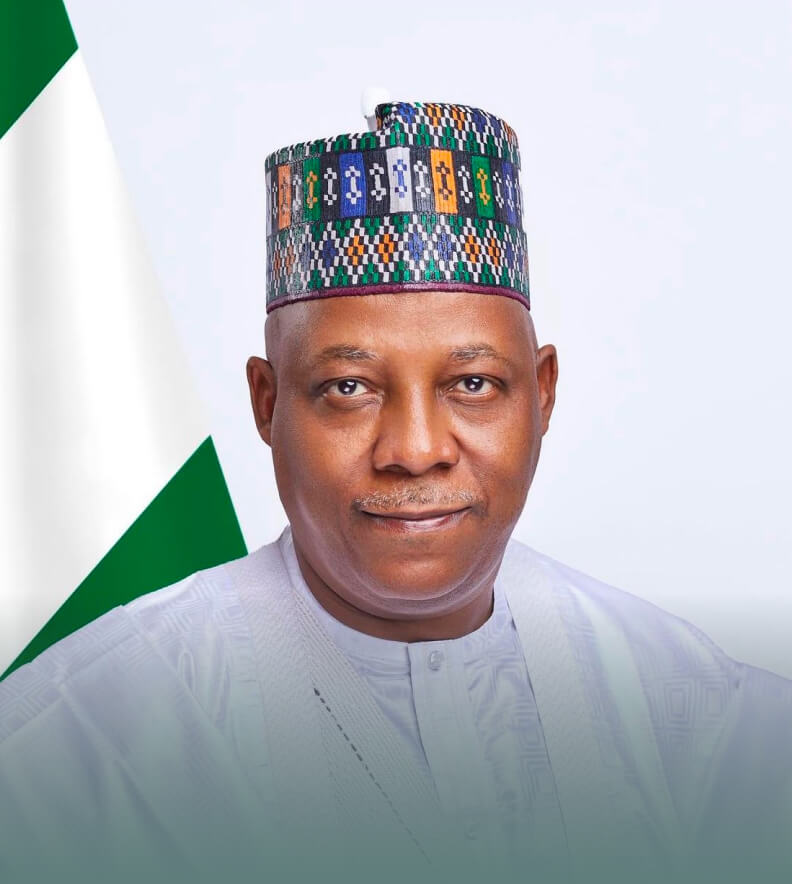
Also speaking, Vice President Kashim Shettima said the commencement of investments under the iDICE Programme represents another step in the Federal Government’s drive to unlock opportunities for young Nigerians.
According to him, “The commencement of investing by iDICE is an exciting milestone and a leap forward in the determined efforts of the Government of Nigeria, under the leadership of His Excellency President Bola Ahmed Tinubu, to deliver on our vision of unleashing the full potential of Nigeria’s young people, in line with the Renewed Hope agenda.”
The organisers said the new fund is expected to improve access to early-stage financing for startups, reduce dependence on foreign venture capital and create more opportunities for Nigerian innovators to secure funding from domestic institutional investors.









- Inaugurates Digital Switch Over (DSO) June 17th
The Federal Government said that Nigeria would earn over $1 billion in dividend from freed digital broadcasting anchored on 700/800MHz as it prepared to inaugurate its Digital Switch-Over programme on June 17th this year.
The government also noted that the Digital Switch-Over programme would unlock 605 billion naira revenues from Nigeria advertising markets, while content creators and broadcasters would have multiple streams of income from the programme.
It urged broadcasters, content creators and other stakeholders to leverage the opportunity to change the narratives for digital broadcasting in the country.
The Director General/CEO of the National Broadcasting Commission, NBC, Mr Charles Ebuebu and the Managing Director /CEO of the Nigeria Satellite Communications limited, NigComSat, Mrs Jane Egerton-Idehen stated this at a news conference at the Headquarters of NigComSat in Abuja.
The two CEOs who addressed a joint news conference and conducted journalists round satellite facilities/ infrastructures preparatory to the inauguration of the DSO programme, said arrangements have been concluded for the successful launch of the programme.
They both addressed infrastructural sharing platforms for the success of the programme as NigComSat plans to acquire two new Satellites before the end of 2028.
The NBC boss said the DSO would mean a game changer for both terrestrial and digital broadcasting following painstaking efforts on technical issues, engagements with critical stakeholders and the opportunities abound in the project.
He said: “The Commission wishes to restate clearly the tangible benefits that a successful Digital Switch-Over will deliver to every sector of national life.
“To the economy, the DSO will unlock the N605.2 billion national advertising market through verifiable audience measurement, generating new revenue streams for broadcasters and content creators.
“The freed digital dividend spectrum (700/800 MHz) is estimated to be worth over $1 billion in auction proceeds, which will be reinvested into digital infrastructure and rural broadband.
“The creative economy, already contributing approximately #5 trillion to GDP and employing over 4.2 million Nigerians, will gain a modern distribution spine, enabling content export across West Africa via NigComSat-1R.
“Every naira invested in local content is expected to generate a 2.5x economic multiplier effect (UNESCO/Deloitte benchmark).”
He said for broadcasters, they would have access to verifiable audience data through the GARB system, allowing them to command fair advertising rates based on actual viewership.
According to Mr Ebuebu the platform offers nationwide reach across all 36 states, including remote communities that terrestrial signals have never served.
He also said the digital broadcasting ecosystem would have six regional studios to produce content in multiple indigenous languages, creating new programming opportunities and audiences.
The NigComSat Managing Director, Mrs Jane Egerton-Idehen provided details of infrastructure sharing between the two agencies, stating that the deployment of Satellite infrastructures to complement the DSO was all that NigComSat had been waiting for to establish its dominance in the industry.
Mrs Egerton-Idehen who conducted journalists round the Satellite farms and studios for the launch of the DSO, said NigComSat had long-term infrastructures for sustainability of the DSO programme, saying that the partnership would be a win-win situation for both organisations.
Speaking further on how Nigeria homes would benefit from the DSO initiative, the NBC boss said:”To ordinary Nigerians, The basic FreeTV service carries no monthly subscription.
“The dish required is minimal; the decoder is an open-standard DVB-S2 device freely available on the open market for as little as N15,000-N25,000. Viewers will enjoy over 100 channels in crisp digital quality, including dedicated language channels (Yoruba, Hausa, Igbo, Tiv, Fulfulde, Ijaw, Edo, Ibibio, Efik, Nupe and more). The signal works everywhere -urban and rural – via satellite, and the FreeTV mobile app”

-

 Art & Life9 years ago
These ’90s fashion trends are making a comeback in 2017
-
Business9 years ago
The 9 worst mistakes you can ever make at work
-
Entertainment9 years ago
The final 6 ‘Game of Thrones’ episodes might feel like a full season
-
Art & Life9 years ago
According to Dior Couture, this taboo fashion accessory is back
-
Entertainment9 years ago
The old and New Edition cast comes together to perform
-
Entertainment9 years ago
Mod turns ‘Counter-Strike’ into a ‘Tekken’ clone with fighting chickens
-
Sports9 years ago
Phillies’ Aaron Altherr makes mind-boggling barehanded play
-
 Law & Crime10 months ago
EFCC vs Yahaya Bello: Court adjourns ₦80.2b alleged fraud trial to Nov 11