
Energy
OTL: $450b needed globally to guarantee stable energy supply

• Downstream stabilising after subsidy removal, says Lokpobiri
The Minister of State for Petroleum Resources (Oil), Senator Heineken Lokpobiri, yesterday said a $540 billion annual investment in oil and gas recovery and associated infrastructure is required globally to guarantee stable energy supply. He based his submission on the projections of a United Nations’ (UN) report. The Minister spoke yesterday at the opening ceremony of the 19th OTL Africa Downstream Energy Week 2025 which began in Lagos. It has as its theme: “Energy Sustainability: Growth Beyond Boundaries & Competition.”
According to him, the recent report by the UN underscores the urgent need for renewed global investment in the oil and gas industry to meet growing global population and energy demands.
The minister also made it known that Nigeria’s downstream sector is gradually stabilising following the removal of fuel subsidy and the liberalisation of petroleum product pricing- a development is described as a “bold and necessary step to attract private sector investment.”
“Subsidy was not sustainable. It discouraged private investment and placed a heavy financial burden on the government. What we are seeing now is a more competitive environment that encourages efficiency, accessibility and availability of petroleum products,” he explained.
In similar vein, the Chairman of the Advisory Board of OTL Africa Downstream Energy Week, Otunba Adetunji Oyebanji, in his opening speech, explained that while the removal of fuel subsidies and market liberalisation in the downstream sector may have presented short-term difficulties, they also mark necessary steps toward building a competitive, efficient and innovation-driven sector. He noted the ongoing progress in logistics optimisation, storage efficiency and digital trading platforms as signs of renewal within the industry.
“The downstream market is evolving amid both turbulence and transformation. Success will depend on our ability to combine innovation with policy stability and operational efficiency,” he said, even as he called for renewed collaboration, policy consistency and innovation to drive Africa’s energy sustainability and competitiveness in a rapidly changing global landscape.
Oyebanji said the conference’s theme underscores the need for Africa and Nigeria to look beyond conventional limits and create an energy future anchored on integration, inclusiveness, and responsible growth.
To this end, Lokpobiri therefore assured that as the world rethinks its approach to energy transition and returning focus to hydrocarbon development as a means of ensuring global energy security, the federal government, he said, is committed to deepening investment in the country’s oil and gas sector.
“The world has come to realise that energy transition cannot happen in a vacuum. Even as we pursue cleaner sources, the global economy still runs on oil and gas. Without substantial investment in these resources, there will be no financial capacities to fund the energy mix we all desire,” Lokpobiri stated.
He noted that while discussions around climate change and net-zero commitments remain important, the realities of global energy consumption and population growth have made it clear that hydrocarbons will continue to play a central role in the foreseeable future.
“Africa, with its population now exceeding 1.4 billion people, cannot afford to ignore investment in oil and gas. Expanding exploration, production and refining capacity is crucial not only for self-sufficiency but also for economic stability across the continent,” he said.
Lokpobiri commended President Bola Tinubu for taking decisive policy actions that have repositioned the downstream sector for long-term growth.
“It takes a courageous leader to make decisions that may be unpopular today but are necessary for the country’s future stability. What we are experiencing now is the outcome of such bold leadership,” he said.
He added that ongoing reforms in the oil and gas industry are geared toward ensuring energy security, encouraging domestic refining and fostering private sector participation across the value chain.
The minister also called on stakeholders in the downstream sector to align with the government’s policy direction and contribute to building a more sustainable and diversified energy future.
“We are no longer just talking about transition; we are talking about an energy mix that guarantees energy security for Africa. Every stakeholder must align with this vision to create the Africa we want,” Lokpobiri emphasised.
According to Oyebanji, the OTL Africa Downstream Energy Week remains a bridge between policy and practice, bringing together regulators, operators, investors and innovators to shape the future of Africa’s downstream energy industry.
“Energy sustainability is not merely about preserving resources; it is about ensuring that our growth today does not compromise the prosperity of tomorrow. We must build an industry that is competitive, responsible, and adaptable to a rapidly changing global environment,” he admonished.
Oyebanji, a former Chairman of the Major Energy Marketers Association of Nigeria (MEMAN), observed that the global energy sector is undergoing major shifts, driven by geopolitical tensions, supply uncertainties and the accelerating march towards energy transition.
He noted that conflicts in Eastern Europe and the Middle East have kept oil markets tight, while the global push toward cleaner fuels and renewables is reshaping investment priorities.
For Africa, he further said, these trends present both challenges and opportunities, insisting that the continent, richly endowed with natural resources and human capital, must move beyond being just a supplier of raw hydrocarbons to becoming a hub for innovation, efficiency and value addition.
“Africa must position itself not just as a source of energy, but as a source of innovation. Our growth must be sustainable, inclusive and borderless,” he echoed.
Oyenabji emphasised that Nigeria remains central to Africa’s energy transformation. The deregulation of the downstream petroleum sector, renewed focus on gas commercialisation and expanding infrastructure, he said, have laid a foundation for long-term growth.
However, he cautioned that sustained progress depends on policy stability, regulatory transparency, and institutional consistency. Investors, he noted, thrive on predictability, and long-term capital inflows which only comes with confidence in the regulatory environment.
Oyebanji called for a new mindset where collaboration becomes the new competition, urging industry players to balance innovation with inclusiveness and competition with cooperation.
“Our capacity to grow beyond boundaries depends not only on how hard we compete but on how well we cooperate,” he said.
He added that the future of energy lies in integration — bridging hydrocarbons, renewables, and alternative energy sources — to create a system that promotes both growth and environmental responsibility.
Oyebanji noted that over the past 19 years, OTL Africa Downstream Energy Week has evolved into the continent’s leading platform for policy dialogue, business networking, and innovation in the downstream value chain.
He urged stakeholders to seize the moment to define Africa’s path toward energy sustainability through infrastructure investment, capacity building and transparent governance. “We must invest in pipelines, depots, data systems and digital tools. We must build capacity through research and innovation. Above all, we must hold ourselves accountable to the highest standards of transparency and environmental responsibility,” he said.
The OTL Africa Downstream Energy Week, now in its 19th edition, serves as a premier platform for policy dialogue, industry networking, and investment promotion across Africa’s downstream petroleum value chain.









….Culled from Reuters
Oil prices could extend gains today as the U.S.-Israeli war against Iran entered a third week, putting oil infrastructure at risk and keeping the Strait of Hormuz shut in the world’s largest supply disruption. U.S. President Donald Trump threatened further strikes on Iran’s Kharg Island oil export hub, drawing a defiant response of further retaliation from Tehran.
Brent and U.S. West Texas Intermediate crude futures have already spiked sharply and rattled global financial markets. Both contracts have surged more than 40 per cent so far this month to their highest levels since 2022 after the U.S.-Israeli attacks on Iran prompted Tehran to halt shipping through the Strait of Hormuz – a key chokepoint for a fifth of global oil supply.
Trump has urged China, France, Japan, South Korea, Britain and others to deploy warships to secure the strategic gateway.
The United States struck military targets on Kharg Island on Saturday, which was swiftly followed by Iranian drone attacks on a key oil terminal in the United Arab Emirates.
“This marks an escalation in the conflict,” JP Morgan analysts led by Natasha Kaneva said.
“Until now, the region’s oil infrastructure has largely been spared.”
Besides UAE’s Fujairah, Saudi Arabia’s Ras Tanura export terminal and Abqaiq oil processing facilities have been listed as critical and highly vulnerable energy nodes in the Gulf, the analysts said.
However, oil loading operations at Fujairah have resumed, a Fujairah-based industry source told Reuters yesterday.
Fujairah, outside the Strait of Hormuz, is the outlet for about one million barrels per day of the UAE’s flagship Murban crude oil – a volume equal to about one per cent of world demand.
Global oil supply is expected to fall by eight million bpd in March due to disruptions to shipping while Middle Eastern producers have cut output by at least 10 million bpd, according to the International Energy Agency (IEA).
Last week, the IEA agreed to release a record 400 million barrels of oil from strategic stockpiles held by member nations to combat price spikes. Japan plans to start releasing its oil today.
Meanwhile, the Trump administration has rebuffed efforts by Middle Eastern allies to start diplomatic negotiations, according to three sources familiar with the efforts, while Iran has rejected the possibility of any ceasefire until U.S. and Israeli strikes end, dimming hopes of a quick end to the conflict.
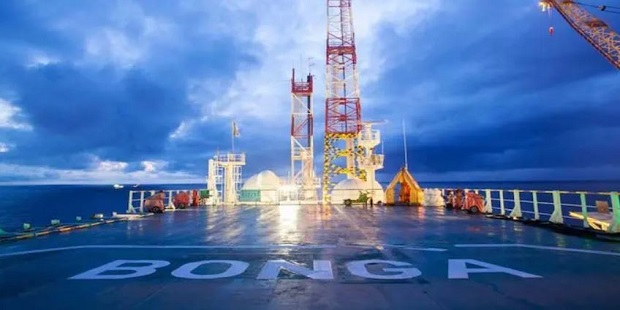
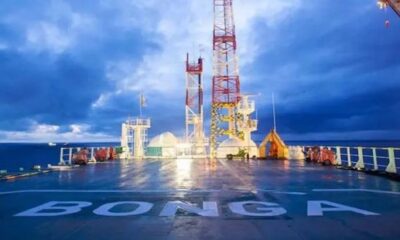
Shell Nigeria Exploration and Production Company Limited (SNEPCo) has completed the turnaround maintenance on the Bonga Floating Production, Storage and Offloading (FPSO) vessel, leading to resumption of production at Nigeria’s premier deepwater field on March 6, 2026. The project was delivered 11 days ahead of schedule and without any safety incident, reinforcing SNEPCo’s longstanding commitment to operational excellence and asset integrity.
SNEPCo Managing Director, Ronald Adams, noted that completing the turnaround safely and ahead of schedule is a testament to the dedication and professionalism of her Nigerian workforce and the helpful support of our partners.
“The achievement not only secures the long‑term integrity of the Bonga FPSO but also positions us strongly for the successful delivery of the Bonga North project, which will leverage the improved reliability of the FPSO,” Adams said.
The exercise which began on February 1, 2026, highlights SNEPCo’s leading role in advancing deep‑water expertise in Nigeria. Of the 55 companies involved in the execution, 43 were wholly Nigerian. Additionally, eight of the 12 international service providers maintain operational bases in Nigeria, contributing to knowledge transfer and increased local investments.
More than 1,000 personnel worked offshore during the turnaround, with over 95 per cent being Nigerians involved in maintenance, engineering, operations, inspection and construction. Thousands more supported activities from onshore locations, reflecting the depth of Nigerian capability in offshore oil and gas operations.
Adams added: “We acknowledge the support of several stakeholders towards the successful execution of the exercise, including the NNPC Upstream Investment Management Services (NUIMS), the Nigerian Upstream Petroleum Regulatory Commission (NUPRC), the Nigerian Content Development and Monitoring Board (NCDMB) and our partners.”
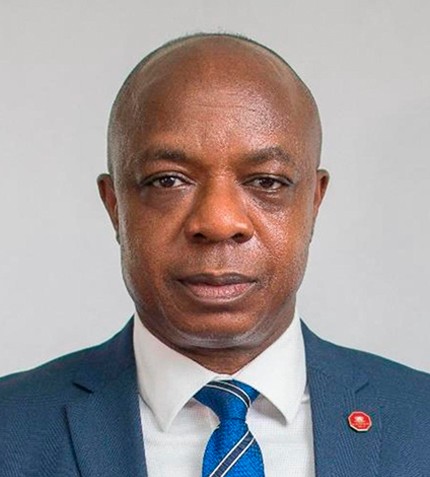
The Chairman, Petroleum Technology Association of Nigeria (PETAN), Wole Ogunsanya, has blamed petroleum industry regulators for persistent delays in oil and gas contracting processes, despite a presidential directive requiring tenders to be concluded within six months. Ogunsanya disclosed this during his presentation at the opening ceremony of the Nigeria International Energy Summit (NIES) 2026 in Abuja, yesterday. The Presidential directive is aimed at accelerating project execution across the energy sector.
Recall that President Tinubu in March 2024, issued Executive Order (OE) 42 mandating reduction of petroleum sector contracting costs and timelines, being part of a wider set of oil and gas reforms signed by the administration.
“We are not concluding contract processes in six months as directed and reports sent to the Presidency often fail to reflect the realities faced by industry players,” the PETAN boss said.
Ogunsanya disclosed that his Association is currently monitoring ongoing tenders, emphasising that several projects scheduled to commence in 2026 and 2027 remain stalled due to prolonged contracting cycles.
He noted that execution gaps persist despite a significant increase in contracting activities involving expressions of interest, tenders, pre-qualifications, and technical and commercial evaluations since the fourth quarter of 2024. He also identified prolonged internal approvals, delayed Final Investment Decisions (FIDs), slow commercial negotiations, extended regulatory and compliance procedures, and funding and financial close challenges as major bottlenecks undermining project delivery.
According to him, a study conducted by PETAN revealed that the current rate of contract awards falls significantly short of the Presidential benchmark of completing tenders within six months, with most contracts structured for five years and a possible two-year renewal.
Ogunsanya therefore called on the Presidency to give closer monitoring of the contracting process to ensure that awards and project execution align with presidential timelines, warning that continued delays could weaken investor confidence and slow sector growth.

-

 Art & Life9 years ago
These ’90s fashion trends are making a comeback in 2017
-
Entertainment9 years ago
The final 6 ‘Game of Thrones’ episodes might feel like a full season
-
Business9 years ago
The 9 worst mistakes you can ever make at work
-
Art & Life9 years ago
According to Dior Couture, this taboo fashion accessory is back
-
Entertainment9 years ago
The old and New Edition cast comes together to perform
-
Entertainment9 years ago
Mod turns ‘Counter-Strike’ into a ‘Tekken’ clone with fighting chickens
-
Sports9 years ago
Phillies’ Aaron Altherr makes mind-boggling barehanded play
-
Entertainment9 years ago
Disney’s live-action Aladdin finally finds its stars